
Pergola Flooring: Porcelain, Wood, or Natural Stone?
Outdoor living
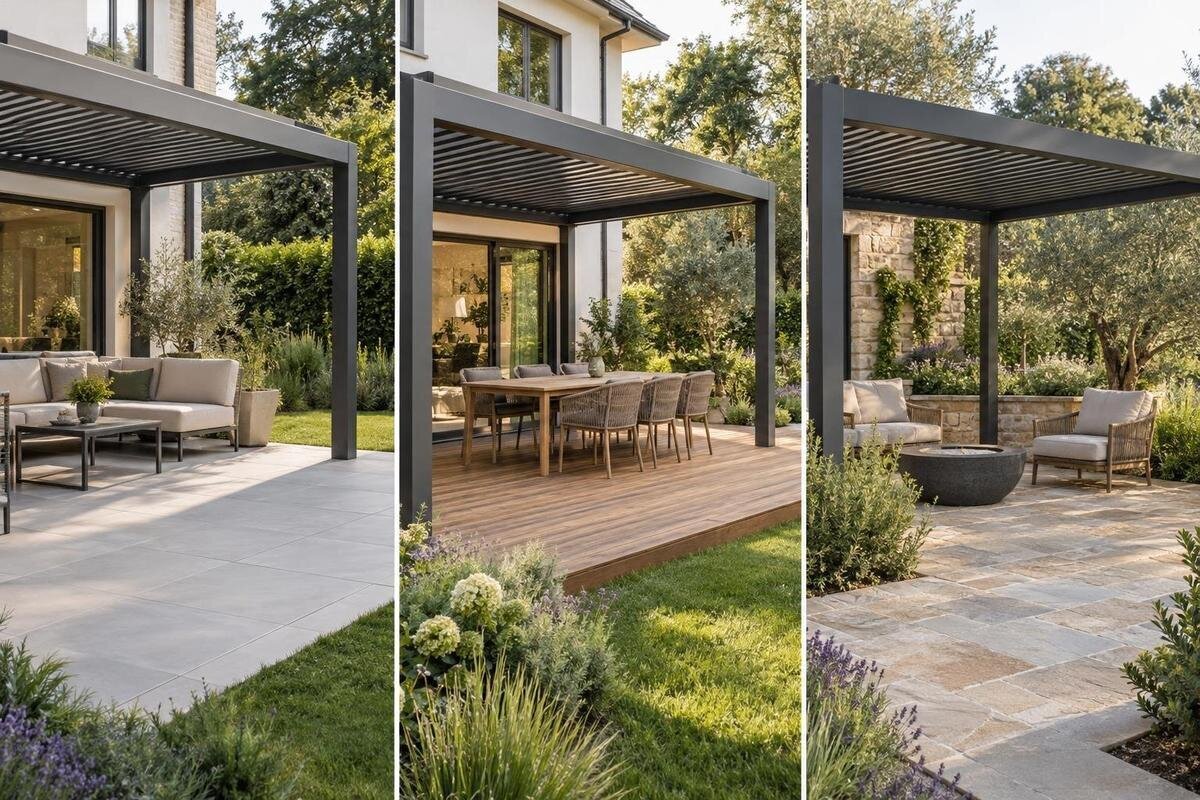
The surface under a pergola does more than complete the view from the house. It affects how the patio feels under bare feet, how chairs move, whether sun-exposed areas become uncomfortable, and how much attention the floor needs after rain, meals, and seasonal debris. Porcelain tile, wood decking, and natural stone each offer a different mix of texture, visual consistency, and upkeep. The right choice depends on the product, shade, weather exposure, layout, and installation—not on a material label or a small color sample alone.

Choose a surface for the way you use the patio
Begin with the patio’s main job, because the walking surface has to support more than a color scheme. A dining zone needs chair feet to sit steadily and move without catching; a route from a door should be easy to cross; and a barefoot lounge area makes texture more noticeable. Mark where people walk, pull chairs back, carry food, and pause. Include the route from the yard if it will see regular traffic, since grit and dampness can affect both cleaning and grip. These paths make it easier to judge materials in actual use rather than by a small sample.
Sketch the finished area, including routes beyond the pergola, existing patio sections, doors, and the edges that meet planting or lawn. Keep the proposed posts and floor outline on the same drawing. If you are also considering the Bloomcabin Lean-To Pergola, include its proposed position beside the house. Draw chairs in both their tucked-in and pulled-out positions, not just the table footprint. That makes it easier to see whether a chair will cross a material change or whether someone carrying a tray will need to squeeze past seated guests. Decide whether the floor should continue beyond the covered area or end at a defined border. A surface boundary should suit the usable patio, rather than follow the pergola outline automatically.
Compare texture, traction, and underfoot comfort
Texture is a practical choice as well as a visual one. A smooth face may be easy to wipe, but it can feel slick when wet; a highly textured finish may offer more grip in some conditions while holding grit in its relief. Compare the manufacturer’s information for exterior use and any available wet-traction data, then discuss the intended conditions with the installer. No single finish guarantees a safe walking surface in every kind of weather. Consider rain, tracked-in soil, and the way people cross the area rather than judging a clean, dry showroom sample alone.
Inspect samples at a useful scale and look at the edges and joints as carefully as the face. On decking, notice grain, board spacing, and any grooves; on tile or stone, examine edge profiles and the texture of the proposed joints. A chair with small feet may behave differently from a broad-legged lounge chair, so bring the furniture dimensions into the comparison. Where feasible, try moving a representative chair over a sample layout without damaging it. Also consider whether the texture is comfortable for the way you use the patio, including bare feet. If you are considering the Bloomcabin Bioclimatic Aluminum Pergola, evaluate the floor samples separately from the structure: its model name does not establish surface traction or underfoot comfort.
Porcelain tile: a consistent look with outdoor requirements
Porcelain can suit a patio when you want a defined grid, a repeatable pattern, and a manufactured finish. The category includes products made for different settings, however, so the word porcelain alone does not establish that a tile is suitable outdoors. An indoor tile is not automatically patio-ready, and a thin-format tile is not interchangeable with a purpose-made paver. Check the product’s exterior-use guidance, climate recommendations, available wet-traction information, and specified installation requirements. Where freeze-thaw conditions are relevant, ask the supplier about the product’s suitability for them.
The surface face is only part of the finished floor: grout, joints, texture, and adjacent materials affect both appearance and cleaning. Ask which cleaners and care steps the manufacturer recommends, including care for the selected grout. Compare several tiles to see how often a printed pattern repeats and whether that repetition will be noticeable across the patio. A wood-look or stone-look tile can resemble another material without sharing its feel or maintenance requirements. Plan the grid against the doorway and post locations so narrow cuts do not land at prominent edges. If you are comparing the wall-mounted pergola option, review that layout alongside the tile plan. Ask the installer how perimeter cuts and visible edges will be finished; these details can change the appearance even when the main tile remains the same.
Wood decking: board texture and recurring care
Wood decking brings grain and a linear board pattern to the patio. Board direction can help organize a seating area or draw the eye along a route, but the appearance and feel vary with species, profile, treatment, finish, exposure, and upkeep. The word wood does not tell you whether a particular surface will keep its color or remain smooth. Review samples and product documents for the exact decking under consideration. If consistency matters, ask how much variation to expect between boards and whether the sample represents the appearance of a larger order.
Ask the supplier for the species or product type, treatment, recommended finish, cleaning guidance, and any renewal schedule. Clarify whether you want to maintain a particular color or accept the appearance changes described in the product’s care guidance; those are different maintenance goals. Ask how rough spots or damaged boards should be addressed, and whether furniture feet or rugs require any precautions. Include the time needed to move furniture and let a renewed finish dry, following the manufacturer’s directions, when judging the upkeep. For a layout using the freestanding Bloomcabin Pergola, coordinate board direction with the seating arrangement and perimeter edges. Review how full boards and cut ends will look from the house, rather than choosing the pattern from a close-up photograph alone.

Natural stone: variation and stone-specific maintenance
Natural stone varies from piece to piece, which can make a large patio feel less uniform than a manufactured grid. That variation is a reason to examine several pieces together rather than judging a single sample. Stone type, cut, finish, and batch affect the color, texture, and way joints read. A smooth finish and a more textured one can look quite different in changing light, but visual texture alone does not establish wet traction. Ask the supplier for outdoor-use and care information for the specific stone and finish, not just for stone in general.
Maintenance also depends on the selected product. Some stone may need sealing or specific cleaners; requirements differ by type and finish. Ask what a recommended sealer is intended to do, whether it changes the appearance, and what care remains necessary afterward. Do not treat sealing as a promise that spills will leave no marks. Request guidance for common patio spills such as food, drinks, and soil from pots, and confirm which cleaners to avoid. For a design featuring the Bloomcabin Pergola, review several stone pieces together with the proposed joint color and paving layout. Decide whether you prefer a more uniform selection or a broader color range, and have that preference recorded in the order rather than relying on one display sample.
Plan for summer heat and changing shade
Underfoot heat depends on more than the material category. Darker surfaces in direct sun often feel hotter than lighter ones, while shade, time of day, wind, surface finish, and local weather all affect what you experience. Wood is not automatically cool, and pale stone or porcelain is not guaranteed to stay comfortable in full sun. Compare the actual colors outdoors rather than under store lighting. If possible, place samples in the proposed area and assess them during the hours when you expect to use the patio; a small indoor sample cannot reproduce the installed surface or its surrounding shade.
A pergola’s shadow can move as the sun changes position, so the shaded area at one time may not match what you get later in the day or season. Observe the site at likely-use times before relying on shade to make the floor comfortable. Include glare in the comparison: a light or reflective-looking finish may be distracting near windows or seating, depending on its surroundings. A landscape plan that records the floor area, seating locations, and expected shade gives you a more useful basis for choosing a finish than assumptions based on the structure’s name or style.
Set realistic cleaning and maintenance expectations
Maintenance includes routine cleaning as well as any periodic treatment. For tile, ask how the selected surface and grout should be cleaned; for decking, ask how to clear debris and care for the specific finish; for stone, confirm any product-specific sealing or cleaner requirements. These are not universal schedules. Pollen, leaves, food spills, soil, and water marks can show differently across colors and finishes, so consider who will clean the patio and how often. Request written care instructions before purchase instead of relying on general claims about a material category.
Think about cleaning access when placing outdoor furniture, planters, or rugs. Leave enough room to reach corners and move items without dragging them across the finish. A textured surface may take more effort to clean than a smoother one, depending on its relief and the dirt it collects. Identify where outdoor debris tends to accumulate and whether your usual cleaning tools can reach those spots. If the bioclimatic pergola option is on your shortlist, keep its care instructions separate from those for the floor. Ask each supplier which products and methods are appropriate; do not assume a household cleaner or pressure washer suits every finish. A practical maintenance plan should account for moving furniture, removing debris, cleaning the surface, and any required drying time—not just the cleaner itself.
Resolve thresholds, edges, and drainage
Door thresholds, steps, and perimeter edges deserve attention before a material is selected. A new floor that sits noticeably higher or lower than existing paving can create an awkward transition, and door operation and clear walking space matter too. Note door swings, access routes, and places where people move from one material to another. For a layout incorporating the Lean-To Pergola beside the house, show these junctions on the same drawing. Ask for the proposed finished surface levels, not simply the thickness of the visible tile, board, or stone: the complete assembly affects the result. Consider how the outer edge will look from the yard and how people will recognize any change in level. The finished walking surface is not a substitute for the pergola’s separately specified structural support.
Consider drainage with the finished floor, surrounding yard, and house rather than guessing from how a small sample looks. Ask the landscape designer or qualified installer how water movement, edges, and adjacent planting affect the proposed surface. The right preparation and edge details depend on the product and site, so compare the relevant professional recommendations before committing. If a step-free route is important, state that need early and have the appropriate professional confirm the transition design. These details affect how the patio works day to day, whichever of the three materials you choose.
Coordinate the floor with the pergola and home
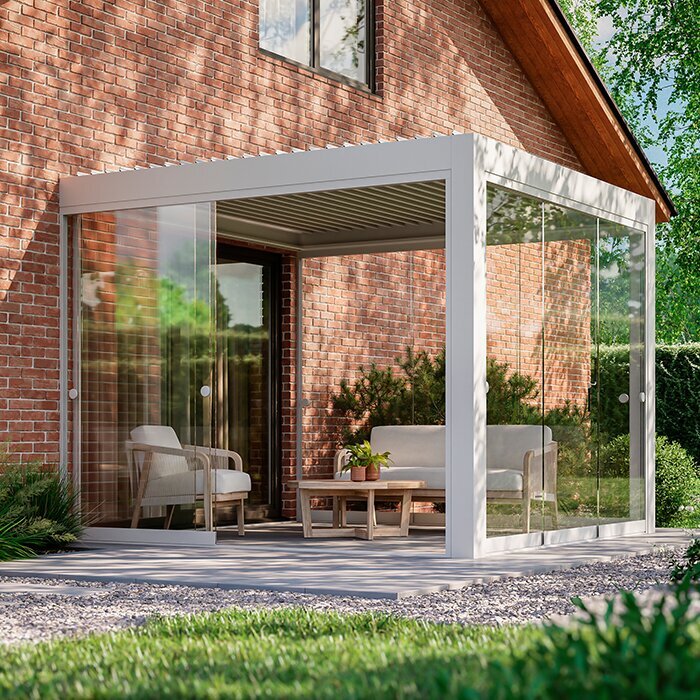
Use color and pattern to connect the floor with the house and pergola without trying to make every finish match exactly. Compare samples beside the siding, brick, trim, and planned frame color in natural light. A tone that is almost—but not quite—the same can look accidental, while a deliberate contrast may define the patio edge. Scale also changes the effect: broad boards and large-format pavers create a different rhythm from smaller modules, and grout or board lines can reinforce or interrupt the lines of the house.
Show the flooring boundary, furniture footprint, main routes, material changes, and post locations on one plan. If you are comparing the Bloomcabin Pergola for a freestanding layout, place it within that composition before settling on a board or joint pattern. Aligning every line with a post can produce narrow cuts elsewhere, so review the whole surface rather than one intersection. Compare grout or joint colors as part of the design: a close color match emphasizes the surface as a whole, while a contrast makes the individual units more prominent. Look at the proposed pattern from the house and from the main garden approach. Those longer views reveal repetition and borders that can be difficult to judge while standing directly over a sample.
Compare the complete installed options
Compare proposals for the finished surface, not just the listed cost of a material. Ask each contractor to identify the product and finish, quantity allowance, surface preparation, installation assembly, grout or joint treatment, edging, transitions, drainage coordination, and labor. Include removal or disposal if it applies to the project. The scope can differ among tile, wood, and stone, so totals are meaningful only when they cover comparable work. Ask for assumptions in writing and clarify who will coordinate the floor levels with the doors, existing paving, and pergola layout.
Bring the same priorities to each comparison: barefoot comfort, summer exposure, available wet-traction information, visible variation, and the amount of cleaning you are willing to do. Include future repairs in the discussion. Ask whether an individual tile, stone piece, or board can be replaced within the proposed assembly, what access that work would require, and whether keeping spare material is worthwhile. Replacement pieces may not look identical to an older surface, so ask about expected variation rather than assuming an invisible repair. If no option fits your priorities and project scope, reconsider the finish, format, or area before committing to the work. The goal is a surface whose everyday feel and upkeep suit the patio, not simply the sample that looked best indoors.
Frequently asked questions
Which pergola flooring stays coolest in summer?
There is no reliable answer based on material name alone. Direct sun, shade, color, surface finish, and local conditions all affect how a floor feels. Compare the actual products outdoors and consider the hours you expect to use the patio.
Can porcelain tile be used on an outdoor patio?
Only choose a product specified for the intended exterior use and installation. Check its weather recommendations, available wet-traction information, and care requirements, and ask a qualified installer whether the product and installation assembly suit the site.
Does wood decking need to be sealed?
That depends on the decking species, treatment, finish, and manufacturer’s instructions. Ask what routine care and any finish renewal involve before buying; do not assume that every wood product follows the same schedule.
Does natural stone need sealing?
Some stone products or finishes may require sealing, while care instructions differ by stone and use. Ask the supplier for written guidance on sealing, cleaning, staining, and weather exposure for the exact product you are considering.
How should I compare flooring samples?
Look at full-size samples outdoors, in the proposed location and light, and compare several pieces if color variation matters. Check texture, edges, joints, and how the sample looks beside the house and pergola. Ask for product-specific care and outdoor-use information.
Porcelain, wood, and natural stone can each make a practical pergola floor, but the category name cannot answer every question about comfort, heat, or care. Choose from the exact product’s outdoor-use information, the conditions at your site, and the way you expect to use and maintain the space. When samples, layout, transitions, and installation scope are considered together, the finished patio is more likely to feel as good in everyday use as it looks in the plan.
