
Outdoor Furniture for a Pergola: Aluminum, Wood, or Wicker?
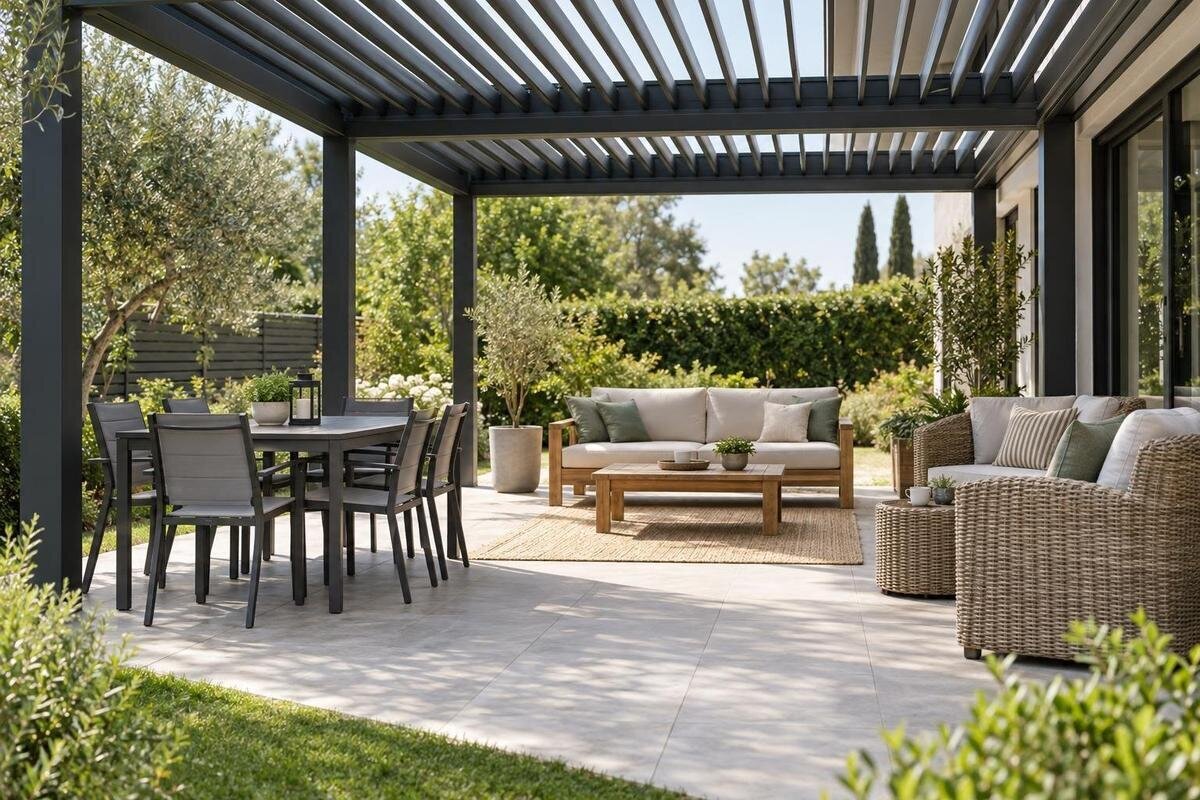
Pergola furniture guide
Outdoor furniture under a pergola is still exposed to changing conditions. A roof may reduce overhead sun or rain at some angles, but open sides can admit wind-driven weather, and furniture near planting beds can collect pollen, soil, or moisture. The useful comparison is not simply aluminum versus wood versus wicker. Consider the actual frame and finish, the location of each seat, how often you will clean or store it, and whether its dimensions work for the way you use the space.

Buyer checklist 1
How exposed is the furniture under your pergola?
Map conditions at the actual furniture positions before comparing finishes. Note where direct sunlight reaches through or around the roof at the times you expect to use the space, whether rain can blow in through open sides, and whether sprinklers, nearby planting, pool splashes, or tree debris reach the area. Check more than one time of day if you use the pergola for both lunch and evening meals. An open structure should not be treated like indoor storage: one chair may sit in steady shade while another catches late sun or wind-driven rain. That difference can matter as much to cushion care and material choice as the material label itself.
Next, work from usable floor area rather than an estimated roof outline. The Bloomcabin Pergola listing identifies a product with a 97–258 sq ft area range, but that range is not a furniture plan or a fit guarantee. Confirm the dimensions of the exact configuration under consideration, then plot the table, chair pullback, walking paths, and any storage piece. Mark areas outside the most sheltered zone separately. Comparing exposure and footprint together helps you avoid choosing a finish for conditions that do not match its care requirements.
Aluminum furniture: finish, heat, and stability
Aluminum furniture appeals to buyers who want a firm frame that is generally straightforward to wipe down and does not call for the same surface-treatment routine as many wood pieces. The metal is only part of the care story: painted or powder-coated finishes, joints, foot caps, and fasteners can need different attention. A scratch, chip, or worn fitting should be handled according to the furniture maker’s instructions; do not assume every aluminum chair is maintenance-free. Remove loose grit before wiping so it does not abrade the finish, and use only cleaners approved for the actual coating. If a set will stay outdoors, check its care guidance for the exposure you expect.
A metal seat or armrest can feel different in direct sun than in shade, so consider where people will sit and how much of the surface is covered by cushions. Test the chair at a comparable time of day if you can. Check the seat shape, arm height, and stability on a surface like the one at home; a firm frame may feel very different from a padded one. Lighter pieces can be easier to move, but do not infer stability from material alone. Ask what the maker recommends for storage or use in windy conditions, and make sure feet sit evenly on your deck or patio.
Buyer checklist 2
Wood furniture: species, finish, and upkeep
Wood brings visible grain and color, but outdoor-care needs vary with the species, finish, and construction. Ask what wood the piece is made from and what finish has been applied instead of relying on a general label such as outdoor wood. Moisture and repeated wetting and drying can affect wood differently depending on the piece and its exposure. Edges, joints, and the underside may also need attention, even when a tabletop looks well finished. Read the furniture maker’s instructions for cleaning and any recommended oiling, sealing, or refinishing; one routine should not be assumed to suit every wood and finish.
Think about how you feel about the surface changing over time. Some wood furniture develops a different color or visible signs of weathering; if you want a consistent appearance, follow the finish guidance and consider how you will protect the piece when it is not in use. A damp, shaded corner may dry more slowly than a sunny, open one, so allow the furniture to dry as directed rather than covering it while wet. Inspect joints, fasteners, and feet as part of routine care. If you prefer not to manage finish-related upkeep, compare that commitment honestly with a simpler cleaning routine.
Wicker furniture: identify the weave and frame
Wicker describes a woven look or construction, not one guaranteed fiber or weather rating. Natural wicker and synthetic resin weaves have different care needs. Natural plant fibers may need more protection from prolonged wet exposure; confirm that the exact furniture is intended for outdoor use and ask how it should be stored. Synthetic weaves also vary, so check the material and the maker’s guidance on sun exposure and cleaning rather than assuming that every product sold as outdoor wicker will age in the same way. Look at the supporting frame, too: it may be made from a different material than the woven surface, with its own finish and care instructions.
Inspect the weave where it wraps around arms, meets the frame, and supports the seat. Look for loose ends or damaged strands, and ask how repairs should be handled. Broad woven arms can reduce usable seating space even when a chair looks generous overall. Compare outside dimensions with seat dimensions before ordering, especially if you plan to place several chairs together. When considering the Bloomcabin Bioclimatic Aluminum Pergola, include the full chair outlines in your furniture plan. A compact table does not necessarily make a set compact if the surrounding chairs have deep backs or wide arms.

Buyer checklist 3
Everyday cleaning and seasonal care
A useful care routine starts with the furniture maker’s instructions, since a frame material alone does not specify which cleaners or methods are suitable. Aluminum surfaces may be wiped clean, while wood finishes and woven surfaces can need different handling. Dust and grit can collect in weave gaps, joints, and beneath cushions; check those areas when cleaning instead of focusing only on the most visible surface. Avoid pressure washing, abrasive pads, or strong cleaners unless the maker permits them. Periodically look for loose fittings, worn feet, damaged finish, or strands that need attention, and follow the product guidance for any repairs.
Consider how you will reach the furniture for cleaning. A heavy table pushed against a boundary may leave its back edge difficult to wipe, while closely grouped chairs can make sweeping underneath awkward. Check whether you can move each piece without dragging its feet across the patio, and whether removable cushions expose areas that collect debris. If your plan includes the Bloomcabin Lean-To Pergola, account for the building-side boundary when arranging furniture. Leave practical access to surfaces and joints that need attention, rather than judging the layout only by how it looks when everything is neatly tucked in.
Furniture for dining, lounging, and daily routines
For frequent dining, think about more than the tabletop. Chairs may be pulled in and out several times during a meal, and spills or crumbs can land on seats and frames as well as the table. Consider how easily you can clean the surfaces and whether the chair shape is comfortable to move. Deep weave openings, intricate details, or cushions that need frequent handling may add tasks to the routine; they are not automatic drawbacks, but they should suit the way you use the set. Sketch the meal arrangement with chairs pulled out, and make sure people can reach seats without shifting other furniture.
For lounging, decide whether you want an upright conversation area or seats that let people stretch out. An ottoman occupies additional space when in use, and a low coffee table may be inconvenient for someone eating a full meal. If you are considering the regular Bloomcabin Pergola, compare these arrangements in your furniture plan before choosing a set. Movable side tables can serve individual seats, but each needs a stable position within comfortable reach. Mixed-material furniture is also an option: a wood table and aluminum chairs need not match exactly, provided their heights, proportions, and separate care routines work for you.
Buyer checklist 4
Seat dimensions and comfort
Material alone does not determine comfort. Seat height and depth, back angle, arm height, and the relationship between the chair and table all affect how a seat feels. Try the furniture if possible, ideally with the cushion you expect to use. Check whether your feet rest comfortably, whether the arms meet the table at a useful height, and whether the back supports the way you normally sit. People sharing the pergola may prefer different seat shapes, so a set that looks uniform is not automatically the most comfortable choice. Take the time to test the actual pieces rather than judging only by their style or material.
Cushions can change both comfort and fit. Check how they sit on the frame, whether they shift when someone gets up, and whether their thickness leaves enough room beneath the tabletop. Test the chair with its intended cushion rather than relying on the bare seat height. When planning seating around the Bioclimatic Aluminum Pergola model, record these furniture measurements alongside the chair's outside dimensions. For recliners or adjustable backs, include the extended position in the plan. A chair that fits neatly when upright may occupy a much larger area during use, particularly with a separate footrest.
Measure the full furniture layout
Use the assembled dimensions of each piece, not the package dimensions or an approximate tabletop size. Mark the table and chairs on the patio with painter’s tape or a paper plan; include chair backs, armrests, and the space each chair needs when pulled out. Add side tables, ottomans, and any storage box that will stay under the pergola. This simple layout is a concept, not a construction drawing, but it can show whether a set occupies the whole usable area or leaves room for everyday movement. Measure doors and other openings nearby so furniture placement does not block the route in and out.
Include fixed obstacles such as posts, walls, planters, or changes in the patio surface when they affect where furniture can stand. For a concept layout alongside the Bloomcabin Lean-To Pergola product page, mark the house wall and any nearby doorway before placing furniture outlines. Use confirmed dimensions for the chosen configuration, including post locations, rather than treating the listed area as an unobstructed rectangle. Check table legs and chair feet against the actual surface, too. A furniture arrangement can fit on paper yet put a foot over a paving joint or leave a chair awkwardly positioned beside a post.

Buyer checklist 5
Cushions, covers, and outdoor storage
Cushions and covers introduce their own material and care questions. Check the fabric label or product instructions for cleaning, drying, and storage; do not assume that a cushion described as outdoor can be left exposed in every condition. Direct sun may affect fabrics over time, while moisture can linger in cushions that are left damp. Consider whether cushions are easy to remove and where they will go when not in use. If you choose furniture without cushions, test the seat rather than expecting to add padding later, and check whether separately purchased cushions will fit the seat shape.
Choose covers using the furniture's assembled dimensions and the cover maker's fit guidance, including any instructions about ventilation and securing the cover. Check whether projecting arms or tall chair backs affect the fit. As you develop a layout for the Bloomcabin Pergola, decide where removed covers will go while the furniture is in use. For a cushion chest, compare its internal dimensions with your largest cushion, not just its advertised outside size. Allow room to open the lid or doors and lift cushions out without moving a chair. Storage that is awkward to use can make a simple daily task unnecessarily cumbersome.
Questions to answer before choosing a set
Before buying, look past the headline material and examine how the furniture is made. For aluminum, check the surface finish, joints, fasteners, and feet. For wood, identify the species and finish and find the care instructions. For wicker, confirm the weave material and supporting frame. Ask what cleaning products are suitable and whether the maker provides guidance for the exposure you expect. If replacement cushions or parts would matter to you, check whether they can be obtained rather than assuming they will remain available. These details make it easier to compare two pieces that use the same broad material label but may require different care.
Compare ownership tasks as well as purchase-day appearance. How many cushions would you bring indoors, how many surfaces need special treatment, and how often would you move the chairs? A concept comparison might pair an uncushioned dining set with a cushioned lounge group, then note the different cleaning, storage, and seating requirements without declaring either universally better. If the Bloomcabin Bioclimatic Aluminum Pergola product listing is part of your project, keep furniture requirements in a separate comparison so the structure's material name does not dictate your choice. Choose the combination you will enjoy using and realistically maintain through changing seasons.
Frequently asked questions
Is aluminum or wood easier to maintain under a pergola?
Aluminum is often simpler to wipe down, but its finish and hardware still need care. Wood maintenance depends on the species, finish, and maker’s instructions. Neither material is maintenance-free, and a pergola does not remove all exposure to sun or moisture.
Can natural wicker stay outside year-round?
Do not assume natural wicker can remain outdoors year-round. Natural plant-fiber weaves generally need more protection from prolonged moisture than synthetic outdoor weaves. Follow the specific furniture's instructions for exposure and storage; a pergola alone is not a substitute for that guidance.
Does a pergola protect outdoor furniture from rain and sun?
Not uniformly. A roof can reduce direct exposure in some positions, but open sides may let in wind-driven rain and angled sun. Consider where each piece sits and how the roof and surroundings affect that location.
Which material is best for dining furniture?
There is no universal winner. Consider how often chairs move, how easily you can clean the table and seats, and whether crumbs or spills could collect in crevices or weave. Test the seating and make sure the full arrangement fits your dining routine.
How can I tell whether a furniture set will fit?
Measure the assembled table, chairs, and other pieces. Mark the table with chairs pulled out, then account for walking paths, doors, and storage. Compare that layout with the usable footprint of the exact pergola configuration you are considering.
Choose aluminum if its finish, seating, and care instructions suit your space and routine. Choose wood if you value its appearance and are comfortable following the upkeep guidance for its species and finish. Choose wicker only after confirming what the weave is made from and how its frame should be cared for. In every case, the most reliable decision combines a real comfort test with an exposure check and a measured layout of the full set, including chair movement and storage.
