
Repairing Scratches on a Powder-Coated Pergola
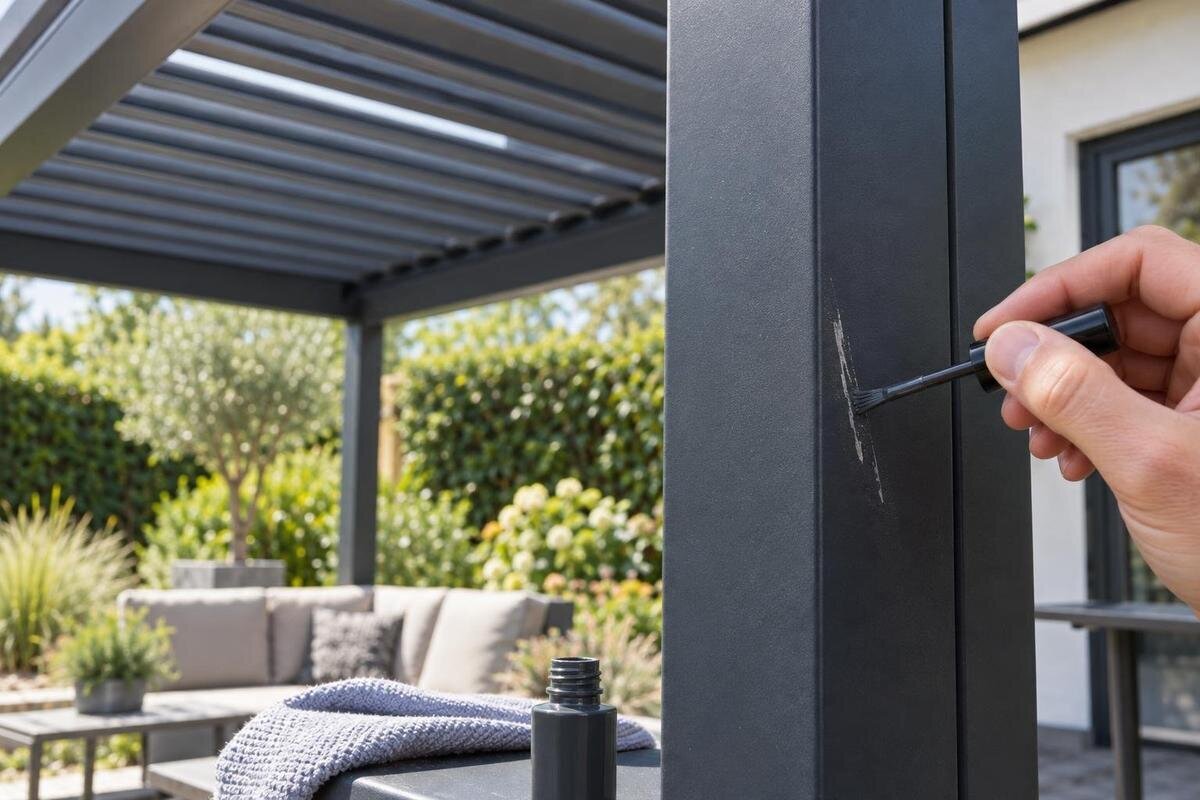
Pergola care and repair
A scratch on a powder-coated pergola can be residue sitting on top of the finish, a scuff that has changed its sheen, or a break through the coating. Those situations do not call for the same response. To avoid a mismatched patch, first establish what is actually damaged, record the exact pergola and finish details, and ask the seller or manufacturer which repair system is approved for that combination. A product listing, generic color name, or hardware-store touch-up paint cannot establish compatibility. This guide explains what to look for, what to photograph, and what to ask before applying anything.

01
Surface marks that can resemble scratches
Do not assume every pale line is a scratch through the finish. A rub from a chair, tool, packaging, or another object can leave transferred material; dust, dried residue, or a cleaning streak can also resemble a defect. View the area from several angles in diffuse light and compare it with the surrounding surface. Avoid picking at an edge, scraping with a blade, or rubbing harder to see what comes away. Those tests can turn an uncertain mark into a real coating break. Note whether the mark is a line, smear, patch, or change in sheen before you clean it.
Think about when the mark appeared and what may have contacted that part of the frame. A smear after moving patio furniture, a line noticed during unpacking, and a patch that appeared after cleaning provide different clues, although none establishes the damage by itself. Keep any earlier photos that show the same area, especially if the mark was present when the pergola arrived. If your paperwork names the Bloomcabin Bioclimatic Aluminum Pergola, use that full name in your inquiry so support can connect the photos with the correct product. Describe the contact or event if known, but distinguish what you observed from what you suspect.
Clean gently before judging the damage
Cleaning is part of the assessment because dirt can hide the edge of a scratch or create a false color change. Use the maintenance instructions supplied for the pergola, including the named cleaner and method. If those instructions are missing, ask the seller or manufacturer what approach is appropriate before using a stronger product. Avoid solvents, abrasive pads, scouring powders, metal brushes, and paint or adhesive removers unless the instructions specifically allow them. A product that lifts residue can also change the finish. Do not mix cleaners or leave a cleaner on the surface while you look for a repair kit.
Use a soft cloth only if the care instructions allow it, and follow their directions for wiping or rinsing. Let the area dry fully before judging color and gloss; a wet surface can look different. Do not use a fingernail, coin, blade, or sandpaper to test the scratch’s depth. If dirt remains in a seam, fastener recess, channel, or moving joint, do not force a tool into the opening. Record that location instead. Applying repair material in a gap can affect fit, movement, or water flow, so a mark beside one of these details deserves extra care.
02
Distinguish a scuff from a coating break
Once the surface is clean and dry, compare the mark with the undamaged finish beside it. A superficial scuff can change sheen or texture while leaving the coating continuous; transferred material may sit on top of an unchanged surface. A coating break is more likely when a chip or line visibly interrupts the finish or an edge is lifting. Color alone is not decisive: a bright streak might be transfer, and a dark spot does not prove that the substrate is exposed. Describe what you see, not a diagnosis you cannot verify, and do not probe the mark with a fingernail or tool.
Take extra care if the mark comes with flaking, blistering, a dent, a bent member, or discoloration spreading beyond the apparent impact. These signs may point to more than a cosmetic scratch, so request an assessment before applying touch-up material. Include the exact product name and affected area in your inquiry. For example, Bloomcabin Lean-To Pergola is a product identity, not proof that a particular paint or repair pen is compatible with its finish. Support will need your order details and a description of the damage, rather than a guess about what lies beneath the coating.
Record the scratch’s location and size
Map the mark to a named part of the pergola, such as a post, beam, edge, or other identifiable member. State where on that part it sits: near a corner, connection, end, or midpoint. If you use left and right, define the viewpoint in the photo so another person can follow it. Note whether there is one scratch or several, whether a dent or loose component is also present, and whether the mark has changed since you first saw it. Estimate the length and width without touching the finish; hold a ruler beside the area for scale rather than drawing on or pressing against the scratch.
Location matters because a mark on an accessible, stationary face is different from damage at a joint, fastener, moving mechanism, seal, or drainage path. Explain whether the affected surface faces outward, inward, upward, or toward an adjoining part. Note whether the line ends at an edge or continues around a corner, and whether it crosses more than one component. These details help support understand the extent of the damage without relying on a tightly cropped image. If your paperwork identifies Bloomcabin Pergola, include that name along with your part description. Use the component name from the manual when available; otherwise, a clearly labeled overview can resolve an uncertain description.

03
Why a close color match can still look wrong
Matching a powder-coated finish involves more than choosing a similar color. Repair material can differ in hue, gloss, texture, and the way it reflects light. A smooth liquid touch-up may look different from a textured or low-gloss surface even when its color description sounds close. The existing frame may also have weathered unevenly: a sheltered underside, a sun-exposed face, and an area behind an attachment can appear different. A color name or screen image can provide background, but neither guarantees that a new spot will blend with an aged coating.
Ask for the exact finish designation, including any available color code, sheen, or texture description, and have support confirm that the proposed material suits the finish and substrate on your pergola. A standard color reference or swatch can narrow choices, but it does not prove that a touch-up formulation is approved. When discussing the finish on your Bioclimatic Aluminum Pergola, distinguish the original finish specification from the appearance of the installed frame today. For a prominent surface, ask whether a spot repair is likely to remain noticeable from normal viewing positions and whether another approved repair approach would give a more consistent result.
Gather the pergola and finish details
Look for the confirmation, invoice, original product documentation, or service correspondence that names the pergola and its finish. Record the full product name, any model or order reference, the finish or color description as written, and the purchase date if available. Use labels that can be read without dismantling a frame or reaching into an unsafe location; do not remove a part to search for a stamp. If the paperwork gives only a broad color name, copy it exactly and mark the finish code as unknown rather than guessing.
Send clear photos of any identification label or document, keeping personal and payment details out of the image. A catalog reference such as the Lean-To Pergola model page may help you compare a product name, but check it against your own purchase records; the name on an older order may differ from current wording. If you bought through an installer or acquired the pergola with the property, explain which records are missing and ask what alternative identification support can accept. Keep uncertain details marked as unknown. Listing a guessed finish code as confirmed could lead to the wrong repair recommendation, even if the model itself has been identified correctly.
04
Ask for an approved repair system
Contact the seller or manufacturer with the model, finish information, damage map, and original photos. Ask directly whether an approved touch-up or repair system is suitable for that exact powder-coated assembly and whether the scratch is appropriate for owner-applied work. Request the full product name and written instructions, including the preparation method, permitted application area, conditions for use, and drying or curing requirements. If the answer is uncertain, ask whether a qualified service provider should inspect or refinish the area instead of filling the gap with a generic product.
If a warranty or future service option applies to your purchase, ask whether using the proposed material could affect it. Keep the answer with your records; a suggestion that a paint is close in color is not the same as confirmation of compatibility. For an inquiry about the model shown in Bloomcabin’s pergola product listing, ask support to distinguish the available repair options and confirm which applies to your installation. If an approved kit is unavailable, request details of a professionally assessed repair or a matched replacement component. Before ordering, clarify what the quoted option includes, who performs the work, and whether any additional assessment is needed.
Take photos that show the mark clearly
Send three views if possible: a wider shot that locates the damaged member, a mid-range view that shows the surrounding finish, and a close-up of the mark’s edge. Use diffuse light and hold the camera square to the surface for one view; a second angled view can help show changes in texture. Keep the lens clear, turn off filters, and send the original image rather than a screenshot or edited crop. Avoid flash glare and strong color casts. Place an ordinary ruler beside the area for scale, not on the scratch, and keep it from touching the finish.
Add a short caption with the product name, part location, approximate dimensions, and what happened if known. State whether the coating appears continuous, chipped, or uncertain; do not label it bare aluminum or another substrate unless you can verify that. For the model shown on the Bioclimatic Aluminum Pergola listing, include your own installation photos rather than using catalog images to illustrate the damage. Number multiple marks and use the same numbers in the captions and overview, so support can connect each close-up to its location. Preserve an unannotated copy of each image, and mention if reflections make an edge difficult to capture.

05
When a scratch needs professional assessment
Flaking, a crack-like line, blistering, significant denting, or a bent member calls for an assessment rather than routine touch-up work. The coating may not be the only issue, and paint cannot restore a distorted part or establish that an assembly is sound. If underlying material is visible, ask support whether the damage is suitable for an approved owner-applied repair or requires professional work. Do not sand, fill, drill, remove a frame component, or operate a mechanism just to inspect it. Damage on an overhead member, at a joint, on a moving part, or beyond safe reach from the ground should be assessed through the manufacturer’s service channel or a qualified professional.
Use the same caution if a scratch is spreading, several sections show similar peeling, or staining returns after the approved cleaning method. These details may help a service team assess the cause, but a photograph alone may not settle it. Avoid covering the area with sealant, clear coat, or another paint while waiting: it can hide evidence and make later approved work harder. Follow any safety instructions supplied for the structure, and leave work requiring disassembly or access equipment to a qualified service provider.
Keep a record of any approved repair
Keep the support reply, finish code, repair-system name, instructions, and date with the pergola’s purchase records. If a product is approved, save its container label and batch details where available; later work may need the same identification. Record the exact area treated and take a before photo under ordinary light. For a pergola identified through the Lean-To model listing, file the repair information under the full name used on your order, along with the relevant service reference. Record who performed the work and any follow-up instructions. Follow the product label for storage, and check its stated shelf life before saving leftover material for another repair.
Use the approved system’s instructions to judge when the repair is ready for exposure, cleaning, or normal use. Do not wash, polish, or add another layer just because a touch-up looks different while wet or before its stated cure period; ask the supplier if the result does not match the instructions. Even an approved local repair may remain visible because sheen, texture, and aged color are difficult to reproduce perfectly. If the area worsens or an edge begins lifting, document the change and return to support rather than layering on another unapproved product.
Frequently asked questions
Can I use automotive touch-up paint or hardware-store spray paint?
Only if the pergola’s manufacturer or seller confirms that the exact product is suitable for its finish and substrate. A similar color does not establish compatibility, gloss, or texture. Ask for the repair product by name and its instructions; do not apply an unapproved paint just to test it on a small spot.
Does every scratch need to be repaired?
No. A mark may be residue or transferred material, and an intact coating scuff is different from a chip through the finish. Clean only by the approved care method, then inspect the dry area. If the coating appears broken, is lifting, or the mark comes with a dent, ask for an assessment.
Will a RAL color code guarantee a match?
No. A code can help identify a color, but it does not confirm that a particular touch-up product is compatible or that its sheen and texture will match. The installed finish may also have weathered. Give the code to support as one piece of information and ask them to confirm an approved repair system.
What information should I send when asking for a repair recommendation?
Include the pergola’s full product name and any model, order, or finish reference you can find. Describe the mark’s location and approximate size, and say whether the coating looks intact, chipped, or uncertain. Add a wider photo for context and clear close-ups. Keep personal and payment details out of images.
What should I do if I can see material beneath the coating?
Do not sand, scrape, or cover it with generic paint. Describe what you can see without guessing what the underlying material is, and ask the seller or manufacturer whether an approved owner-applied repair is suitable. If the area is flaking, dented, bent, or near a joint or moving part, request a qualified assessment.
A good repair decision starts with identifying the mark, not covering it. Separate residue or a surface scuff from a possible coating break, document the affected part, and have the proposed system matched to the pergola and finish details. A small approved touch-up, a service assessment, or a replacement component may be appropriate in different cases; color alone cannot decide which. Keeping the written guidance and repair details with the product records makes it easier to assess later changes without guessing.
