
Calculating Whether a Restaurant Pergola Can Pay for Itself
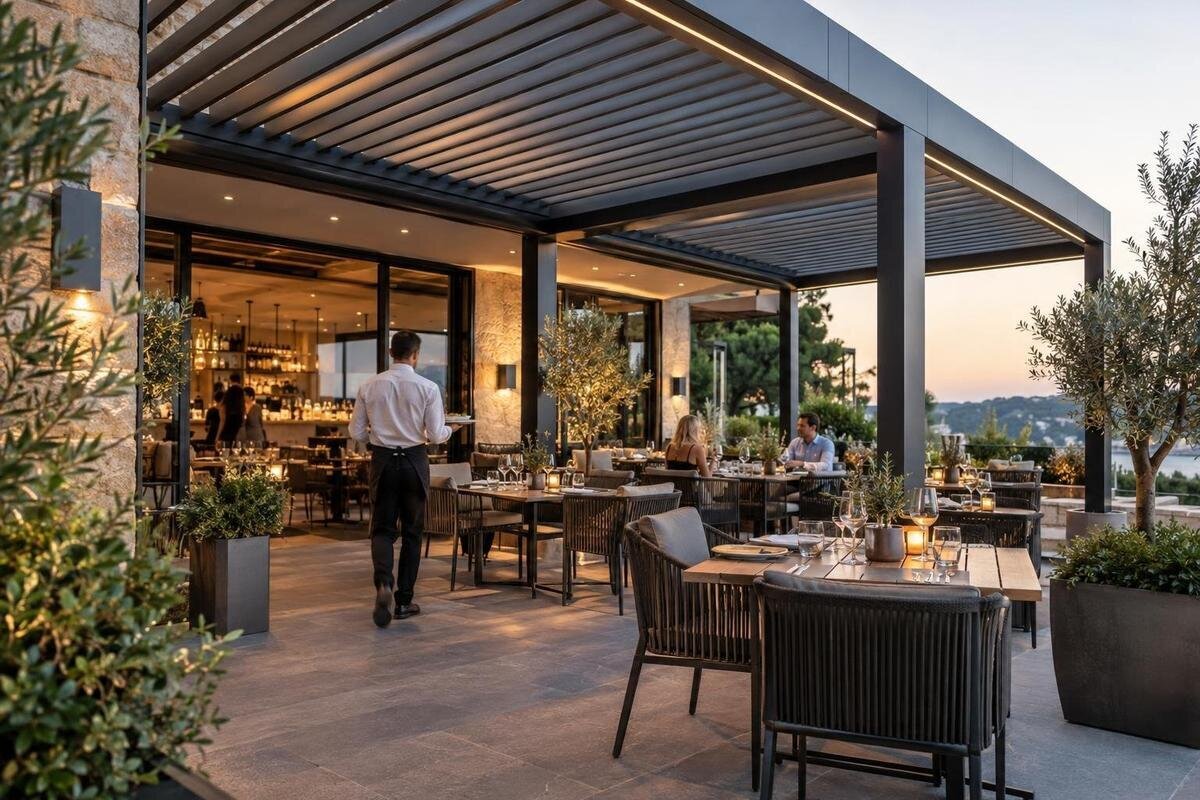
Restaurant pergola planning
Restaurant operators often ask whether a pergola can pay for itself, but the answer is not determined by a product name, a covered footprint, or a busy patio on one sunny weekend. The useful test is whether the project can create additional contribution—after variable costs—and cover its installed cost and ongoing expenses within a period the business accepts. That depends on service days the project genuinely adds, demand for extra covers, the site’s operating layout, and a complete cost estimate. The model below keeps each assumption visible, separates sales from contribution, and lets you test a conservative case against a more optimistic one. It is a decision tool, not a forecast or a promise of higher revenue.
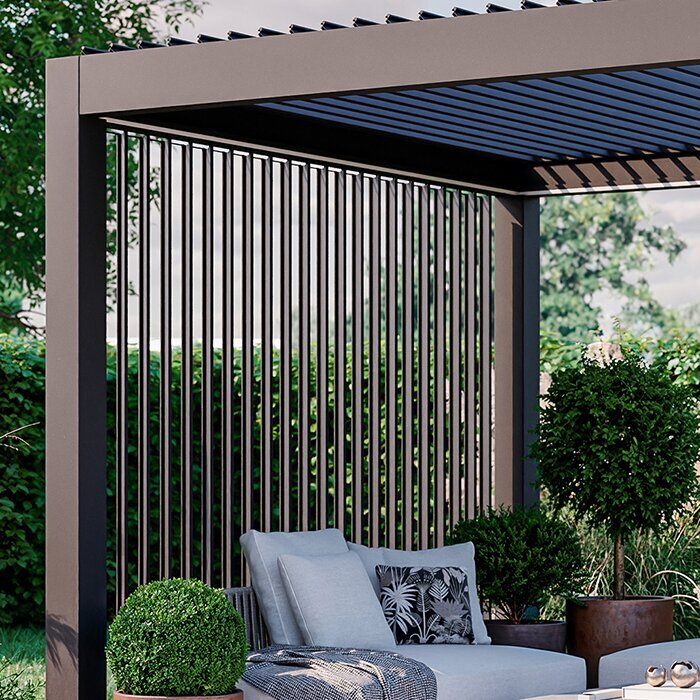
Define the payback test
Define the decision before comparing options. Simple payback is the time needed for net incremental cash contribution to recover the initial project investment: all-in upfront cost divided by annual net benefit, when that benefit is positive. A five-year target is a management hurdle selected for this project, not an industry benchmark. For a more detailed investment comparison, model yearly cash-flow timing and financing separately; an accountant or financial adviser can address tax treatment and any required return. Do not use return on investment as a substitute for a stated payback method: one payback period does not show cash timing or value after the recovery date.
The baseline is what the restaurant would do without the pergola. If the same guest would have eaten indoors, moving the table outside is not automatically an incremental cover; if the patio already operates through the conditions in your model, that day is not newly usable. Count only benefits caused by the proposed change, less sales or capacity shifted from elsewhere and costs added to serve it. A product page can identify the model under consideration, such as Bloomcabin Lean-To Pergola, but its name or image does not establish site suitability, added sales, or payback. Write down the evaluation period, baseline, and definition of an extra cover before modeling.
Estimate the total project cost
Build a one-time budget from written project scope. Include the product and options actually quoted, delivery, site survey or design fees, site preparation or support work specified by the project team, assembly or installation, and applicable planning or review costs. Add changes to paving, drainage, furniture, lighting, or service routes when the project requires them; have qualified providers price electrical work. Include applicable taxes in the project budget. Keep borrowing costs and loan payments in a separate financing analysis so they are not mixed into the unfinanced payback calculation below. Ask bidders to list exclusions and assumptions so their estimates can be compared on the same scope. Do not infer site, anchoring, or electrical costs from a photograph or a generic product price.
Separate the project outlay from annual expenses, and show when payments are due if cash flow matters. Put temporary closure, lost patio contribution during installation, staff training, and opening-day setup in a one-time or transition line rather than hiding them in maintenance. For a proposal involving Bloomcabin Pergola, record the selected configuration beside the supplier’s quote and identify which other providers are responsible for site work and installation. This makes omissions easier to spot and helps avoid budgeting for work already included in another contractor’s scope. If management adds a reserve for uncertainty, label it separately from quoted costs so the estimate remains auditable.
Count only days the project can actually add
Build a service calendar from the restaurant’s operating records, not climate averages alone. Review prior seasons where records are available, noting patio closures or reduced service by date, time, and cause, and whether indoor seating absorbed the demand. Separate weather-related limits from staff shortages, scheduled closures, maintenance, and weak demand: a pergola cannot be credited for a day the restaurant would not have served outdoors for another reason. If daily records are incomplete, use manager logs and local weather history as context, then mark the estimate as uncertain rather than presenting it as observed fact.
Estimate days the proposed project would make meaningfully usable, not every day with rain, wind, sun, or low temperatures. Some conditions may remain unsuitable, and operating policy, staffing, furniture, and the selected design affect whether service is opened. Create low, base, and high counts, stating which conditions each assumes the project addresses; verify those assumptions through product documentation and a site-specific review. The Bloomcabin Bioclimatic Aluminum Pergola listing identifies one product for comparison, but its name does not establish weather coverage, operating days, or suitability for a restaurant.
Estimate additional covers from real demand
Seats indicate capacity, not forecast sales. Draw the proposed service area from the actual floor plan and count tables that remain after the project team accounts for supports, furniture, staff routes, and needed clearances. Then estimate covers by shift using the restaurant’s own table turns and seat utilization, rather than multiplying a nominal seat count by an assumed full dining-room cycle. Lunch and dinner may have different demand and staffing limits, so estimate them separately before totaling the year. Use the net capacity the restaurant can serve, not the maximum number that could be drawn on paper.
Look for evidence of unmet demand, such as reservation requests, waitlists, recorded turnaways, or canceled outdoor bookings, and check it against staffing and kitchen capacity. Compare expected covers with and without the project; only the difference belongs in the case. Guests moved from indoors count only if their former seats can actually be resold and records support that chain. When evaluating the Lean-To Pergola option, have the proposed configuration shown on the restaurant’s floor plan, with a table count for each shift. Note whether tables accommodate the party sizes that usually request outdoor seating. Four available seats do not necessarily accommodate two separate parties, so a seat-based estimate should be checked against actual booking patterns.
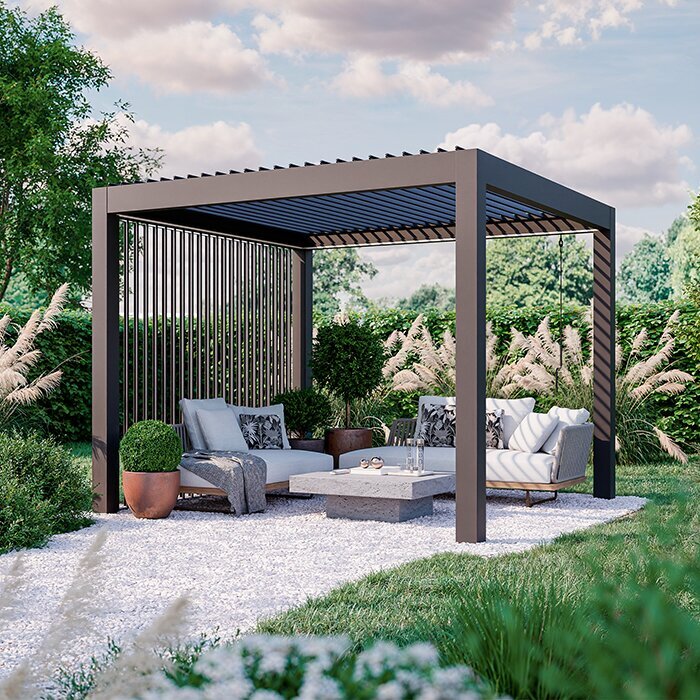
Use contribution per cover, not check size
Convert extra covers into contribution dollars. For each daypart, estimate net sales retained per incremental cover, then subtract food and beverage costs, discounts, payment fees, disposable supplies, and other expenses that rise with each customer. The remainder—not the check average—is the contribution available to offset the project. Use the restaurant’s point-of-sale records and cost categories; a seasonal menu mix, happy hour, or beverage-heavy patio can make contribution per cover different from the dining-room average. Apply the same accounting definition of retained sales throughout, and account for pass-through amounts consistently.
Include labor where it changes because of added service. If a busier patio requires another server, support worker, or longer shift, include that extra labor in the relevant service-day or annual cost line. Do not subtract the same expense from both contribution per cover and operating costs. Conversely, do not assume a scheduled shift has spare capacity just because payroll is already set: verify who will serve, clear, seat, and close the additional area. If contribution varies sharply by shift, total covers and contribution by shift instead of relying on one optimistic average.
Include recurring operating costs
Annual operating costs are different from per-cover variable costs. List additional cleaning, opening and closing time, seasonal setup or storage, routine service, inspections recommended for the selected project, repairs, replacement consumables, and utility use. Include recurring service or insurance costs only when supported by provider or insurer information. Add supervisor and staff time if it is not already counted. Assign a source and responsible department to each line; maintenance included is not a useful annual estimate unless the scope, frequency, and cost are known.
Use documentation for the selected configuration and request written estimates for work that is not covered; do not borrow maintenance costs from a different structure or assume there will be no repairs. For an option identified through the Bloomcabin Pergola model page, ask the project supplier for the applicable care information before assigning maintenance tasks and costs. Distinguish work staff can perform within those instructions from work requiring a service provider. Keep a budgeted repair allowance separate from a recurring service contract, and account for expected downtime without also counting the same lost contribution elsewhere. Any modeled savings in labor or other costs should be supported by the restaurant’s records rather than entered as an automatic benefit.
Calculate payback and break-even covers
For a simple, unfinanced model, let I be the all-in one-time cost, D the newly usable service days per year, N the incremental covers on each such day, C the contribution per cover after variable costs, and O the additional annual costs not already included in C. Annual net benefit is D × N × C − O. Simple payback is I ÷ annual net benefit when annual net benefit is positive; otherwise, the assumptions produce no simple payback. For a positive target horizon H and positive C, required additional annual covers are (I ÷ H + O) ÷ C. If D is also positive, divide that figure by D to find required covers per newly usable day. These formulas assume a repeating annual pattern and exclude financing and discounted cash flow.
For arithmetic only—not a product price, industry norm, or forecast—suppose an operator enters I = $48,000, D = 60, N = 8, C = $14, and O = $3,000. The modeled contribution before annual costs is 60 × 8 × $14 = $6,720; after O, net annual benefit is $3,720, so simple payback is about 12.9 years. For a five-year hurdle, (48,000 ÷ 5 + 3,000) ÷ 14 ÷ 60 = 15 additional covers per newly usable day. Since the example assumes eight, it misses that target. Replace every input with actual records and quotes. If comparing a proposal for the Bioclimatic Aluminum Pergola, enter its quoted total project cost in a separate worksheet and retain the evidence supporting each operating assumption.
Stress-test the assumptions
Prepare low, base, and high cases instead of relying on a single estimate. Change newly usable days, additional covers, contribution per cover, initial cost, and annual expenses separately, and show why each value changes. Avoid combining an optimistic assumption for every input into one case without evidence. A low case might reflect observed service restrictions and demonstrated unmet demand; a base case can use current booking patterns and documented capacity. A high case should still have a credible basis and should not be presented as the expected result. Keep the source and date beside each input so management can distinguish measured facts from judgment.
Compare break-even covers with reservation history and the number of guests the actual shift can serve. Test delays, added site work, fewer usable days, lower covers, lower contribution, and higher operating expense. A proposal that pays back only in the high case is not equivalent to one that remains viable in the low case; whether the risk is acceptable is a business decision. For a proposal involving Bloomcabin’s Lean-To Pergola, use the same demand baseline as for other options and change only inputs supported by differences in their documented scope. Also compare the recovery period with the restaurant’s expected use of the site: a payback extending beyond that period may not support the investment. Note which changed assumption would make the decision fail.
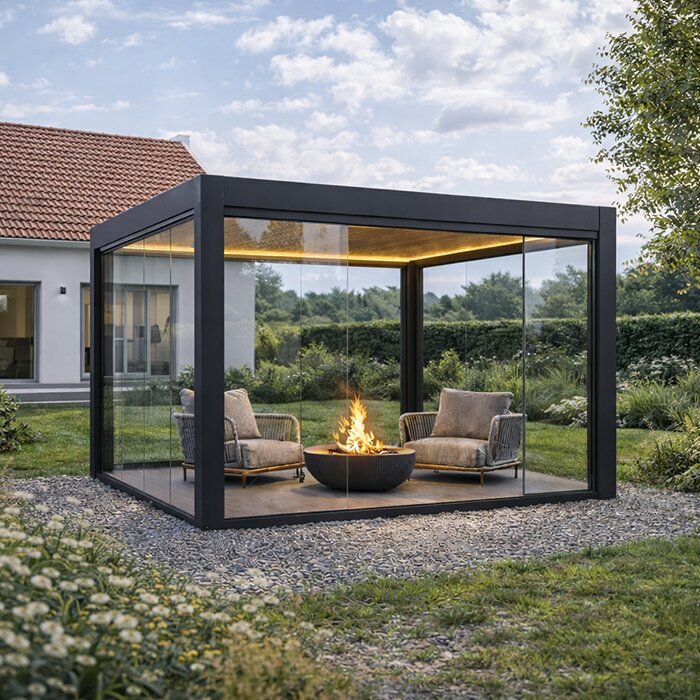
Confirm the layout and site review
Verify the footprint and operating flow before treating covers as achievable. Review an actual plan showing proposed support locations, tables, routes for staff, access paths, exits, host queue, service stations, and existing patio use. Added tables can be offset if the layout creates pinch points, blocks equipment, or lengthens staff routes; estimate net covers and labor from the plan, not an idealized square-foot figure. Include installation time, restricted areas, and any expected service closure in the cash model. The restaurant’s operating requirements belong beside the drawing, not in a separate assumption that is never checked.
Ask qualified project professionals and relevant local reviewers to assess applicable planning, access, fire, building, and site constraints for the restaurant and the exact proposal. The checks and their cost vary by site; this article is not a substitute for a project review. If a quote names the Bloomcabin Pergola listing, provide reviewers with the exact proposed configuration and the operator’s requirements rather than assuming the catalog label proves commercial suitability. Put required changes, review fees, and any resulting operating limits in the base case instead of discovering them after the financial model is complete.
Track results against the forecast
Set a baseline before work begins. For comparable dayparts, record patio status, covers, party counts, booking or turnaway information, check mix, labor hours, and closures. After opening, record the same fields and note other changes such as menu prices, promotions, hours, staffing, nearby construction, or local events. Compare like with like and distinguish guests who moved outdoors from genuinely additional guests. An increase in patio covers alone does not establish an increase in total restaurant covers or contribution, especially if indoor covers fell at the same time.
Choose a review period and decision rule in advance, with management and accounting input. Compare actual incremental contribution and recurring costs with the low and base cases, then update cumulative cash flow. Do not annualize a short busy stretch without allowing for slower periods, and do not treat a weather difference as proof that the model was sound or unsound. If records show fewer usable days or covers than assumed, revise the payback calculation and examine whether operating practices can change within approved site limits. Do not retain a revenue gain in the case solely because it appeared in the budget.
Frequently asked questions
What is the basic payback formula for a restaurant pergola?
Divide the all-in initial cost by annual incremental contribution after recurring costs, using a simple, unfinanced model. If that net contribution is zero or negative, the assumptions produce no simple payback. When cash flows change from year to year, use a year-by-year analysis instead.
Should I count added seats or added covers?
Count genuinely additional covers: guests the restaurant serves because of the project, beyond what it would have served otherwise. Seats describe capacity, not demand. A guest moved from an indoor table to a patio table is not automatically an extra cover.
Should the model use sales revenue or profit?
Use contribution after costs that rise with each added cover, then subtract additional annual operating costs. Gross sales and average check size overstate the amount available to repay the investment because they do not account for food, payment, labor, and other expenses.
Which project costs belong in the calculation?
Include the quoted product and options, delivery, site work, installation, applicable review or permit costs, and other changes required for the project. Add recurring cleaning, maintenance, utilities, and extra staff time when supported by estimates. Avoid counting the same cost twice.
How many additional service days should I assume?
Use the restaurant’s operating records to identify days when the patio could not serve, then count only days the proposed project is verified to make usable and the restaurant would actually open. If evidence is limited, show low, base, and high assumptions instead of presenting one estimate as certain.
Use the calculation as an investment test, not a promise: a pergola pays back only when attributable contribution across realistic service days covers one-time and recurring costs within the restaurant’s chosen horizon. A useful model states its baseline, names the source for every number, separates per-cover margin from annual expenses, and survives a conservative case. If key evidence is missing, treat those inputs as open questions rather than assumed sales. Actual quotes, demand records, and a project-specific layout and site review turn a hopeful seat-count estimate into a business case management can revisit.
