
Solar-Powered Pergola Lights: What Can They Provide?
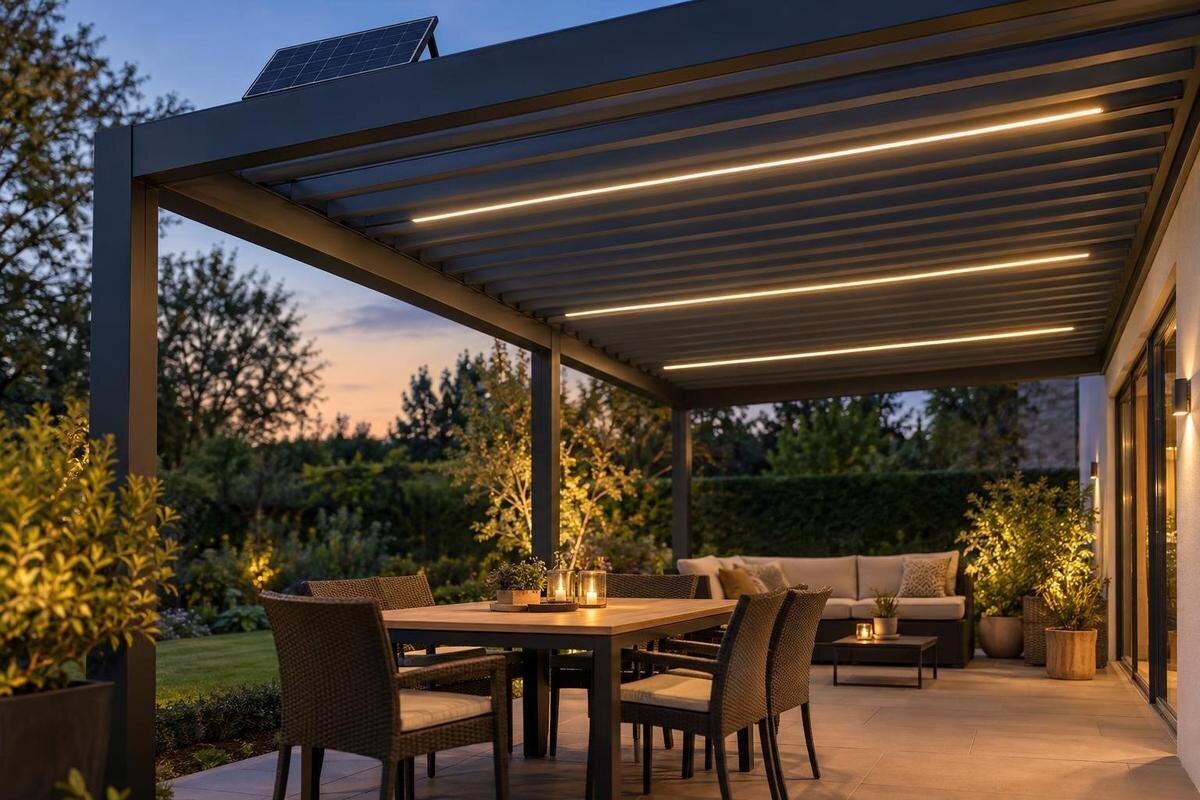
Pergola lighting
Solar-powered pergola lights can suit accents and gentle evening ambience, but they do not collect unlimited energy during the day. Their output after dark depends on the panel’s exposure, the battery’s charge, the selected brightness, and the hours of use. The useful question is not simply whether a light is solar-powered; it is whether the exact system can deliver enough light, across the area you need, for your activities and the season. That distinction separates pleasant background lighting from dependable illumination for dining, reading, or detailed work.
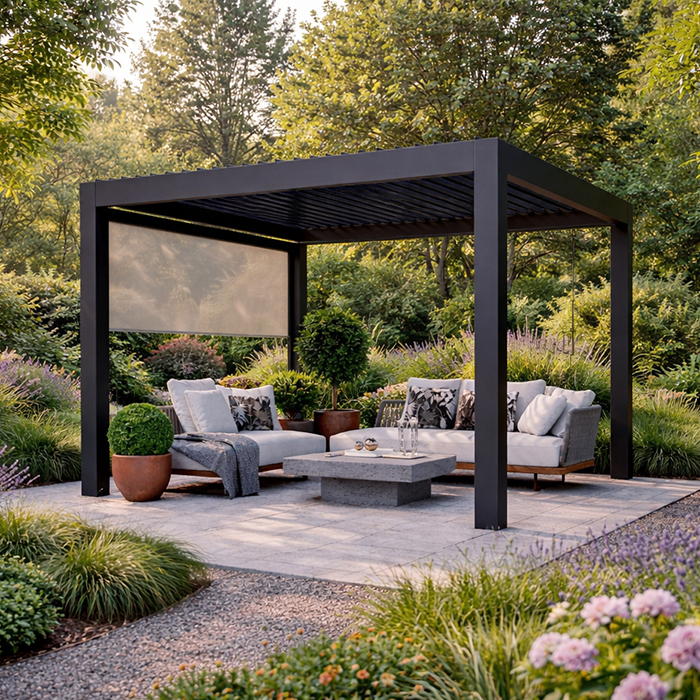
Define the lighting task before choosing a solar kit
Write down what the light must do before comparing products. A strand that marks a roofline or adds a soft glow has a different job from a fixture meant to illuminate faces across a dinner table, a path to a door, or a surface used for reading. Name the main activity, the part of the pergola involved, and the time of evening when the light needs to work. If you expect several uses, rank them. Otherwise, an ambience light may be judged unfairly against a task-lighting need, or a bright unit may be bought for an area that only needs a subtle accent. Include how long people typically stay outside, not just when the light is switched on.
Sketch the area you want illuminated instead of assuming one fixture will cover the whole roof. Mark the table, walking routes, entrances, and any corners that should remain darker; furniture and posts can interrupt a beam. The listed Bloomcabin Bioclimatic Aluminum Pergola options span 97–258 sq ft, but floor area alone says nothing about the coverage of a separately selected light. Use the actual configuration and furniture arrangement to plan zones. Fixture position, beam pattern, and panel exposure all matter, so compare the lighting system with both the task and the space it is expected to serve.
Lumens, beam spread, and comfortable visibility
Check more than a lumen number. Lumens describe the amount of light a source emits, but the beam pattern and distance help determine where that light lands. A narrow beam may make a small area bright and leave nearby seats dim; a diffuse source may spread light more widely but feel less intense at a particular surface. When specifications give illuminance at a stated distance or area—often expressed in foot-candles or lux—compare it with the intended task. If they give only total lumens, ask for a beam diagram or evaluate the light at the planned mounting height. A product photo cannot establish brightness or coverage.
Find out whether stated output applies to one lamp, the whole set, or a peak mode. If several lamps share a panel and battery, they draw on the same stored energy; independently powered units have different limits. A dim setting may use less energy, but compare only runtime figures given for that setting. When planning lighting around a Bloomcabin Lean-To Pergola, mark the table and path as separate targets on your layout. Compare how much of each target the proposed beam covers rather than dividing total lumens by the pergola’s floor area. Light color and glare can affect comfort, but neither compensates for inadequate illumination where people need to see.
The panel needs sun where it will actually sit
Solar charging is site-specific. A panel needs access to daylight, and direct sun generally offers a stronger charging opportunity than deep shade. Trees, neighboring buildings, house overhangs, and the pergola itself can interrupt that access; clouds and dirt or debris on the panel can also affect the energy collected. Shade moves, so a spot that looks sunny at noon may be shaded later, while charging time remains. The usable window changes through the year as day length and the sun’s path change. A runtime measured under one set of conditions will not predict the charge available at every home.
Identify where the panel would sit and observe that location at several times of day. Consider the months when you most want the lights, not only the season in which you shop. If a product uses a separate panel, check its permitted placement and cable reach rather than assuming it can go anywhere. As you consider the Bloomcabin Pergola for your property, mark the proposed panel location on the same site sketch as nearby trees and buildings. Record when shade reaches that location and whether a different approved position would improve exposure. A sunny seating area does not necessarily mean the panel itself will receive enough sun for your intended evening use.
Panel placement around moving roof components
Pergola roof geometry adds another layer to panel siting. A panel built into a fixture may sit beneath a roof edge, while a separate panel may need a clear, approved position away from the light. Slats, a roof surface, a wall, or nearby plants can cast shadows onto the charging area. On a roof with adjustable or moving components, the shadow pattern may change as the roof position changes; do not assume a panel stays exposed in every configuration. Check that the proposed position will not interfere with roof operation, drainage, doors, or access for maintenance.
Ask the lighting supplier or pergola provider for the exact mounting guidance before choosing a bracket or location. A convenient attachment point is not automatically an approved one, particularly if it is on a moving component. When considering a bioclimatic aluminum pergola configuration from Bloomcabin, include your proposed panel position in the configuration discussion rather than assuming an accessory will fit. The model name alone does not establish panel-mounting approval. Explain which roof positions you expect to use during the charging period, so the provider can assess the arrangement against the applicable documentation. A remote panel helps only when both its exposure and its permitted cable arrangement suit the location.
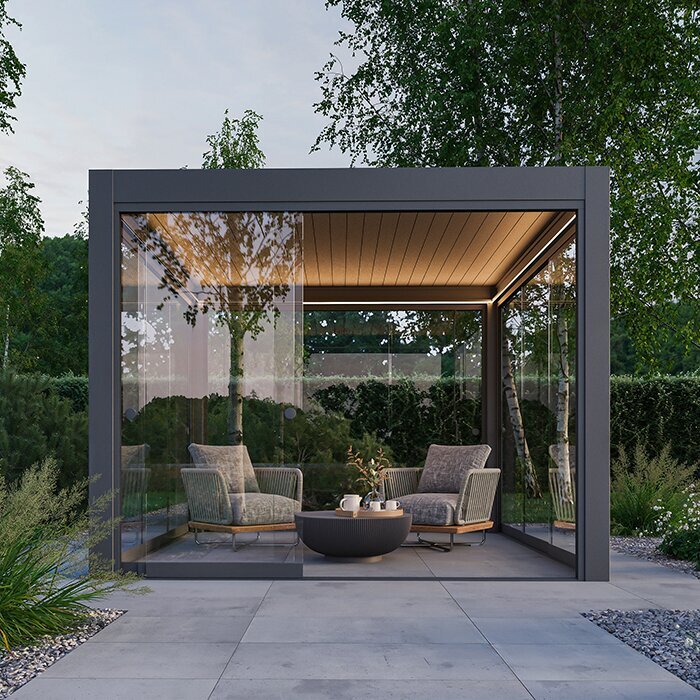
Treat runtime claims as conditional
Read a runtime claim as a condition, not a promise. “Up to” hours may refer to a fully charged battery, a low-output setting, or a particular test environment. Your result can vary with the sunlight collected, brightness level, battery condition, and how long the light runs each evening. Some products may dim as stored energy falls, which can be a problem if a task requires steady visibility. Look for runtime figures by operating mode and the charging conditions behind them. When those details are missing, do not turn a best-case headline into a dependable nightly schedule.
Translate your routine into a requirement: when should the light come on, how many hours must it remain useful, and will it be used after cloudy days? For example, lighting needed from dinner until guests leave has a different schedule from a brief walk to the door. If you are planning a lean-to pergola from Bloomcabin, describe that schedule alongside the seating layout when discussing separately selected lighting. Ask whether the stated runtime means steady output or includes a dimmer final period. For consecutive evenings, also check documented battery storage, recharge conditions, and replacement options. A long runtime at a setting too dim for your task is not a useful match.
Aim light at the places people use
Place fixtures with people’s sightlines and routes in mind, not just wherever attachment seems easiest. At a dining table, light aimed into seated people’s eyes can be uncomfortable even if overall output is modest. A path or doorway may need a visible cue near the ground, while an accent on a post serves a visual purpose rather than lighting a task. Draw the table, chairs, entrance, steps, and frequent walking line on a simple plan. Mark the direction of each beam and consider shadows from people or furniture, especially where several lights could overlap.
Tie the drawing to the actual footprint and furniture arrangement, including any roof sections that move. For a layout based on the Bloomcabin Pergola product page, use the dimensions of your selected configuration rather than the apparent proportions in a photograph. Include chair pullout space and the route people take around an occupied table; those positions may reveal shadows that an empty patio does not. Avoid blocking controls or battery access, obstructing drainage, or placing a cable across a walking route. If a trial is possible, view the light from seated and standing positions after dark. Check whether a bright source appears directly in your line of sight, even when the surface below it looks adequately lit.
Verify weather suitability and mounting approval
Outdoor suitability applies to the exact fixture and its exposed components, not to solar lighting as a category. Check the manufacturer’s ratings and instructions for the lamp, panel, cable connections, battery enclosure, and control unit, as applicable. Rain, windblown debris, moisture, and temperature exposure vary by location, even under a pergola. A roof overhead does not make an indoor-rated component suitable outside, and a rating for one part does not automatically cover the whole kit. Review cleaning and battery-care guidance, too; the panel needs to remain clear enough to collect light.
Mounting deserves the same care as weather protection. Confirm that the fixture’s support is approved for the exact pergola component and will not impede operation or maintenance. Do not alter a structural or moving component based on a guess or a generic accessory photo. If you are considering the Bloomcabin Bioclimatic Aluminum Pergola product page, request documentation for the proposed attachment before buying the light or bracket. Include the fixture, panel, and any separate battery enclosure in that request, since each may need its own approved support. Ask the appropriate qualified professional to assess any attachment not covered by the instructions; fixed electrical connections require qualified electrical input.
Compare solar and wired lighting by reliability
Solar and wired lights address different constraints. A self-contained solar fixture does not rely on an outdoor supply at its light location, but its use depends on the panel, stored charge, and weather. A wired system can be planned for consistent output and scheduled use, but its power route, outdoor-rated equipment, mounting, and controls must suit the setting. Neither label guarantees a good result: a poorly placed panel can disappoint, while an unsuitable wired fixture or unreviewed route creates its own problems. Compare how each plan meets the task, rather than choosing only because it avoids a cord.
Compare the full ownership requirements, including seasonal use, controls, battery replacement, maintenance access, and any professional work needed for a fixed supply. Solar accents can remain optional while a separate light handles a task that must be illuminated reliably. When reviewing a Bloomcabin Lean-To Pergola as the structure, ask which lighting options are documented and what each proposed system includes. Distinguish the cost and scope of the structure from those of the lighting equipment without assuming that lamps or power provisions are included. Have a qualified electrical professional assess any fixed supply. A combined plan should also let you operate the essential light without depending on the solar battery’s charge.

Test the plan against your site and schedule
Prepare a short site brief before ordering. Record the primary task, the areas to light, the time the lights should operate, and the visibility needed at each point. Note the likely panel position and what shades it through the day. Compare the selected product’s output mode, beam information, charging conditions, runtime, weather rating, battery details, and approved mounting locations with that brief. If a specification says only “bright” or “all night,” ask for measurable details and the conditions behind the claim. Specific questions make it easier to judge a promise against your actual use.
If a trial is possible, assess the same fixture in its intended location after a representative charge, using the setting you expect to leave on. Look at the table, path, and faces from normal seated and walking positions. Note whether the light remains useful for the required hours and whether glare or dark gaps matter. A daytime display, product photo, or quick test after a short charge cannot establish performance through an entire season. Repeat the assessment under the conditions that matter most, or compare documented operating conditions with your site. Judge the task, not how dramatic the fixture looks by itself.
Where solar pergola lights make sense
Solar lights are a sensible candidate for decorative accents, gentle background light, or occasional wayfinding when the panel has good sun exposure and you can accept some variability. They may also serve more demanding tasks if the exact model’s documented output, runtime, and approved placement meet those needs; the power source alone does not determine suitability. Set a realistic priority: a softly lit seating area can feel inviting without making every corner bright, while a work surface calls for clearer, more consistent illumination. Match the system to the main job instead of expecting one small kit to serve every purpose.
If you need broad, bright coverage every night, a fixed late-hour schedule, or light in a location where the panel cannot get sun, do not make an underspecified solar kit the sole source. Consider an appropriately documented wired system for the critical task, with solar accents as a separate layer if the arrangement is approved. If flexible ambience is enough and a shorter or dimmer evening after poor charging is acceptable, solar may fit well. The deciding evidence is the exact light’s output and operating conditions at your site—not the word “solar” on its packaging.
Frequently asked questions
Can solar lights charge under a pergola roof?
They can charge only if their panel receives enough daylight. A panel shaded by the roof may collect too little energy for the runtime you expect. A separate panel can help only when the light is designed for remote placement and the manufacturer’s instructions allow the proposed location and cable arrangement.
Will solar pergola lights stay on all night?
Not necessarily. Runtime depends on the charge collected, the battery’s condition, the brightness setting, and the product’s stated test conditions. Compare runtime figures for the mode you plan to use, and consider whether the light must last through several cloudy days—not just one fully charged evening.
Are solar string lights bright enough for a dining table?
They may create pleasant background light, but that does not guarantee enough visibility for eating, reading, or detailed tasks. Check the light’s output and beam pattern, and look for illumination figures at the surface when available. A photo or a lumen total alone cannot show how bright the table will be.
Can I attach a solar panel to a pergola roof?
Use only a location and mounting method approved for the exact panel and pergola configuration. Check whether the placement will shade the panel, interfere with moving components, or obstruct access and drainage. Do not assume that a convenient surface or generic bracket is an approved attachment.
Can I combine solar and wired pergola lighting?
Yes, if the selected equipment and mounting arrangements are suitable. Solar lights can serve accents while a separately planned system handles a task that needs more consistent illumination. Have a qualified electrical professional review any fixed electrical connections and use the instructions for the exact equipment.
Think of a solar pergola light as a small energy system matched to a particular job. When the panel gets enough seasonal sun and the required brightness and runtime are modest, it can be a practical source of evening ambience. When visibility must be broad, bright, and dependable, the exact product documentation—and a backup or separately planned source—matters more than the solar label.
