
Squeaking Pergola Mechanisms: When Is Maintenance Needed?
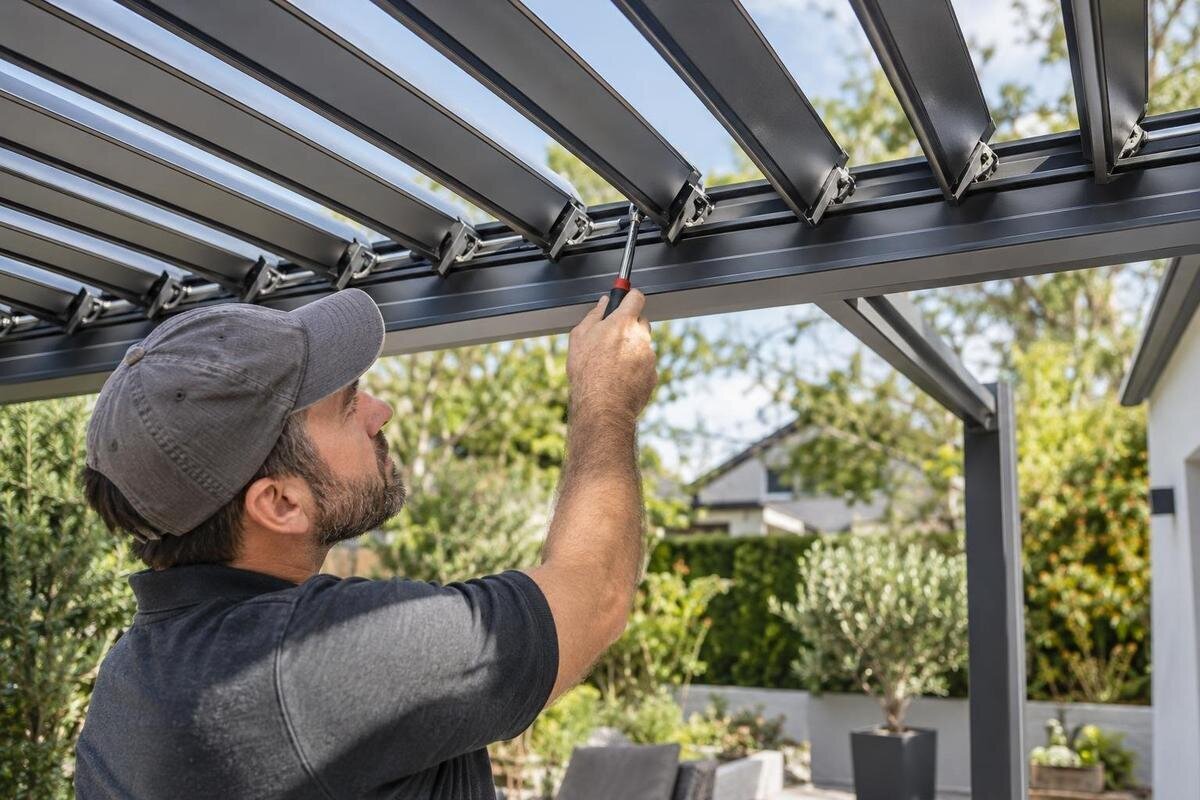
Pergola maintenance
A squeak from a pergola mechanism is a useful clue, not a diagnosis. Note when it happens, where it seems to come from, and whether movement has changed. Check the instructions for your exact model before cleaning, lubricating, or adjusting anything. If the mechanism binds, moves unevenly, or a component appears loose or damaged, stop operating it and contact the installer or a qualified service provider rather than testing a quick fix.

Before requesting service 1
What a pergola squeak can tell you
A squeak is an observation, not proof that a joint needs oil or a part has failed. Similar sounds can come from contact between moving components, friction at a pivot or guide, a fastener that needs attention, an object brushing the frame, or another source. Sound alone cannot distinguish ordinary contact from wear, misalignment, or resistance in a drive mechanism. Pergolas differ in how their moving parts are designed, so advice for a similar-looking model may not apply to yours. The useful question is not just whether it squeaks, but when it happens, where it seems loudest, and whether movement has changed. Keep your description neutral until someone with the right model information assesses it.
Describe the sound in everyday terms: a brief chirp, a high squeak, a repeated creak, a scrape, a click, a rattle, or a grind. These words are not a technical diagnosis, but they help distinguish the first symptom from a later change. Note whether the sound coincides with movement, happens at one point in travel, or occurs while the mechanism is still. An object tapping the frame in wind can seem mechanical; do not reach into gaps or move parts by hand to test that idea. Record what you can observe, not a guessed cause. A change from squeaking to scraping or grinding is worth reporting as a new symptom.
Look for a pattern before treating the noise
Timing often helps more than repeated attempts to hear the noise. Note whether it occurs as the mechanism begins to move, only partway through travel, near the end, in both directions, or after the structure has been idle. Record whether it happens during normal operation and whether the mechanism completes its usual movement without hesitation. Do not repeatedly open and close it to recreate the squeak. If conditions are outside the manual’s operating guidance, or you cannot observe from a safe position, skip the test. A one-time sound that does not recur can be logged without an immediate repair guess; wait for an ordinary, safe opportunity to observe again.
Track how the sound changes rather than setting your own lubrication deadline. Write down the first date, how often it returns, whether it grows louder, and whether resistance, uneven travel, or another sound appears. Note relevant events such as recent cleaning, installation, service, impact, or strong wind, but treat timing as context rather than proof of cause. Record wet or dry conditions if they are apparent, without assuming weather explains the noise. Use the maintenance schedule in the exact manual; noise alone does not establish a universal service interval. A recurring or worsening squeak warrants asking the installer or a qualified service provider for model-specific advice.
Before requesting service 2
Locate the sound from a safe position
Try to locate the sound without taking anything apart. With the pergola stationary, look from a normal standing position for an obvious object touching the frame or debris in an accessible area; do not reach between moving parts. If ordinary operation is safe and the manual permits it, observe from a clear position and note whether the sound seems to come from one side, a roof edge, a post, or a wall connection. Describe sides consistently, such as the left side when viewed from the yard, so the service provider can interpret your notes. Include the model name from your records; the Bloomcabin Pergola product page can serve as a catalog reference, though your installed unit’s documentation is needed to identify its components.
Keep hands, loose clothing, phones, and tools outside the mechanism’s movement area. Do not stand beneath or lean over moving sections, climb on the frame, use a chair or ladder to reach an elevated component, remove a cover, or loosen a fastener. A video from a safe distance is more useful than a close-up made beside a moving roof. If the sound occurs only while the pergola moves and there is no safe place to observe it, do not try to make a recording; explain that when requesting service. Avoid placing a phone on the frame or leaving it where a moving part could contact it. No recording is worth approaching a pinch point.
Record the conditions and movement
Keep a brief log while the details are fresh. Include the date and time; what was moving; where in its travel the sound started; whether it happened once or repeatedly; how long it lasted; and whether movement looked normal. Add relevant conditions, such as wind or rain, and say whether anything had been cleaned, adjusted, or serviced recently. Write that a detail is unknown when you cannot tell which side or phase produced the sound. A concise sequence, such as quiet at rest, one squeak while closing, then normal movement, is more useful than saying the mechanism needs oil, which assumes a cause before inspection.
Organize photos and recordings so they explain the log rather than leaving the service provider to guess. For any video made safely during ordinary operation, keep the original audio and identify the date, viewing direction, and moment when the squeak is audible. A wide photo can establish the location; a separate photo taken safely with the mechanism stationary can show an external mark. Label observations as approximate if the source is uncertain. Include a readable order record identifying the model, such as the Bloomcabin Bioclimatic Aluminum Pergola listing, and keep original files available if a compressed attachment makes the sound hard to hear. Recordings document symptoms; they do not establish a diagnosis.

Before requesting service 3
Possible sources of pergola noise
A service professional may consider contact at a hinge, pivot, guide, or bracket; a component that has shifted; debris at an exposed contact point; wear; or a drive mechanism encountering resistance. Several causes can produce a similar squeak, and a nearby accessory or loose item can sound like part of the pergola. For a model identified in your records as the Bloomcabin Lean-To Pergola, distinguish a sound near the wall connection from one that seems to follow a moving section. This describes the location without blaming the attachment or a joint. Do not tighten, loosen, or dismantle anything to test a suspected source; exact documentation and inspection should determine the diagnosis.
Distinguish noise during commanded movement from noise while the mechanism is at rest. A squeak that occurs at the same point during opening gives a different observation than a creak heard only while the structure is stationary in wind. Neither pattern proves the cause. Sound can also seem loudest somewhere other than its source, so report an apparent location rather than naming a failed part. If your pergola has louvers, describe whether one section appears to move differently from the others, without approaching it or attempting to move it by hand. If surrounding traffic, music, or other equipment obscures the sound, note that limitation instead of drawing a conclusion from an unclear recording.
Use only approved maintenance methods
Maintenance products and methods must match the exact model. Start with the manual supplied with the pergola, checking its model designation and revision against your order or installation records. If those records identify the regular Bloomcabin Pergola model, use that name when requesting the applicable care instructions. Ask which tasks are intended for owners, what intervals apply, and whether any specified product has been replaced by an approved alternative. The instructions should identify the application point and method, not merely a general product category. If the documentation is missing, contradictory, or requires access behind a cover, obtain clarification from the manufacturer, installer, or qualified service provider before proceeding.
Do not apply a general-purpose spray, household oil, grease, silicone product, solvent, or abrasive simply because it seems likely to quiet a squeak. An unapproved product or cleaning method may affect nearby finishes, seals, or other components, attract grit, or mask a symptom; the consequences depend on the actual materials and design. Never spray into a motor, switch, wiring enclosure, or an area you cannot identify. Avoid pressure or force that could drive debris farther into a joint. If the manual gives a user-level care method, follow its specified product, location, and steps exactly. If it does not, leave lubrication or adjustment to the person responsible for service.
Before requesting service 4
Signs that call for stopping operation
Stop operating the mechanism and request service if squeaking comes with a sudden change in movement, sticking, jerking, uneven travel, an unexpected stop, new grinding, or a part that looks loose, bent, displaced, or damaged. Do not force it through resistance or run repeated cycles to see whether it clears. If a component appears unstable or could fall, keep people clear and leave it in place; do not try to hold or reposition it. If you notice an electrical or control concern, do not open an enclosure or attempt a repair. Tell the service provider what changed and when.
For an occasional squeak without changed movement, separate the observation from the question of urgency. Tell support whether the sound is new, recurring, or getting louder, and ask whether operation should remain paused pending assessment. There is no universal sound threshold that establishes safety or a service interval. If your records identify the Bioclimatic Aluminum Pergola model, include that name along with any accessible identification details so the question reaches someone with the relevant documentation. Also mention whether the pergola is currently open, closed, or partway through travel. Do not move it solely to place it in a preferred position while awaiting advice; explain its present condition and follow model-specific guidance.
What to include in a service request
Make the support request easy to assess by opening with the main concern: a recurring noise with otherwise unchanged movement, or a noise accompanied by an operating problem. Follow that summary with your observation log, full model name, accessible identification details, installation date, and installer if known. Keep observed facts separate from possible explanations. If someone has already applied a product or performed work, state what was used or done and when; that history may affect the assessment. Ask whether an owner-level maintenance procedure is appropriate, whether an inspection is needed, and what to do about operation in the meantime. A clear question is more useful than requesting a guessed replacement part.
Attach the relevant recordings, photos, and prior service notes, keeping the files tied to the dates in your log. If your purchase record names the Bloomcabin Pergola catalog listing, include that reference alongside the order details rather than relying on a photograph alone. Ask for a response that identifies the proposed action, who should perform it, and the documentation supporting it. If a component is suspected, request its confirmed identification before discussing an order. For a service visit, explain any access limitations visible from ground level so the provider can plan appropriately. You do not need to expose wiring or remove a cover to make the initial request complete.

Before requesting service 5
Match replacement parts to the exact model
If service recommends a replacement component, match it by confirmed model and part information, not just appearance. Similar-looking pieces can differ by design version or installation position, and a generic substitute may not be appropriate. Ask the service provider or manufacturer to confirm the correct part number or revision for the pergola you have; provide the full label or purchase details rather than guessing. Do not cut, drill, stretch, or modify a proposed part to make it fit. A squeak alone is not proof that a component must be replaced; inspection may point to another cause or no defect.
When using the Bloomcabin Bioclimatic pergola product page as a reference, keep catalog identity separate from parts compatibility. The model name does not establish that a component fits every installation or design revision. Before authorizing an order, request written confirmation of the matched part, what the proposed repair includes, and whether any associated components need assessment. Clarify who will install it and how the completed work will be checked. If a service provider recommends replacement because of wear or damage, ask which finding supports that recommendation. This gives you a basis for evaluating the proposed work without trying to diagnose or fit the component yourself.
Assessing repair and replacement options
Replacing the entire pergola is a separate decision from maintaining a squeaking mechanism. A sound alone cannot show whether routine approved care, a specific component repair, or broader service is appropriate. Base that decision on an actual inspection, how the mechanism moves, any visible damage, and whether a matched part or approved repair is available for the exact system. Ask the service provider to explain the finding and options in plain terms. Avoid replacing a whole structure—or paying for a component—on the strength of an unconfirmed guess about what the sound means.
If you are considering an upgrade rather than a repair, compare the scope of the two proposals. Ask what can be retained, what must be removed, and what new installation work would be required. The Bloomcabin wall-mounted pergola listing may be a product to discuss, but it is not evidence that existing attachments, controls, or parts can be reused. A qualified installer should assess the intended location and existing structure before confirming a replacement plan. Keep the original noise report with your records so the buying decision remains tied to an actual finding. Choosing a new pergola should resolve a verified need, not substitute for understanding an unexplained sound.
Frequently asked questions
Does a squeak always mean my pergola needs lubrication?
No. A squeak can come from different parts or even something touching the frame. It does not identify the cause or show that lubricant is needed. Check the instructions for your exact model before applying any product.
Should I keep operating the pergola to find the sound?
Do not repeatedly cycle it just to recreate a noise. Observe only during normal operation, when the manual permits it and you can stay clear of moving parts. Stop if movement changes, binds, or seems unsafe.
Can I use a general-purpose spray or household oil?
Only if the manufacturer approves that specific product and method for your model. A product that seems suitable may affect nearby materials or mask the problem. If the manual is unclear, ask the installer or a qualified service provider.
When should I contact a service professional?
Ask for service if the squeak persists or worsens, or if it comes with uneven movement, sticking, grinding, or a visibly loose or damaged part. Stop operating the mechanism if its movement changes or a component appears unstable.
What should I send with a support request?
Include the model name and any accessible identification details, when the noise began, which movement produces it, and whether operation has changed. Add a short recording if you can make one safely, plus relevant service or maintenance history.
Treat a squeak as information to record, not an automatic instruction to lubricate or replace a part. Its timing, location, and relationship to movement can help identify when maintenance advice is warranted, while changes in operation or visible damage call for a more cautious response. Keep observations safe, follow the exact model’s approved care instructions, and let qualified service determine a repair when the cause is uncertain.
