
15 Questions for Your Greenhouse Supplier Before Ordering
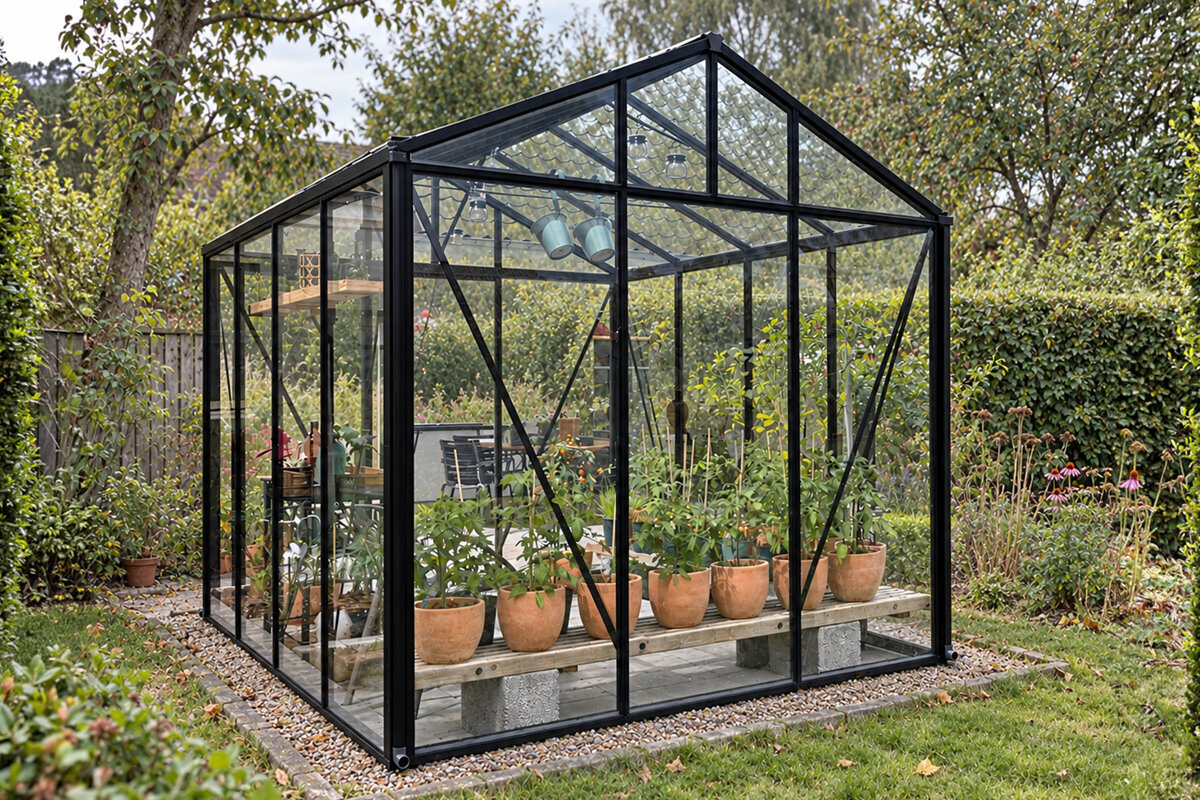
A buying check for your garden project
The questions you put to a supplier can resolve uncertainty before purchase.
Looks and floor plan are only part of choosing a greenhouse. A purposeful conversation reveals whether the quoted package and available assistance fit the block, the crops you intend to grow and the amount of assembly you are prepared to undertake.
In brief: what needs confirming before you commit?
Begin with the precise model in the quotation, everything supplied with it, and the site and base conditions it needs. Next, cover freight arrangements, the build manual, required tools, replacement components and how later enquiries are handled. Make sure every response refers to the configuration you selected.
Separate the greenhouse’s technical characteristics from services connected with the sale. Have the supplier spell out available versions, extras and who handles each task. For setbacks, local building requirements and insurance, seek project-specific guidance from your council, relevant authority or insurer rather than relying on a broad statement.
01
Identify the product exactly
Obtain the precise model designation together with its measurements and specification level. Then verify that the plans, manual and quote all identify that one greenhouse.
02
Request an itemised package
Establish what arrives with the order, including components, glazing, fasteners and instructions. Deal separately with optional extras, materials for the base and any assembly service.
03
Understand the support route
Ask what documentation follows the purchase and how enquiries about missing components, freight damage or technical matters should be lodged.
An organised set of prompts brings the product scope, location, construction and later assistance into one assessment.
Before placing an order, treat your discussion with the greenhouse supplier as a brief project review. Material is not the only issue: reliable documents, clear responsibilities and a package without unexpected gaps matter just as much. This lets you compare offers on firm information rather than photographs or a short description.
A domestic greenhouse brings together location, base, airflow and intended use. What succeeds on a flat display area must also suit your own garden, including access, slopes and existing planting. Give the supplier a detailed description of the space and request details you can verify afterwards.
For Australian customers, these fifteen questions follow the usual stages of ordering a greenhouse. They are a discussion tool, not a universal purchasing recommendation. Write down the replies, compare them with the supplied documents and settle unresolved matters before you place a binding order.
Inspection 01 · First check
Match model and intended use
Open by describing what you want the greenhouse to do, then ask which particular model meets that brief and the reasons for the suggestion. Seedling propagation, vegetable production and a weather-sheltered work zone can call for different proportions, door positions and interior arrangements. Require the quote to identify the chosen variant unambiguously, preventing advice about one version from carrying into an order for another.
Clarify whether dimensions describe the outer edge, usable space or peak height. Your plan needs more than internal room: doors, paths and maintenance access also need clearance. Use a sketch of the garden to assess the reply, then check whether shelving, benches and planting areas can realistically sit within the chosen layout.
Set the supplier’s proposal beside your own brief. This exposes whether its size accommodates your planting goals, movement space and available approaches. Where several versions are possible, ask for the differences to be demonstrated in the documents for each product rather than explained only in conversation.
Prepare a concise briefing note with the crucial measurements and unusual features of the location. You can later test the supplier’s guidance against the conditions where the greenhouse will actually stand.
- What exact model, specification level and selected extras will be recorded on the final order summary?
- How will the usable internal measurements for my planting and work aisles be shown in the documentation?
For an initial look at a freestanding garden layout, use a Classic greenhouse in its standard version whose precise configuration can be verified.
Inspection 02 · Second check
Discuss site, wall and base
Ask what conditions the proposed position must satisfy. Describe its aspect, soil, gradient, access and surrounding trees, then consult the preparatory guidance for the model. Measure the location carefully yourself and, where the ground requires specialist work, arrange for it to be prepared appropriately.
Where the greenhouse adjoins a wall, investigate the conditions of that wall in detail. Consider the supporting ground, connection details, eaves, downpipes and room to work during assembly. Rather than accepting a broad suitability claim, identify the dimensions and construction conditions that require an on-site check. Seek independent professional input if you are unsure.
Photograph the proposed position from different directions and add a basic plan. Together, these records show obstacles, junctions and the room available for work. Confirm as well that nearby doors, windows and areas needed for building maintenance will stay accessible.
Match every drawing and instruction to the version on your order. This is particularly important when photographs depict extras or when models offer different ways to open doors and vents.
- Before recommending a version, what details does the supplier require about the ground, gradient and proposed base?
- What parts of the existing wall or building could alter access, planning or the greenhouse junction?
For a structure connected to the façade, assess a complete Regular Lean-To greenhouse against the conditions at that particular site.
Inspection 03 · Third check
Check materials and components
Determine the composition of the frame, glazing, doors, roof vents and fasteners for the version being quoted. A material name is insufficient unless it is tied to that configuration. Have the supplier distinguish standard components from available choices so the equipment shown in promotional images is not mistaken for what you ordered.
Include maintenance of exposed finishes and clear panels in your enquiries. The manual should indicate suitable cleaning techniques and products, as well as those to avoid. Also learn how an individual component is identified for replacement. A well-labelled component schedule makes a future request much more precise.
Assess specifications within one configuration at a time. Promotional pictures can contain optional equipment or another variant, so do not use them as proof of inclusion. Written confirmation covering the frame, glazing, openable sections and fasteners provides a sounder record of the quoted version.
Reconcile the packing schedule with the order record. Tick off examined entries and record any discrepancy so the resulting enquiry identifies the relevant item accurately.
- Where do the written specifications identify every finish and component included with this particular version?
- According to the instructions, how should the frame, glazing, hardware and movable components be maintained?
A freestanding comparison can use a freestanding Classic greenhouse and check each component against its documentation.
Inspection 04 · Fourth check
Separate package and delivery
Find out how the supplied package is organised and what should be checked when it arrives. A detailed list is useful where components are packed separately. Confirm what delivery information is needed early enough to prepare vehicle access, a set-down area and any assistance realistically.
Treat arrival of the packaged product and extra work as distinct matters. Establish whether carrying components to the build location, assembly or removal of packaging forms part of the order or must be organised separately. Assess gates, steps, narrow points and lengthy carrying distances on your property, then disclose any constraints in advance.
Reserve a weather-protected receiving spot that can be reached easily and keeps each parcel identifiable until construction. Promptly photograph damaged-looking packaging or apparent shortages and reconcile what you see with the order paperwork.
Do not schedule assembly under pressure. A prepared workspace, sorted packages and a previously read sequence make it easier to complete work carefully in the intended order.
- On arrival, which parcels, records and inspection points should be checked against the order documents?
- What access, unloading area and onward handling arrangements are needed to move the components to their build location?
For a greenhouse attached to the building, review a wall-mounted Regular Lean-To greenhouse together with its corresponding package contents.
Inspection 05 · Fifth check
Prepare realistically for assembly
Discuss the build process directly: what sequence is in the manual, which tools are called for and how many people are practical for the work? Obtain the applicable instructions ahead of purchase. Examine the base, component order and safety sections particularly closely so you can make an informed decision about undertaking the assembly yourself.
Identify the inspection points that follow each stage of construction. Level alignment, firmly secured fasteners and correct placement of components all warrant attention. If another contractor will assemble the greenhouse, provide the correct model information before work starts. The supplier should distinguish the site preparation expected from you from the instructions specific to the ordered version.
Study how the tasks fit together, not simply each task in isolation. Arrange tools, aids and a suitable working area beforehand. This preparation makes it easier to decide what is manageable yourself and which stages may justify assistance.
Rank accessories as essential to operation, desirable for convenience or suitable for a future upgrade. The categories show which selections influence construction and which need not be settled immediately.
- For this version, what site preparation, tools and number of helpers are expressly identified in the manual?
- Before work starts, which stages should be reviewed with the contractor appointed to assemble the greenhouse?
For a standalone project in the garden, examine the construction material for the Classic garden greenhouse with particular care.
Inspection 06 · Sixth check
Plan climate, ventilation and accessories
Instead of starting with the accessory catalogue, consider the purpose each item would serve. Describe your crops, available maintenance time and solar exposure before assessing ventilation, shade, shelving or irrigation. Ask the quote to differentiate included equipment from paid extras, keeping both the proposed package and your spending plan intelligible.
Explore whether later upgrades are possible. Certain additions are best judged after the greenhouse is standing; others affect the structure or internal arrangement and belong in the original plan. Ask what evidence is needed to choose. Avoid promises of a standard temperature or yield, because local conditions, weather, care and equipment all influence performance.
Accessory placement should preserve routes for tending and reaching plants. A practical interior balances planting area with airflow, clear movement and convenient access to items that need frequent use or cleaning.
File the photographs, emails and relevant product records with the order details. A complete project file makes it simpler to establish the exact configuration whenever an enquiry arises, whether during construction or afterwards.
- Which optional items serve the crops I intend to grow, and which of those come with the configuration quoted?
- Which extras affect the initial build, and which could be evaluated for a later addition after seeking advice?
Beside a sun-exposed house wall, a Regular Lean-To greenhouse can be specified around the accessories actually required.
Inspection 07 · Seventh check
Documents, contact and spare parts
Establish before purchase what documents will be supplied and in what format. Assembly guidance, care information, component lists and use instructions may all be relevant. Ask who to contact if a specific issue appears while preparing or assembling the greenhouse. A clear route to the right person is usually more valuable than a general service assurance.
Clarify the procedure for components that are absent, damaged or required later. Identification may depend on the order reference, images or a label from the component schedule. Retaining the confirmation and documentation in order enables a precise enquiry without relying on an uncertain description of the greenhouse.
Use one project folder for the quote, confirmation, manual and photographs, and record the exact model and options inside it. Should you need assistance later, the complete set of relevant details will be ready to provide.
- In what usable format will the manuals, maintenance guidance and component schedules for my chosen configuration be supplied?
- What records will allow the supplier to pinpoint the correct component if I make a parts enquiry later?
For clear records of a freestanding option, select a standard Classic greenhouse with documentation that unmistakably belongs to it.
Inspection 08 · Eighth check
Review warranties and written terms
Before buying, identify the documents that govern the order and obtain access to them. Learn how an issue must be reported and what evidence the process requires. Helpful sales conversations do not replace those terms, so examine their coverage, conditions, exclusions and procedures. Any applicable Australian Consumer Law guarantees operate separately and cannot be excluded by a commercial warranty.
Questions about insurance, neighbour boundaries or site controls belong with the relevant authority, your insurer or a qualified professional. The greenhouse supplier can explain its product, but cannot give a binding assessment of your circumstances. File these responses with your other documents so the basis for your decision remains clear.
Consider the written conditions in the context of the actual order and retain a copy with your records. Ask for clarification of any uncertain wording or process. Product guidance should remain distinct from an issue that needs professional assessment of your particular circumstances.
- Before committing, examine the conditions attached to the order and understand their stated process for raising an issue.
- Which documents contain my order terms, how does the supplier require an issue to be reported, and what site, insurance or building matters should I take separately to the responsible council, authority or adviser?
When assessing an attached structure, read all documentation for a large house-wall Lean-To greenhouse before making the purchase.
Comparison
Judge quotations through the responses
The table helps you weigh the substance of each supplier’s response rather than merely record it. Strong quotations specify the chosen version, distinguish the goods from extra work and identify the supporting records. Place your own observations about the site beside those details.
| Check question | Helpful answer | Warning sign when comparing |
|---|---|---|
| Which model is offered? | Clear name with selected options. | Only a general product group. |
| What is included? | Packing list separates parts and accessories. | Package remains unclear when queried. |
| What does the site need? | Specific documents identify preparatory checks. | Blanket assurance without site context. |
| How is assembly done? | Manual describes sequence and requirements. | Assembly effort is not explained. |
| How is support handled? | Contact route and required information are stated. | Support remains a general promise. |
Get ready for the supplier discussion
Brief groundwork can turn a broad enquiry into a useful project discussion. Assemble the important information about the garden, explain the purpose you have in mind and decide which details you want the supplier to confirm in writing.
01
Survey the location
Measure usable space, approaches and obstructions. Record the gradient, sunlight, nearby trees and any notable features of a prospective house wall.
02
State the purpose
Outline the crops, routine tasks and storage you expect. This brief directs attention to suitable dimensions, entry arrangements and internal fittings.
03
List the versions
Record the proposed model, preferred extras and alternatives still under consideration. Request an unambiguous, separate account of what each version provides.
04
Plan the arrival
Inspect vehicle access, the proposed unloading spot and every section between there and the construction area. Advise the supplier of limitations well before the delivery arrives.
05
Keep a written record
File the quote, plans and conditions as one set. Flag every detail that still needs written confirmation before you proceed with the order.
Your pre-order checklist
Use these checks after reaching an initial decision on both location and model. Resolving each point beforehand helps prevent hidden assumptions from emerging only when the packages arrive or construction begins.
01. Your paperwork identifies the precise model and records every option you selected.
02. External measurements, usable interior space and door clearance accommodate your routes, plants and outdoor furniture.
03. Your site notes cover the ground, gradient, approaches and obstacles beside the intended position.
04. For an attached greenhouse, you have assessed the wall junction, eaves and any downpipes.
05. Included components are distinguished from optional equipment in writing, rather than inferred from photographs.
06. You have reviewed the relevant manual, tool requirements and work needed to prepare the property.
07. Maintenance guidance, component information and contact details are traceable to the version you chose.
08. Project-specific controls and insurance questions will be referred to the appropriate authority, council, professional or insurer.
Common greenhouse questions to resolve before purchase
Does the base need to be finished before I order?
Measure the site and understand base and ground requirements before committing to an order. The timing of any work depends on your project plan. Use the selected model's documentation as your guide, and obtain professional advice when construction issues at your specific site are unclear.
What should I give the supplier to receive relevant guidance?
Provide photographs, measured site dimensions, gradient and access details, and an explanation of the intended use. If the position is close to a building, describe the wall and neighbouring elements as well. A precise brief enables the supplier to direct you to more relevant product material and enquiries.
How can I decide whether an accessory serves a real purpose?
Start with the way you expect to use the greenhouse, rather than attempting to include every extra. Establish the role of each item and whether it comes standard. Factor in crops, maintenance time and local exposure. Some selections can be deferred, while those that alter construction need an earlier decision.
What must I clarify about delivery?
Confirm the contents, number and type of parcels, unloading space and any access constraints. Determine who will take the components from the set-down point to the construction area and how irregularities should be reported. Have the order paperwork available for an accurate receipt check.
Is a spoken assurance about the warranty sufficient?
No. Ask where the conditions relevant to your purchase are recorded and examine them before committing. Focus on coverage, qualifying conditions, exclusions and the procedure for notifying a problem. If a point is uncertain, request an explanation tied to your configuration instead of accepting a broad verbal assurance.
Do approval or insurance questions need to go through the supplier?
Ask the supplier about the greenhouse itself and its technical documents. For property-specific obligations, approach the responsible authority; for cover, speak to your insurer. These separate enquiries establish how the requirements affect your own circumstances rather than relying on an example that may not fit.
Compare greenhouse solutions
Decide with more confidence
Useful supplier questions connect concrete written information with the conditions on your property. Treat the selected model, included package, construction process and contact arrangements as parts of a single project. Doing so reveals unresolved decisions early and identifies the records needed before you commit.
Bloomcabin can help you navigate freestanding and wall-adjacent greenhouse choices. Bring accurate site details, assess each configuration on its own merits and refer site-specific construction or insurance matters to the responsible council, authority, professional or insurer.
Browse suitable models, then apply your question list to reach an orderly and well-supported decision.
