
Argon or krypton in insulating glass: key differences
Choosing insulating glass
Window quotations commonly foreground a single term: argon or krypton. It should not be the sole basis for choosing. These inert gases occupy the cavities between panes in insulating glass and influence heat transfer, but cavity width, pane number, coatings, edge seal, frame and actual window dimensions are also relevant. A replacement project containing different openings benefits from one consistent assessment of the whole element. This guide shows where argon is often a reasonable standard, when krypton can be relevant in compact constructions, and which details a comparable quotation needs. Align gas fill, glazing structure, operation and installation with the requirements of the project.
01 / Define project priorities
Putting gas fills in context
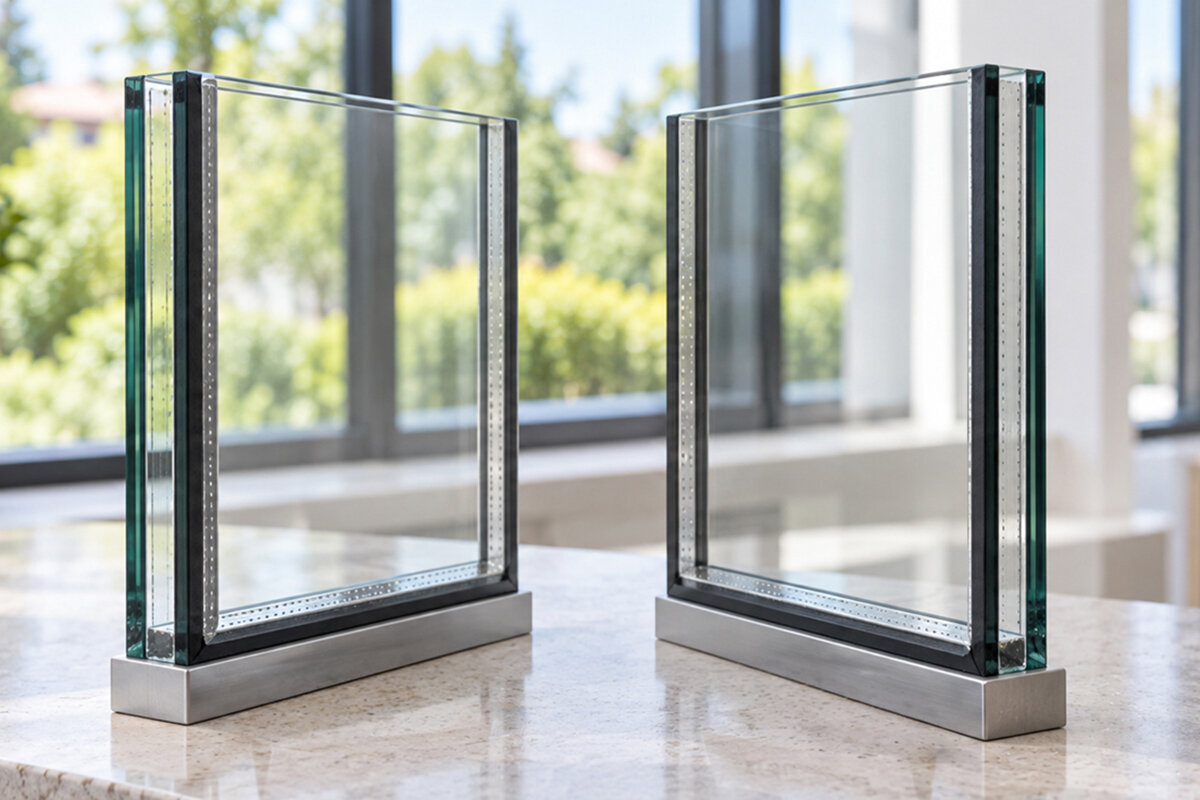
An insulating-glass unit is made by sealing separate panes together at their edges. Gas occupies the cavity between each pair of panes and reduces heat movement more effectively than ordinary air. Argon and krypton are inert gases used for this purpose. Neither changes the visible appearance of the glass: both are colourless and odourless, so the fill cannot be identified by looking through the window. What counts is the calculated, documented result for the complete glass unit. The name of the gas reveals little by itself because pane spacing, coatings and edge construction determine how it performs in a particular build-up.
A useful quotation identifies whether the proposal uses double or triple insulating glass, gives the Ug value for the glazing and states the complete window’s Uw value. Ug principally concerns the glass unit, while Uw includes the frame; lower figures indicate less heat transfer. Compare the coatings, individual cavities and edge seal as well. These details turn “krypton glazing” into a specification that can be checked. Have the supplier confirm every figure for the requested dimensions and configuration. Data-sheet results based on a reference element may change for small windows, unusual shapes or constructions assembled from several parts.
Why pane spacing matters
A fill gas works in conjunction with the distance between the panes. Its properties may contribute differently in a narrow cavity than in a wider one, yet continually increasing the gap will not produce continual insulation gains. Internal gas movement can eventually restrict the benefit. Cavity width is therefore a designed part of the glass unit, not a measurement to maximise in isolation. Argon commonly serves conventional cavity arrangements. Krypton is more often examined when a slimmer unit must still meet a thermal objective. Pane count, coatings and the required Ug value all need to be considered when choosing the appropriate spacing.
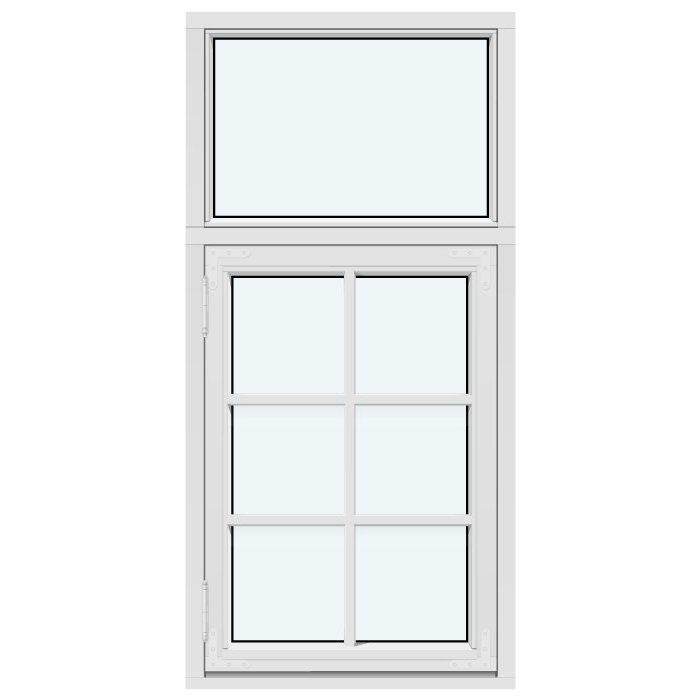
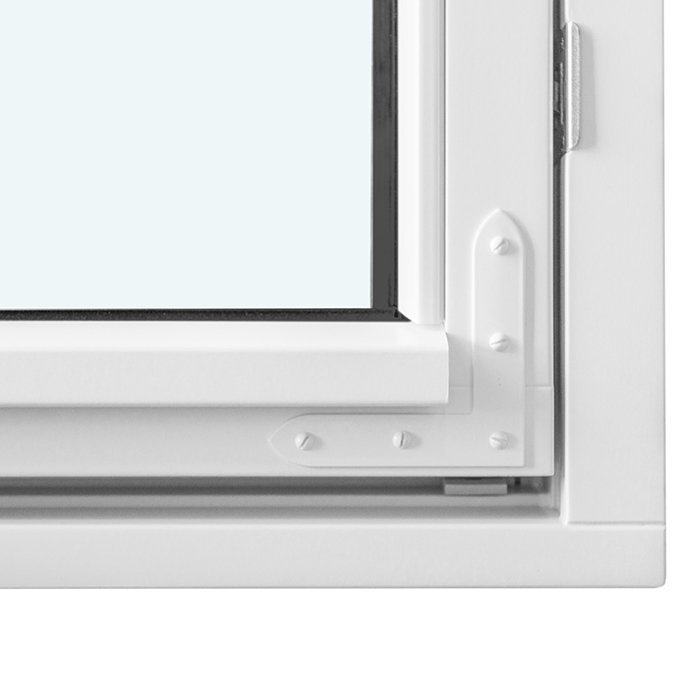
Slim frame sightlines, replacement glass constrained by rebate depth and finely profiled designs are situations where this may matter. They do not make krypton compulsory. The supplier still needs to establish which complete unit fits the system and can be manufactured at the required size. If depth is restricted, request the overall glass thickness, the width of every cavity and the resulting Ug value. With outward-opening heritage-style “Kombi” casement windows coordinate the sightlines, glazing-bar pattern and opening action at the same time. You can then judge whether krypton addresses a genuine design constraint or is merely the dearer option.
02 / Record each element
Argon as a practical standard
Argon is a logical option when the chosen pane arrangement provides enough depth for appropriately designed cavities. Many projects benefit more from a coherent, traceable specification than from one attention-grabbing technical feature. Argon can support that approach because the glazing, frame, dimensions and proposed use are considered together. Across a home containing several standard window formats, consistent documentation also makes quotations and element schedules clearer. Any departures required for special shapes remain easy to identify rather than becoming lost among poorly labelled glass variants. A precise build-up reference also allows later questions to be matched to the correct element.
Argon should not be read as a universal assurance about comfort or energy consumption. A small opening on a sheltered façade presents a different case from a large window exposed to the weather. Coatings, the proportions of frame and glass, edge conditions, shading and the wall junction also shape the result. For an inward-opening single-sash window request more than confirmation of the fill gas. Obtain the Uw value for its quoted dimensions, the glazing’s Ug value and a clear glass specification in the order confirmation. Before judging variants by gas alone, verify that the hardware and inward opening action suit the room and its intended use.
Consider krypton for compact glazing
Where pane cavities are narrower, krypton can make particular use of its properties. This makes it an option when construction or design calls for a compact glass build-up. It is not automatically a better specification for every window. If sufficient depth is available for an argon arrangement that has been properly designed, krypton need not bring a material practical advantage. Rather than asking which gas is universally superior, ask which tested glazing construction meets the stated target in the proposed element. Obtain the same details for each alternative. Differences can only be attributed to the glass build-up when dimensions match, frames are comparable and performance figures are clearly identified.
Krypton may be discussed for broad areas of uninterrupted glazing where limited unit thickness accompanies demanding performance goals. The glass dimensions, frame share, moving mechanism, weight and installation setting nevertheless remain part of the decision. A Patio Life lift-and-slide door identifies a lift-and-slide door but says nothing by itself about gas fill or performance. For the proposed configuration, separately request dimensions, glass build-up, Ug and Uw values, plus the operating and safety features your project requires. Compare the consequences for profiles, movement and available specifications as well as the thermal figures. This broader review shows whether krypton advances the project priorities or whether an argon build-up produces the more balanced result.
03 / Compare glass build-ups
Assess double and triple glazing separately
Changing the pane count changes the entire assembly. Double insulating glass contains one cavity; triple insulating glass contains two. A three-pane specification must account for both cavities, all coatings and glass thicknesses, overall weight, and compatibility with the frame and hardware. Choosing triple glazing simply because it contains krypton—or rejecting double glazing because it uses argon—would be misleading. Match the unit to the thermal objective, window dimensions and construction limits of the system. In replacement work, confirm that either the retained or new frame can safely carry the proposed glass. Gas type alone cannot answer that technical question.
Pane and coating choices can also alter daylight and solar-energy behaviour. Ug therefore cannot answer every question about using the room. Where Australian sun is strong, total solar energy transmittance may influence summer comfort, while visible light transmittance can matter in living areas and workspaces. Ask the supplier to explain these measures when daylight, solar gain or the appearance of the glass is important. For a fixed-glazed window there is no sash to operate, but glass, frame, shading and wall connection still need coordination. Compare double and triple options as complete constructions, not simply by pane count.
Compare coatings and edge seals
Gas fill contributes to thermal performance, but it is not the entire strategy. Coatings applied to designated glass surfaces modify radiant heat transfer, so their type and location must form part of the specification. Around the perimeter, the edge seal spaces the panes and seals the cavity. This junction brings the glass, frame and several possible heat paths together. Two quotations grouped under the same gas can consequently describe quite different assemblies if coatings and perimeter details are omitted. Nor does a favourable Ug figure establish the outcome for the complete ordered window or identify which edge construction the supplier has included.
Request a plain technical description rather than relying on a marketing label. It should list the number and thickness of panes, fill gas, cavity widths, coatings and declared performance figures. Confirm whether each figure describes only the glazing or the complete window; otherwise a favourable Ug value can easily be mistaken for Uw. For fixed-glazed triangular and angled windows the quotation must record the exact geometry. Their dimensions, perimeter lengths and frame-to-glass ratio differ from those of a rectangular reference unit. Confirm both that the proposed glazing can be supplied in that shape and which performance figure belongs to the specified configuration.
04 / Coordinate the specification
Plan frame and glass together
Performance is determined by more than the central area of glass. Because the frame occupies part of the opening, it combines with the glazing and perimeter zone in the Uw calculation. Its proportion is usually greater in a small window than in a broad fixed light, while sashes and glazing bars introduce further changes. Identical glass units should not therefore be assumed to deliver identical whole-window results in different elements. Start with a schedule of the actual dimensions rather than one generic data sheet. Clearly identify fixed sections, opening sashes and special shapes so coatings, gas fills and figures remain attached to the intended opening.
Group rooms with similar purposes during planning, but do not force every opening into the same specification. A bathroom may call for a different opening arrangement from a large living-room window even where the thermal objective is comparable. A top-hung outward-opening casement window defines the movement of the sash rather than its final glass specification. Also consider operating height, access for cleaning, shading and routine ventilation. Check the path of the outward-opening sash against nearby external fittings and surroundings. Otherwise, a carefully selected gas fill may accompany an impractical opening action or controls that are difficult to reach.
Assess large formats and doors separately
Large panes make Ug an obvious consideration for patio and sliding doors, but the rest of the moving assembly is equally important. Include the frame, threshold, seals, wall junctions, sash weight and operating effort in the assessment. The fill gas should follow the door design rather than be selected separately. Glass that works in a small fixed light may be unavailable or unsuitable for a large operable panel. Ask the supplier to document the construction and figures at the proposed dimensions, and whether glass thickness or weight changes the hardware or profile offered. Those practical relationships inform the purchase more effectively than comparing argon and krypton alone.
Set the order of priorities before requesting quotations: an uninterrupted outlook, generous daylight, a particular opening action, an appropriate transition or strong thermal performance. Some aims may conflict, so their relative importance should be clear. For outward-opening double patio doors allow for the clear opening, indoor furniture, usable outdoor space and both leaf-swing zones. Plot the arcs on the floor plan and decide which leaf will serve as the everyday entry. Once that arrangement is established, seek an argon or krypton build-up suited to it. Gas choice then supports the way the doors will function instead of controlling the entire selection.
05 / Check the order
Glazing bars, special shapes and appearance
Glazing bars strongly influence appearance, but the available constructions are not interchangeable. A true divided-light bar physically separates glass units; applied bars and decorative members placed inside the cavity are made differently. Decide on the intended look before finalising the glass. The choice can change the quantity, dimensions and perimeter lengths of the units as well as the elevation. Selecting argon or krypton is consequently one part of balancing visual design with technical performance. If several bar arrangements are under review, obtain an unambiguous drawing so the quotation, elevation design and final order all show the same divisions.
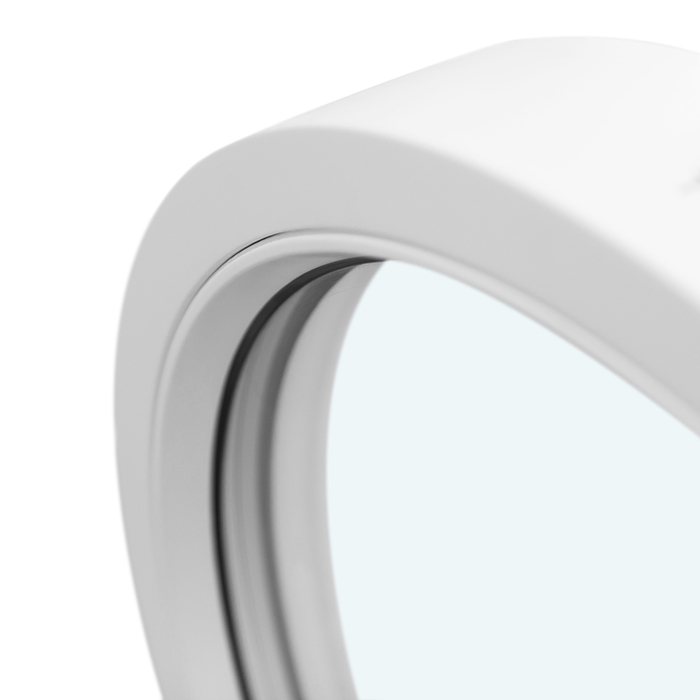
Obtain separate quotations for round, curved and sloping special shapes. Their area and perimeter proportions differ from standard units, making a rectangular sample figure an unreliable basis for comparison. A round fixed-glazed window describes shape and fixed operation only; it does not identify the gas, pane count or thermal figure. Ask which glazing can be supplied at the exact dimensions and which stated value applies. Place both design and technical details in the element schedule so each assembly is assigned to the right opening. If the preferred glass cannot be produced in that shape, assess the proposed substitute against the original project objective rather than focusing solely on its alternative fill gas.
Coordinate quotations, ordering and installation
Read competing quotations item by item. Record quantity, width, height, opening direction, frame, glass construction, Ug and Uw figures, glazing bars, accessories and the boundary of the installation work. Distinguish values based on standard reference dimensions from those confirmed for the ordered element. A bare reference to “krypton” requires details of every cavity and the complete unit; apply the same test to “argon”. Verify that suppliers have priced the same pane count, coatings and element divisions. Reliable selection depends on like-for-like documents, because a low figure has little meaning when dimensions or included work differ.
Before placing the order, coordinate site measurement, wall junctions, shading and installation responsibilities with the relevant professionals. They should check that the proposal suits the building and intended work. Bloomcabin offers a five-year commercial guarantee on windows and doors, while rights available under Australian Consumer Law remain additional and cannot be excluded. Delivery takes four to six weeks, subject to order confirmation. The final confirmation must still identify dimensions, opening types, glass build-ups and agreed figures. Reconcile it with the element schedule and resolve discrepancies before approval. The selected gas then becomes a traceable part of the coordinated project rather than an option that is difficult to identify afterwards.
Frequently asked questions
Is krypton always better than argon?
No. Krypton can be advantageous in a narrow cavity, whereas a differently proportioned unit may be better designed around argon. Judge the proposed element by its pane count, cavity arrangement, coatings, edge seal, frame and declared figures. A gas name without the complete technical specification is not a meaningful comparison.
Can the gas fill be changed later?
Gas is sealed into the insulating-glass unit during manufacture; it is not an adjustable feature of an installed window. If the project requirements change substantially, ask a qualified professional to assess the complete element. The review needs to cover the frame, available rebate depth, glass weight, hardware and wall junction as well as the preferred fill.
How can I identify argon or krypton in an installed window?
Neither gas can normally be seen or smelt in use. Identification should come from the supply records, including the order confirmation, element schedule, technical glass specification and any unit markings. Retain these documents with the dimensions, opening action, installation information and guarantee details so the correct configuration can be traced during future enquiries.
Is a low Ug value enough when choosing windows?
No. Ug characterises the glazing, whereas Uw covers the assembled window and its frame. The decision must also account for dimensions, divisions, perimeter effects, installation, daylight, solar exposure and operation. A sound comparison records both figures and links each one to the precise size and configuration being offered.
What comes first when requesting a quotation?
Define what the element must achieve first: thermal protection, slim glazing, daylight, a particular appearance or a generous usable opening. Then ask for the proposed pane construction, fill gas, cavity widths and the Ug and Uw figures for those dimensions. Beginning with the purpose makes the supplier’s advice more specific.
Your next steps
Argon and krypton are not competing quality badges, but options within a coordinated insulating-glass build-up. Argon commonly suits standard pane cavities; krypton can be a targeted alternative for compact cavities. For a purchase decision, however, the documented values for the actual window matter more than the gas name alone. First establish use, design, dimensions and opening methods. Then compare glass and window information element by element, and have construction and project-specific requirements assessed by suitable professionals. This keeps glazing understandable even where a project combines fixed lights, special shapes, windows and doors.
