
Bathroom privacy glass: frosted, patterned or reflective?
Planning a bathroom window
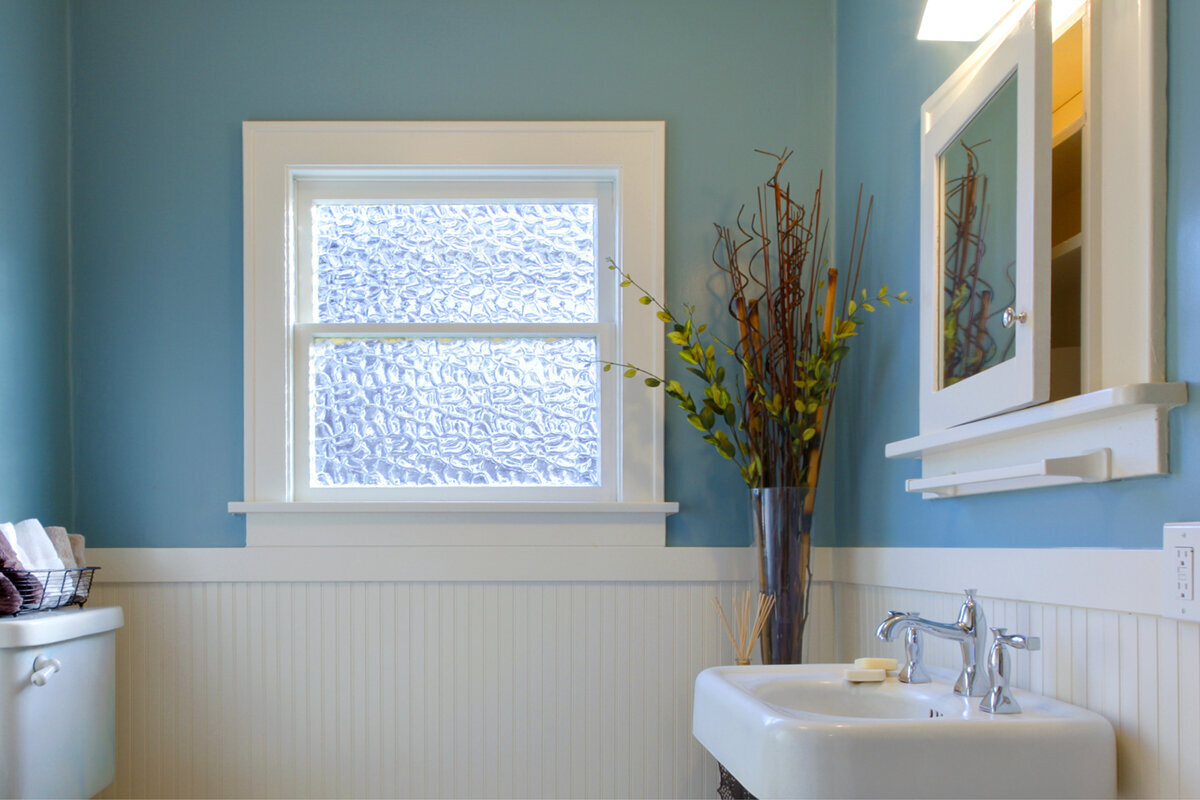
A bathroom window needs to admit daylight and fresh air without exposing someone at the basin, in the shower or in the bath. Choosing by the label “obscure glass” does not resolve both needs. Frosted, patterned and reflective panes screen views through different effects, which change with backlighting, darkness, cleaning and viewing distance. A sound choice accounts for the window format, opening action, use of the room and real sightlines from a neighbouring home or footpath. Map the revealing angles before settling on a finish; otherwise, a window that seems bright and private by day may feel unexpectedly exposed once the bathroom light is on.
Compare the viewing conditions, not only the glass name
Begin by surveying the existing or proposed opening. Work out whether someone could see the pane from a house opposite, a path beside the garden, a higher apartment or only from immediately outside the façade. With the same glazing, a window above a bath may be less exposed than a low window beside the toilet. Record whether curtains, planting or an outdoor screen are permanent or only occasional aids. In a frequently used bathroom, these extras should not carry the entire privacy burden. Repeat the assessment after switching on the bathroom lights as daylight fades; an inspection in ordinary daytime conditions is insufficient.
Set priorities in a practical sequence: secure the most exposed sightline, decide how much light you want, then consider appearance and maintenance. Buyers often study only how a sample looks from inside, although the view towards the room is equally important. During selection, place samples against bright and dark backgrounds and step through several viewing distances. A hand touching the glass, a nearby silhouette and someone standing centrally will not look the same. Require the quotation to identify the precise design rather than merely saying “privacy glazing”. This keeps the specification unambiguous if the frame, dimensions or opening direction are finalised later.
Frosted glass for a calm, even finish
Light is dispersed across the treated face of frosted glass. Seen from outside, forms in the bathroom generally lose definition and the pane presents as a consistent pale surface. This works well in restrained interiors where the window should not become decoration. Useful daylight remains, although the outward view is reduced along with the inward one. That trade-off can suit a compact bathroom: the opening still brightens the space without turning a cluttered outlook into part of the scheme. Because finishes differ in both blur and residual visibility, neither a catalogue image nor the generic description “frosted” is a substitute for handling the specified sample.
Check where the treated face will sit and whether that arrangement suits regular cleaning. Mineral deposits, soap marks and fingerprints may register differently there than they do on polished clear glass. Ask the supplier about orientation, compatible cleaners and which face is likely to receive the most wear. A single-sash window opening inwards might suit a small bathroom, but changing the glass will not reduce the sash sweep or its clearance. Consider tall cupboards, the vanity and towel rails at the same time as the glazing so these choices work together.
Patterned glass: texture, outlines and moving light
Texture, rather than a uniformly matt face, gives patterned glass its screening effect. The chosen motif might animate incoming light, reinforce upright lines or evoke older glazing. It can therefore make the window a visible feature while obscuring a direct view. However, the category “patterned glass” does not denote a standard degree of privacy. Fine designs may look almost closed from farther away yet disclose more recognisable shapes at close range or under strong backlighting than deeper reliefs. Do not assess only the decorative face; inspect the exact pane in the orientation planned for the bathroom.
In a renovation, texture also affects how the new unit relates to existing windows. A historic-style combination casement opening outwards defines the window arrangement and character, not its decorative glazing. Choose the pattern separately, considering the elevation, existing glazing bars and neighbouring windows. Bars paired with textured glass can add character, but numerous lines across a small pane may become visually restless. Ask for an elevation drawn at the proposed dimensions, or position a sample over the intended opening. You can then judge whether the result behaves like a restrained visual filter or takes over as the bathroom’s dominant ornament.
Do not depend on reflective glass after dark
Under strong exterior daylight, reflective glazing may resemble a mirror and impede a view into the bathroom. That performance comes from the contrast between indoor and outdoor light. After sunset, a lit bathroom will commonly be brighter than the area beyond it, so daytime reflectivity cannot be assumed to preserve privacy. For a room used early or late, investigate those lighting conditions before choosing this glass. Street lighting, an illuminated courtyard or a fitting outside the window may alter the result again, which is why a universal promise about its screening effect would be misleading.
Reflective glazing may still suit a project where daytime solar exposure or a particular façade treatment leads the brief, provided evenings are covered by a separate indoor measure. Blinds, an internal screen or a built element could perform that role, but it must also be easy to operate. A solution people need to remember after showering will sometimes remain unused. Test the real scenario instead: with only the ceiling light operating at night, what is visible from outside? Insist on more than a daytime demonstration. If privacy must remain consistent whenever the bathroom is occupied, an appropriate frosted or textured finish is generally a clearer place to begin.
Distribute daylight deliberately, rather than simply seeking brightness
Obscure glazing need not leave a bathroom short of natural light, although it changes how that light appears. Clear panes maintain a defined outdoor connection and sharper patches of illumination. A frosted finish diffuses brightness, while a pattern may break it into more distinct shadows and highlights. Room depth, wall colour and window placement determine which treatment works best. For a narrow bathroom facing a nearby wall, a luminous, softened pane can be preferable to a limited outlook. A larger room in a sheltered position may benefit from retaining a view. Evaluate samples as part of the whole interior rather than as isolated pieces on a display rack.
Window geometry is a useful design tool. A higher fixed highlight can admit daylight while being less exposed to views than a low window. Fixed-glazed windows can suit a position where ventilation through that pane is unnecessary. They do not resolve the room’s broader ventilation or escape planning, which must be addressed elsewhere in the design. A window combining fixed and operable sections may justify different glazing in each: stronger screening below and, where appropriate, greater openness above. Establish early whether this division is technically feasible and visually coherent for the opening and installation.
Plan ventilation and privacy together
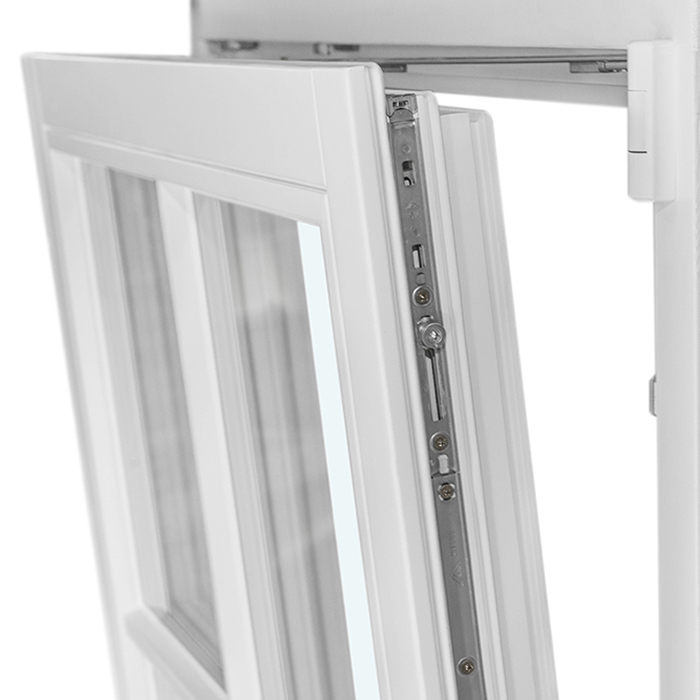
Privacy provided by a closed pane disappears when that window is opened, a basic issue that glass selection can obscure. If you air the room thoroughly after a shower, decide what protects it then. The opening might be high enough to avoid a direct view, shielded from the side, or paired with another screen while ventilation occurs. Beside a passage or close boundary, sash position may influence privacy more than the closed glass. Draw the open sash on the floor plan, then trace ordinary movement around the bathroom. This will reveal potential conflicts with the shower, toilet or cupboards.
An outward-opening, top-hung awning window installed high on the wall approaches ventilation differently from a low casement. Its name confirms only the opening action, so ask specifically about dimensions, controls, glass construction and suitability for the proposed opening. Work out how both faces will be cleaned and whether outdoor access is practical. A qualified designer or tradesperson should review the bathroom window where ventilation, moisture control and existing construction must operate together. Obscure glazing can sit comfortably within that plan, but it cannot perform the ventilation function itself.
Plan cleaning around the surface and window position
Humid air, mineral residue, cosmetics and repeated wiping all affect bathroom glazing. A smooth face and a matt or relief surface may need different cleaning methods, and deposits can become conspicuous in patterned recesses. Look beyond the product name to identify which face points into the room and whether it can be reached comfortably. Obtain written maintenance guidance for the selected pane. Until the manufacturer’s directions are known, avoid abrasive equipment and incompatible chemicals that could damage its visible finish. Samples are useful for care assessment too: rather than wetting one in the showroom, turn it towards side lighting and inspect how its texture and any marks appear.
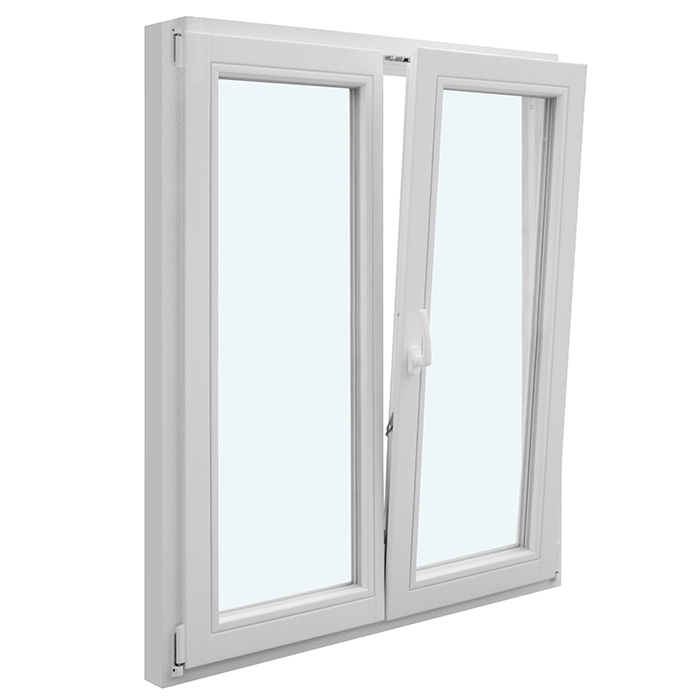
With several sashes, there are more pane edges, fittings and frame surfaces to reach. Confirm that taps, the sill and the reveal leave enough space for a hand, cloth and squeegee. In a deep reveal, a smaller accessible pane may be more practical than a broad one whose corners are awkward to reach. A two-sash window opening inwards may suit a wide opening only if both sashes can move and be cleaned once the bathroom is furnished. Do not make maximum opening width the sole test. A basin immediately below or an oversized mirror can complicate upkeep more than the plan suggests. Before confirming format and operation, decide whether the outer face will be cleaned from the room, garden, balcony or by a service provider.
Read frame, glazing bars and glass design as one view
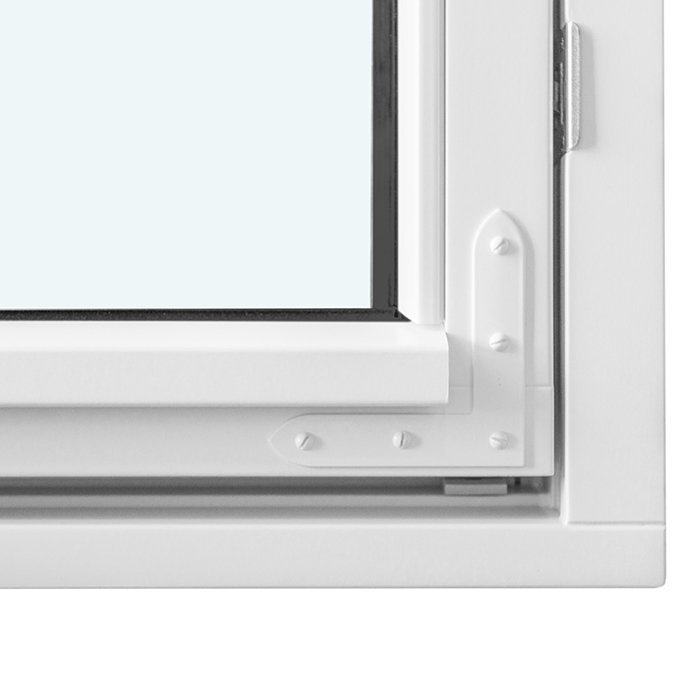
Glass is only one part of the composition. A narrow frame can make a frosted area feel expansive; a heavily divided frame gives the opening a stronger outline. Glazing bars may organise the façade and visually break a bathroom window into smaller panels, but they are not a privacy treatment. You must still determine how much shape or movement can be recognised through each field. Distinguish applied decorative bars from bars that genuinely divide separate panes. The quotation and drawings should identify the selected construction and show exactly how the finished window is intended to look.
For a historic-style double casement opening outwards period character may come primarily from the sash arrangement and glazing bars. Pairing it with understated frosting, a pattern or another finish will also affect daylight and maintenance. Review the entire composition from each side. Inside, include tiles, tapware and mirrors; outside, account for façade colour and the rhythm of nearby windows. If the design differs from the standard specification, have its pane divisions and glazing recorded precisely. Clear documentation prevents the design intention from changing as the window moves through quotation, ordering and installation.
Special window shapes need samples in a suitable format
Circular, semicircular, triangular and tapered openings can illuminate places where a standard rectangle will not work. Because the outline already attracts attention, the glazing texture becomes especially prominent. A restrained frosted pane may let the geometry lead, whereas a vigorous pattern can amplify it. Scale changes the result: detail that looks delicate in a hand sample might become bold across a large arch, yet almost disappear inside a small custom pane. Confirm at an early stage which finishes can actually be produced for the required shape and dimensions. Leaving that enquiry until every other decision is complete risks discovering that the preferred glass is unavailable for the geometry.
Fixed-glazed triangular and sloping windows offer one way to glaze these shapes. Because a fixed pane cannot open, any required room ventilation must be provided separately. Privacy also depends on the line of view along the slope: glazing that appears high when approached from the front could remain exposed sideways to a neighbouring window. Put a scaled façade drawing beside the site plan and draw the likely sightlines. That exercise is usually more informative than searching for one glass type that is supposedly best in every setting.
Turn comparison into a dependable order
Give every participant one concise specification before an order is placed. Record the window location and structural opening, direction of operation, sash count and divisions, exact glass design, location of any treated face and, where applicable, the viewed side of glazing bars. Rank the main objective as privacy, daylight, façade appearance, period character or easy maintenance. Seek a firm quotation based on that record and verify the drawings before approval. Revisit any sample selected only in daylight under evening conditions. For alteration work, a qualified tradesperson should assess the opening and its surrounds because the glazing decision must suit the complete installed window.
A pivot roof window shows why access and position cannot be separated. Compared with an upright façade window, its slope, installation height and reach alter daylight, viewing angles and cleaning. The model description does not select suitable bathroom privacy glass, so specify glazing independently and ask which samples can be examined before approval. Coordinate delivery with storage space and the construction program. If it arrives before plastering or tiling, assign responsibility for receipt, protection and installation. Check that every document agrees on dimensions and viewed directions. Bloomcabin provides a 5-year guarantee for windows and doors. Delivery takes 4–6 weeks, subject to order confirmation. These commercial details do not replace technical checking or coordination with tiling, finishing work and the proposed installation date.
Frequently asked questions
Is frosted glass always private enough for a bathroom?
No. A frosted appearance does not guarantee complete concealment. The finish itself, viewing distance, backlighting and movement close behind the pane all influence what can be recognised. Examine the specified sample from indoors and outdoors, especially with the room illuminated after dark.
Can reflective glass provide privacy in the evening?
Do not rely on it. Reflection depends on relative brightness inside and outside. If the bathroom is brighter than outdoors, the mirror effect can be much weaker from outside. Plan an independently effective privacy measure for evening use.
Which glass is easiest to clean?
There is no useful universal ranking. Consider the exact texture, which face is exposed to the room, local water hardness and whether the pane is easy to reach. Obtain care directions for the selected product. In daily use, practical access and a compatible finish matter more than a broad glass label.
Can privacy glass be used only in the lower part of a window?
A partial treatment can work both visually and functionally, keeping lower sightlines screened while preserving more outlook above. Ask the supplier and project professional whether that arrangement can be made for the selected window and whether it is appropriate. Include sash divisions, access for cleaning and every relevant viewing angle in the decision.
Do I have to sacrifice ventilation for bathroom privacy glass?
No. They simply need to be resolved as one design. The glass can screen the room only while the sash remains shut, so inspect sightlines with it open. Also check operation around the finished furnishings and the proposed ventilation method. A qualified tradesperson can review these details for the actual opening.
Next step
The right bathroom privacy glass is not necessarily the finish that looks most opaque. It is the one tested for your real sightlines in daylight and after dark, then matched to ventilation, shape, maintenance and the room’s design. Frosting offers soft, even diffusion. Patterned glass introduces texture and warrants close sample inspection. Because reflection changes with relative light levels, reflective glass requires a particularly careful night test. Identify the exposed views first, select the exact finish second, and record it in the order beside the opening action and sash layout. Privacy is then designed into the window rather than repaired afterwards.
