
Beneficials in the greenhouse are a managed relationship.
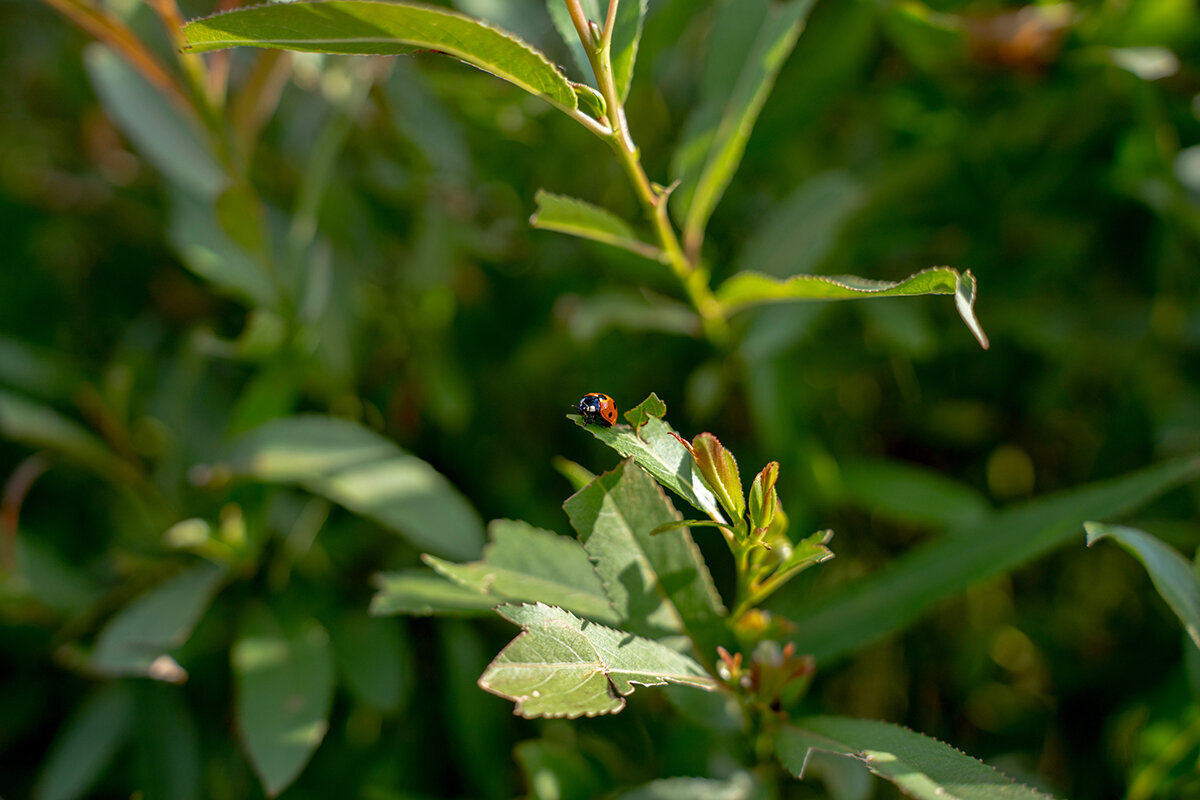
A living pact · Greenhouse biological control
Beneficials in the greenhouse are a managed relationship.
Used well, natural enemies can turn a greenhouse governed by recurring emergencies into a closely observed growing environment. A release is no magic act. Its outcome depends on the pest, predator or parasitoid, crop, conditions and gardener, with routine scouting testing whether the arrangement succeeds.
A single order cannot do everything
Success is not measured by releasing the greatest number of insects. Build conditions in which an appropriate enemy locates its target, remains active and checks it before losses increase.
Integrated pest management combines prevention, early detection, diagnosis, selected living enemies and targeted follow-up only when needed. Greenhouses help home growers spot patterns early. Yellow traps for trends, a hand lens and weekly inspections can reveal infestations while beneficials can still catch up.
Ordering living controls is not the automatic answer to every problem. Quarantine for new plants, suitable spacing, weed control, measured irrigation and tidy paths all reduce pressure. One practical setting is the Classic aluminium greenhouse where access is straightforward, ventilation can be planned and crops remain easy to inspect.
For a lasting structure that can accommodate a developing plant-protection routine, the Classic aluminium greenhouse provides space to organise aisles, planting rows and vents without the scouting difficulties of a crowded temporary shelter.
Three broad kinds of ally
Each group performs a different job.
“Beneficials” is convenient shorthand, but the field also covers predatory mites, parasitic wasps, useful nematodes and microbial plant-protection products. One category cannot simply replace another.
Predators feed directly on prey.
This group includes lacewing larvae, ladybirds, predatory bugs and numerous predatory mites. Many hunt actively, although performance varies with pest identity, crop structure, prey abundance, conditions and release timing.
- Lacewing larvae consume aphids without solving every pest problem.
- Different predatory mites pursue spider mites or immature thrips.
- Generalists may act early, then disperse when food dwindles.
Their young develop within or upon a host.
Tiny and often highly specialised, parasitoid wasps are best suited to prevention or very early intervention. Evidence of their activity—aphid mummies, changed whitefly stages or clean exit holes—is more useful than simply seeing an adult.
- Encarsia and Eretmocerus may be appropriate for particular whitefly programs.
- Aphidiusspecies must be matched to the aphid involved.
- Suitable host stages are essential, and an established outbreak will not disappear overnight.
Their effects matter more than visible activity.
Useful nematodes may be watered into moist media to target fungus gnat larvae. Microbial treatments have their own requirements for susceptible stage, delivery, coverage and surroundings. Any option must fit both the crop and authorised use.
- Although not insects, they remain part of biological control.
- Moisture, light, coverage and pest stage can determine the outcome.
- Always include the current label and supplier directions in the plan.
Identify first, choose an enemy second
Investigate before placing an order.
Sticky residue, yellowing and pale flecks are clues, not diagnoses. Aphids, whiteflies, thrips and mites differ in signs, plant location and vulnerable stage. Photograph findings, inspect leaf undersides with a lens and compare plants before selecting a beneficial organism.
1
Interpret symptoms
Begin with damage.
2
Locate the culprit
Note where it lives.
3
Establish life stage
Trace egg through to adult.
4
Plot its spread
One pocket or the entire crop?
Symptoms: Honeydew with sooty mould suggests sap feeders. Fine pale specks and webbing indicate spider mites, while silvery scarring and dark faecal spots may signal thrips.
Position: Inspect tender shoots, blossoms, leaf reverses, older foliage low on the plant and damp media. A pest's hiding place largely determines which intervention can reach it.
Development: Eggs, early and late nymphs, larvae, pupae and adults differ in vulnerability. Consequently, the stage that is easiest to notice may be the wrong one to target.
Extent: Distinguish an isolated patch beside a doorway from a pattern across the crop. Mark and separate concentrated areas, then describe all observations to the specialist supplier.
Working in this order avoids a common mismatch: a popular generalist may be bought for a pest hidden below the surface, inside curled foliage or beyond the organism's reachable stages. For an enduring layout that remains easy to examine, see Bloomcabin aluminium greenhouses.
Profile I · An unobtrusive patrol
Predatory mites
Their small size makes predatory mites easy to overlook but no less useful. Certain species are selected for spider mites; others take immature thrips and may supplement their diet with pollen or other food. Define the assignment before ordering, because a mite sold for spider mites is not automatically suitable for thrips.
Spread the carrier through the crop exactly as the supplier directs rather than tipping it in one spot. Heavily webbed plants are a poor candidate for a casual rescue attempt; severe pressure usually calls for isolation and coordinated remediation. Temperature, humidity, plant density and earlier pesticide applications can all alter results.
Evidence to seek: a decline in active pest stages across repeated inspections, rather than sudden disappearance on the day of release.
Profile II · A carefully chosen host
Parasitoid wasps
A parasitoid is valued for specialisation, not for looking like a tiny ornamental wasp. It locates an appropriate host stage and deposits an egg on or inside it; the developing offspring eventually kills that host. In greenhouses, both their searching behaviour and the traces left behind can be useful.
The parasitoid Encarsia formosa is used against greenhouse whitefly, preferably when populations are very low. Persistent residues from earlier insecticides can undermine results. Select other whitefly or aphid parasitoids for the actual pest, crop and climate; distinguish greenhouse whitefly from Bemisiaspecies.
Evidence to seek: mummified aphids or whitefly stages that have changed appearance and carry a neat, circular exit hole.
Profile III · Appetite in plain sight
Lacewings, ladybirds and predatory bugs
Lacewing larvae prey on aphids and various other small, soft-bodied animals. Familiar as ladybirds are, adults may fly from a structure that is open or short of prey. Predatory bugs considered for thrips management can use pollen, but establishment still requires time and appropriate crop and climate conditions.
Regard these animals as purposeful controls, not greenhouse mascots. Instead of choosing the most attractive species, ask which abundant, exposed stage of a correctly identified pest the predator can reach. In a home greenhouse, deliberate placement and follow-up observation are generally more useful than releasing a colourful assortment.
Evidence to seek: hunting activity where prey actually occurs, accompanied by a sustained downward trend rather than one memorable sighting.
Profile IV · Work beneath the plants
Nematodes and microorganisms
Foliage is not home to every greenhouse pest. Fungus gnat larvae occupy damp media, where useful nematodes including Steinernema feltiae may be delivered as a drench when conditions suit them. Keep the medium moist according to instructions and apply at the right time, while also correcting chronic overwatering, algae and decomposing plant debris.
Microbial plant-protection products demand comparable precision. Their effect may vary with susceptible stage, temperature, humidity, light and how completely surfaces are covered. Use only a product authorised for the crop, location and proposed purpose, follow its current label, and check compatibility with every other element of the biological program.
Evidence to seek: reduced larval numbers below the surface or fewer fresh feeding marks after treatment of the susceptible stage.
Pairing living controls
Choose for the pest stage, not the name.
Treat this chart as a conversation starter, not an order form. The species, presentation, application technique and amount must reflect the crop, reliable diagnosis, greenhouse conditions, supplier advice and present infestation.
Identified pest
Aphids Soft shoots
Whiteflies Leaf undersides
Thrips Flowers, leaves
Spider mites Before webbing
Fungus gnats Damp media
Mealybugs Local colonies
Group to discuss
Parasitoids or lacewings
Encarsia/Eretmocerus
Predatory mites or Orius
Specialist predatory mites
Steinernema feltiae
Specialist parasitoids
Start with the problem shown on the left. The aphid species determines which aphid parasitoid may fit. Whitefly choices vary with pest identity and crop conditions. Thrips mites chiefly pursue young stages, whereas spider mites call for another appropriately specialised mite.
Use the right side to frame expert advice. Supply photographs plus details of the crop, growing conditions, past treatments and life stage observed. The supplier can use that information to suggest an available organism and provide current transport, storage and release directions.
An obvious mismatch: A friendly appearance cannot substitute for diagnosis. A predator of immature thrips will not control fungus gnat larvae below the surface, and a drench cannot reach adult whiteflies beneath foliage. Likewise, releasing parasitoids cannot instantly reverse an outbreak where incompatible residues have disrupted the program.
Planning the release sequence
Different timing serves different purposes.
The best opportunity arises when release timing reflects current pest pressure. These categories describe approaches, not a standard application rate. Directions specific to the organism, plants, shipment and greenhouse environment must still lead the decision.
Preventive release
Ahead of detection
Prompt correction
At the earliest sign
Managing an outbreak
Under heavy pressure
Pre-emptive release: consider it when records reveal a recurring issue and the control can persist or be replenished routinely. It is preparation rather than an emergency response.
Prompt correction: Flag the first affected spot, deal with that zone and its neighbours as instructed, and schedule a return inspection. This early window often gives biological methods their strongest chance.
Heavy-infestation response: Separate or discard badly affected plants, obtain specialist guidance and assess whether a selective intervention is required before the biological program is established again.
Before dispatch arrives
When it is delivered
After 3–7 days
Over subsequent weeks
Verify identification and treatment records, then set out a shaded route that is easy to reach for distribution.
Unpack without delay, examine the packaging, and use the supplier's requirements for temperature, timing and position.
Revisit the first hotspot and a representative plant sample. Log pest stages, traces of beneficials, recent conditions and crop response.
Review patterns from several inspections. Add organisms, change course or obtain professional help only when the observations justify it.
Conditions are part of the deal
Include climate in every release decision.
A setting that suits tomatoes, capsicums, orchids or seedlings may still fail a particular beneficial. Temperature, relative humidity, light, airflow and available prey all affect establishment. No single responsible setting applies universally because organisms, supply forms, crops and local environments differ.
Before ordering, ask for the preferred range of the exact organism. Across Australia, that may mean accounting for cool southern spring nights, rapid warming in sunshine, dry heat in some regions or tropical humidity in others. Apply the answer to ventilation, shade and irrigation planning, not merely release day.
Banker plants demand disciplined management
A banker plant is a deliberately maintained companion carrying suitable alternative prey or hosts to sustain a specified natural enemy. Professional production systems use documented pairings. This does not justify adding arbitrary flowers or unmanaged aphid colonies to a domestic greenhouse.
Without a well-understood system, banker plants can introduce pests, disease or diagnostic confusion. Use only a documented combination suited to the crop, target and beneficial, then label and inspect it. In a small structure, dependable scouting and releases planned with a specialist supplier are often the more controlled and safer option.
When the pact is interrupted
Previous residues may undermine a release.
Labels such as “natural” or “organic” do not make soaps, oils or home remedies harmless to every beneficial. Direct exposure, leaf deposits, systemic action or a sharp reduction in prey may impair them. An apparently unsuccessful release can therefore originate in an earlier treatment.
Use only authorised treatments, following current labels. Discuss ingredient, formulation, crop, location and release interval with the manufacturer and beneficial-organism supplier. Check APVMA registrations and permits plus state or territory rules; old lists and forums are insufficient.
Compatibility checkpoint
Resolve these points before proceeding.
- What exactly are the product name, formulation and active constituent?
- Does a current registration or permit cover this crop, place and proposed Australian use?
- Is its action through contact, feeding, systemic uptake or a combination?
- Which release interval is stated by the present label or organism supplier?
- Did treatment reach nearby plants, weeds, paths, media or the crop itself?
- Could the worst pockets be separated instead of spraying the full structure?
The evidence clause
Observe outcomes instead of relying on hope.
Effective biological management is usually quiet. New colonies appear less often, fresh injury declines, trap counts weaken and traces of beneficial activity become more frequent. Allow time for living controls to work, while responding if the pest population is clearly gaining speed between scheduled checks.
During every inspectionReturn to a consistent sample of plants, the initial concentration, doors, vents and areas where new material enters.
Write downRecord pest identity and stages, estimated abundance, symptoms, beneficial evidence, weather or climate events, dates and all action taken.
Study the patternCompare multiple observations. A single sticky card or leaf is useful evidence, but decisions should rest on the direction of the greenhouse-wide pattern.
Seek more helpWhere pest numbers and injury grow, or signs of beneficials remain missing, investigate why before ordering an identical replacement shipment.
Indicator 01
Whitefly stages look different
On the underside of foliage, parasitised whitefly stages may alter in colour or shape. Their circular exit hole can be distinguished from the rough opening made when the pest emerges.
Indicator 02
Mummified aphids become visible
An aphid that has been parasitised may swell into a papery mummy. Continue examining tender new growth for live individuals, because parasitoid activity and a continuing infestation can overlap for a time.
Indicator 03
Growth in the population slows
Trap counts, fresh feeding injury and active pests stop rising before beginning to fall. That repeated, measurable direction is more informative than finding one beneficial organism.
Practices that support the program
Good greenhouse discipline remains essential alongside biological control.
Use barriers
Examine incoming plants before adding them to the collection. Fit appropriate screens over openings and pay particular attention to crops beside doors, ventilation edges and routes used for bringing material inside.
Maintain hygiene
Take badly infested material out without scattering pests. Remove weeds and crop residues, sanitise tools, and address algae or persistently saturated spots that may support fungus gnats.
Keep growth balanced
Discourage overly lush, congested growth and constant wetness. Space plants so air and sightlines can pass between them, leaving every specimen accessible for inspection.
For a greenhouse planned as an orderly, enduring place to grow, the Classic aluminium greenhouse allows vents, aisles, shade, irrigation and crop rows to work together so routine care naturally includes checking foliage.
Questions from Australian greenhouse growers
Consider these before a first release.
If the pest is unidentified, the crop is commercial or the outbreak is severe, ask an experienced supplier of beneficial organisms or a suitably qualified plant-protection adviser.
Should ladybirds be released in a home greenhouse?
Ladybirds prey on aphids, but adults can disperse. Suitability depends on pest, life stage, climate and supplied form. A specialist parasitoid, predatory mite or cultural measure may work better.
Are beneficial organisms suitable for food crops?
They are used in edible crops, provided the organism and method suit that setting. Buy through a reputable supplier and follow its directions for plants, location, handling and release. Apply any plant-protection product only as allowed by its current label, registration or permit.
When should a change become visible?
Expect a changing pattern rather than instant removal. Development rate, the pest's stage, conditions and starting pressure all affect performance. Use the supplier's expected timeframe and inspect regularly. Continued growth in the infestation is a reason to reassess the plan.
Can soaps or oils accompany a beneficial release?
Check the precise combination first. Contact and residues may harm beneficials differently depending on product, application, crop and organism. Verify authorisation and label, then ask the supplier about a compatible treatment interval.
Can purchased organisms simply be released?
Use an established supplier and observe all guidance for the crop, location and release procedure. Do not introduce an unidentified or unsuitable organism outside its stated purpose. For greenhouse and garden use, also consider escape and wider environmental effects, and seek specialist advice whenever the intended use is unclear.
References and useful next reading
Use technical background together with local checks.
Beneficial organisms, supply forms, availability, registrations and instructions change. Check current supplier guidance, labels, APVMA registrations and permits, and state or territory rules. German references below provide technical background, not Australian authorisation.
Continue with Bloomcabin: Greenhouse curtains from Bloomcabin · Greenhouse tomato growing · Browse greenhouses and conservatories
- Julius Kühn Institute — biological plant protection
- Julius Kühn Institute —information about beneficials and plant-protection product effects
- German Environment Agency — gardening with beneficials
- North Rhine-Westphalia Chamber of Agriculture — biological controls for pests under glass
- North Rhine-Westphalia Chamber of Agriculture — biological control of whitefly
Maintain the living pact
Create working space for the smallest allies.
Begin with a notebook, hand lens and a scheduled weekly inspection. A well-made greenhouse is more productive when its conditions, aisles and care routine support close observation. Before buying anything, turn over a leaf and look carefully.
- Confirm pest identity before selecting a living control.
- Ask the specialist supplier to verify the organism, target stage and handling method.
- Book the next inspection in your calendar before the shipment comes.
Begin with an orderly space
Design around observation.
Open access, adjustable ventilation and well-arranged crops help growers notice subtle changes sooner and protect plants through consistent care.
