
Buying a Garden Shed on Black Friday: Check Delivery Access and Unloading
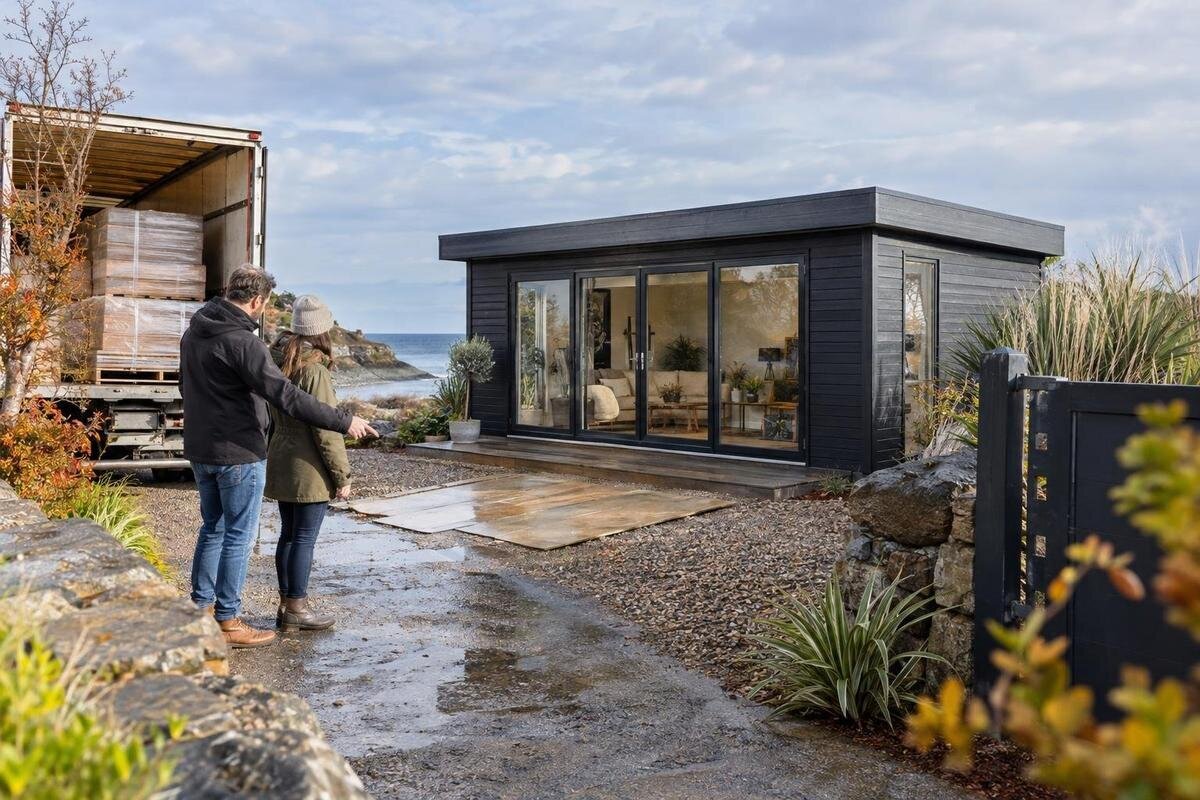
Black Friday buying guide
If you’re planning to buy a garden shed on Black Friday, a tempting offer is only useful if delivery works at your property. Before checkout, establish where the vehicle can stop, how the goods will be unloaded and whether the route to the intended site meets the seller’s requirements. Garden shed delivery access depends on your address and exact order; it cannot be judged from a product name or photo. Confirm the arrangements with the seller before placing the order.

Before you order 1
Make delivery part of the Black Friday purchase
Treat delivery as part of the buying decision, not a detail to resolve after checkout. Black Friday can put attention on an advertised price, but that alone does not tell you whether a particular garden shed is on offer, how it will be transported or whether the service suits your property. Read the current product and delivery terms for the exact item and postcode, and ask the seller to explain any gaps. If an offer is displayed, review its conditions separately. Also ask whether any delivery amount shown applies to your postcode and the access arrangement you need. Compare the whole order you can accept, rather than leaving access and unloading undecided.
Before comparing models, map the final part of the journey: the street approach, likely stopping area, unloading zone and route to the intended site. Note narrow gates, turns, shared driveways, overhead obstacles and places where a vehicle might need to turn. Clear photos can explain a constraint better than a vague description, while simple measurements make questions more precise. Do not use them to guess a vehicle’s suitability; ask the seller or carrier what limits apply. Keep the Verdana 1 garden house listing beside your notes so everyone is discussing the same product. This preparation makes comparisons easier without assuming a model includes a particular delivery service.
Read the exact listing and ask for package details
Record the exact product name, selected model or variant, quantity, destination postcode and address; the seller needs the same order details you will enter at checkout. Ask how the goods are prepared for transport, how many packages to expect, and the packed dimensions and weights of each. Also ask whether the order arrives assembled, in components or in another format; do not infer this from a finished-product photo. A listing’s overall size is not a substitute for the measurements of the packages that must pass through a gate or around a corner. Where a detail is absent, request information that applies to your selection before paying.
Check that the answer covers the exact option and quantity in your cart, and ask whether the dimensions include protective packaging and which package is largest. One long or bulky package may determine whether the route works, even when the shed’s overall footprint seems manageable. Use the Verdana 2 product page to identify the item in your question, not as evidence of freight size, package count or handling. Keep the page and the seller’s reply together. If you change the model, option, quantity or address, confirm that the delivery details still apply to the revised order rather than carrying an earlier answer across automatically.
Before you order 2
Check whether the vehicle can reach the property
Think from the road to the vehicle’s possible stopping point, not just about whether your property has a driveway. Note narrow approaches, tight turns, low branches, overhead obstacles, steep sections, soft or uneven ground, and whether a vehicle has room to turn or leave. Check for height limits and changes in clearance along the approach, not only at the entrance. Ask what vehicle size or access conditions apply to your order; the product page does not normally tell you what transport will be used. If the route includes an unsealed, shared or particularly narrow road, describe it rather than assuming the carrier can proceed. Photos along the approach can help explain the conditions.
Give specific information, such as measured gate or road clearances, the tightest bend and any height limit, then ask whether the proposed delivery arrangement can use that route. Do not rely on a postcode being serviceable as proof that a delivery vehicle can reach the unloading point. For the Durano spacious garden house page, identify the exact listing and explain the access at your address; its name provides no information about the vehicle. If access is uncertain, ask whether an alternative stopping point is possible and what it would mean for unloading before placing the order.
Trace the route from the drop-off point
Vehicle access and movement of the goods are separate questions. A delivery vehicle may be able to enter your property yet stop some distance from the intended shed site, so ask exactly where the carrier hands over the order: at the kerb, driveway entrance, another agreed spot or further inside. Then trace the route from that point to the intended site, including gates, steps, slopes, narrow turns, thresholds and changes in level. Walk the route rather than relying on a map, which may not show a gate or step. Delivery to your street address does not automatically mean the goods will be carried beside the place where you plan to use them.
Compare the route with the package measurements and handling method supplied by the seller, not just with a finished shed’s listed footprint. Check each opening at its clear usable width and note obstacles that cannot be moved on delivery day. A long package may need more turning space than the opening alone suggests, so ask the carrier whether its agreed service can manage the route. Do not assume a driver will take a package through a side gate, up steps or around a building. Use the Veltor 1 listing to keep the product reference clear while getting a separate answer about the route to your site.

Before you order 3
Allow room for unloading and temporary storage
Allow for three distinct areas: room for the vehicle to stop and work, a place where the delivery can be set down, and the shed’s eventual position. They may not be the same patch of ground. Ask the seller or carrier how much clear space the unloading method needs, including room for any doors or lifting equipment to be used if relevant. Remove cars, bins, garden furniture and other movable obstructions from the agreed area. If the proposed unloading point is soft, sloping, uneven or difficult to reach after rain, describe that condition and ask whether it meets the provider’s requirements rather than making your own assumptions.
Plan where the packages can stay if the shed will not be moved or assembled straight away. The finished item’s dimensions are not a reliable guide to the space its transport packaging occupies, so request the size and number of packages and leave usable access around the chosen storage spot. Ask the seller what protection is needed if the packages cannot go indoors; do not assume packaging can be left exposed to weather. The Orello 1 listing helps identify the product you are discussing, but its name does not state parcel dimensions or storage instructions. Keep these questions separate from advice about preparing the final site.
Confirm who unloads and what equipment is needed
Ask what the delivery service actually includes. Clarify who unloads the vehicle, whether the handover is at the kerb or another agreed point, whether packages are carried any distance, and whether a tail lift, forklift, crane or other equipment is required or supplied. These are questions, not services to assume from the word delivery. Delivery, unloading, unpacking, placement and assembly are separate tasks, so ask which ones are included in the arrangement. If equipment is needed, confirm who provides it, who operates it and what clear space or access it requires. Where a seller and freight carrier are different parties, find out which one can confirm the plan.
Confirm whether a recipient must be present, what notice the carrier gives and whether you need to arrange help or equipment. Do not plan to move packages yourself unless the handling requirements and your arrangements make that appropriate; if they do not, organise capable help before ordering rather than relying on the driver to improvise. Ask about the exact service for the Modano 1 listing as a delivery question, separate from the product description. If the seller cannot explain the handover or unloading responsibility, treat that as an unresolved purchase condition, not a detail to discover when the vehicle arrives.
Before you order 4
Disclose address restrictions and site requirements
Check the address as carefully as the vehicle route. Confirm that the seller accepts delivery to the full postcode, including any unit, rural address or alternate access point, and provide accurate contact details and access notes. Shared driveways, locked gates, building entry systems, narrow car parks and delivery-time restrictions can affect the practical plan even when the street address is correct. If the accessway is managed by a body corporate, strata or property manager, ask them about relevant access or booking requirements before choosing a delivery date. Do not assume a carrier can enter a shared area without the necessary arrangements.
Ask whether a remote or difficult-to-reach address changes the available service, the quoted delivery charge or the handover location; do not guess from an online postcode checker alone. Make sure the address, unloading point and access instructions on the order match what you discussed, and ask whether those notes will be passed on to the carrier. A product page cannot confirm whether your particular lane or building can be served. When comparing the M timber garden shed listing, include the destination and constraints in the same enquiry so the seller’s response relates to your actual purchase. If the only workable drop point is outside the property, agree how the goods will be received and moved before paying.
Get the delivery timing and arrangements in writing
Black Friday ordering and delivery dates are separate pieces of information. Ask for the current estimate for dispatch and arrival, whether any date shown is an estimate or a booked appointment, how much notice the carrier gives, and whether tracking or a contact number is provided. If the shed is needed for a planned project, decide whether the expected timing is workable without assuming it will arrive by a particular day. The seller should clarify what the stated timing means for your postcode and selected item; do not rely on a date copied from another product or order.
Before checkout, get a written answer covering the exact model and options, destination address, access limits, agreed handover point, unloading method, expected timing and what to do if the carrier cannot reach the agreed spot or no one is available. Ask about appointment changes, failed access and any associated charges or rebooking conditions; terms can vary, so read the seller’s stated process rather than presuming one. Use the Timber Tool Shed S page in the enquiry so there is no confusion about which listing the estimate refers to. Keep the reply with the order confirmation.

Before you order 5
Prepare for delivery day and changes
Recheck the plan shortly before delivery. Make the approach and agreed stopping area clear of parked cars and movable obstacles, arrange access to gates as agreed, and keep the unloading zone available. Ensure the nominated recipient can be reached and knows the handover point, any access notes and who is expected to unload. Keep shared areas clear for the agreed operation. If weather has softened the ground, the site has changed or a gate will be unavailable, tell the seller or carrier before dispatch and ask what adjustment is possible. Do not assume the driver can work around a new obstruction or change the agreed drop point.
At handover, compare the packages with the delivery paperwork if provided and look for visible damage or missing items. Record what you can see and contact the seller through the stated process promptly; follow its instructions about reporting and retaining packaging. If the load cannot be unloaded as arranged, ask the carrier or seller what options are available rather than pushing ahead with an unsafe or unagreed method. Keep a note of whom you spoke with and the response. These simple records make it easier to resolve a discrepancy without guessing at the next step.
Compare the full order before you buy
Compare the complete purchase, not just the model name or any Black Friday price shown. Check that the advertised item, quantity, delivery charge and unloading service refer to the same order, then weigh the timing and access requirements against your plans. A delivery offer is not comparable if one stated price stops at a different handover point or leaves equipment to you. Read the offer terms, if present, for eligible products and delivery conditions, but do not infer a saving, service or deadline that is not stated. This keeps a seasonal promotion separate from the practical service you need.
A sensible go-or-no-go check is straightforward: can the vehicle reach an agreed stopping point; can the goods be unloaded and stored or moved by an agreed method; is there enough room for that operation; and are the timing and responsibilities clear? If any answer is unknown, contact the seller and resolve it before ordering. If access works only with a special arrangement, keep that agreement in writing and check it appears in the order details. Once those points are settled, you can choose a garden shed on the basis of the product and terms that actually suit your property, not an assumption about delivery.
Frequently asked questions
How can I tell whether a delivery vehicle can reach my property?
Describe the full approach, including narrow roads, turns, gates, slopes and overhead obstacles. Give the seller or carrier measurements and clear photos, then ask what vehicle and access conditions apply. A serviceable postcode alone does not confirm that a vehicle can reach your unloading point.
Does delivery include unloading at the shed’s final position?
Do not assume it does. Ask where the carrier will hand over the goods, who unloads them, whether anything is carried further into the property, and what equipment or help is required. Confirm these arrangements before ordering.
Are the product dimensions enough to check access?
Not necessarily. Overall product dimensions do not tell you the size, number or weight of the transport packages. Ask for those details and compare them with gates, turns and the route from the agreed drop-off point to the intended site.
When should I confirm delivery arrangements during Black Friday?
Before checkout. Confirm the delivery estimate, vehicle access, handover point, unloading responsibility and any special requirements with the seller. If you change the product, option, quantity or address, check that the arrangements still apply.
What if my property has a shared driveway or access gate?
Tell the seller about it before ordering and ask how the carrier will receive access instructions. Where another person manages the shared area, check any relevant access or booking arrangements with them. Make sure the agreed drop-off point is clear.
A garden shed purchase is ready when the delivery can reach an agreed stopping point and the goods can be unloaded under conditions you have confirmed. Settle the route, handover, handling method and space for the packages before checkout. That way, you can compare the product and any stated Black Friday offer on practical terms, instead of leaving a difficult access question until delivery day.
