
Buy windows only or arrange installation too?

Window planning and purchasing routes
Quotes for the same windows may cover very different projects. A supply-only order leaves the survey, fitting, site logistics and coordination of separate trades with you or your appointed specialists. When delivery and installation are combined, the provider handles more stages, although preparatory and finishing work may still sit outside the contract. Choose by examining responsibilities rather than package names. Before comparing costs, identify who approves production sizes, investigates the wall construction, deals with an unexpected opening, sets the limits of fitting work and signs off the result. One agreed window schedule and scope of work can then reveal which approach fits your planning skills, timetable and available contractors.
Compare responsibility, not the product
Frame the decision around ownership of every stage, not merely whether you will fit the window yourself. A supply contract provides the selected unit and agreed delivery; you remain responsible for checking the opening, finalising dimensions, preparing the site, appointing installers and coordinating adjoining work. This arrangement can be effective when a window contractor, construction manager or experienced renovation team already leads the project. Information must still remain consistent. The production size, measured opening, handing, fixing method and junction detail must all reflect the same design issue. Assign each approval to a named person and record which document revision controls it.
Even a fitting package may leave substantial site work elsewhere. The provider might survey, install and adjust the windows but exclude opening preparation, scaffolding, powered-shading connections, plastering, painting and waste removal. Ask both bidders to describe the scope with actions such as survey, supply, remove, carry, fit, connect, adjust, test, hand over and dispose. Beside each action, record the material provider and required site condition. That detail makes comparison possible. A cheaper unit price and a dearer combined package represent different allocations of contracted labour, customer management and unresolved coordination; they are not directly equivalent offers.
Start with a reliable window schedule
Use one window schedule as the reference for either route. For every unit, note its room, storey, position number, existing opening, opening method, handing, sill arrangement, divisions, glazing preference and unusual fitting conditions. Include photographs from inside and outside, with notes about shutters, heaters, furniture, reveals, sills and nearby external finishes. Clear labels prevent similar openings, dimensions and operating directions from being confused. A single inward-opening window cannot be ordered unambiguously until its position, interior and exterior views, and operating side are settled. Put the position and a known orientation directly on each photograph instead of trusting file names.
Treat choosing the product and approving the survey as separate decisions. Catalogue imagery and an approximate opening size may help shortlist a window, but they are not manufacturing dimensions. For supply only, agree before purchase who surveys, verifies the information and resolves inconsistencies. If fitting is included, confirm whether the quotation covers the survey, what state of site preparation it assumes and when production dimensions receive approval. Give every revision a clear identifier and document alterations. Changing sash divisions, handle position or opening direction later may affect furniture, shading and preparation around the opening as well as the window itself. Remove superseded drawings so verbal amendments cannot conflict with old documents.
Keep the whole project in view
Where supply-only can work particularly well
Supply only often suits a professionally managed site. During a renovation, for example, an architect, head contractor or established window specialist may already control dimensions, junction design and installation sequencing. Clearly designed openings in a new building can support the same split of duties. You gain flexibility in product choice and can engage the delivery and fitting parties separately, but must actively align approval, vehicle access, receipt, protected storage and the installation date. Ask the intended installer to review the configuration, dimensional information and supplied components before placing the order. Resolving a concern at that point is far easier than debating suitability after the consignment has arrived.
A small, clearly bounded job may also suit supply only, such as replacing one unit where an experienced person understands the existing construction. With fixed-glazed windows opening-sash questions disappear, but the team must still settle dimensions, fixing, safe glass handling and connections to the surrounding structure. Before buying, confirm whether the installer will review the chosen window and what conditions apply to fitting customer-supplied products. Establish who specifies installation materials and whether their procurement is included. If the contractor rejects the unit only after delivery, the consequences may extend to storage, subsequent trades and room access. Choose this route because the necessary expertise is in place, not simply because someone is willing to organise the work.
When delivery and installation simplify the process
Bundling the work can help when several unknowns coincide, including irregular openings in an older building, varied window types, restricted access or a demanding renovation timetable. A single contact may connect surveying, ordering and fitting with fewer transfers of information. The brief must nevertheless be exact. Explain whether existing frames are exposed or concealed, whether complete removal is expected, and whether fragile finishes or narrow stairs affect access. Identify rooms that must remain usable and decide if the work will occur in one visit or stages. These facts shape staffing, protective measures, temporary weatherproofing and coordination with residents and other contractors.
Large operable units make the relationship among the product, site handling and fitting particularly important. For Patio Life lift-and-slide doors agree before ordering how each unit will travel from the delivery vehicle to its final opening. Verify available passage widths, lifting arrangements and responsibility for preparing the route. Establish when the door will be tested and whether nearby walls and floors receive protection. Plan the handover to later trades as well: determine when flooring or internal finishing may begin and who will communicate actual progress. A full package provides value only through defined duties, stated site requirements and a process for resolving questions; the label alone offers no assurance of convenience.
Surveying: the most consequential decision before ordering
Width and height are only part of a usable window survey. The surveyor must identify the reference plane, interpret uneven reveals and allow appropriate space for fixings and junctions. In replacement work, retaining or removing the old frame produces different starting conditions. Record the method used, the existing construction and features such as sloping sills, recesses, linings or later finishes alongside the figures. Measurements at several points can expose irregularities, yet they do not by themselves determine the production size. That calculation must be made by the person professionally accountable for the installation approach. Until the dimensional method is agreed, any product quotation remains provisional.
Coordination needs increase with shapes outside a rectangle. A triangular and raked fixed-glazed window requires a precise geometric template and agreed terms for its edges, angles and viewing orientation. Supply only remains manageable when a competent party has verified the dimensional basis and the installer accepts it. For a combined contract, ask whether the shape will be surveyed at the property, who reviews the production drawing and how approval is recorded. Do not limit the drawing check to overall width and height; confirm orientation and the location of the sloping edge. Approved order documents should capture every dimensional assumption instead of leaving it in a hand sketch or conversation.
Read junctions and preparatory work as separate scope items
What you see as the frame is only one part of the finished opening. Fixings, joints and interior and exterior interfaces connect it to the wall, insulation, sill and, where present, shading. Suitable details depend on the building fabric and wider design. Have each quotation state the proposed junction work rather than accepting a broad word such as “installation”. It should identify the finished condition on each side and the point at which another trade takes over. A qualified designer or installer can assess those details against the building. If the existing wall construction is uncertain, schedule an investigation before production approval rather than discovering the issue on fitting day.
Site preparation may govern the programme more than inserting the window. Work can involve clearing the area, shielding furniture, taking off old linings, separating adjoining components, preparing sound surfaces and coordinating exterior or interior finishes. With supply only, allocate each task to a trade and specify how the opening will remain protected between stages. In a fitted quotation, identify preparation that is included, optional or excluded. Confirm who repairs reveals, modifies sills and reinstates finishes. Describe the handover condition plainly: “window fitted and operational, internal reveal unfinished” communicates more than “installation complete”. This distinction avoids treating a functioning window as a promise that the surrounding wall will also be fully restored.
Keep the whole project in view
Choose opening style for future use
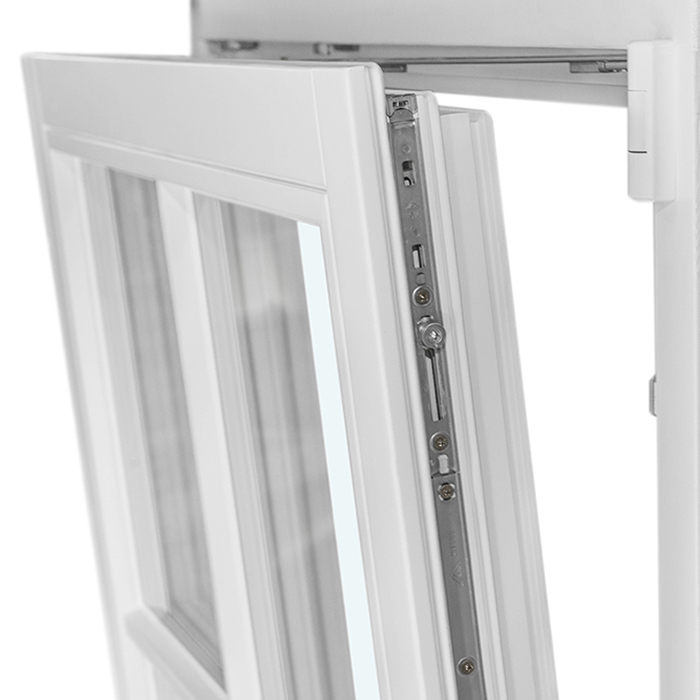
Do not let the contracting route dictate the window configuration. Begin with everyday operation, ventilation, cleaning and nearby furniture. Inward-opening sashes need unobstructed indoor space, whereas outward-opening versions affect the façade, balcony or path. For several sashes, decide which will be used most and check for interference from handles, curtains, fittings or heaters. A double inward-opening window serves a different practical purpose from two separate windows, even where their elevations appear similar. Plot the swing on the floor plan or test it in the room before approving a technically valid but inconvenient arrangement.
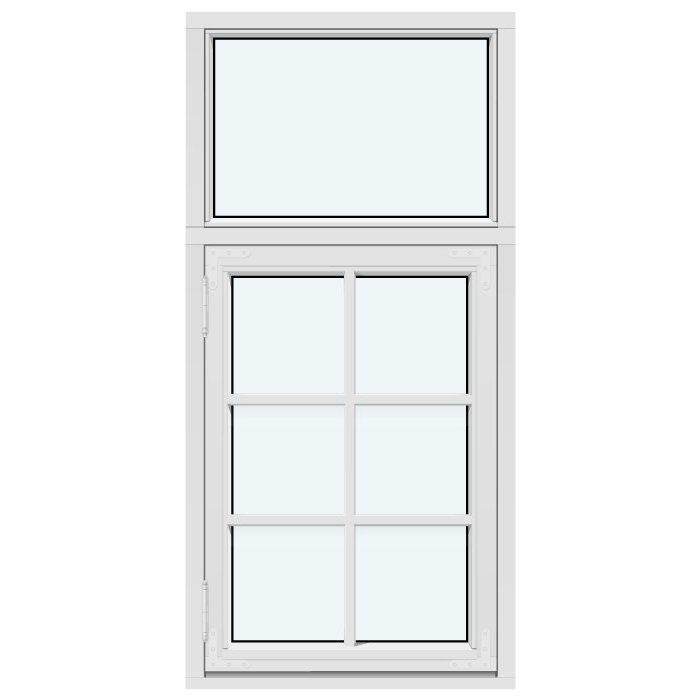
Glazing bars should also be resolved early. State whether you want them for appearance and, where relevant, whether bars dividing the glass are intended. In a building with a historic appearance, a desired elevation is no reason to simplify dimensions or junctions. A outward-opening historic-style “Kombi” casement window identifies the visible configuration only; the existing structure, survey and installation details still need project-specific assessment. For an individual replacement, provide straight-on photographs of adjacent windows and measurements that clearly locate every division. Review both exterior and interior views because the apparent handing and sash arrangement can change with viewpoint. Agreeing the elevation early avoids trying to reconcile the selected product with its position only after work begins.
Plan access, receipt and storage early
A delivery date is useful only when the consignment can be received and stored safely. Review vehicle access, unloading space, doorways, stairs, lifts and the full route to each opening. Large or heavy units may need dedicated lifting and handling arrangements. Allocate the practical duties: who attends, checks the goods, selects the storage area and prevents damage before fitting? The standard Bloomcabin delivery period is 4 to 6 weeks, subject to order confirmation. Reserve firm installation capacity only after that date is confirmed, and arrange secure storage rather than improvising. An empty patch of floor is not necessarily suitable for windows.
At handover, verify the number of units, their labels, visible transport damage and conformity with the order. Photograph any concern immediately from both overview and close range, then notify the agreed contact. If specification or completeness is seriously in doubt, pause before unpacking or fitting the affected item. A pivoting roof window for instance, needs to be matched to its designated opening and documents rather than recorded as a generic unit. Where installation is included, decide who inspects the consignment and what happens to the schedule if a window cannot be fitted. Sound logistics cannot eliminate discrepancies, but they keep each product, its paperwork and the responsible person readily connected.
Check quotes using a comparison matrix
Build a row-by-row matrix for the competing quotations. Include product description, quantity, dimensions, opening direction, appearance, delivery, survey, removal, fitting, junction treatment, waste, ancillary tasks, programme assumptions and acceptance. Treat an omitted service as unresolved, never implicitly included. Add columns naming the person responsible and the date a decision is required. The matrix exposes both price differences and unallocated duties. Supply only may be preferable when your installer expressly accepts every remaining task; a fitted offer may be stronger when it resolves uncertain interfaces. Show optional items separately so that a genuine alternative is not confused with an unnoticed gap in scope.
For a door, examine the exterior threshold and how people will actually use the opening. With a single inward-opening patio door ensure the order and fitting documents agree on handing, swing direction and the floor interface. Find out what information remains outstanding at approval and which activities rely on other contractors. Align payment and production-release stages with the project programme instead of focusing only on the final amount. Simple rates per square metre or unit do not make quotations comparable: removal, access, junction work and reinstatement can make similarly sized projects very different. The useful figure is the documented work still left for you to commission, coordinate or perform after the promised scope ends.
Acceptance, records and dealing with discrepancies
Set aside time for acceptance rather than reducing it to a signature at the end of a tiring day. Work through the position schedule, confirming that each unit matches the order, sashes and hardware function, glazing has no visible damage and contracted tasks are complete. List outstanding work separately. Each record should state the position, observation, supporting photograph, responsible contact and next agreed action; “check window” is less useful than a precise reference and description. For supply only, decide in advance who assesses the fitted work and who receives product enquiries. With one installation provider, prior agreement on scope and inspection steps makes handover clearer.
File the quotation, order confirmation, approved sizes, drawings, delivery docket, photographs, correspondence and acceptance record together by window position. Written records are more dependable for later enquiries than recollections of calls. Bloomcabin windows and doors have a 5-year commercial guarantee, governed by the terms and documents for the particular order. This guarantee operates alongside any non-excludable rights that apply under Australian Consumer Law. It does not replace goods inspection or determine whether an issue arose from the product, fitting, junction work or a later contractor. Record the business responsible for each activity so post-installation concerns can be assessed and directed using a clear account of responsibilities and the original condition.
Frequently asked questions
Is buying windows without installation always cheaper?
No. A lower-looking unit price may leave the survey, installation, on-site handling, junctions and incidental work for separate engagement. Price both approaches against an identical task list. Consider the work already assigned with confidence, the risks that remain divided among parties and the project coordination you would still need to provide.
May I measure windows myself, then arrange installation?
Yes, provided the intended installer reviews and accepts both your dimensional basis and the chosen unit before purchase. Document who verifies the figures, calculates the production size and makes decisions when records disagree. Taking opening measurements yourself does not amount to professional approval for manufacture or mean that the eventual installer has adopted your survey.
What belongs in a quote for supply and installation?
List the supplied units and state whether the price covers surveying, removal, movement around the site, fitting, junction treatment, adjustment, waste disposal, protection and acceptance. Record exclusions and site prerequisites with equal care. Replace broad promises such as “everything included” with named tasks, materials, finished conditions and handover points.
Who coordinates the installer and delivery for supply-only purchases?
Usually, coordination remains with you or an appointed construction manager. Bring the confirmed delivery date, access arrangements, protected storage, goods receipt and installer availability into one programme. Give the installer enough time to examine the order, dimensions, configuration and planned junction details. Missing information or unassigned work can then be identified before the windows reach the site.
What if there is a problem with delivery?
Reconcile the delivered quantity and position labels with the order, and inspect for visible damage. Photograph and report discrepancies immediately through the agreed channel. If there is serious uncertainty about an item, keep it out of the installation sequence until clarified. For a combined package, nominate beforehand who will inspect the goods, create the record and coordinate the response.
Next step
Choose the contract route to suit the way your project is managed, not a general rule. Supply only is logical when competent people already control the survey, fitting, logistics and site. A combined delivery-and-installation arrangement may reduce pressure where the existing construction is uncertain or interfaces are numerous, but only if its scope is explicit. Begin with an accurate window schedule, approved production dimensions and a frank description of site conditions. Compare responsibility for surveying, removal, junctions, access, protection, reinstatement and acceptance rather than comparing package names. The sounder offer is the one whose boundaries are clear and compatible with the contractors delivering the rest of the project.
