
Buying a Garden Shed for a Home Gym: What to Consider
Garden shed buying guide
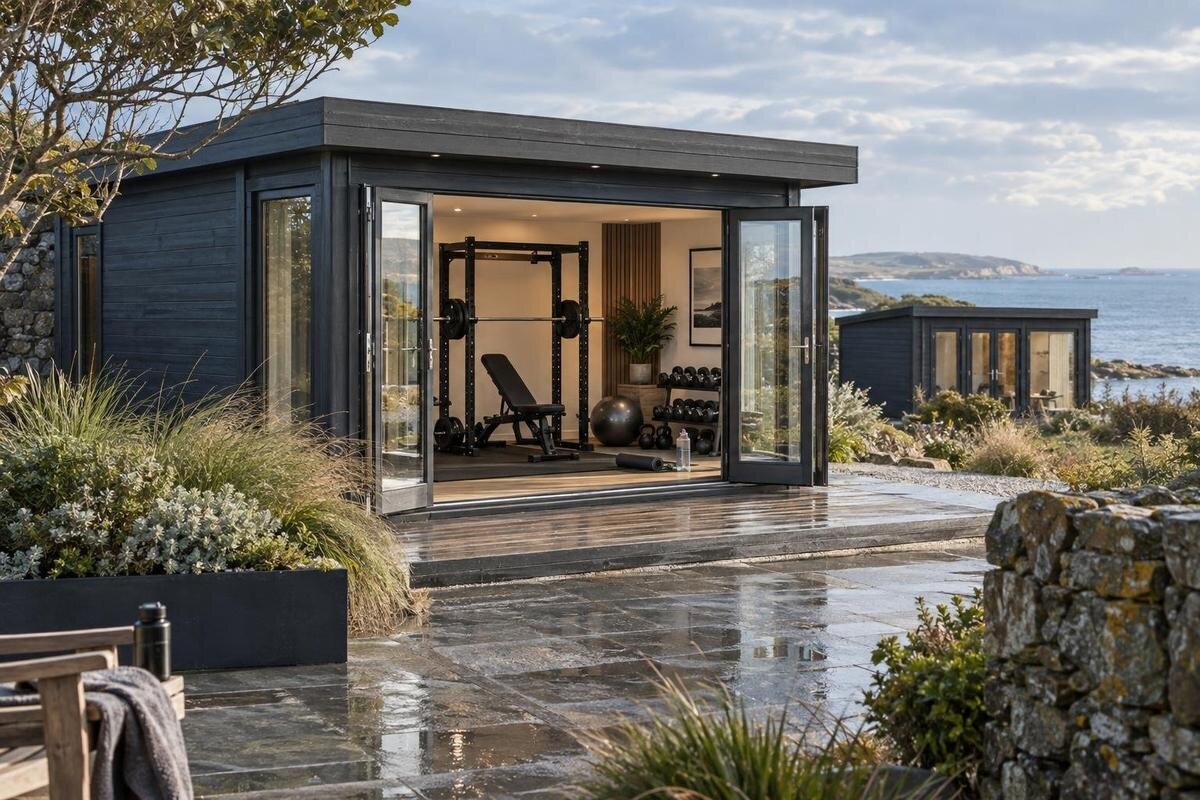
Planning a backyard gym involves more than finding a garden shed that looks spacious. Each piece of equipment needs room for its full movement, a practical route through the doorway and a floor and base suited to the intended use. Heat, moisture, light and the location on your property also affect how comfortable and convenient the room will be. Measure your equipment and site before comparing models, and treat missing product details as questions to resolve before ordering.
01
Match the shed to your training routine
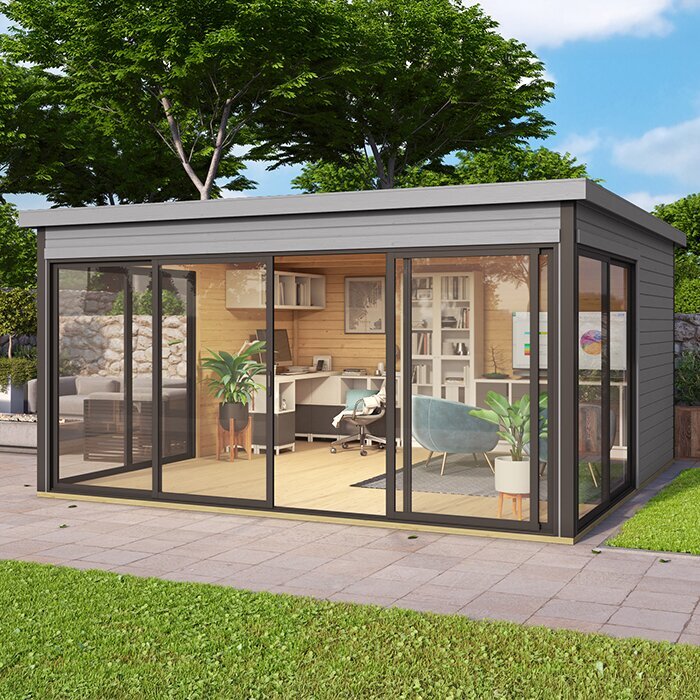
Before comparing sizes, list the sessions the room must support. A setup for a stationary bike and a few weights needs a different arrangement from one built around a barbell, bench, rowing machine or regular floor work. Write down every item you own, likely additions, whether more than one person may train at once, and what needs to be stored between sessions. Decide whether the shed will be gym-only or shared with garden tools, boxes or bikes; shared storage takes clear floor area away from exercise. Note which activities need open floor or overhead reach, and how often you would move bulky gear. That inventory keeps size decisions tied to actual use.
Rank each requirement as essential, useful or optional. Essentials might include enough headroom for movements you actually do, room to use one item without shifting another, and an entrance that can take bulky gear. Mirrors, extra shelving and decorative finishes should not displace those priorities. For every listing, including the Verdana 1 garden house, record any stated internal dimensions, access details, floor information and included items. Mark missing facts as questions rather than guessing from the model name or image. Also note which equipment needs to stay assembled; repeatedly setting up and packing away can take space and make daily use less practical. This gives you a like-for-like comparison grounded in your routine.
Measure equipment in use
Measure every item in the state in which you will exercise, not only as it sits folded or parked. Record its length, width and height, then note moving parts: a rower's rail, a bench in working position, a bike's handlebars or a machine's arms can extend beyond its base. Use the equipment maker's guidance for operating clearances and include that space in your plan. Measure racks, benches and accessories separately, and note whether one item must be moved to use another. Record whether dimensions describe stored or operating size; if equipment will be carried in assembled, include its largest dimension. If it can be dismantled, decide whether assembly inside is practical.
Compare those figures with the shed's clear internal measurements and entrance opening, not just its outside footprint. For the Verdana 2 garden house, use measurements stated for the exact model or request missing ones; don't scale a photo or infer clearance from perspective. Check ceiling height at the points where equipment and movement will be, especially if the roof profile varies. Keep the source of each figure beside it so package, external and internal measurements do not get mixed. A paper plan marked to scale, or a full-size outline made with tape, can expose a tight fit before an order is placed.
02
Compare usable internal dimensions
An outside length and width do not show how much uninterrupted floor is usable. Walls, posts, a sloping roof, door recesses or other fixed features can change the shape of the available area. Ask for a dimensioned plan and clear internal measurements at relevant points, including ceiling height where overhead movements matter. Confirm which figures describe internal space and which describe the external footprint; don't compare one model's outside width with another's inside width. Ask whether thresholds, fixed features or any non-usable area are included in quoted dimensions. When comparing the Durano garden house, place stated internal measurements beside your own plan and request missing figures rather than estimating from the exterior.
Draw the actual outline, including recesses, obstructions and changes in ceiling height, then mark each equipment footprint. Add separate zones for exercise, storage and passage instead of filling every gap with a box or rack. A single floor-area figure can conceal a long, narrow layout that won't suit a bench or side-by-side equipment. Show the doorway and any windows or fixed features that affect where items can sit. If the shape is hard to picture, mark the proposed footprint with tape in a clear area at home and walk through the route between pieces. Include planned mats or fixed storage in the drawing so the same area is not counted twice.
Allow room for movement between exercises
Once items fit on paper, map the movement envelope around each one: where you step on and off, extend arms or legs, move a bench, load and unload weights, or set down a mat. Use clearances in equipment instructions where supplied; there isn't one spacing figure that suits every machine or movement. For bodyweight and stretching sessions, mark an open patch separately rather than treating any empty corner as a workout zone. If more than one person may train, check whether their exercise areas can be used at the same time. Test the order of your usual exercises on the plan, including the space needed to change from one activity to another.
Check that exercise zones do not overlap in a way that makes you move heavy equipment between activities. Preserve a direct route to the entrance, and account for the door's opening method if it takes room inside. Put storage where it won't become an obstruction or force equipment into a movement area; keep frequently used items within practical reach. A model name such as Veltor 1 does not establish the clear space available for training. Compare the layout information provided for the exact model with your movement plan, and ask for details that are missing rather than assuming the floor area is all usable. The aim is a workable arrangement, not simply fitting the largest number of items.
03
Check access before delivery
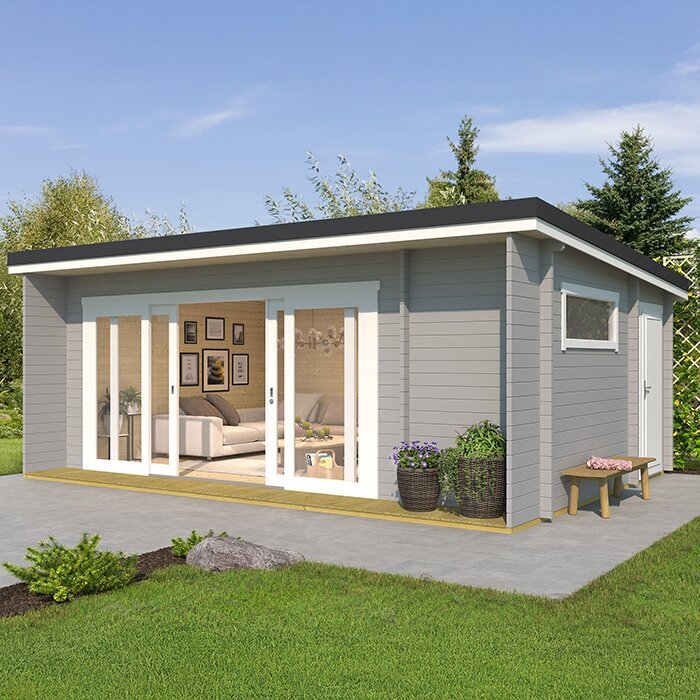
A home gym can fail at the doorway before interior size matters. Measure the clear width and height of the entrance at its narrowest point and the route from where items will be unloaded: a gate, side path, corner or step can restrict movement. Compare those openings with the largest equipment dimensions and the size of packaged pieces. Ask for the actual clear opening, not a nominal door size, and confirm whether the selected item can be taken apart if required. A photo or overall shed dimension won't answer these access questions, and an equipment footprint says nothing about its route indoors. Check turning room in a passage as well as its width.
For Orello 1, as for any listing, verify the clear entrance opening and how the door operates for the exact model; don't infer access from the product image. Check the everyday route as well as delivery: a narrow gate, turn or step may make it awkward to bring in bulky pieces even when the shed itself has a wide opening. Ask the seller and delivery provider what delivery covers, how packages are unloaded and whether assembly or placement is included. If equipment needs to be assembled inside, allow room to do that without blocking the entrance. Confirm where responsibility for moving packages ends, and check arrangements for your address and chosen configuration before scheduling.
Confirm the floor and base suit the equipment
A home gym asks more of the floor and supporting base than light boxed storage. A cardio machine, rack, stored plates, users and repeated movement or impact can create different demands from static garden items; concentrated weights are not the same as spreading items across a room. Don't infer suitability from shed size, appearance, a material in the model name or a general floor description. Tell the seller what equipment you plan to use, how weights will be stored and whether activities involve impact. Ask what the stated floor and base information covers. If the documentation does not address your setup, get advice from a qualified building professional before purchase rather than working out a limit from a photo.
Find out whether a floor is included, what base or support the supplier requires, and whether those details apply to the configuration you are considering. If you plan to add rubber mats, a rack, wall-mounted equipment or overhead storage, confirm that the floor or structure is suitable rather than treating walls and ceiling as fixing points. Ask a qualified professional to assess any proposed structural fixing or uncertain load condition; don't drill or attach equipment based on appearance alone. Check the exact base and preparation requirements early, because changing them after the shed is ordered can affect the project. Apply the same questions to Modano 1 if its listing leaves floor or base suitability unclear.
04
Plan ventilation for heat and moisture
Exercise adds heat and moisture to an enclosed room, so check how air can move through the exact configuration. Look for stated information about vents, windows, doors and their position; having an opening does not by itself tell you how well air will circulate. Consider whether you would use the openings in ordinary weather and whether leaving a door open is practical for privacy and security. The room's size, training intensity, number of users and local conditions all matter, so avoid relying on a universal ventilation rule. If you may need mechanical ventilation, ask an appropriate professional about options before fixing the layout.
Plan for what happens after a session as well as during it. Damp towels, mats and footwear need somewhere to dry, while moisture or condensation can affect equipment; follow the care advice for each item rather than assuming a shed will keep it dry. Hot, humid or exposed sites raise different questions from sheltered ones, and conditions vary by property. The listing for M Timber Garden Shed should be checked for stated opening and ventilation details, not judged from its name or image. If those details are not clear, ask before choosing; if using fans or cooling, include their power needs in the plan and consult a qualified electrician about supply and outlets.
Account for light, privacy, noise and power
Work out how much natural light you want and when you will train. Sun position changes through the day, and direct glare can make it harder to use screens or mirrors; windows can also affect privacy from the house or neighbouring properties. Visit the proposed site at likely workout times, note sightlines and shade, then compare actual window and glazing details stated for each option. Don't assume a product image shows the precise configuration offered. If you plan to mount mirrors or shelves, confirm suitable fixing points instead of assuming the wall can carry them. Plan task lighting too if sessions will happen after dark.
Noise and power deserve separate checks. A treadmill, weights or speaker may be audible outside the shed, so consider nearby rooms, neighbours and the hours you expect to train rather than assuming the structure will soundproof the space. List each item that needs power, where outlets would be useful and how cables can stay out of movement routes. Include lights, a fan or cooling if planned, but don't plan electrical work from a product photo. Ask a qualified electrician about supply and outlet positions before ordering. For Timber Tool Shed S, as for any model, verify the stated openings and layout rather than assuming its label tells you whether it suits your routine.
05
Assess the backyard position and site
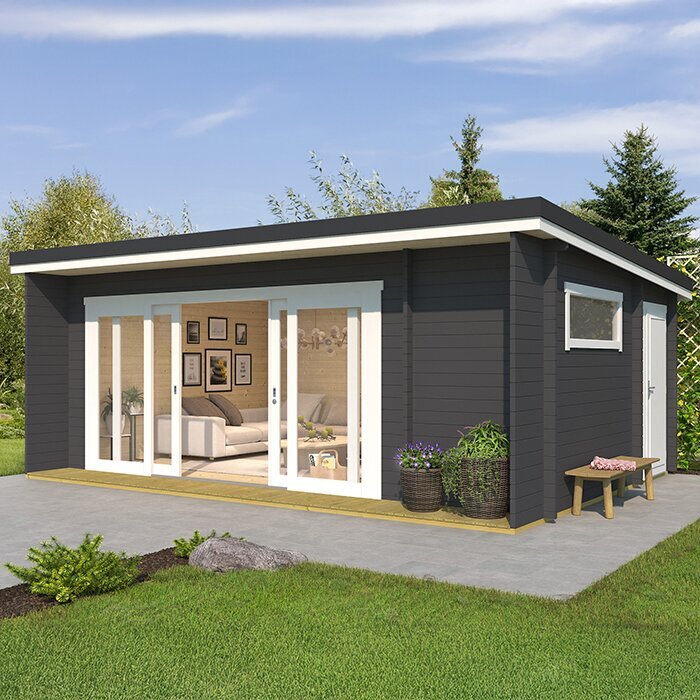
Measure not only the shed footprint but also the space needed for access, any clearance specified for assembly or maintenance, and a route from the house or gate. Check the proposed ground against the supplier's base requirements; don't assume a lawn, slope or existing paved area is suitable. Notice where water runs or collects after rain, and whether nearby trees, fences, bins or service paths affect access. A level-looking patch isn't proof of suitability. If ground preparation or drainage is uncertain, ask the supplier or a qualified site professional before ordering rather than choosing a base by guesswork.
Consider sun and shade, privacy, noise from nearby rooms, and how the garden will be used around the shed. Keep access to doors, paths and areas that need maintenance, and allow the delivery route to remain clear. If any local planning or building requirements might apply to the intended position, check with the local council or a qualified professional before committing; this is a site-specific question, not something to infer from another property. Record the final footprint and route on your site plan, then compare them with the supplier's stated dimensions and preparation instructions.
Check the listing and full order requirements
Compare models against the same short list: internal floor dimensions, clear ceiling height, doorway opening, floor and base information, ventilation and lighting details, included parts, assembly requirements and any options you would need. Separate confirmed figures from details you have only inferred, and write down unanswered questions. This makes it easier to reject a model that misses an essential criterion, even if other features look appealing. Use the model name only to identify the listing; photos and names cannot establish size, load capability, ventilation, included components or suitability for training. Ask for information specific to the chosen model and configuration, and keep the answers with your comparison notes.
Before placing an order, confirm what the quoted amount covers and what is separate, such as a base, delivery, unloading, assembly or electrical work if required. Check access constraints with whoever is responsible for delivery, and make sure the product dimensions, included items and configuration match the answers you received. Read the actual terms for payment, returns and warranty rather than assuming one policy applies to every model. A written record of key measurements and inclusions helps avoid a mismatch between the space you planned and what arrives. Treat timing and installation arrangements as details to confirm for your order, not assumptions.
Frequently asked questions
What size garden shed do I need for a home gym?
There is no standard size for every setup. Add the in-use footprints of your equipment, the clearances in its instructions, an open exercise area, storage and a route to the door. Compare that plan with clear internal dimensions and ceiling height, not just the outside footprint or a single floor-area figure. Include any items you expect to add.
How much clearance should I leave around gym equipment?
Follow the equipment maker's guidance and map the full movement, including where you get on and off, extend your arms or legs, load weights and change exercises. Requirements differ by equipment and activity, so a universal gap is unreliable. Keep the entrance route clear and don't count storage space as workout clearance.
Can I put free weights or a rack in any garden shed?
Don't assume a shed's floor and base suit free weights or a rack. Ask what the product information covers for your equipment, stored weights, users and intended activity. A floor's appearance or a general description does not establish suitability. If the documentation is unclear, seek advice from a qualified building professional before ordering.
Does a backyard gym shed need ventilation?
Plan for heat and moisture from exercise, and check the actual ventilation information for the model you are considering. An opening in a photo does not show how air will move in your setup. Consider whether you will use the openings in typical weather, and ask an appropriate professional about mechanical ventilation if you think it may be needed.
What should I confirm before ordering a garden shed?
Confirm the internal dimensions, clear entrance opening, floor and base information, ventilation details, included items and assembly requirements. Check that the delivery route works for the shed and your equipment, and ask what delivery, unloading or assembly covers. Review the actual terms for payment, returns and warranty rather than assuming they are the same for every model.
A practical home gym shed is one that fits the way you train, not simply the equipment you can squeeze inside. Measure each item in use, leave space for movement and access, and confirm the floor, base, ventilation and site requirements for the exact model you are considering. Once those points are clear, comparing listings and confirming the order becomes much more straightforward.
