
Buying a Large Garden Shed: Choosing the Right Footprint
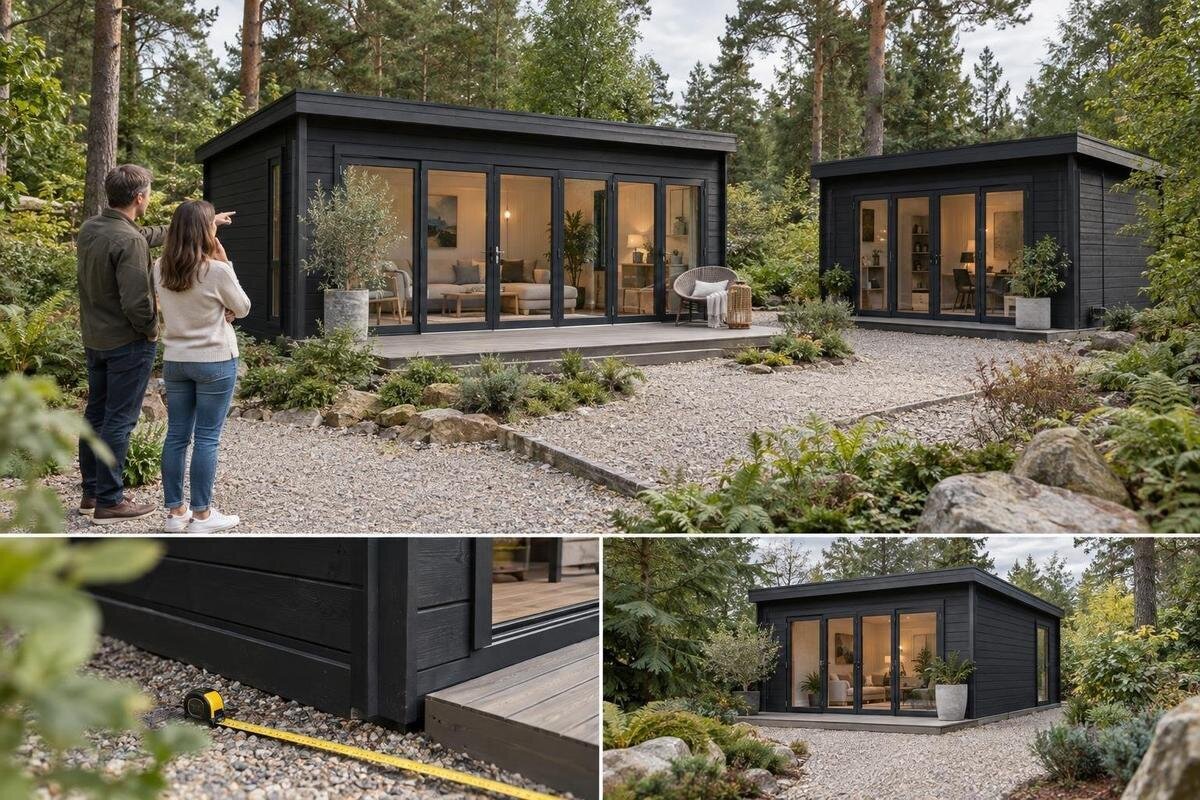
Garden shed size guide
Buying a large garden shed is a balance between storage capacity and the space it takes from your backyard. A sound choice starts with the items you need to store, then checks the shed’s actual outside dimensions, usable interior, door opening and delivery route against the site. This guide explains how to compare those measurements before choosing a footprint.
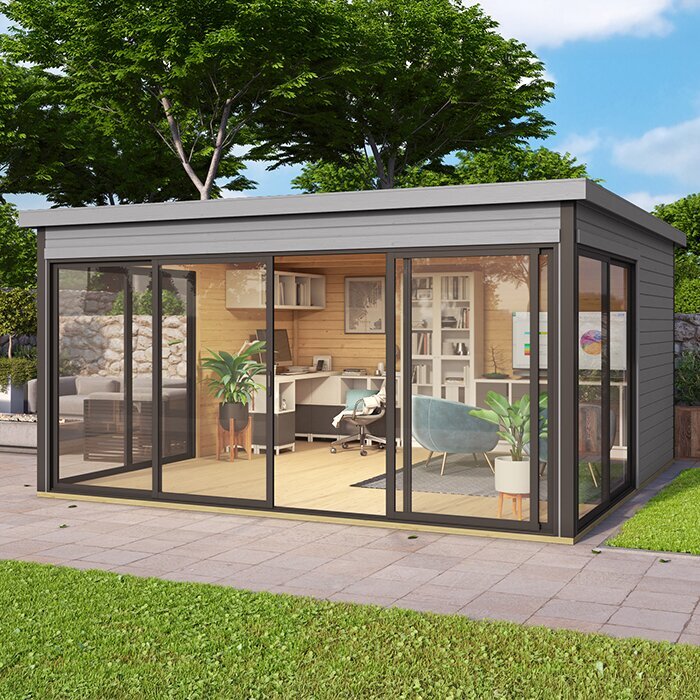
List what the shed needs to hold
There isn’t a universal measurement that makes a garden shed “large”; the useful size is the one that holds your actual list and leaves items accessible. Write down what needs to go inside, separating everyday equipment from seasonal or occasional storage. Include bulky items such as a mower, wheelbarrow, bicycles, bins, outdoor furniture or pool gear, along with hand tools and supplies. Count planned additions only when there is a realistic use for them. Also note what will remain elsewhere, so the list reflects what the shed truly needs to hold. A broad floor can still feel cramped if equipment needs room to turn, stand upright or be reached without shifting other belongings.
Group the inventory by how each item is stored and how often you use it. A few bulky pieces can demand more floor area than many cartons; stackable boxes may use vertical space, but only if you can reach them safely. Note items that need to stay upright, fold, roll out or be opened in place. Separate weekly-use belongings from things brought out once a season, then sketch likely storage zones. The drawing needn’t be to scale yet. It should reveal whether you need open floor space for equipment, a clear aisle, or a mix of shelves and floor storage—layouts that can call for different proportions even when the overall area is similar.
Measure bulky items and the space to use them
Measure the largest items in the way they will enter and be stored. For a mower, include the widest point across its handles; for a bike, record its length as well as its height. Note removable attachments, projecting handles and wheels, and check the folded dimensions of furniture that will be stored folded. If equipment needs a lid, handle or seat opened while it is parked, measure that working position too. The aim isn’t to add the same arbitrary margin to every object. It is to identify where a doorway, wall or neighbouring item could block the movement you need.
Measure the route through the shed as well as the object. A bike may fit inside but be hard to steer past stored tubs; a mower may need a fairly straight path to the door. Allow room for hands and movement where you use an item, not just the item’s outline. For any shortlisted option, including the Verdana 1 garden house, copy only dimensions actually stated on its product page. If a clear opening or internal measurement is missing, ask before treating the model as suitable; don’t estimate it from a photograph. This turns your inventory into a practical access check, not just a rough area calculation.
Separate the outside footprint from usable floor space
The word footprint usually describes the area a shed occupies on the ground, but product listings may use dimensions for different edges. Keep external width and depth separate from floor or base measurements, and note whether an overall figure includes roof eaves or other projections. The outermost dimension is the one to test against the site; a base measurement may not include every part that extends beyond it. Don’t assume two figures are comparable just because both are shown as width by depth. Read any diagram or measurement notes, and ask for clarification if the reference points are unclear.
Internal dimensions answer another question: how much clear floor and wall space can your items use? Compare inside width and depth, usable height, and the clear doorway with your storage sketch. Wall thickness, framing, a threshold or internal fittings can make usable space differ from an outside measurement, but don’t calculate a precise figure unless the seller supplies it. Assess each candidate from its own details; the Verdana 2 garden house, for example, should be compared using its stated measurements, not its name or how large it looks in an image. If one listing omits an essential figure, mark it as unknown rather than assuming.
Check the site, not just the rectangle on a plan
Measure the proposed position in the yard, not just a convenient open patch on a plan. Check the usable width and depth between fixed obstacles, including fences, house walls, trees, raised garden beds, downpipes, taps and outdoor units. Measure at the narrowest points, not only across one clear stretch. Look up for branches or eaves if the location is close to them, and consider gates and paths you still need to use. A tape measure gives the clear span, but the ground can also slope, collect water or be uneven. Note these conditions so you can check what preparation the selected product requires instead of assuming the rectangle is the only site issue.
Mark the proposed outline with string, chalk or a hose, then walk around it. Check whether you can reach the doorway and retain access to nearby garden areas; space for maintenance matters too. Mark the door opening separately, because the footprint alone doesn’t show the space needed when the shed is in use. If you’re considering the Durano garden house, compare its stated dimensions with the position you have measured rather than estimating from an image. Where planning or siting requirements could affect the location, confirm them with your local council or a qualified professional before ordering; a general size guide can’t confirm local rules.
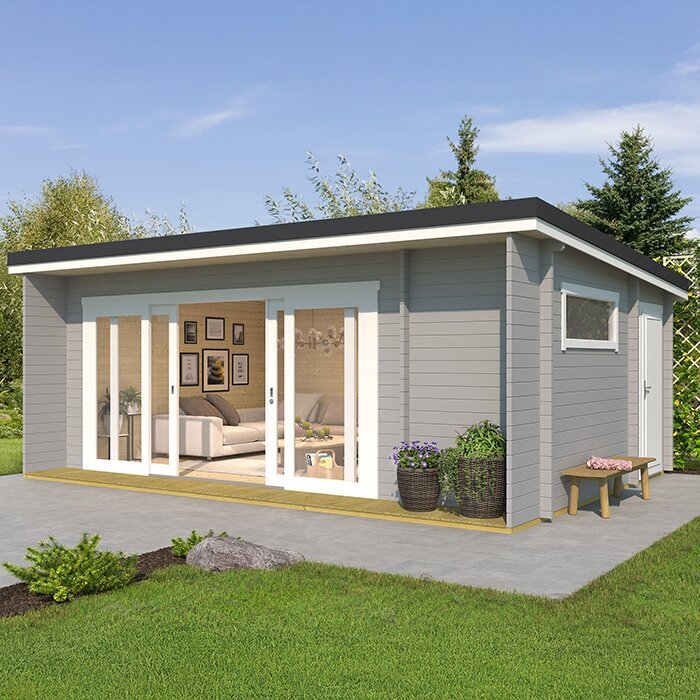
Allow for the doorway and the route inside
Door access can decide whether a large shed works for bulky items. Check the clear opening, not just the outside width of a door panel, and compare it with the widest object you need to move through. If the design has a hinged door, mark its swing and handle space; if it slides or folds, check where the panels travel and whether stored items could block them. Also consider the approach: can you turn a bike or wheelbarrow into the opening, or will a fence, corner or step narrow the route? A threshold may affect wheeled equipment. These are practical fit questions, not details you can settle from the shed’s advertised floor area.
Inside, leave a workable route between the entrance and equipment you use often. If items will be stacked near the door, make sure they don’t obstruct it or prevent you from getting the bulky item out first. A narrow clearance can make stored space difficult to use, even when the dimensions technically fit. For the Veltor 1 listing, verify the clear opening and door arrangement from the information actually supplied before comparing it with your measurements. If a figure is unclear, ask for a confirmed measurement; a product image can show a door but cannot establish its usable width or swing.
Confirm delivery access to the backyard
Access for delivery is different from access once the shed is in place. Trace the route from the likely drop-off point to the chosen site: measure gates, narrow passages and tight turns, and note steps, slopes, overhead branches or low eaves. A completed shed’s footprint won’t tell you whether its parts can reach the backyard. Depending on how it is supplied, packages may have dimensions and handling requirements that need checking separately. Take measurements of any tight point and share them with the retailer when asking what delivery access is needed for the exact option.
Before placing an order, clarify who unloads the goods, where they can be left, and whether the delivery arrangement covers moving them to the final position. Don’t assume a driver will carry items through a narrow side passage or that packaging will be split into small sections. Ask what happens if the route is inaccessible and whether you need to arrange a different drop point. For the Orello 1 product page, as with any candidate, don’t use the model name to infer package dimensions or delivery arrangements; confirm those details with the retailer. This can prevent choosing a shed that fits the garden but cannot be brought to it as planned.
Plan where everything will sit inside
A large external footprint can still be inefficient if the inside has no planned arrangement. Draw the floor as a simple rectangle and place the largest items first, keeping doors, drawers and lids in their in-use positions. Reserve the clearest route for things that must be wheeled in and out; put occasional-use boxes away from that route rather than making them obstacles. If you want a potting or repair area as well as storage, show the bench or work surface in the sketch and allow space to stand in front of it. This can reveal whether you need more width, more depth or simply a different layout.
Use wall height only for storage you can reach and that is suitable for the structure and fittings. A tall item may use little floor area but still need height clearance; shelves can add storage while narrowing an aisle. Don’t assume shelving, hooks, a floor or other fittings are included unless the listing says so, and check any stated limits with the seller rather than inferring them. When assessing the Modano 1 listing, compare its stated internal measurements with your sketched zones. If those figures aren’t available, the outside footprint alone can’t confirm that the intended arrangement will work.
Balance extra capacity with the garden space it uses
Choosing a bigger footprint can make sense when the stored inventory needs it, but unused space takes up part of the garden. Think about what the shed will displace: a path, lawn, garden bed, clothesline, seating area or room to manoeuvre bins. A building that fills the only access route can make ordinary yard tasks harder, even if it holds more equipment. Consider views from the house and whether you can reach the doorway without walking through a planting bed. These aren’t just cosmetic details; they affect how practical the chosen location remains once the shed is occupied.
Set a realistic reserve for likely additions rather than filling every spare corner on paper. If you expect to add another bicycle or a larger mower soon, include that item in the sketch now. If an imagined future use has no clear plan, a smaller footprint may preserve more flexibility for the yard. Check that a larger option still leaves a route for maintenance, access to existing taps and gates, and any outdoor activity you want to keep. Include M timber garden shed in your comparison only on the basis of its own stated dimensions and details; its name can’t tell you whether its capacity matches your future list.
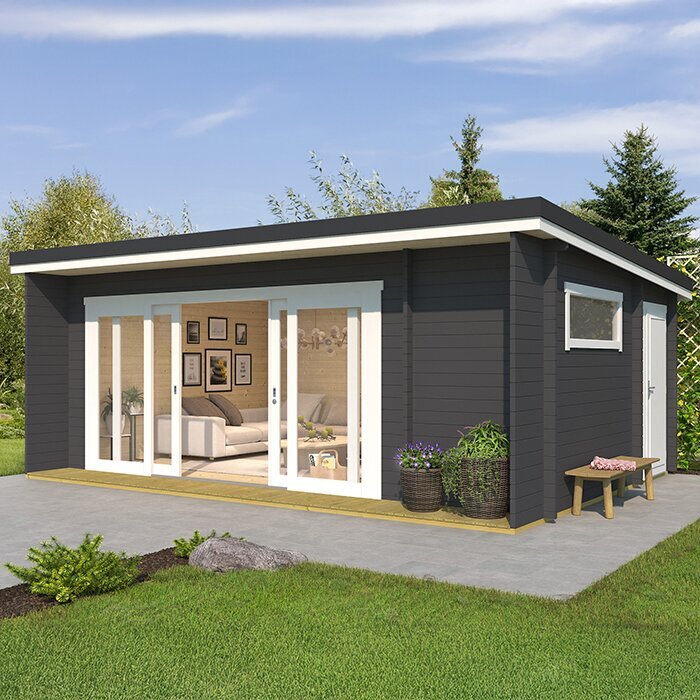
Compare published dimensions consistently
Create a short comparison table so each candidate is judged by the same measurements. Record external width and depth, the overall size including projections if given, base or floor dimensions, internal floor width and depth, clear door opening and height. Write units beside every number—metres for the broad outline and millimetres when small differences matter—and label each figure as external, internal, base or overall. This prevents a common mistake: comparing one shed’s outside dimension with another’s internal floor area. If a plan or diagram is supplied, check what its arrows measure and whether the dimensions are described as approximate or exact.
Add three columns beside the figures: site fit, item fit and unanswered questions. A candidate needs to meet all three, not just have the largest advertised area. Use the Timber Tool Shed S page as one option only if the measurements actually provided answer the points you need; don’t infer its size from the model name, a photograph or another shed in the range. If a key figure is absent, ask the retailer whether it can be confirmed. Keep the response with the product details so you don’t end up comparing from memory or mixing measurements from different models.
Test the shortlisted size on the ground
Before settling on a size, mark the shortlisted footprint on the ground using a tape, rope, chalk or temporary markers. Mark the door’s full movement separately, then place boxes or garden equipment in the proposed positions to represent your largest stored items. Walk the route from the side gate or delivery point to the entrance, and imagine carrying or wheeling an item in. Can you get it around the turn, open the door, park it and still reach other belongings? A ground-level test can make a tight pinch point obvious before an order is placed.
Recheck the outline against your site notes and comparison table. A candidate that fits only if you block a path, lose access to the garden or leave no room to use its doorway isn’t a good practical fit. If two footprints both meet your storage needs, compare how comfortably their interiors can be arranged and how much usable yard each leaves; the larger one isn’t automatically better. Resolve unknown dimensions, delivery access and any relevant site requirements before deciding. Choose the footprint that gives your belongings a workable home without taking space you rely on elsewhere.
Frequently asked questions
What size counts as a large garden shed?
There is no universal footprint that defines a large shed. Judge it by the outside dimensions, the usable interior and the items you want to store. A shed is only large enough if the contents fit and you can still reach and move them.
Should I compare internal or external dimensions?
Both matter. Compare external dimensions with the space available in your yard, then use the stated internal dimensions and clear doorway to check whether your belongings will fit and remain accessible. Confirm what each measurement refers to if the listing is unclear.
How much clearance should I leave around a garden shed?
There is no single allowance for every shed or site. Door movement, access for maintenance and any applicable siting requirements affect the space needed. Check the product information and confirm local planning questions with your council or a qualified professional.
How can I check whether a shed will fit through a side gate?
Measure the narrowest points along the route, including gates and turns. Ask the retailer for relevant package dimensions and delivery requirements, as the assembled shed’s footprint does not show whether its parts can reach the backyard.
Is it worth buying a bigger shed for future storage?
Allow for additions you realistically expect, such as another bike or larger equipment. A larger footprint also uses more garden space, so include likely future items in your layout rather than choosing extra capacity without a clear purpose.
A suitable large garden shed is not simply the biggest model that fits inside a measured rectangle. Its outside dimensions need to suit the site, while the interior, doorway and delivery route must work for the items you plan to keep there. Use your inventory and on-ground layout to compare the figures on each product page, and resolve any important unknowns before ordering. The right footprint gives your belongings room to stay organised while preserving the backyard space you still want to use.
