
Choosing a Family Hot Tub: Seating for Everyday Use
Family hot tub guide
A family hot tub should suit the people who use it most often, not just the largest number printed beside a model. Compare the documented seating plan and occupancy with your household’s usual mix, then consider shared legroom, access and the effort of preparing a regular session.
Who is likely to use the hot tub together?
Write down who is likely to use the tub on an ordinary occasion: adults, older children, younger children or a changing mix. Then note whether people expect to use it together each time or whether a session will usually involve only some household members. This is not a headcount exercise alone. Family members may differ in height, mobility, tolerance for close contact and preferred posture, and those differences affect which positions feel usable. Include quieter household members in the discussion as well as the person who will most often organise a session. Ask each person directly about their preferences rather than letting one enthusiastic buyer speak for everyone; a layout that suits most people can still be awkward for someone expected to join.
Separate the usual group from the rare full-house occasion. Write down the combinations that matter most, such as two adults and a child or siblings with an adult, without assuming every age or body size fits the same way. Ask regular users what makes a place comfortable: a more upright posture, room to move their legs, a position that feels relaxed or enough space from another person. Include preferences that may conflict; the point is to identify compromises before comparing products. The Cove 2 catalogue page identifies a model, but its numeral does not confirm a seat count or show which family combination it suits.
What does the stated seat count tell you?
A stated occupancy is useful only when you know what the supplier means by it. Read the exact wording and keep it separate from any seating diagram: a figure for users and a count of seats are not automatically interchangeable. A headline number does not show how positions are arranged or how comfortable they feel when occupied together. Do not treat a maximum occupancy statement as a promise that every place will suit every body size or posture. Nor should you read the capacity from a model name. Treat the stated figure as one part of the decision, not as a substitute for details about the actual layout.
Use the Haven 6 product listing as one row in your comparison, not as evidence of capacity by itself. If an occupancy figure is published, record its exact wording, the document it comes from and which model it applies to. If the listing and manual appear to differ, ask which information is current rather than choosing the larger figure. Clarify whether the stated users are meant to occupy the tub at the same time and whether any qualification applies. If you cannot point to a documented position for each person in your usual group, mark the fit as unconfirmed instead of counting shapes in a photograph.
What should a seating plan show?
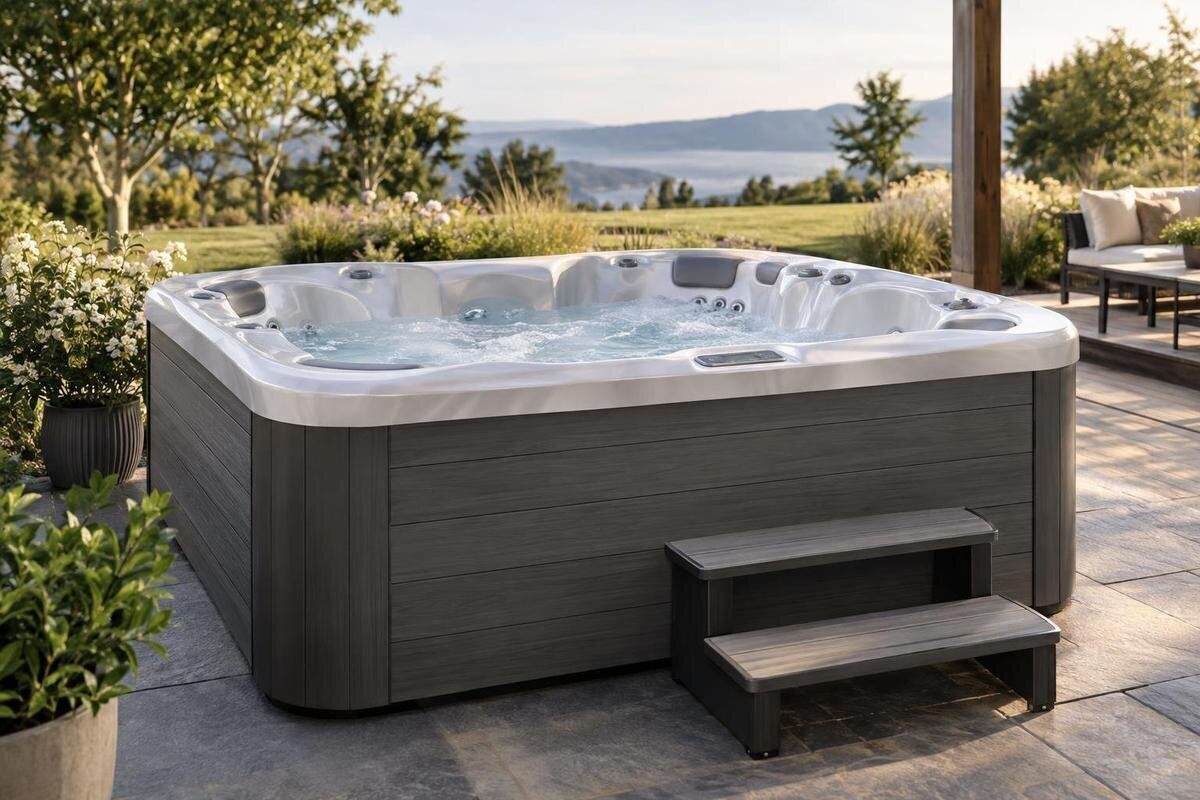
Look for a current interior plan or a manufacturer-labelled diagram that shows the actual positions. It should help you see how places relate to one another, whether users sit close together and where there is open space. Layouts across hot tubs can differ: some use individually shaped seats, while others may have a more open arrangement. Those are options to compare, not features to attribute to a particular model without documentation. Check that a diagram is for the exact model you are considering. An exterior image or a general lifestyle photograph may not reveal the usable interior arrangement, so ask for a model-specific plan if it is not provided.
Map your usual family combination onto the plan rather than looking only at the total number of positions. Mark who would sit where and note any place that seems too close, too separated or difficult to share. Ask whether all marked places are intended for use at the same time, and what the diagram does not explain about legroom or posture. The Fjord 8 listing can be a starting point for identifying the model, but use a current seating plan and written occupancy information to judge its layout. If a drawing is unclear, request an explanation instead of assuming that every visible contour represents a separate comfortable seat.
Seating comfort for different heights and preferences
One seat can feel different to people of different heights. Leg reach, knee position, posture and the amount of space beside another user may all affect whether a position feels comfortable. Preferences matter too: one person may favour sitting upright, while someone else may want to shift position or sit with more room around them. Treat these as questions to check with the people who will use the tub, not as features guaranteed by a phrase such as family-friendly. Where the manufacturer provides an interior plan or seat measurements, use them to ask about specific positions; do not turn a measurement into a promise that a seat will suit everyone.
Compare the same positions against each regular user’s preferences. Ask who is most likely to need more legroom, who is comfortable sitting close to others and whether anyone dislikes a particular posture. If a product viewing is offered, it may help users assess a position in person, but do not assume one family member’s experience applies to the rest. When reviewing the Aurora 10 product page, first establish what the manufacturer documents about the seating arrangement, just as you would for any model. If the plan or measurements do not answer your questions, request clarification before treating the tub as a fit for the household.
Will everyone have room for their legs?
Shared legroom deserves a separate check because places that look adequate on a diagram may sit close together. Look at where users are expected to rest their legs and whether adjacent positions appear to share the same area. Ask what happens when everyone in your usual group sits down at once: can people keep a comfortable position, or might one person’s feet or knees press into another’s space? Do not assume that a larger seat count means more room per person. The arrangement and the way users share space matter as much as the headline figure when several family members plan to use the tub together.
If Bloomcabin’s Cove 2 listing gives an external measurement, do not use it as a substitute for documented interior space. Ask for a seating plan or relevant internal measurements where available, and check that the information applies to the exact model. Use the plan to compare neighbouring positions as well as those opposite each other. Note where a taller user would prefer to sit and whether that choice leaves acceptable room for the person beside them. If the available information does not show where legs and feet would go, record that specific question. This makes the enquiry more useful than simply asking whether the tub is spacious.
Can everyone get in and out comfortably?
Access is a different question from whether there are enough seats. Check the manufacturer’s information for the intended entry point and any documented access features; do not assume a step, handhold or other feature is included because it appears in a photo or on another model. Think through how each regular user would approach, turn, get in, settle and leave. Consider the space around the tub as it will be set up, including whether the usual route is easy to use for the people in your household. This is a practical usability check, not a claim that everyone will need the same kind of access.
Apply the same questions to the Bloomcabin Haven 6 page and any other shortlisted model. If a product viewing is available, compare the documented entry arrangement with the movements your family expects to make; an exterior picture alone may not answer that. Ask how any stated access feature is intended to be used, and whether the product information identifies it as part of the model or as a separate item. If a family member has a specific mobility requirement, seek relevant professional advice as well as manufacturer information before deciding. Keep access and seating as separate checks: a comfortable position does not automatically make entry straightforward.
What does a regular session involve?
Consider the preparation behind an ordinary session, not just the time spent in the tub. Review the selected model’s instructions for what needs to happen before use, how the tub is brought to a ready state and what users should do afterwards. Do not assume every model follows the same routine or invent a preparation time from the product name. Ask for the current operating information and use it to understand what the household will need to plan around. The aim is to see whether the required steps fit the way your family expects to use the tub, rather than choosing on the assumption that it will always be ready whenever someone wants it.
Work out who will take responsibility for the repeatable tasks and when those tasks would fit into a typical day. A routine that works when one adult has spare time may not suit a household that expects spontaneous sessions or has several people sharing the work. Consider the practical sequence: who organises what is needed, who follows the manufacturer’s operating instructions and who makes sure the tub is left as directed after use. Include any waiting or preparation time stated in the documentation, but do not estimate it if the information is missing. Use the Bloomcabin Fjord 8 product page as a model-specific starting point, then confirm operating requirements from current instructions.
What should you confirm before children use it?
A child being able to sit in a position does not establish that the tub is suitable for their age. Before planning family use, check the manufacturer’s current instructions for age suitability and any guidance on supervision, water temperature or session length. Do not assume adult guidance applies to children, and do not use a model’s occupancy figure to answer these separate questions. Keep the manufacturer’s advice in writing with the other model-specific information you are comparing. If the instructions are missing, unclear or appear inconsistent, ask for clarification before treating children’s use as part of the household routine.
Cross-check the manufacturer’s information against current, authoritative Australian guidance on children and hot water, rather than relying on social posts or informal advice. Do not create your own temperature or time limits where guidance has not been confirmed. If a question relates to an individual child’s health, seek appropriate professional advice rather than treating product copy as medical guidance. Also check with the relevant state, territory or local authority if requirements may apply to your property; do not assume advice for another location settles the matter. These checks are separate from comfort and seating, and should be resolved before planning children’s use.
Compare the same details for every model
A simple comparison keeps different kinds of claims from being confused. For each model, record the exact occupancy wording, the current seating plan, any documented internal measurements relevant to positions, access information and operating requirements. Add the source and date for each item so you can tell whether it applies to the exact model you are considering. Include manufacturer guidance relevant to children if they may use the tub. The Aurora 10 listing from Bloomcabin can be one row in that comparison, but the same questions should be asked of every shortlisted model. This prevents a familiar product name or a prominent headline figure from doing the work of missing evidence.
Mark each field as confirmed, not stated or needing clarification. Not stated does not mean a feature is absent; it means you do not yet have evidence to rely on. Compare like with like, such as one current manufacturer seating plan against another, rather than weighing a detailed manual against a vague marketing description. If a seller cannot clarify a point that matters to your household, keep it open rather than assuming the most favourable answer. The result is a shortlist based on what you know about seat positions, occupancy and routine, with gaps visible before they influence the decision.
Which model best fits your family’s routine?
Give the combination of people who will use the tub most often more weight than a rare occasion when everyone is present. Picture a normal session: who is likely to join, where each person could sit, whether adjacent positions leave acceptable shared space and how the group would get in and out. Then consider how often that session is likely to happen and whether the documented preparation fits the household’s schedule. This does not mean ignoring occasional users; it means checking that their needs are understood without letting an unusual headcount set the whole decision. A larger stated occupancy is not automatically a better match for the family.
When two layouts both appear to meet your needs, compare the compromises rather than returning to the headline seat count. One family member may value a particular sitting position, while another cares more about space beside them or straightforward access. Identify which preferences are essential for regular participation and which people are willing to compromise on. Keep unresolved suitability questions separate from preferences: an unanswered question is not a trade-off you can assess confidently. A useful final choice is one the usual users understand and can agree on, including anyone who may not be the first to volunteer an opinion.
Frequently asked questions
Is the advertised seat count enough to choose a family hot tub?
No. Check what the figure means and compare it with a seating plan for your household’s usual combination of users. A number alone cannot show how seats are arranged, whether legroom is shared or whether everyone will be comfortable at once.
Can I tell how many people a hot tub holds from its model name?
No. A number in a model name identifies the model; it does not confirm its occupancy or seating layout. Use current Australian product information and manufacturer documentation for those details.
How do I compare seating for family members of different heights?
Ask for a current interior seating plan and any documented measurements that clarify the positions. Compare the plan with each regular user’s posture and legroom preferences. If a suitable product viewing is available, use it to ask specific questions rather than treating one person’s comfort as proof for everyone.
What information should I request before deciding?
Ask for the exact stated occupancy and its meaning, a model-specific seating plan, relevant dimensions, any documented access features, and the operating instructions. If any detail is missing or unclear, mark it as unconfirmed and ask for clarification.
What should I check before planning hot tub use with children?
Check the manufacturer’s current instructions on age suitability, supervision, water temperature and session length, then consult authoritative Australian guidance. Do not assume adult advice applies to children or fill gaps with estimates. Check with the relevant authority if local requirements may apply.
The right family hot tub is the one whose documented seating can be matched to the people who usually use it, whose access works for them and whose preparation fits an ordinary week. A high capacity figure cannot answer those questions on its own. Once the layout, occupancy and routine are clear, you can choose on the basis of everyday use rather than a model name or an occasional peak headcount.
