
Choosing a Hot Tub for Two: Comfort, Space and Practicality
Hot tub buying guide
Choosing a hot tub mainly for two people is less about finding the lowest advertised seat count and more about whether both of you can sit, move and get in and out comfortably. A headline capacity cannot show how positions are arranged or whether the usable space suits your bodies. Agree on the kind of sessions you expect, then compare seating layouts and practical details for both users. Treat external fit as a final filter, not a substitute for checking the space inside the tub. A catalogue name can identify a model, but it cannot tell you whether its layout will work for a particular pair.
Agree on the way you’ll use it together
Discuss an ordinary session rather than an idealised one. Do you expect to sit side by side and chat, face one another, or settle into separate positions? Will both of you use the tub together most times, or is one person likely to use it alone more often? Those answers help define what comfort means for you both: adjacent seats may matter more than several marked positions, while the direction you face may matter if conversation is central. There is no universally right arrangement; the useful measure is whether it matches your routine and how you want to spend time together. Think about likely use across a normal month, rather than occasional special occasions.
Before looking at products, ask each person to list their priorities separately. One might value the ability to stretch their legs; the other may prefer a more upright position or room to turn without crowding. Note differences in height, preferred posture or tolerance for close seating if they affect either person’s comfort. Then mark each point as essential or flexible. This makes trade-offs explicit: it prevents one person’s idea of a comfortable two-person tub from becoming the default and gives you specific questions to put to a retailer or manufacturer. Keep the list short enough to compare against actual layouts, not promotional language.
A seat count cannot tell you whether two people will fit comfortably
A stated seat count tells you little about the experience of sharing a tub. It does not, by itself, show whether the seats are equally usable, how they are arranged, how much legroom is shared, or whether two people can sit without their knees and feet competing for space. Nor does it explain how the stated occupancy relates to the arrangement you want. Treat capacity as one fact to verify, not a substitute for checking usable space. Ask for the manufacturer’s seating diagram and explanation of the occupancy figure, rather than assuming each counted position feels equivalent. If the listing is unclear, note what still needs answering.
A model name is no substitute: the numeral in Cove 2 does not prove that the tub is designed or documented for two. If the Cove 2 product page is on your list, look for an explicit capacity and an actual seating layout; do not infer either from its name or a photograph. Apply the same distinction to every candidate. If a listing gives a number but no clear diagram or explanation, record the missing information as an open question. A convenient label should not settle a choice that depends on the two of you sharing the same space.
Compare the seating positions, not just the number of seats
The direction and shape of seats matter as much as their count. Side-by-side positions can make conversation straightforward but may feel close if shoulders or knees meet; facing positions can change where legs point and how easily both people settle. These are possibilities to check, not promises about any particular tub. Compare a dimensioned plan that shows each seat and its orientation, then consider whether each person prefers to sit upright, recline or turn slightly. Check whether the drawing labels actual usable places or simply gives a general outline; that distinction affects how useful it is for assessing comfort as a pair.
Ask whether the layout has individual seats or more flexible seating areas, how the two intended positions relate, and whether the layout restricts where a person can sit. If a display is available, try the intended arrangement together rather than taking turns and imagining the combined fit; notice whether either position is awkward to reach or use. If there is no display, use the plan and measurements, and ask what any unclear labels mean. When reviewing the Haven 6 listing, identify the positions each of you would prefer and check whether they could be used comfortably at the same time.
Check legroom and room to change position
Legroom is a shared-space question. With both people seated in their preferred positions, consider where their knees and feet would go: can each rest their legs naturally without pressing against the other, tucking their feet awkwardly or blocking a neighbouring place? Think about both length and width of the usable area, as well as how your different proportions affect the fit. A tub can have marked positions yet feel cramped if they rely on the same foot space; the layout, not the count, determines whether that is an issue. A measured plan or a trial can help resolve it for a particular model.
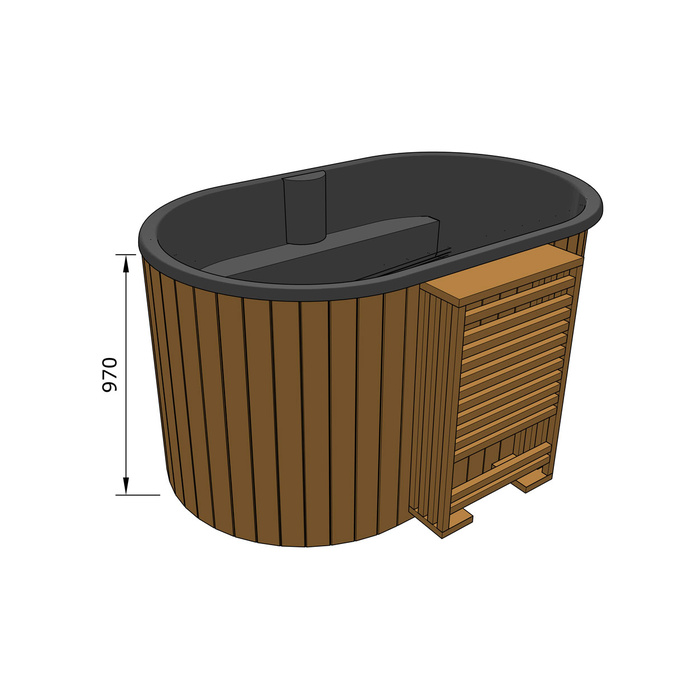
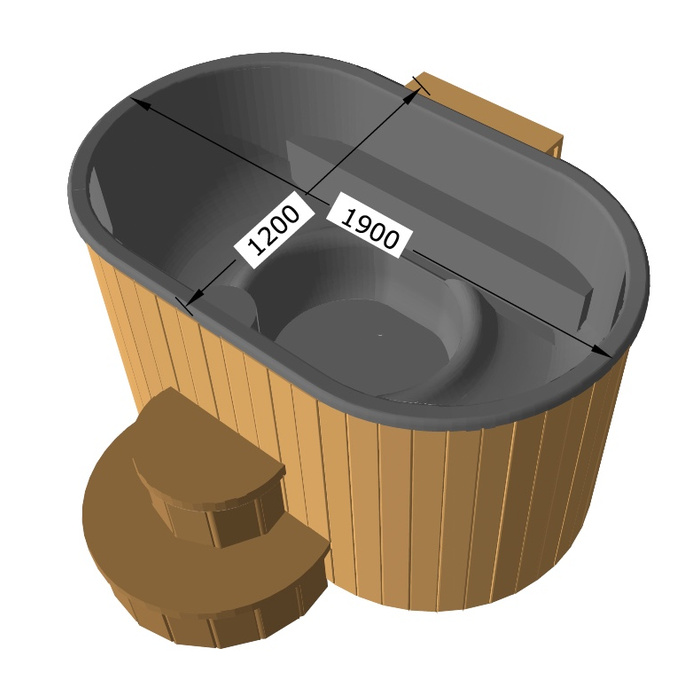
Ask how easy it would be for either person to change position once seated. Could you shift your legs, turn slightly or sit more upright without jostling the other? Do the seat contours appear to direct users into fixed positions, or is there room to adjust? Do not decide from exterior dimensions alone: they describe the outside boundary, not the space between seats. Compare documented internal measurements where available, and ask for clarification rather than estimating from an image. When reviewing the Fjord 8 product page, check which parts of the interior any published measurements describe.
Entry and exit for both users
Comfort starts before sitting down and continues when getting out. Consider how each person would approach the tub, where the intended entry point is, and whether there is room to turn and settle without needing to pass over the other person’s preferred position. Think through the sequence for both users, including who would enter first and whether either would need to move to make space. If you can inspect a display, have both people try the sequence in turn and note what feels awkward. Differences in reach, balance or flexibility are relevant if either person wants to account for them.
Ask which access aids, steps or other items, if any, are specified or supplied for the model, and whether they affect the space needed to get in and out. Do not assume a feature is included because it appears in a photograph or diagram. Confirm which side needs to remain accessible and what the manufacturer says about the approach area for the selected configuration. When reviewing the Aurora 10 listing, note any documented entry details and questions about the approach to your preferred seats. If either person needs a particular support or access arrangement, make it an essential check.
Frequency of use and shared responsibilities
A layout that suits a long, relaxed soak may not suit a quick, frequent visit, while a tub used only occasionally may be poor value for you even if it looks appealing. Discuss a realistic pattern: how often you expect to use it together, whether either person might use it alone, and how often your schedules overlap. Avoid planning around an occasional perfect evening. A repeatable routine is a better test of everyday practicality because it helps you judge how much preparation, coordination and follow-up the purchase would involve. If you disagree about frequency, decide whether the tub still makes sense for the person likely to use it most.
Consider the tasks around a session, too: who will prepare the tub, read and follow the manufacturer’s care instructions, tidy up afterwards and keep track of any consumables or service needs that apply? Ask what is involved with the particular operating system, then decide how you would share those responsibilities. If Bloomcabin hot tub Cove 2 remains under consideration, compare its documented operating and care information with the routine you have agreed on, just as you would for any candidate. Being clear about the work involved can matter as much as agreeing on seats.
Compare the practical work and costs of regular use
Compare practical costs on a like-for-like basis, even if comfort is your main concern. Start with the written purchase price for the exact configuration, then ask which delivery, site preparation, setup, optional items and ongoing costs are included, excluded or dependent on your location. These items may or may not apply; the point is to expose assumptions before deciding. For regular operation, ask the seller or manufacturer what energy or fuel use and care costs are relevant to that specific system. Compare any estimates using the same assumptions about frequency of use and operating method, rather than treating capacity as a cost guide.
Consider the effort as well as the dollars. A model with preparation or care tasks neither person wants to manage may be less practical for your routine, but do not guess at the workload from a photograph or marketing label. When reviewing the Bloomcabin Hot Tub Haven 6 listing, record only items that are actually stated, and ask for written clarification where operating requirements, inclusions or costs are unclear. Use the same categories for every candidate. That way, you are less likely to favour the model with the fullest sales description over the one whose documented details genuinely suit both of you.
Verify the layout and measurements for each model
Catalogue names alone do not establish current Australian occupancy figures, seating arrangements, internal measurements, external dimensions or features for Cove 2, Haven 6, Fjord 8 or Aurora 10. These are models to investigate, not recommendations that any particular one suits two people. For each candidate, look for current product information that identifies the exact model and version and explains how its capacity and seating layout are defined. Match that information to the configuration you are considering. If internal space is not documented, treat it as unknown rather than filling the gap with an estimate from the outside shape.
Make a record for each model: stated capacity, a seating plan, internal measurements where published, external dimensions and any documented details relevant to positions or access. Note which details are missing and ask the supplier for the manufacturer’s information; do not treat a photograph or model number as a substitute. For Bloomcabin Hot Tub Fjord 8, as for any candidate, compare only what you can confirm for the exact version. Keeping the source and date of each document helps if you later find conflicting product information.
Treat site fit as a supporting check
Once a layout looks promising, check that the exact unit can be accommodated at the intended site. Compare its documented external dimensions with the available space, including any clearances specified by the manufacturer and room for the entry side or separate items you have confirmed are needed. Check the route from the delivery point to the final position with the supplier; measuring the tub alone does not establish that it can be moved into place. This is a feasibility check, not a reason to choose a model before both users have considered the seating.
Ask the supplier or a qualified installer about any site preparation, base, connections or clearance requirements for the selected configuration. Those details depend on the model and installation, so do not extrapolate from another tub or an image. Keep the enquiry focused: the question here is whether your preferred shared seating arrangement works at the real site, not how to design an outdoor area. For Bloomcabin hot tub Aurora 10, and any other candidate, compare the documented dimensions and intended access side with your measured space. If a key measurement is unavailable, leave the fit unconfirmed.
Build a shortlist around both users
A useful shortlist needs two things: both people can explain why the seating could work for them, and the product information answers the questions that matter. Make a simple table with a row for each exact model and columns for capacity, seat orientation, legroom, room to shift, access, internal and external measurements, routine tasks and unresolved questions. Mark each point as confirmed, unsuitable or still to verify; do not turn blanks into assumptions. Give both people an equal opportunity to rule out a position that does not work, rather than ranking options by brand or a single headline number.
Then apply your deal-breakers. Set aside any option that lacks an arrangement one of you needs, cannot be shown to fit the measured site, or leaves essential operating information unresolved. If two candidates both pass, compare which one you expect to use comfortably and often, alongside the practical tasks and costs you have verified—not the largest claimed capacity or the smallest-looking footprint. If no model meets those requirements, request the missing information before deciding. The strongest shortlist gives both people a comfortable place and a routine they are willing to share.
Frequently asked questions
Does a model number tell me the tub’s capacity?
No. A numeral in a catalogue name identifies a model; it does not establish its stated occupancy or whether two people will be comfortable in it. Check the current Australian product information for the exact model and version, including its stated capacity and seating layout. If those details are unclear, ask the seller rather than guessing.
Is a higher seat count better for two people?
Not necessarily. A higher count does not show whether the two positions you would use together provide the legroom, orientation or access you want. Nor does it explain how the layout affects everyday use. Compare the actual seating plan for your usual pair, then consider costs and practical requirements using information for the exact product.
What should we look for on a seating plan?
Check where the seats are, which way they face and how close they are to one another. Look for internal measurements where available, especially around the seated positions and shared legroom. Consider whether both people could change position without jostling. A plan without dimensions may not answer every comfort question, so ask for clarification or try a display model if one is available.
Should we both try a display model?
If a retailer has a suitable display, trying the intended positions together may reveal crowding that separate turns would miss. Each person can see how they settle, shift and get out while the other is in their preferred place. A display may differ from the exact version you buy, so confirm the final model’s layout and measurements before relying on the trial.
When should we check the space at home?
After a layout has passed your comfort checks, compare its documented external dimensions and any specified clearances with the measured site. Also confirm the route to the final position and requirements for the selected model with the supplier or a qualified installer. Site fit matters, but it cannot establish that the seating will work for both people.
A hot tub for two is a good fit when both people can explain why its positions work, the space lets them move and enter comfortably, and its routine suits how often they expect to use it. Treat seat counts and model names as prompts for verification, not answers. Compare candidates with documented layouts and measurements, and leave the choice open if a detail central to either person’s comfort cannot be confirmed. That keeps the decision centred on shared use rather than an attractive headline.
