
Why Garden Shed Doors Stick in Changing Seasons and How to Adjust Them
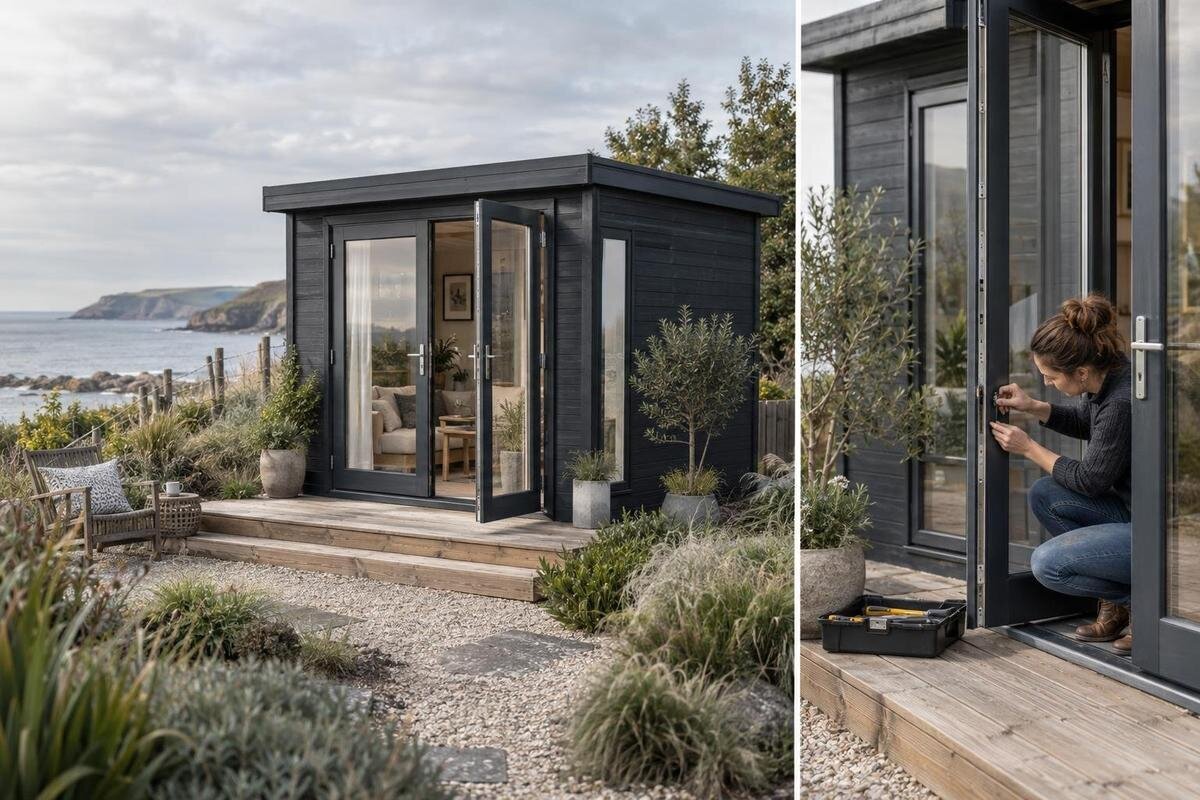
Garden shed door care
Sticking garden shed doors can look like a simple hinge problem, but a tight edge may also reflect changing moisture, a shifted frame, debris or a latch that no longer meets cleanly. The useful first move is to find the contact point, then decide whether the door has changed, the opening has moved or the hardware needs attention. This guide covers careful checks and minor, reversible adjustments, and explains when to stop rather than force a door that may be affected by a larger fault.

Why seasonal weather can change a door’s fit
Garden shed doors can become harder to operate when the door leaf, its frame or the building changes position relative to the others. Timber responds to moisture: during persistently damp or humid weather it can take up moisture, then release some as conditions dry. Its dimensions may change slightly, reducing a clearance that was already close; a small difference at an edge can be enough for a latch to catch or a door to drag. Sun exposure can also be uneven, so different parts of a door or frame may not respond in exactly the same way. The amount and direction of any change depend on construction and exposure; the calendar alone does not predict how a particular shed will behave.
Seasonal movement is plausible when sticking appears after a weather shift and eases as conditions change, but timing alone proves nothing. Loose hinge screws, worn hardware, a distorted door, movement in the frame or base, grit at the threshold, or a latch out of line can create similar symptoms. Exposure differs from one site to another: repeated wetting, damp ground, wind-driven rain and strong sun can affect a shed differently from a sheltered location. Compare the current fit with an older photo if you have one. If binding recurs, worsens or comes with new gaps or cracks, investigate the change rather than simply waiting for another season.
Find where the door catches
Begin with a slow visual check, with the shed clear of anything that might fall or obstruct the doorway. Open the door only as far as it moves freely, then guide it towards closed without leaning on it. Notice whether resistance begins at one corner, along an edge, at the latch or only in the final part of travel. Check the threshold for leaves, grit, a raised mat or stored items, and look for fresh rub marks on the door edge and frame. Do not slam the door to reproduce the fault: hard closing can hide the contact point while loading hinges and fasteners. If the leaf feels heavy or unstable, stop testing it.
For a hinged door, compare the gaps at the hinge side, top and latch side as it approaches the frame. A gap that tapers, or a latch edge that sits low, can point towards sagging or movement; even clearances with resistance only as the latch engages may direct attention to the latch. Neither pattern is conclusive: seals, a warped leaf or a change in the frame can produce similar clues. Take photos of the edges, note the date and recent weather, and record where contact occurs. This simple record helps distinguish a one-off nuisance from a change that is continuing, and gives a repairer useful information if you need help.
Inspect the hinges and their fixings
Inspect the hinge leaves, pins and visible fasteners without removing the door. Check whether a hinge has pulled away, a screw head sits proud, a fixing turns, metal looks bent, or there is visible movement at the joint as the door opens. Keep fingers clear of the gap between door and jamb, and do not put your weight against the leaf. Look for splitting or softness in timber around a hinge; a loose fastener in damaged material is not solved by tightening harder. A squeak can be a clue, but it does not prove the hinge is the only problem. If the leaf is sagging noticeably or a hinge moves, stop and get it assessed.
If an accessible screw is simply loose and the surrounding timber is sound, a correctly sized screwdriver may let you snug it gently. Do not overtighten, substitute a larger screw or keep turning if it will not bite; that can worsen the fixing. If a repair becomes a replacement decision, treat the Verdana 1 garden house listing as one model to assess, not a like-for-like match. Confirm with the seller any stated door arrangement and assembly details that matter, and ask about information not shown rather than assuming the hinge layout or clearance is the same as your current shed.
Read the door-to-frame clearance
Look at the gap between the door and frame without pushing the door into place. Note whether it narrows at the top, widens down one side or disappears only at the bottom. A consistent rub mark helps locate contact, while a latch edge that meets at one point first can suggest that the leaf is out of alignment. These signs do not identify the cause by themselves: a swollen edge, loose hinge, frame shift or base movement can produce similar patterns. Check whether a seal or threshold strip is catching too; do not pull it off or trim it just because the door feels tight. Record what touches before attempting any adjustment.
Check whether the door can open fully without striking a wall, stored equipment, plants or a sloping path. A tight opening area can make a sound door awkward and encourage it to be pulled sideways at the handle. If comparing a replacement, look for any published opening direction, clearance and overall dimensions for the Verdana 2 garden house listing, and ask the seller to confirm missing measurements. Do not rely on the building footprint alone: a hinged leaf needs room to move, while other door arrangements have different space requirements. Consider the route from the doorway to where you will use or store equipment, not just the doorway width.

Check the frame and base for movement
Door fit also depends on the frame staying in a usable shape. From a safe position, look for a jamb that appears bowed, new gaps at wall or floor joints, or a threshold that seems to have changed height. Notice whether the door fits differently after rain or whether the floor feels newly uneven, but do not remove cladding or climb to inspect. These are observations, not a structural diagnosis. If the opening itself has shifted, moving a hinge may disguise the symptom briefly while leaving the cause untouched. Photos of the frame and the base can help a qualified installer understand what has changed.
Do not jack, wedge or re-level a loaded shed as a door fix. If the base is visibly uneven, waterlogged or moving, pause adjustments and ask an installer or building professional to assess it and recommend an appropriate remedy. When considering another model, the Durano garden house listing is a page to check for its own published footprint, entrance and site-preparation details; the word spacious in a model label does not confirm usable clearance or a foundation solution. Compare the requirements for the exact unit with the intended site before ordering, and ask for drawings or installation information if they are not supplied.
Make only small hinge adjustments
Make an adjustment only when you have found a clear, minor hardware issue and the hinge is designed to adjust. Read the shed or hinge instructions first. If a visible screw is merely loose and the timber around it is sound, use the correct screwdriver to snug it gently; do not overtighten or loosen several fixings at once. For an adjustable hinge, follow its stated method and move it a little at a time, noting the original position so you can reverse the change. Keep the door in its normal supported position, and get help if it is heavy, unstable or awkward to control. Do not lift it by the handle, lever against the frame or remove it to experiment.
After each small change, close and open the door gently, then compare the same gaps and latch position. Stop if one rub point worsens, a fastener will not hold, or the door needs force; do not add more adjustments to compensate for the first one. The manufacturer’s instructions apply to the fitted hardware, so avoid copying a method from a different hinge. If shopping because repair is not practical, inspect the details for the Veltor 1 listing and ask the seller to confirm relevant door and assembly information for your site. The product label alone cannot establish fit, clearance or adjustability.
Align the latch after checking the door
Test the latch separately from the door’s movement. As the door nears closed, notice whether its edge sits evenly in the frame before the latch engages. If the door already rubs or sags, address that fit first; moving the strike plate can make the latch catch at a new point without correcting why the door has dropped. If it moves freely until the latch meets its keeper, inspect for visible debris, a loose fixing or damage and consult the latch instructions. Do not force the handle or slam the door to make it catch; that can further loosen fittings or damage the edge.
Only shift a latch or strike plate when the hardware is made for adjustment and the manufacturer’s guidance permits it. Change one thing at a time, retest gently and stop if the lock no longer engages reliably or the fasteners do not hold. Different door mechanisms need different checks, so do not assume a sliding, folding or hinged system is adjusted in the same way. When weighing a replacement, the Orello 1 garden house listing is a model page to review alongside any available drawings or instructions; confirm the stated opening arrangement and clearances before ordering instead of inferring them from a product name.
Reduce repeat sticking by watching moisture
After locating a moisture-related pattern, focus on exposure around the shed rather than repeatedly trimming or moving the door. Note whether the problem follows sustained rain, direct sun or water collecting close to the threshold; keep the doorway clear of leaves and material that holds damp against the frame. Maintain ordinary airflow around the structure where its design allows, and address obvious drainage or water entry in line with the shed’s care guidance. Do not wet the door to test a theory or seal over a damp area. A repeated damp patch or visible deterioration needs assessment, not just a seasonal hinge change.
Keep a brief log of weather, contact point and whether the door frees up again; it is more useful than adjusting it on every warm or wet day. If a new garden house is being considered, use the Modano 1 listing as one page to assess for whatever construction, opening and maintenance information it actually provides. Ask the seller where details are not stated, including what routine door checks are expected. Neither a model name nor a product image tells you how a unit will respond at your site, so judge it against your exposure and the documentation supplied for that exact model.

When a sticking door needs professional repair
Stop and arrange a qualified assessment if a hinge has pulled from the timber, the frame is visibly distorted, the floor or base appears to have shifted, timber is cracked or soft around a fixing, or glazed door components are damaged. The same applies if the door is unusually heavy, needs force to move or cannot be secured safely. Avoid planing, sanding, bending hinges, drilling new holes or moving the shed to overcome these symptoms; those changes can remove material or conceal a larger alignment problem. A carpenter or garden-shed installer can assess whether the fault is limited to hardware or involves the structure.
Where repair is not worthwhile, compare replacements on confirmed information rather than a similar-looking picture. For example, the M timber garden shed listing identifies a model to investigate; ask what door and frame details, assembly instructions and support information apply to that exact version, and get unclear points answered before purchase. A new shed also needs a suitable prepared location and installation approach, so check the stated requirements and seek competent advice where the site or base is uncertain. Keep any assessment or measurements for comparison; avoid ordering in haste while the cause of movement is unknown.
What to check before ordering a replacement
Make the doorway, not just storage volume, a buying criterion. Confirm the stated door opening, opening direction and clear space needed for the leaf or track, then compare them with the path and room around the proposed location. Check exterior dimensions and actual entrance width rather than relying on a model name such as compact or spacious. If you store long-handled tools, wheeled equipment or bulky items, consider the route from the entrance and whether the threshold will be an obstacle. Resolve these questions from exact product information and site measurements; one shed’s door arrangement cannot be assumed from another model in the same category.
Before ordering, read the assembly and site-preparation information for the exact model and version, confirm what door hardware is included, and ask about options that would change the opening or clearances. Check whether the delivery route can reach the intended location and whether installation needs assistance; do not assume a product page includes services or components that it does not state. The Timber Tool Shed S listing should be judged by its own documented details, just like any other model, not treated as a presumed match for an existing door problem. Save the product information and your measurements so you can check the delivered model against what you ordered.
Frequently asked questions
Why does my garden shed door stick after rain?
Rain can increase moisture around timber and may affect the fit, but a wet-weather pattern does not prove that the door itself has swollen. Water at the threshold, a change in the frame, a loose hinge fixing or latch misalignment can produce similar symptoms. Note where it catches and whether it eases as conditions dry. If the binding keeps returning, investigate the cause rather than forcing the door.
Is sanding or planing the door a good first fix?
No. Removing material is difficult to reverse and may alter the finish or the way the edge meets the frame. First identify whether the door, hinges, latch or opening is responsible, then follow the maker’s instructions. If an edge is visibly swollen or warped, or seems to need material removed, ask a qualified repairer to assess it before altering the door.
Can I fix a sticking door by moving the latch plate?
Only if the latch alone is misaligned and the hardware instructions allow adjustment. If the door has sagged or rubs before reaching the latch, moving the plate may hide the symptom rather than correct it. Check the door gap and hinges first. Make one small change at a time, test gently and stop if the lock does not engage reliably.
Should I adjust the hinges at the start of every season?
No. Seasonal changes do not automatically mean a door needs adjustment. If it opens and closes freely and the frame looks sound, leave it alone. If the fit changes, record where it catches and inspect the hinges and surrounding timber before acting. Repeatedly shifting hinges can create a new misalignment or conceal movement elsewhere.
When should I call a professional?
Arrange an assessment if a hinge has pulled out, timber is split or soft around a fixing, the frame or base appears to have shifted, the door is heavy or unstable, or glazing is damaged. Also seek help if permitted minor adjustments do not restore free movement. A carpenter or garden-shed installer can assess whether the fault is limited to hardware or involves the structure.
Seasonal sticking is a symptom, not a diagnosis. A clear record of where the door rubs, how its gaps look, and what the hinges, frame and latch show helps distinguish a modest hardware correction from a moisture or structural issue. Keep any adjustment small, follow the instructions for the fitted hardware and retest gently. If the frame, base or fixing points are damaged, stop before removing material or forcing the door; correcting the underlying cause matters more than making the latch catch once. When replacement is necessary, compare exact door and installation details for the specific model so the new garden shed suits both the access route and the intended site.
