
Planning Garden Shed Heating Options for Occasional Use
Garden shed planning
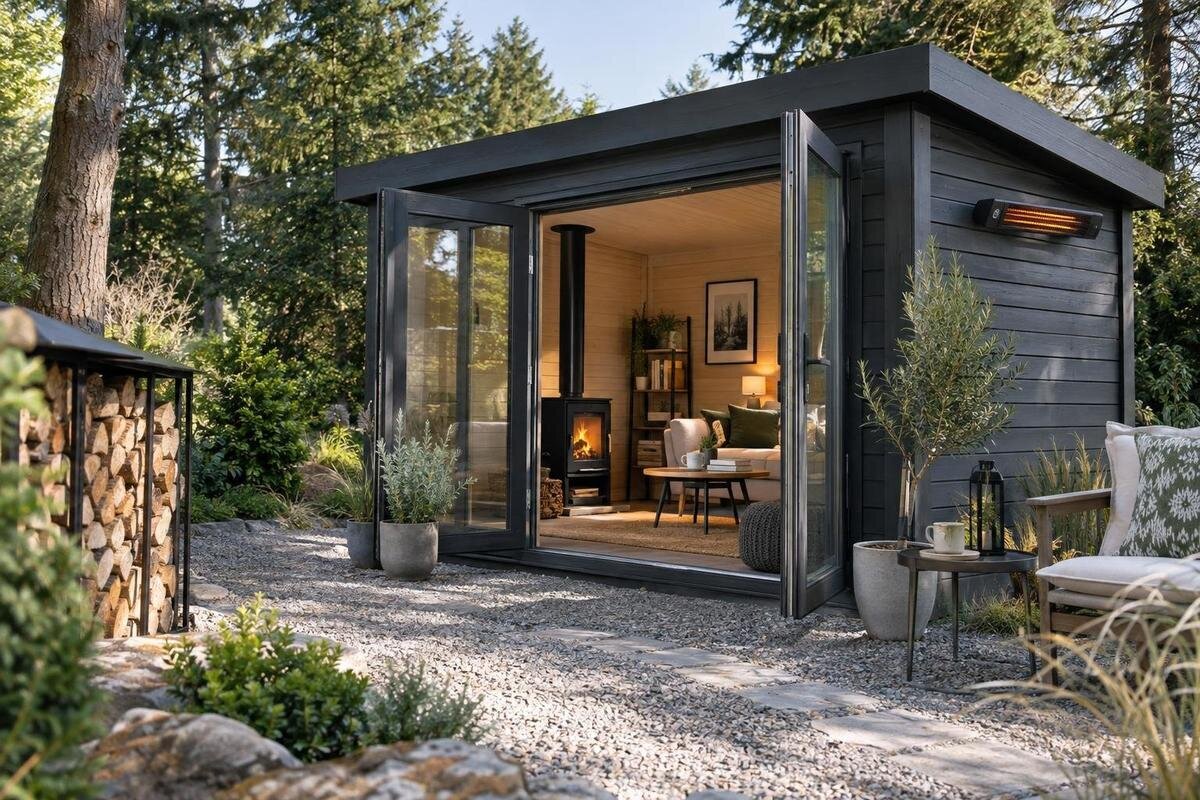
Heating a garden shed for occasional use is a different problem from keeping a room warm every day. You may want usable warmth soon after arriving, without paying to heat an empty space between visits. The right choice depends on the length and purpose of each visit, the building’s ability to hold heat, the power available and how the heater can be operated safely. First decide whether you need to warm people in one work area or bring the whole interior to a more even temperature. Then compare heater response, insulation, ventilation, running costs and installation needs. A listing for a garden shed does not, by itself, confirm insulation or heating readiness.
Before you buy 1
Define the area and length of each visit
Write down how the space will actually be used: how often you visit, how long you stay, whether you sit still or move around, and which part of the building needs to feel comfortable. A short session at a workbench has a different requirement from several hours spent moving between shelves. Note the coldest conditions when you expect to visit, but do not size a heater from one weather forecast. The goal is to define the useful area and acceptable warm-up delay, not to promise a particular indoor temperature. Include whether you arrive with wet gear or leave the door open repeatedly, as both affect how quickly the space feels settled.
Separate the building decision from the heater decision. A small room, a large glazed area, uninsulated surfaces or frequent door opening can change how a space feels, but a product name cannot tell you the heat loss. When reviewing a candidate such as the Verdana 1 garden house listing, check the stated dimensions and construction details and note anything the page does not specify. Treat missing information as a question for the supplier, not as evidence that the building will be warm or compatible with a particular heater. Use internal dimensions, if supplied, to estimate the occupied area and leave space for safe heater positioning.
Match heater response to visit length
Warm-up time is more than the heater’s output figure. A fan heater pushes warmed air around, so the area near it may feel warmer quickly, but air can cool rapidly in a draughty structure. A radiant electric heater directs warmth towards people and nearby surfaces; it can suit a fixed work or seating position, although the rest of the room may stay cool. Panel-style convectors warm the surrounding air, so assess them by the change across the room rather than a direct beam. Cold surfaces and air movement affect comfort too. Actual results vary with appliance capacity, placement, building fabric and outside conditions, so avoid promises based only on heater type.
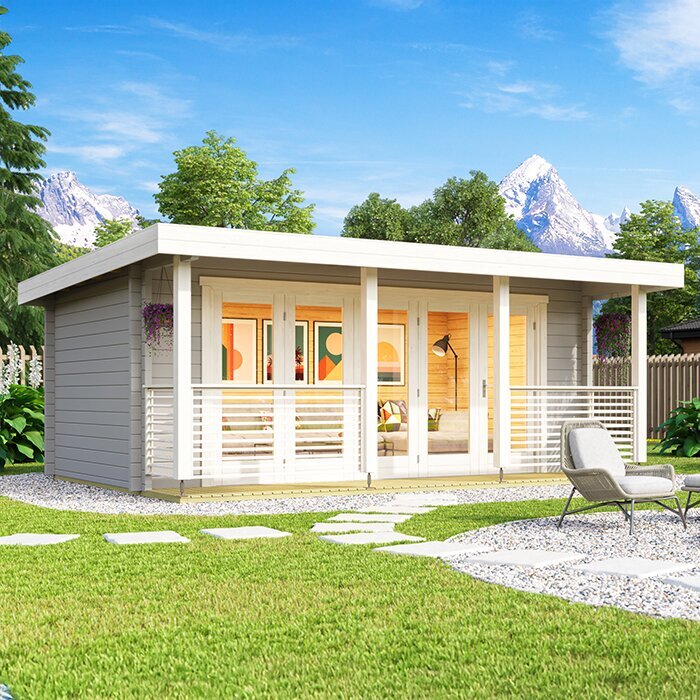
Before buying, decide whether you want quick personal warmth or a more even room temperature. If you are comparing the Verdana 2 garden house listing, use its published building information to assess the space; do not read the model name or photographs as a heat-performance rating. For a brief visit, a direct-warmth option may be more practical than waiting to heat every surface. For longer stays, consider whether a whole-room system and improved insulation are worth the setup. Ask the heater supplier for guidance on the appliance’s intended room size, then weigh that against the actual construction rather than relying on a generic claim that one type is always fastest.
Before you buy 2
Check power access before choosing electric heating
Electric heaters can be convenient where a suitable supply is already available, but a power point in the yard does not prove that the intended heater can be powered safely. Check the heater’s input and installation instructions, then ask a qualified electrician to assess the circuit and proposed location. This matters especially for higher-demand appliances, permanent wiring or a reverse-cycle air conditioner installed as a fixed system. Do not assume an extension lead, adaptor or power board is an acceptable substitute for a designed supply; the appliance instructions and professional assessment determine what is suitable. If no suitable supply is available, ask an electrician about options before narrowing the heater shortlist.
Think through the route between the supply and the occupied area without planning your own wiring. Where would a fixed unit sit, and could a qualified installer provide the required connection without obstructing access or exposing equipment to weather? When reviewing the Durano garden house listing, look for construction and layout information relevant to a proposed installation, and ask what remains unspecified. The page identifies a garden shed; it does not confirm that power is provided, that a circuit is adequate or that an appliance can be mounted to the structure. Resolve these points before choosing a heater, especially if the shed sits well away from the house.
Reduce heat loss through the building
Heat escapes through the roof, walls, floor, doors and glazing, while gaps can let warm air out and cold air in. Insulation slows heat transfer through the building fabric; draught control reduces unwanted air movement. They solve different parts of the problem, and a heater cannot make an uninsulated, leaky shed retain warmth efficiently. Look first at the surfaces around the area you plan to heat and ask whether the floor and roof are included in any insulation description. A cold floor can feel uncomfortable even when the air is warmer. The importance of each surface depends on the actual construction and site, so do not assume a standard garden shed has the same envelope as a house.
Ask for specific information about materials, any insulation supplied or optional, linings and door seals. If a listing is silent, request clarification rather than estimating performance from a photograph or product name. For example, the Veltor 1 garden house listing can be used as a candidate page to inspect, not as proof of any particular insulation level. If you make later improvements, choose products compatible with the building and its moisture management; indiscriminately sealing every gap or covering every vent can create a separate problem. A builder can advise on alterations that could change ventilation, condensation or the building’s weather resistance.
Before you buy 3
Consider openings and ventilation
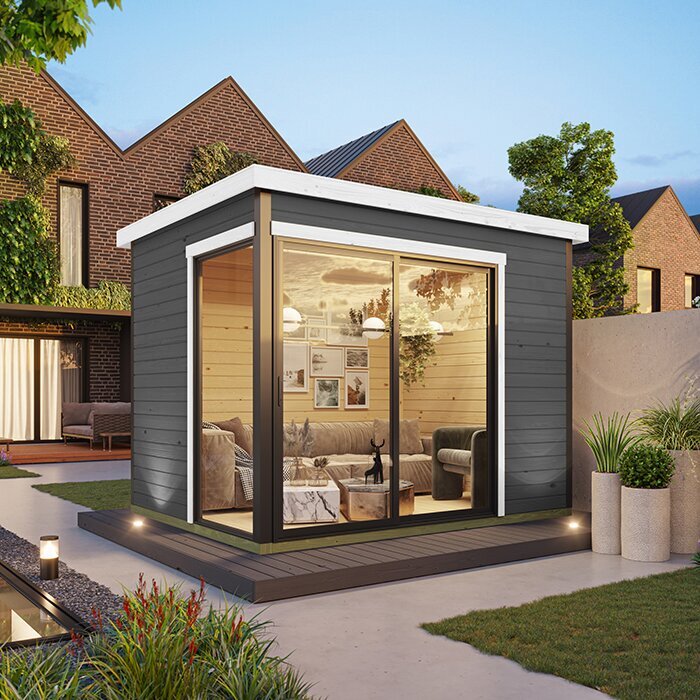
Windows and doors shape both warmth and air movement. Glazing can behave differently from a well-insulated wall, and a poorly sealed opening can admit draughts; the effect depends on its construction, seals, size and exposure. Door traffic matters too: each trip outside disturbs the indoor air, and an open door may undo the benefit of heating a small zone. Check which openings are present, whether windows can be opened, and what the supplier states about glazing and weather sealing. Do not assume an attractive glazed frontage will retain heat as well as an insulated wall; equally, do not judge it without details about the glazing.
Ventilation is not the same as a draught. A ventilation opening may be needed for air quality or moisture control, so do not block vents to hold warmth without advice. People, wet clothing and damp garden gear can add moisture; in a cold shed, condensation can follow if moisture has no suitable way to leave. For the Orello garden house listing, look for actual information on glazing, operable windows and ventilation rather than inferring these from its appearance. A building professional can help reconcile heat retention with ventilation where the published details are unclear, particularly if you plan to store wet equipment inside.
Assess combustion heating separately
Combustion heaters need a more cautious assessment than plug-in electric models. Gas, wood or other fuel-burning appliances can produce carbon monoxide and other combustion products; some are made for outdoor use only, while others are designed for indoor settings with specific exhaust and ventilation arrangements. Never bring an outdoor-only appliance into an enclosed garden shed, and never improvise a flue or air opening. Carbon monoxide has no reliable warning smell, so ask how detection and ventilation are addressed rather than relying on your senses. An indoor-rated appliance is not automatically suitable for every shed: follow its manufacturer’s instructions and have the installation and clearances assessed by a qualified professional.
If you are considering a fixed fuel-burning system, treat the flue, ventilation, fuel storage and building compatibility as part of the project, not as accessories to sort out after purchase. Ask the appliance supplier and installer what the structure must provide and whether that can be achieved safely. A product page such as the Modano 1 garden house listing identifies a building to assess; it does not establish that a combustion heater can be installed in it. If the proposed arrangement is unclear, pause before buying and compare an electric approach that an electrician confirms is suitable instead. Keep exits and normal access clear in any layout.
Before you buy 4
Compare running costs with your use pattern
Compare the total cost of using the heater, not just its purchase price. Check the appliance’s rated electrical input, your electricity tariff and the hours you realistically expect to run it. A thermostat may switch a unit on and off rather than draw its full rated input continuously, so the label alone does not predict a bill. Include any warm-up period and expected standby or scheduling use where applicable. A larger unit is not automatically the cheaper choice: if heat escapes quickly, you may spend more energy replacing lost heat; if you heat only one seat, warming the whole shed may be unnecessary. Check whether a quoted figure refers to electrical input or heat output.
Frequency changes the comparison. A few short visits can favour a responsive way to warm the occupied area; longer sessions or frequent use make building insulation, controls and the cost of a permanent system more relevant. Use the expected weekly pattern and the supplier’s published ratings to compare options, then ask an installer for an estimate where electrical or building work is unknown. In a candidate page such as the M timber garden shed listing, check the construction data separately from heater costs; the name alone tells you nothing about running expenses. Compare like with like, using your own tariff rather than an advertised running-cost example based on different conditions.
Check controls and heater placement
Controls can make intermittent heating more convenient, but convenience is not a safety feature. A thermostat helps regulate a system towards a chosen setting; a timer or remote control may help with timing only if the heater is designed for that use and its instructions permit it. Do not assume a portable heater can be left operating unattended or started while nobody is present. If you want warmth on arrival, ask whether the proposed fixed system can be scheduled safely and what installation it needs. Otherwise, plan to switch the heater on when you arrive and off when you leave. For occasional visits, prioritise a clear way to stop heating as well as a convenient way to start it.
Positioning also affects comfort and fire risk. Follow the heater manual’s clearances and keep the unit away from combustible walls, stored tools, paper, fabrics and anything likely to fall against it. Do not block its air intake or direct heat at items that can scorch. Keep the door and normal route through the shed unobstructed, and do not use a heater as a drying rack. Ask for professional advice about mounting or fixed clearances rather than borrowing a distance from another model. When looking at the Timber Tool Shed S listing, use any available floor-plan or dimension information to consider a safe position; the product image cannot confirm heater clearance.
Before you buy 5
Verify the shed details before ordering
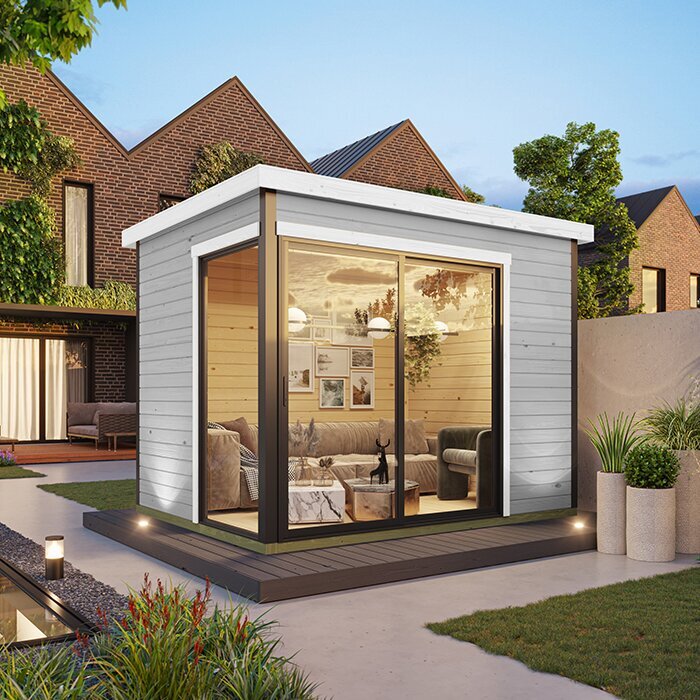
Before you order the building, assemble the details that affect heating: internal dimensions, wall and roof construction, floor arrangement, insulation inclusions or options, glazing, door seals and intended ventilation. Ask which features are supplied, which can be added, and what must be arranged separately. If the answer is not in the listing, get it in writing rather than treating an omitted feature as standard. Ask about the building’s intended use and weather protection as well; warmth depends on more than the heater, and a heating unit cannot correct water entry or unsuitable construction. Check whether dimensions are internal or external before calculating usable space.
Also plan how the heater will fit into the completed space. Identify the area that must stay clear, the likely supply route and whether a professional can access the proposed installation point. Confirm separately whether the building purchase includes any heating equipment or electrical work; product photos and category names are not evidence that they do. If modifications, added insulation or a fixed system are proposed, have the relevant building and electrical professionals review the combination before purchase. Clarify who is responsible for each part so the building order, electrical work and heater purchase do not leave an unresolved gap in the plan.
Compare the options against your actual use
Use a short comparison sheet rather than trying to rank heaters in the abstract. Record visit length and frequency, the area to warm, the expected warm-up priority, power access, stated insulation, ventilation provisions and likely installation work. Mark unknown building details clearly, and keep confirmed specifications separate from assumptions. Then compare a direct electric option for local warmth, an electric system intended to heat more of the room, and any professionally assessed fixed alternative. Eliminate choices that rely on an unsuitable power source or an unverified combustion setup before weighing convenience. Compare options using the same visit length, occupied area and assumptions. This keeps the decision tied to real use, not a heater’s marketing label.
If every visit is brief, prioritise safe, prompt comfort where you sit or work, and avoid paying to condition unused corners. If visits become longer or more frequent, revisit whether better insulation or a fixed system is worth the additional work. In either case, choose the building and heater as a connected plan: its fabric affects heat loss, its openings affect ventilation, and its supply constrains your options. A clear answer from the supplier about the structure, combined with a qualified assessment where services or installation are involved, gives you a sound basis to order. If those basics remain unconfirmed, settle the building plan before choosing a heater.
Frequently asked questions
What is the best heater for an occasionally used garden shed?
There is no single best type. A radiant heater can provide warmth to a person in its range, while a fan or convective unit is intended to warm the air. Choose after considering visit length, insulation, power access, the space to heat and safe clearances.
Can I use a portable electric heater in a garden shed?
Only if the heater is suitable for the location and the power supply can support it. Follow its manual for placement and clearances, and ask a qualified electrician about circuit suitability. Do not assume an extension lead is appropriate or leave a portable unit running unattended.
Does insulation make a garden shed easier to heat?
Insulation can slow heat transfer, while draught control limits unwanted air movement; both affect heat retention. Check the roof, walls, floor, doors and glazing, and preserve ventilation needed to manage moisture. Do not assume insulation is included in a shed purchase.
Can I use a gas heater in a garden shed?
Only consider an appliance explicitly designed for indoor use, and follow its manufacturer’s instructions. Fuel-burning appliances can produce carbon monoxide and may need specific exhaust and ventilation arrangements. Never use an outdoor-only heater in an enclosed shed; get qualified advice on suitability and installation.
How long does a garden shed take to warm up?
There is no reliable time without details about the heater, building size and construction, starting conditions and air leakage. Ask the heater supplier to assess the intended space. For a short visit, compare how quickly each option provides warmth where you will be, rather than expecting an even temperature everywhere.
Occasional-use heating works best when the choice reflects what you need to do and for how long, rather than the heater’s headline output alone. A draughty, uninsulated building may make whole-room warmth difficult to maintain, while direct warmth can suit a short task without heating every corner. Confirm the building details, power arrangements and ventilation needs before ordering; involve qualified professionals for electrical work or fixed equipment. With those points settled, you can choose a garden shed and heating method that fit the visits you actually make.
