
Garden Sheds: Privacy Without Losing Natural Light
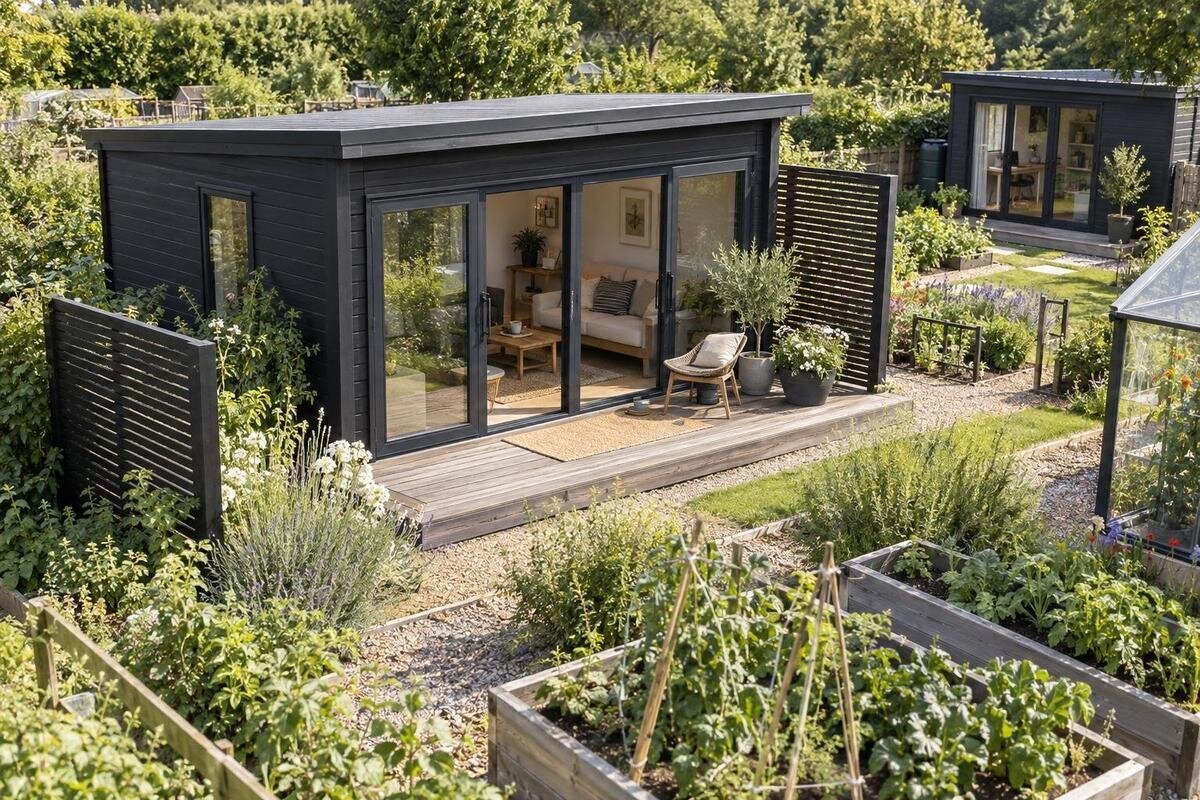
Garden shed planning
Garden shed privacy does not require covering every window. First identify the views you need to screen, then compare the site, window positions, glazing and coverings as separate choices. A targeted barrier or adjustable treatment may preserve useful daylight, but the result depends on how the shed is placed, used and lit. This guide focuses on buying and planning decisions to settle before you order.
Before you buy 1
Define what privacy means for your garden shed
Privacy means different things in different garden sheds. A room used mainly for tool storage may need its contents kept out of sight; a room for reading, hobbies or desk work may need protection at seated eye level. Note the activities that need screening and who could see in: someone on a path, driveway, neighbouring yard or from an elevated window. Record views you would like to retain as well, such as a garden bed or open sky. Separating these needs prevents an all-or-nothing response: covering every opening may remove the daylight you wanted, even if only one side feels exposed.
Decide when privacy matters, not just where. A shed used during the day with the door shut raises different questions from one used after dark, when indoor lighting can make occupants or stored items easier to see. Rank your priorities: screen a desk or seat, conceal equipment, or keep a view to the garden. Note whether the solution must work continuously or can be opened when the room is empty. Include the entrance in your plan because an open door can create a view straight through the room even when its windows are well placed. This turns a general wish for privacy into a brief you can compare against drawings, window options and the way you will use the space.
Map sightlines before choosing the site
Walk the proposed site and look back at it from likely viewpoints around your own property and from public areas such as a nearby path. Check seated and standing eye levels, and include the usual position of a neighbouring outdoor area or an elevated window where you can assess the view without entering someone else’s property. Look towards the shed through each proposed opening, not just at the wall. A quick plan with arrows for direct views is more useful than a general note that the site feels exposed. If views change with the season or time of day, mark that too.
Use your map to compare moving or rotating the shed before adding a barrier. A window facing a fence may lose one direct view but also miss an open aspect that brings daylight; another wall may be exposed from a different property. Note nearby buildings and trees that could affect the light reaching the room. Compare your sketch with a product’s published plan or elevations, if available. The Verdana 1 garden house listing is one product page you can assess; rely on details it actually states, rather than the name or a staged image, to confirm opening positions.
Before you buy 2
Choose window positions around the views you want
Window placement can reduce the need for broad screening. An opening on a less exposed wall may admit daylight while keeping a direct view away from a neighbour’s living area, if that layout is available. Higher glazing may protect seated privacy yet remain visible from an upper-level window, balcony or raised outdoor area. A smaller or offset opening can limit a direct view, though it will not provide the same outlook as a broad clear window. Treat these as options to compare, not benefits you can assume for a particular model.
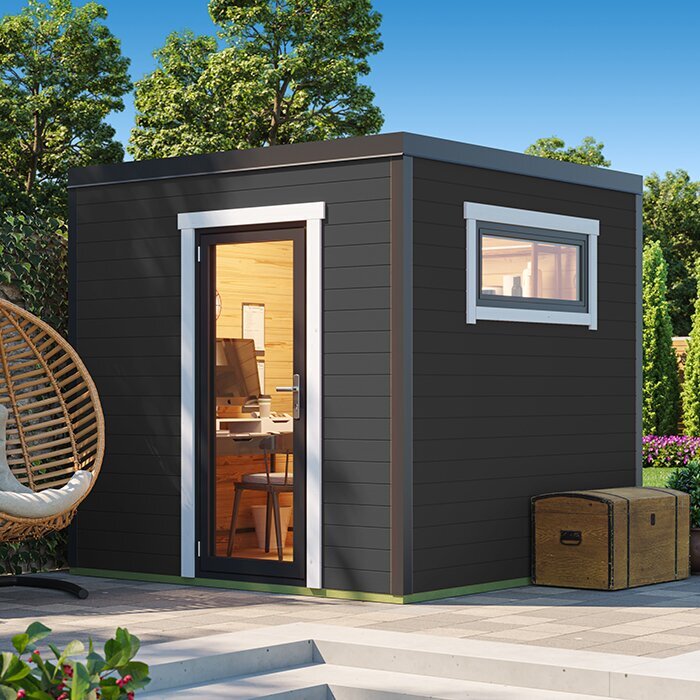
On a floor plan, mark each window, the door, likely furniture and the points from which people could see in. Draw a line from an outside viewpoint to the seat or work area, then repeat at standing and seated height. Check what happens with the door open and whether a window handle or opening sash affects where a blind or screen could sit. If you want a window moved or added, ask the supplier and a qualified builder whether that change is available and suitable; do not assume a wall can be altered. The Verdana 2 garden house listing can be checked for the window information it publishes.
Understand what different glazing can do
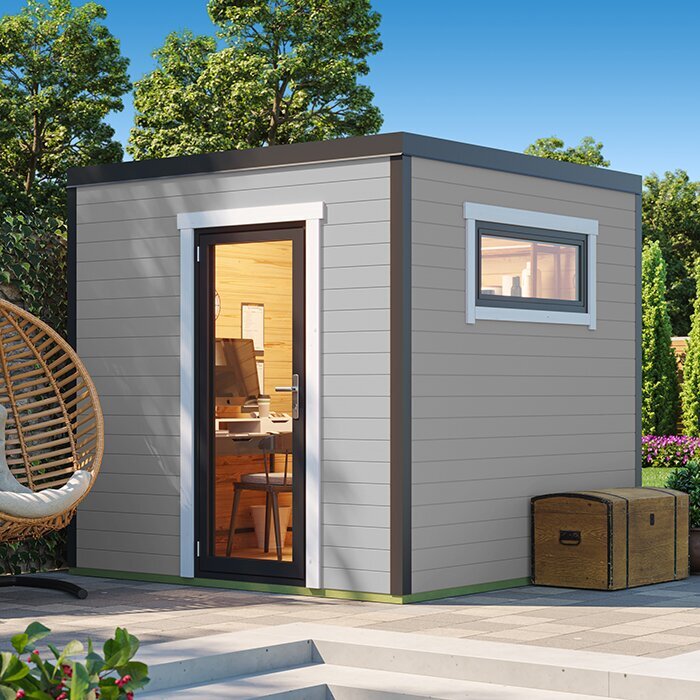
Clear glazing preserves a direct view and passes daylight, but it also leaves more of the interior visible. Translucent or obscure glazing can soften sightlines while admitting light; how much detail remains depends on the actual product, its pattern and viewing distance. It is not automatically equivalent to an opaque barrier, and silhouettes may still be visible. Ask for the glazing type and any privacy information in writing, and check examples from both sides rather than relying on a listing photo. If the Durano spacious garden house listing is under consideration, use its stated details only; its name or styling is not proof of a particular glass specification.
Reflective privacy film is not a reliable day-and-night solution on its own: its effect depends on relative light levels inside and outside, and can change after dark. Film or applied coverings may also reduce daylight or alter the colour of the view, so try a sample if the supplier can provide one. Before applying anything, check compatibility with the exact glazing and ask the glazing supplier or manufacturer about suitable products and any warranty conditions. If privacy needs to remain when the room is lit, choose a solution intended for those conditions rather than relying only on reflection.
Before you buy 3
Use external screening to block specific views
An external screen can intercept a particular sightline before it reaches a window, which may let other openings stay clear. A slatted panel, lattice or trellis can filter views while allowing some daylight through; gaps may still reveal movement from certain angles, so do not assume an open pattern gives full privacy. A solid panel blocks more of the view but can cast shade across the shed or garden. Position screening for the exposed direction, then check what it does to each window and to the view you want to retain. Treat it as a targeted design choice, not a reason to enclose every side.
Planting can soften a view, but it is not an immediate screen: allow for growth, seasonal changes in leaves and ongoing pruning. Consider a plant’s mature height and width, and whether it will cover the relevant sightline without shading a window or obstructing the entrance. For a constructed screen, check whether it can stand independently or needs a supported connection; do not assume the shed can carry an added panel. Ask the manufacturer or installer about any attachment, and check with your local council or a qualified professional where placement or boundary rules may apply. Compare the Veltor 1 garden house listing with your screen plan using only its published information.
Add adjustable privacy inside the shed
Blinds or curtains can be opened to restore a view and direct daylight, then closed when privacy matters. A sheer covering may soften a view without hiding shapes; a lined or opaque covering gives stronger concealment but removes more of the window’s contribution while drawn. A lower-half treatment can leave upper glazing clear if the window design and outside sightlines make that useful. Choose based on the observer’s angle and where people sit, rather than choosing a fabric from a catalogue description alone.
Check the room-side space around the window, including handles, opening parts and nearby furniture, before choosing a covering. Make sure it will not interfere with window operation or the doorway, and confirm that its attachment method suits the shed. If the Orello 1 garden house listing is one you are comparing, see whether its published information answers these questions; do not assume a covering is included unless stated. For film, verify glazing compatibility before purchase. If possible, view a fabric or finish sample at the window during the day and after dark, as the two conditions can look quite different.
Before you buy 4
Plan the room layout around available daylight
Privacy choices should fit the floor plan. Draw in fixed shelves, tall cupboards, work surfaces, seating and any partition before deciding which windows can remain clear. A cupboard in front of glazing can block daylight; a partition might hide a seat but leave the deeper part of the room darker. Place seating and work areas with both the view from outside and the daylight they need in mind. A clear window does not provide much privacy if it directly frames the person using the room, while a private corner may be less useful if it has little daylight.
Where product information allows, compare the floor plan with the furniture you expect to use. Listing images can make a room look brighter or more open than it will feel once storage and partitions are in place. Light-coloured, matte finishes generally reflect more available daylight around a room than dark finishes, but they cannot restore light blocked by a wall, screen or closed covering, and they do not create privacy. A paper plan or simple scale drawing can help you judge how far daylight may reach. Check the Modano 1 garden house listing only for floor-plan or window details it actually supplies, and ask about anything missing.
Check product listings for confirmed window details
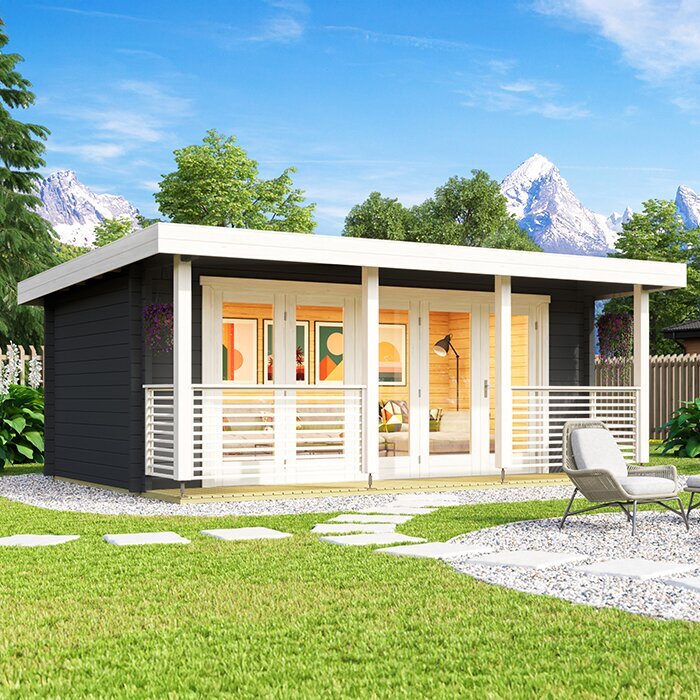
Treat a product listing as information to inspect, not proof that a room will be private in your garden. Look for a dimensioned plan and elevations that identify openings; check stated window positions, glass type, opening arrangements and any available options. Confirm whether blinds, screening or other fit-outs are included, optional or separate. A staged image can suggest an atmosphere but cannot settle those details. If the M timber garden shed listing is on your shortlist, apply the same questions to its published product information; do not treat its name or image as evidence of a particular window layout.
Compare like with like and keep a simple record of what each page confirms: intended use, exposed sightline, opening placement, stated glazing, possible treatment, internal layout, what is included and what remains unanswered. This makes trade-offs visible. A more private glazing choice may alter the outlook, while a screen may preserve clear glazing but create shade. Avoid assuming that modifications or accessories are part of the package. Ask the retailer for the precise model or configuration and a written answer to any question that affects your decision before paying; do not let a marketing image settle a technical point.
Before you buy 5
Check site access and ordering requirements
A privacy plan will not help if the shed cannot be delivered or placed where intended. Check the route to the site, including gates, tight corners, overhead clearance, the unloading area and space for assembly. Ask the retailer what access and delivery arrangements are required, and confirm who is responsible for unloading and assembly rather than assuming those services are included. Check base preparation and any clearances with the supplier or installer; if you are unsure about the site, have a qualified person assess it. The Timber Tool Shed S listing can be one page to review for information it actually provides about the product and its arrangements.
Before ordering, settle anything that could change your privacy plan: the exact model or variant, which openings are included, whether a different window arrangement is available, and whether coverings or screens are supplied separately. Confirm current delivery, assembly and site-preparation terms with the retailer. If the plan relies on moving a window, adding an opening or attaching a screen to the shed, ask the manufacturer and a qualified builder whether the change is suitable and what it could mean for the structure, weather resistance or any applicable warranty conditions. Get important answers in writing so the delivered configuration matches the one you compared.
Test the privacy and daylight trade-off before ordering
Before committing, use a sketch or scaled plan to picture the shed in its intended position. Mark the footprint and proposed openings, then compare the window lines with the viewpoints you mapped earlier. A chair placed where you expect to sit can help you judge whether a clear window would expose the room at seated eye level. If the location is accessible, a temporary outline on the ground can make the placement easier to visualise. Where you cannot test the actual room, ask for accurate plans or elevations and use those rather than relying on a wide-angle product image.
Review the plan twice: first for the privacy you need during normal use, then for the daylight left when the chosen treatment is in place. Ask whether the screen blocks only the exposed view or shades more of the room than intended; check whether an adjustable covering can be opened at other times. If either answer is unsatisfactory, compare a different shed position, window arrangement or screening method before ordering. The point is not to achieve complete concealment from every angle, but to make a considered choice about the views that matter and the daylight you want to keep.
Frequently asked questions
Can a garden shed have privacy and still get natural light?
Yes. Consider where people can see in, then address that particular view with window placement, a targeted external screen or a suitable covering. Keeping other windows clear can preserve daylight, but the result depends on the shed’s position, surrounding buildings and how the room is used.
Are translucent or frosted windows private at night?
Not necessarily. Translucent glazing can soften views while admitting daylight, but silhouettes or other details may still be visible, particularly when the room is lit. Check the specific glazing with its supplier and consider how it performs with light on both sides.
Does reflective film provide privacy after dark?
It is not a dependable day-and-night solution on its own. The effect of reflective film depends on the relative light levels inside and outside, so it can change after dark. Check compatibility with the exact glazing and ask the supplier about suitable options.
Is external screening better than blinds?
It depends on the exposed view and how much flexibility you want. An external screen can block a sightline before it reaches the window, but may shade it. Blinds or curtains can be opened when privacy is not needed, though closed coverings reduce the window’s contribution to daylight.
What should I check on a garden shed listing before ordering?
Look for a plan and window details, including positions, glazing and opening arrangements. Confirm which options and coverings are included, then check the site, delivery access, assembly and any requirements that apply to your location with the retailer or a qualified local professional.
Good garden shed privacy comes from addressing exposed views rather than treating daylight as a problem. A site sketch, clear window plan and realistic choice of screen or covering help you compare product information on the details that matter. If a desired change is not stated as an option, get the manufacturer or a qualified installer to confirm its feasibility before committing. Aim to preserve the daylight your activities need while screening the views that genuinely affect how you use the shed.
