
Garden Trends 2027: 12 Ideas for Australian Gardens
Looking only at fashionable colours, materials or plants misses the larger story. The emerging garden ideal must be appealing while also supporting wildlife, slowing water, easing heat, supplying food and reducing repetitive upkeep. Across Australia, the right response will depend on climate and site.
A useful overseas indicator comes from a representative 2026 KfW Research survey of German households. It found that 47% of households with gardens followed all four nature-friendly practices examined. Another 89% avoided pesticides or synthetic fertilisers, 66% deliberately selected food plants for animals, and 74% consciously avoided invasive species.
Those results describe Germany rather than Australia, yet they demonstrate how far wildlife-conscious gardening has moved into ordinary household practice. Here, prolonged heat, dry periods and bursts of intense rain add different pressures. The strongest 2027 directions bring appearance, ecological value and day-to-day practicality together.
Designing with ecology
01
Wildlife-friendly design gains structure
A nature-focused Australian garden in 2027 will not simply be left to run loose. Its character comes from pairing ecological purpose with an ordered framework. Dense, locally appropriate planting and retained seedheads can sit beside deliberate paths, defined edges, seating and architectural features. Deadwood may add habitat where local fire conditions and the site make it appropriate.
KfW’s German results indicate that concern for biodiversity is no longer confined to specialist gardeners. In design terms, plants are increasingly valued for providing food, refuge or nesting resources. Australian choices should suit the local climate, and unfamiliar species should be checked against relevant regional weed advice.
Intentional planning is the next step. Provide a succession of flowers suited to the local growing calendar, several vegetation layers, structurally varied shrubs, exposed soil for some ground-nesting bees and protected pockets. That combination can appear carefully resolved while still behaving like a living habitat.
The nature garden of 2027 is deliberate, not abandoned: it carefully decides where natural processes can lead.
Climate-aware gardening 02
Site-fit plants replace default recipes
Austrian garden-trend reporting from 2026 also highlighted water retention, planting adapted to changing conditions and nature-led layouts. For Australia, the practical starting point is particularly local: assess aspect, soil, exposure and reliable water before falling in love with a plant list.
Hot front gardens benefit from hardy perennials, deeper-rooted shrubs and layered planting that produces shade. On sites exposed to cloudbursts, consider infiltration, organic-rich soil and species able to handle short wet spells. Conditions can also change sharply between different parts of the same block.
Multi-purpose plants become especially useful: perhaps drought-tough yet valuable to insects, edible while casting shade, or structurally strong without demanding frequent attention. That idea of several benefits from one choice links many trends in this forecast.
Designing with water · 03
Let rainfall serve the garden before it leaves the property
Water handling will become easier to see in well-planned gardens during 2027. A tank is only one part of the response. Shallow swales, permeable paving, planted depressions, organic-rich beds and suitable storage can be arranged so rainfall remains useful on site for longer.
That approach changes visual priorities as well. Large sealed expanses and completely paved front yards become less appealing. Paths over free-draining bases, vegetation between joints and carefully placed areas that can briefly receive stormwater offer a softer alternative.
Vegetable plots and greenhouses also reward accurate watering. Drip irrigation reaches the root zone, mulch slows evaporation, and thoughtful airflow reduces avoidable plant stress. For protected cultivation, the {link("https://www.bloomcabin.com/de/gewaechshaeuser-und-wintergaerten","greenhouse and conservatory range from Bloomcabin")} includes solutions for gardens of different scales.
Biodiversity in everyday gardening
04
Build habitat beyond the insect hotel
An insect hotel can remain an appealing feature, but the broader habitat matters more in 2027. Pollinators also require a long supply of food, drinking water, refuge and garden areas managed with minimal pesticide use. Seedheads, fruit and thick shrubs help birds, while organic matter and limited disturbance support life in the soil.
Pay attention to periods when resources disappear. A spectacular flowering display is less useful if little is available on either side of it. Adapt the sequence to the regional climate, combining early, peak-season and later flowers with plants that keep shelter or structure during quieter months.
This calls for a different idea of tidiness. Spent stems need not always be removed immediately, and in cooler regions every fallen autumn leaf need not be cleared. Maintain access, safety and important views, while allowing less formal areas to retain ecological value.
Productive planting with visual appeal
05
Home produce joins the composition
The German source draws on a strong kitchen-garden and allotment tradition, but the design principle translates readily: productive beds need not be concealed behind a hedge. Silverbeet, culinary herbs, berries, fruiting trees and edible flowers can contribute colour, form and harvests within an Australian layout.
Smaller gardens gain extra interest from this combination. Raised beds can establish boundaries, espaliered fruit makes use of a vertical surface, and herbs near an outdoor dining area connect cooking with cultivation. Mixed planting also brings contrasting foliage, colours and flowering periods together.
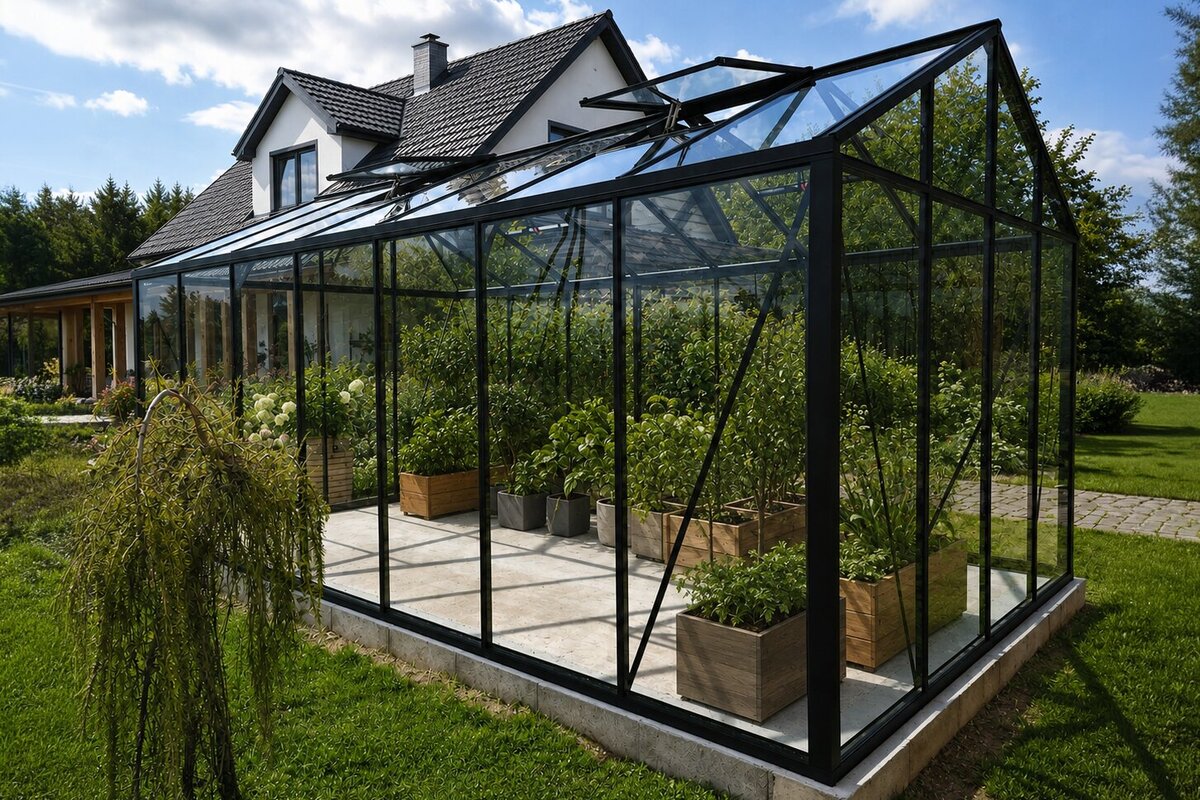
A greenhouse can make ambitious food growing more predictable. In temperate areas it may help begin earlier and continue later, while elsewhere it can give sensitive crops a more controlled setting. The {link("https://www.bloomcabin.com/de/gewaechshaeuser-und-wintergaerten/gewaechshaeuser-aus-aluminium/aluminium-klassisches-gewaechshaus.html","Aluminium Classic greenhouse")} may also provide a strong architectural focus within the productive part of a garden.
Reassigning garden space 06
Use less lawn, but make it count
Australian lawns are unlikely to vanish, although their role can become more selective. Turf earns its place where people play, rest or need an open surface. Little-used verges, awkward slopes and peripheral front-yard areas can instead support perennial, meadow-like or shrub planting.
Maintenance changes rather than disappearing. Perennial planting may need a few targeted annual tasks instead of weekly mowing, while adding flowers, structure and soil cover that reduces evaporation.
A balanced 2027 layout may use neatly defined turf as visual breathing space, with fuller and less formal planting arranged around it.
Outdoor space as part of the home · 07
Terraces, pergolas and garden zones form a connected plan
Increasingly, a garden is laid out with the logic of an interior plan. Separate places may support meals, quiet time, plants, cooking or work. Success comes not from squeezing in every activity, but from shaping the links between them with views, surfaces, planting, light and shade.
A pergola can establish a room-like zone without visually sealing the garden. The {link("https://www.bloomcabin.com/de/gewaechshaeuser-und-wintergaerten/bloomcabin-bioklimatische-pergola/bloomcabin-pergola.html","Bloomcabin bioclimatic pergola")} can give a dining or lounge setting a defined frame. Against the house, a {link("https://www.bloomcabin.com/de/gewaechshaeuser-und-wintergaerten/bloomcabin-wandpergola/bloomcabin-pergola.html","wall-mounted pergola")} can articulate the move from indoors to the garden.
The aim is lasting spatial coherence, not unrelated furniture. Match materials and colours with the house façade, window positions and garden structure for a restrained, settled atmosphere.
More effect from considered effort
08
Manageability begins in the plan
A manageable 2027 garden takes more than gravel and clipped evergreens. Match plants to their site, cover soil densely, choose durable materials and plan realistic maintenance.
Broad groups of resilient perennials can suppress some unwanted growth. Shrubs should be chosen for a natural form that does not rely on continual trimming. Irrigation belongs where it provides a genuine benefit, while clear paths and edges can make tasks easier without creating a sterile result.
This direction suits households that want a well-resolved outdoor setting without devoting each weekend to its upkeep. Spending shifts away from temporary embellishment and towards a durable framework that continues to work.
Quietly useful technology
09
Smart tools become discreet problem-solvers
Effective 2027 garden technology solves real problems discreetly. Moisture sensors, weather-responsive irrigation, automatic ventilation and accurate plant identification can save resources and prevent mistakes; sensor count alone proves little.
Use information from the actual site: a general weather app cannot show moisture in a sunny raised bed. A sensor or regular hands-on soil check can guide irrigation more accurately.
Greenhouses make this especially clear because growers can follow heat, humidity and airflow more closely. Even so, the equipment should support horticulture rather than become the reason for it.
Fit more in, without clutter 10
Compact gardens call for sharper spatial decisions
Space is increasingly valuable in cities and established neighbourhoods. The response in 2027 is not to abandon design, but to make every choice work harder. Trellised layers, espaliered fruit, narrow containers, seating edges with several functions and carefully scaled shrubs can enrich a small block.
Narrow or wall-side greenhouses make use of overlooked space. Plan clear paths and door movement early so compact protected growing remains practical.
Restrained hardscape choices also help a compact garden. Repeating a small family of finishes, maintaining purposeful views and limiting colour in permanent features gives abundant planting room to feel composed rather than crowded.
Character over perfection · 11
Cottage atmosphere returns with tougher planting
After a long period of pared-back landscapes, gardeners are again seeking fragrance, abundant flowers, atmosphere and a sense of personal history. The 2027 version is a contemporary cottage mood: fruit, herbs, roses and perennials can mingle generously without trying to reproduce a garden from another era.
Refresh romantic planting with robust, site-suited varieties instead of preserving fragile favourites at any cost. Suitable native species can mingle with traditional ornamentals, combining the aesthetic with drought tolerance and biodiversity.
This produces a warmer response than rigid minimalism while better accommodating present-day climate pressures and realistic levels of upkeep.
Protected cultivation as architecture
12
A greenhouse works as both growing space and focal structure
A greenhouse connects the key 2027 themes: household food growing, climate adaptation, a longer productive season and a distinctive garden retreat. Its value extends beyond cultivation alone.
According to scale, the interior might shelter seedlings, tomatoes, cucumbers or tender container plants, and a larger design may also accommodate a seat. Ventilation, circulation, beds, water supply and seasonal shading should all be resolved at the planning stage.
Across the {link("https://www.bloomcabin.com/de/gewaechshaeuser-und-wintergaerten","greenhouse collection by Bloomcabin")}, that purpose ranges from straightforward crop production to a garden structure with a stronger architectural presence.
Looking beyond the headlines
How the forecast translates across Australia
Australia spans tropical, subtropical, temperate, Mediterranean, arid and alpine conditions, alongside dense urban settings. Adapt each 2027 trend to the site, its use and the care you can provide.
Design for the region first
A coastal block may have to handle salt, wind and humidity, while an inland site can face intense summer heat and long dry intervals. Frost, runoff on slopes and compressed growing periods add other challenges in elevated districts. Rather than asking which plant is fashionable, ask which one can thrive in that particular position for years.
This favours planting developed around regional conditions, resilient perennials, locally appropriate shrubs and close observation of small climate differences. Record sun-baked walls, shaded pockets, wind paths and sealed ground. More observation at the outset can produce a cleaner contemporary result with fewer later corrections.
Naturalistic planting becomes more disciplined
A garden designed for biodiversity need not look untidy. Deliberate routes, uncluttered hard surfaces, well-positioned greenhouse or pergola structures and confident edging can provide the framework. Within it, suitable perennials, grasses and shrubs have space to develop with a looser character.
The 2027 distinction is between elements that organise the composition and those allowed to live more freely. Built features become quieter as planting gains density and variety. Less exposed soil and more habitat can then look more coherent than a bed assembled from disconnected specimen plants.
Grow selected foods exceptionally well
Contemporary self-provision does not require a household to raise its entire food supply. A focused selection is more achievable: flavourful tomatoes, fresh herbs, berries, salad crops or uncommon varieties whose quality is obvious at harvest. This approach uses space efficiently and fits modern patterns of living.
A greenhouse helps by making sowing, seedling production and climate-sensitive crops easier to organise. When protected cultivation is combined with outdoor beds and perennial areas, food plants become an intentional, visible part of the landscape rather than being confined to a separate service plot.
Plan the workload as carefully as the planting
Many people want a greener property without adding constant chores. The important point is that manageable does not mean sparsely planted. Once established, dense groundcovers and perennials suited to the site may demand less intervention than large open areas of gravel or bark where unwanted plants repeatedly appear.
When planning for 2027, examine each zone by frequency: which jobs recur weekly, which arrive with the season, and which arise only every few years? Spread that effort across the design. Retain turf where it serves a purpose, use durable planting around the margins, and automate watering or ventilation only when the saving is genuine.
Turning a forecast into a workable garden
A practical sequence for applying the 2027 ideas
Every garden needs its own selection of trends. Establish how the place behaves and how it will be used before settling on a visual style.
- Record site conditions. Watch how sun, shade, wind and soil moisture change, and note heat-prone positions over several days.
- Trace rainfall movement. Before adding beds or paving, identify where water soaks in, flows across the block or collects.
- Give lawn a purpose. Retain turf that supports real activities, while considering habitat-rich planting for underused edges.
- Sequence the flowers. Match early, peak and late flowering plants to the regional calendar so pollinators have longer support.
- Make harvests visible. Use berries, herbs or espaliered fruit where their form also strengthens the composition.
- Shape distinct outdoor zones. Define places for sitting, dining and gardening with planting, routes or a pergola rather than harsh divisions.
- Position the greenhouse early. Resolve its base, approach, water access, sunlight and airflow before the surrounding garden is completed.
- Add technology with intent. Choose sensors or automation only where they meaningfully save water, reduce losses or release time.
FAQ
Australian garden trends for 2027: questions answered
Which idea leads the 2027 garden forecast?
The central direction joins habitat-focused gardening with resilience. A successful garden supports more species while responding intelligently to hot weather, limited rainfall and sudden heavy downpours.
Does naturalistic planting reduce work automatically?
No. It requires both a plan and ongoing attention. However, plants matched to the position, close ground coverage and less reliance on formal clipping can change the workload and may reduce it over time.
Are conventional lawns on the way out?
Not completely. Turf remains worthwhile when it supports play, relaxation or another clear use. Areas without a purpose are increasingly being reconsidered for perennials, shrubs or meadow-like planting.
Will Australians still prioritise edible gardening?
Yes. One of the most useful directions combines ornamental and productive roles, bringing vegetables, fruit, herbs and berries into the visible garden composition.
Can a greenhouse belong in a nature-focused garden?
Yes. Careful siting allows its ordered form to balance relaxed planting, while the protected interior broadens cultivation options through the local growing year.
What garden technology earns its place in 2027?
Prioritise tools that solve a defined problem, such as soil-moisture readings, site-based weather information, precisely controlled irrigation or automatic greenhouse vents.
The 2027 garden favours thought over decoration
The most significant directions for 2027 are not fleeting changes of style. They reconsider the work a garden should perform, treating habitat, rainfall, climate, food production, rest and built form as connected concerns.
The outcome is more personal. A compact city garden might produce well through vertical planting and a small greenhouse. A family block could link useful turf, wildlife areas and sheltered places outdoors. Relaxed ecologically valuable planting may also soften the character of a sharply modern home.
The strongest garden will not attempt to display all 12 trends. Its success will come from plants, materials and spaces chosen so accurately for the setting that the whole place feels richer, more alive and easier to enjoy.
Starting a 2027 garden plan?
If your scheme includes a greenhouse, pergola or enduring outdoor room, the Bloomcabin collection can help you compare forms, scales and architectural approaches at the beginning of the design process.
Research and useful reading
- KfW Research – Biodiversity in German gardens 2026
- Maschinenring – Garden trends 2026: climate-resilient, nature-led gardens
- Bloomcabin – greenhouse and conservatory range
This 2027 outlook is an editorial forecast informed by data, specialist material and developments available during 2026. Plant selection and practical measures should always respond to the Australian region, the property’s soil, its microclimates and the conditions of the individual site.
