
Grow flavourful melons in your greenhouse
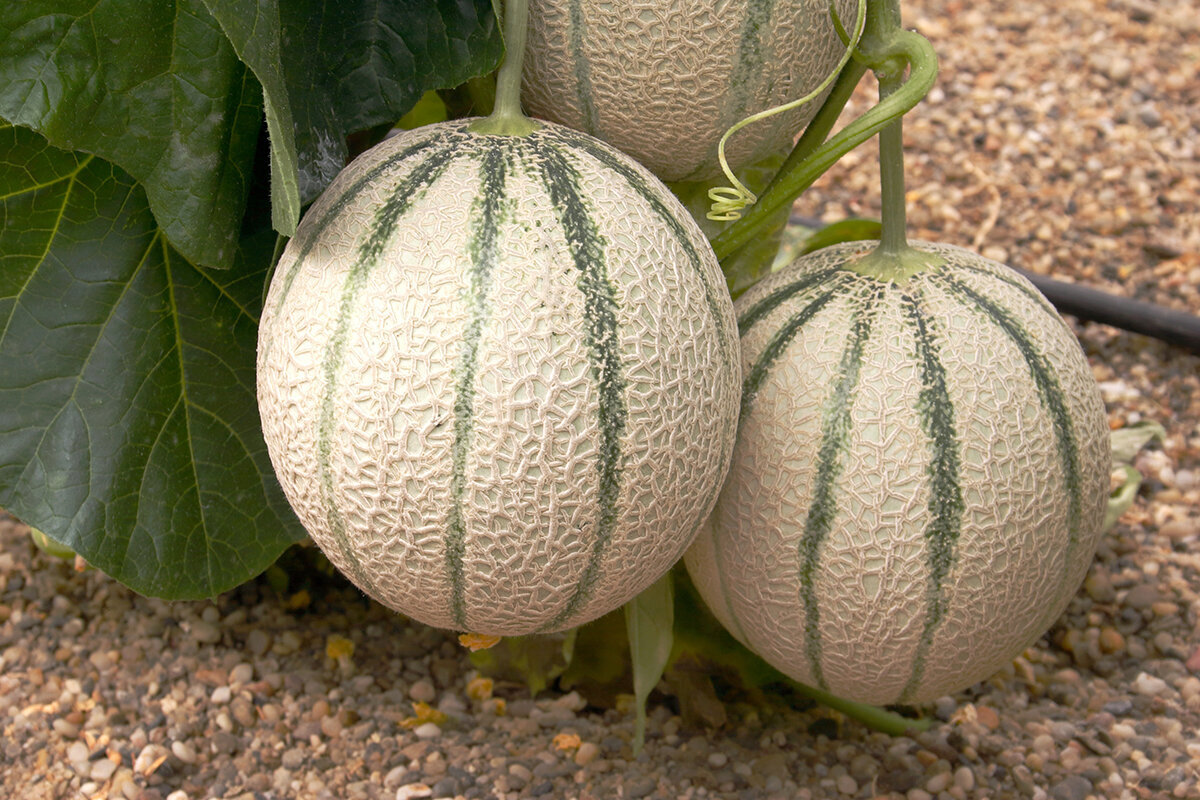
Greenhouse growing · Australia
Raise melons
with rich flavour inside your
greenhouse
Growing melons under glass is less about recreating the tropics than coordinating warmth, airflow, moisture and height. Provide a dependable upward path and the vine can produce fragrant fruit while transforming the greenhouse into a memorable summer space.
From a warm start to late-summer fruit
The key idea
Give warmth a framework,
so sweetness can develop.
Fast-growing and heat-loving, melon vines have exacting requirements: warm roots, abundant light, freely draining soil, steady moisture as fruit develops and enough airflow for leaves to dry quickly.
Shelter makes those elements easier to coordinate. It also leaves the grower responsible for work that outdoor weather and insects sometimes perform: opening vents, irrigating, directing shoots, managing fruit load and hand-pollinating when necessary. Small or medium sweet melons, including rockmelon types, suit many home greenhouses. Their vines adapt to vertical training, ripe fruit often becomes fragrant, and broad slings can bear the weight. Compact watermelons can also succeed, although they demand extra room, a stronger frame and thoughtful variety selection. Base the layout on light, usable height and accessible working routes, not floor area alone.
Choose the variety before the training system
Four choices
for summer beneath cover.
Names help, but growth habit tells you more about how each melon will use the greenhouse. Useful descriptions include quick to mature,restrained growth,smaller fruit,for growing under cover or adapted to trellising.
A shorter crop cycle matters in Australian districts where summer warmth is limited or unreliable. With a first crop, resist pursuing the biggest possible melon. Better results come from fruit you can guide, support, inspect and ripen fully without closing the centre path or shading nearby plants. Review likely fruit weight, vine vigour and any pollination advice as well.
- Galia and reticulated types These juicy green-gold melons carry their familiar net-like rind. Many sit securely in fabric slings, but each variety has its own maturity clues and tendency to separate from the stem.
- Charentais and cantaloupe types Intensely perfumed fruit, usually small or medium, may suggest apricot, flowers and sun-warmed soil. Choose them when depth of flavour matters more than sheer weight.
- Honeydew and other smooth rinds Their understated exterior can make maturity harder to judge. Consult the variety notes and assess underlying colour, rind character and feel rather than depending on a single hue or powerful fragrance.
- Small watermelons These eye-catching vines require ample headroom, load-bearing training and a generous fruit cradle. A seedless watermelon also requires a compatible variety that produces suitable pollen.
From seed to vine
Begin with warmth. Handle carefully.
Wait until the growing space is prepared.
01 / Sowing
Germinate warmly
02 / Young plant
True leaves
03 / Transition
Harden off
04 / Bed
Plant into warmth
Germinate warmly. The German timetable starts with one seed in each roomy pot from mid to late April; in Australia, align sowing with your region’s warm planting window. Individual pots avoid root damage from separating seedlings or repotting unnecessarily. Keep the medium evenly damp, never saturated. A heat mat can help where the room is cool. Once shoots emerge, strong light matters more than extra heat and keeps them compact rather than soft and stretched.
Once true leaves appear. Plentiful light produces compact, resilient seedlings. Do not move them repeatedly into larger pots merely to follow a calendar. Transplanting is safer with a young, cohesive root ball than with an overgrown plant whose roots circle the container or fall apart when moved.
Acclimatise, then transplant. Introduce seedlings gradually to greenhouse light, moving air and daily temperature variation. Start with brief, sheltered periods, avoiding chilling draughts and an abrupt move into harsh midday sun. German guidance commonly plants from late April into May; Australian timing should instead follow reliable local spring warmth, with adjustments for tropical, temperate and cool regions. Keep the root ball intact and at its previous depth. Two to three true leaves indicate useful development, but actual soil and greenhouse conditions outrank the calendar.
The root zone
Build drainage first, then water attentively.
Melons are hungry plants, yet dense soil with little air around the roots is unsuitable. Establish them in deeply loosened, warm, freely draining ground, improved moderately with finished compost rather than an isolated pocket of rich mix inside cold, compacted soil.
Prepare the whole in-ground planting area deeply and level any hollows where irrigation collects. Good soil retains moisture, then admits air again as drainage occurs. Finished compost supports establishment; add further nutrients only when the crop shows a genuine need. A raised bed may help where soil stays wet. Keep the surface orderly and aim water at the ground to minimise splashing. Repeated fertilising will not remedy cold, compacted soil; structure, warmth and patience will.
Use the largest practical container. Tiny pots heat sharply and dry unevenly during high summer, restricting fruit development. About 30 to 40 litres is a reasonable minimum guide for one trained plant, while greater volume steadies water and nutrient supply. Choose a structurally stable, free-draining medium, unobstructed drainage holes and a firm base. Container moisture will need checking more frequently than soil in a bed.
The main training sequence
Set the vine’s upward path
before growth runs ahead.
Root zone
Open crown
Flowers
Fruit
Turn at roof
Single main stem
Ventilated base
Place side shoots
Continue across the top
Inspect the vine from its base. Loosely attach one main shoot to cord or trellis first. Open the lower zone sufficiently for airflow, but do not remove sound leaves indiscriminately. Position selected laterals where foliage, flowers and melons will not merge with the next plant into a shaded, humid barrier. Remove growth lying on the soil when necessary.
At the top of the available space, turn the leader across, continue it on another cord or stop it to suit plant vigour and the intended crop load. For related ideas about paths, planting areas and attachment locations, see the Bloomcabin guide Classic aluminium greenhouse. Successful vertical growing begins by planning ventilation, access, usable beds and secure anchor points as one system.
Morning pollination
The job takes minutes;
work softly and inspect each bloom.
Open roof vents and doors may admit honeybees or bumblebees, but their visits are not guaranteed. Melon flowers last briefly, and a female bloom may receive no pollinator while it is receptive.
Distinguish
Choose daylight
Move pollen
Tag
A male bloom has a narrow stalk and no swelling behind its petals. The female carries a tiny melon-shaped ovary immediately below the flower. Poor pollen transfer may prevent fruit set or produce small, uneven growth. On bright mornings, locate newly opened flowers and remember their positions.
Choose a dry, bright morning. Collect pollen from an open male bloom with a soft brush, then lightly touch the female stigma; alternatively, remove the male flower and apply it directly. Treat other open blooms in turn and record the date on a small tag or coloured tie. Results are not visible the next day, so watch for steady, even enlargement during the following week. Avoid condensation-wet flowers and rough handling among delicate shoots.
Pollination remains essential for seedless watermelons. Read the variety instructions and include a compatible pollen-bearing companion, as an arbitrary cultivar may not perform this role.
Select with purpose
A lighter fruit load often brings
a more rewarding result.
A vigorous vine may appear ready to bear an orchard’s worth of melons, but it cannot. Every fruit left to mature draws on the same foliage, moisture, nutrition, sunlight and remaining season.
When several melons begin developing, favour those in sound positions with even growth. Retain fruit on healthy, well-lit shoots where a sling will fit comfortably. Remove malformed, damaged, trapped or very late fruitlets early. The right crop load depends on variety, mature size, root space, light, weather and season length, so reassess the vine instead of obeying an inflexible number.
Excess nitrogen creates a related imbalance: lush, dark and soft foliage with long runners, yet slower flowering and fruit development. Moderate feeding and a realistic crop load keep growth directed towards harvest.
Retain
strongly set
strongly set
Retain
with good light
with good light
Discard
pinched
pinched
Discard
damaged
damaged
Cradle
selected fruit
selected fruit
Keep clearance around each rind, stem and supporting shoot. Dense, still foliage makes inspection difficult and remains wet longer after humid periods. Early thinning is gentler than discarding a heavy melon later because it rubs, sits in shade or cannot be supported safely. Confirm that its bearing shoot remains healthy and within reach.
A simple structural measure
Install each cradle
before its melon becomes heavy.
Wide weight distribution
Growth allowance
Load-bearing anchor
Ongoing inspection
Choose soft mesh, wide clean cloth strips or purpose-made fruit nets so the load is distributed broadly, not concentrated along one pressure line. Form a hammock rather than cinching material around the rind. Allow plenty of expansion room: an initially neat fit can later mark, deform or constrict a ripening melon.
Carry the load through a strong upper cord or trellis, never through the tender fruit stalk or a slender lateral alone. During rapid enlargement and after irrigation, inspect the suspension at least twice per week. Check for tight material, damp cloth, strain at the stem, contact with glazing and slings that have slipped or become uneven. Fruit support requires continuing attention rather than one installation visit.
A steady care pattern
Water evenly. Feed moderately.
Keep moisture stable as harvest approaches.
Planting
Runner development
Fruit initiation
Ripening
Once transplanted: Water the root zone thoroughly at first so the root ball meets the surrounding medium. Let the top layer become slightly drier before the next irrigation while deeper layers stay consistently moist. The roots require water, but soil pores still need oxygen. Increase supply as foliage expands rather than swinging between drought and saturation. Pots warrant closer attention because they warm fast and store less moisture.
As flowers open and fruit begins: Consistent moisture is particularly valuable now. Apply water to the soil, or use controllable drip irrigation, because continually damp leaves invite avoidable disease pressure. Test below the surface instead of irrigating merely because the air under glass feels hot. Repeated shallow sprinkles generally help less than a thorough application based on actual need.
As fruit matures: Never cut off water abruptly. Reduce needless surplus instead, while avoiding wilting and major fluctuations. Prolonged dryness followed by drenching can contribute to disorders and cracked fruit. Finished compost in the prepared soil assists establishment; later, use a balanced supplementary feed only as its directions advise. Very soft, deep-green leaves and relentless runners may signal excessive nitrogen. Maintain an even course to harvest rather than attempting to intensify flavour through sudden drought.
Keep air circulating
Warmth is valuable.
Stillness is not.
A productive melon house feels bright and active rather than sealed. Circulation moderates temperature peaks, speeds drying across leaves, encourages balanced growth and improves conditions for morning care and pollination.
When outdoor conditions permit, combine high roof vents with the doorway or another low opening. Rising hot air then exits naturally and draws replacement air through the lower level. Under fierce midday sunlight, gentle external shade can moderate conditions without leaving the structure permanently dim. Irrigate the soil in the morning, maintain clear paths and keep thick foliage away from glazing and walls. Moisture condensed during cool nights should dry swiftly after daybreak.
In the Bloomcabin accessories section, you will find practical additions for ventilation, shading and crop training. What matters most is an orderly system that remains easy to operate on hot days.
The five-minute check
Check little, but check often.
1 / Begin underneath leaves
Inspect young leaf undersides for aphids, eggs, delicate webbing, pale speckles or sticky deposits. Hot, dry conditions favour spider mites, and early detection usually permits a more precise response.
2 / Interpret leaf symptoms
Floury growth, yellow tissue, browned margins or dead areas all warrant investigation. Assess moisture on the foliage, circulation and plausible causes before choosing any treatment or plant-protection product.
3 / Check every stem
Review clips, ties and the lower stem. Replace anything causing friction or constriction, then hygienically clear away dropped foliage, injured fruitlets and decaying plant matter without delay.
4 / Review soil and cradles
Puddles, algal growth and decomposing debris raise humidity and offer shelter to pests. Also examine fruit cradles for dampness, pressure marks and stable positioning. Keeping the working path clean supports crop health.
Prevention starts with sound cultivation: sensible spacing, circulating air, dry foliage, clean equipment, moderate feeding and prompt removal of debris. Keep irrigation away from the stem itself and monitor the base for injury or discolouration. When symptoms appear, establish the cause or organism before acting. Carefully remove severely affected material. Before using a chemical product in an Australian home garden, verify its current APVMA registration or permit, follow the label and check the applicable state or territory use requirements. If identification remains uncertain, seek regional horticultural advice rather than treating speculatively.
Reading the final stage
Decide when to pick by combining
several signs of maturity.
Ripening becomes apparent through a collection of subtle changes, and their order varies among types and cultivars. Treat the listed growing period as guidance rather than a fixed picking appointment.
01
Scent
02
Skin
03
Stem
04
Timing
Aroma. Many ripe sweet melons, including rockmelons, release a distinctly warm sweetness near the blossom end. Smooth-rinded varieties may remain much quieter, so fragrance belongs among several clues and should not decide harvest alone.Rind and underlying colour. Compare surface netting, lustre and background tone with the cultivar notes. Depending on type, green may soften towards cream, gold or another warm shade. A glossy, firm green rind often means additional ripening is required.
What happens at the stem. Some sweet melons form an abscission layer at full maturity and release more readily at the stem. Not every cultivar slips, and watermelons cannot be judged reliably this way. Record the fruit-set date, then learn to relate days of development, expected weight, aroma and rind appearance. Test any softness at the blossom end with a gentle touch; heavy pressure can bruise a melon grown over many months.
Where the cultivar does not release naturally, harvest during the cool morning with clean secateurs or a knife. Do not pull on the vine or stem. Handle netted rinds gently, and clean the outside, blade and cutting board before opening the fruit. Chill melon after cutting. An intact sweet melon can remain briefly at room temperature, but extended storage reduces fragrance and texture. Simple serving best preserves the character of a greenhouse-fresh harvest.
Inside the melon greenhouse
Answers to common growing questions
How many plants suit a compact greenhouse?
Use fewer plants than the plan seems able to hold. A sensible first arrangement is one vine in each large pot or clearly allocated bed location. Preserve a proper centre path, space beside the glazing and sufficient height to reach shoots, blooms, ties and slings comfortably. Open planting generally ripens more reliably than a floor crowded to capacity.
Is hand-pollination essential for melons?
Not in every case, although it often gives the most dependable result. Insects may arrive through open vents and doors. If visits are scarce or fruit formation is weak, gently transferring pollen between newly opened flowers during the morning provides greater control.
What causes flowers to fall before fruit forms?
Early blooms are commonly male, making some flower loss expected. After female flowers emerge, poor pollen transfer, excessive trapped heat, chilly nights, moisture stress or surplus nitrogen may hinder fruit formation. Begin by examining flower sex, greenhouse conditions, irrigation pattern and feeding.
Will melons grow in greenhouse containers?
Yes. Select a compact or modest-fruited cultivar, provide a stable pot of about 30 to 40 litres or more, and install dependable training. Ensure drainage openings stay clear. Monitor moisture more closely than in an in-ground bed because pots become hotter and lose water faster during high summer.
Should leaves beside ripening melons be removed?
Remove only diseased, damaged, ground-touching or permanently congesting leaves. Healthy foliage supplies the fruit with assimilates and therefore supports growth and sweetness. Improve air and light with thoughtful training instead of suddenly exposing fruit completely to intense midday sun.
What greenhouse shape supports upright melon vines?
Prioritise ridge clearance, a load-bearing course for cord or trellis and room for suspended melons above an accessible walkway. Air exchange matters just as much: even after the canopy thickens, the door and roof openings must leave rising warmth an unobstructed exit.
References
Research and practical reading
LWG Bavaria: protected melon trial 2025
Reports German trial findings for cultivar performance, yield, melon weight, crop health and production under shelter.
LWG Bavaria: protected melon trial 2024
Provides Bavarian horticultural data on melon cultivars and practical crop management.
LVG Heidelberg: greenhouse cultivar comparison 2024
Compares sweet melons and watermelons for yield, fruit characteristics and crop health.
Weihenstephan-Triesdorf University: melon production under cover and outdoors
Shows practical vine-training methods and ways to cradle suspended melons safely in appropriate nets.
Bingenheimer Saatgut: watermelon cultivation notes
Covers propagation, transplanting, ongoing care, pollen transfer and signs of watermelon maturity.
University of Minnesota Extension: home-garden melon production
Offers further English-language guidance about warmed soil, cultivar selection, pollination, irrigation and picking.
A closing thought
Design a beautiful route for the vine.
Floor area alone does not determine the quality of a melon crop. Success also needs ridge clearance for the leader, ventilation through the leafy canopy, unobstructed access for pollinating and tending, and reliable anchors for cords and ripening melons. Treat the greenhouse as a growing structure that connects the warmed root zone with the fragrant harvest.
For a traditional and adaptable foundation, consider the Classic aluminium greenhouse. Its restrained, familiar form can organise upright melon growing. Large pots or beds, support cords, roof openings, fruit cradles and usable paths can become one coordinated arrangement for melons, herbs and lingering summer afternoons beneath glass.
Classic aluminium greenhouseContinue planning
Review the construction and proportions of the Classic aluminium greenhouse when mapping broad paths, upright crop areas and support locations that remain easy to reach.
Explore further configurations for a sheltered garden through the Classic aluminium greenhouses
For additional ideas about robust construction, appearance, position and airflow, explore Bloomcabin accessories and shape a light-filled, airy growing space for the coming melon season.
