
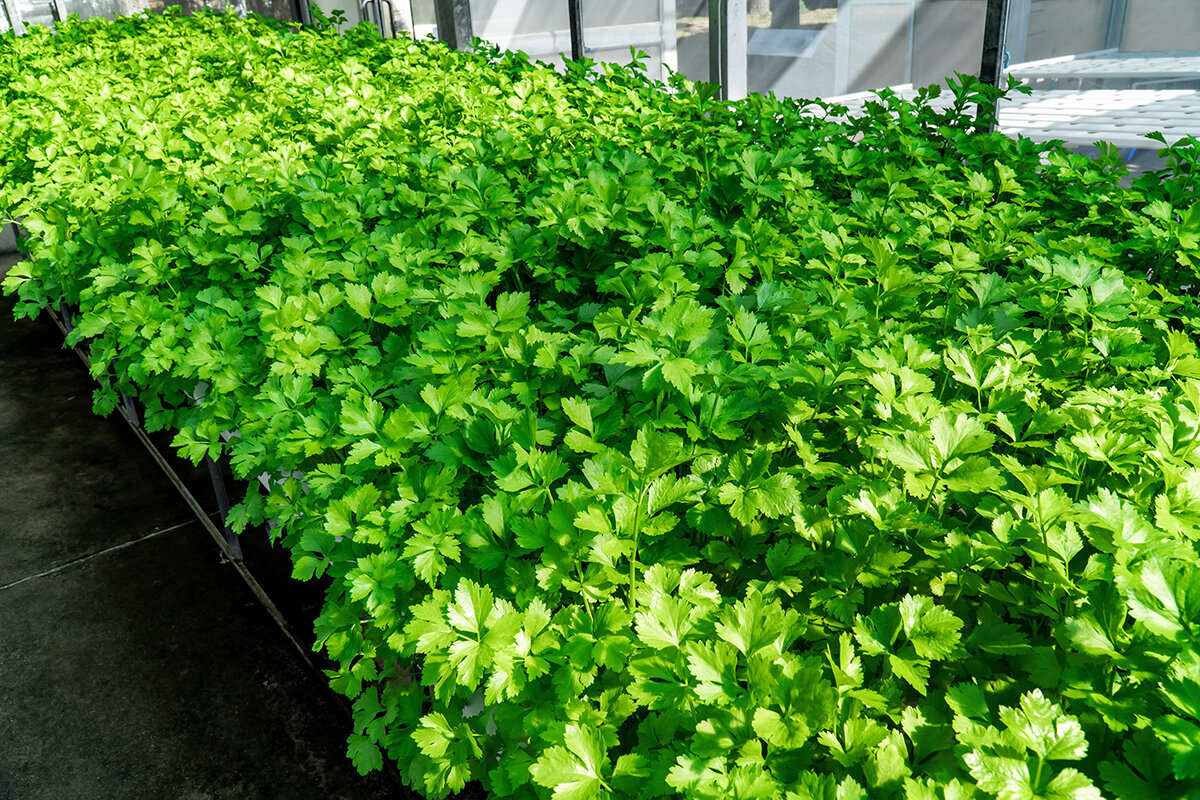
Growing coriander / cilantro in a greenhouse
Bloomcabin crop notes · Australia
Coriander under cover / greenhouse cilantro
This fast annual offers two distinct harvests. Cool conditions and early cutting produce fresh coriander leaves; plants left to rise, bloom and dry provide fragrant coriander seed for the spice cupboard.
Harvesting leaves
For quick, fresh picking, grow cilantro.
Leaf coriander is Coriandrum sativum and gardeners harvest its tender stalks and divided foliage. Under cover, the process is direct: sow a small area in place, wait for sturdy rosettes, then take only what the kitchen will use promptly. The leaves taste brightest before prolonged storage or cooking.
- Aim: repeat harvests of fresh leaves.
- Best approach: sow closely and overlap short batches.
- Climate priority: avoid hot root zones and stale air.
- Growing rhythm: a few weeks, rather than one whole season.
Harvesting spice
Coriander is the slower, spiced crop.
The plant is unchanged, but this crop is permitted to gain height, carry pale flower clusters and mature its rounded fruits. Its leaves become finer and serve a different culinary role. Give chosen plants room instead of suppressing their flower stems, catch seed before it drops, and complete the harvest in dry conditions.
- Aim: aromatic, fully mature spice seed.
- Best approach: wide spacing and unrestricted airflow.
- Climate priority: ordinary warmth helps once seed formation begins.
- Growing rhythm: the full plant cycle through maturity.
Growing for leaves
Harvest while young.→
Growing for seed
Allow full development.Separating these crops is the central greenhouse choice. Leaf plants may grow comparatively close and tolerate several cuts. Plants reserved for spice need sunlight, branching space and time without disturbance. Asking every specimen to supply both commonly leaves little tender foliage at first and only a sparse seed crop later. Allocate separate parts of a bed, bench or trough. Two labelled bands are enough: refresh the leafy band with small successive sowings, but stop cutting several vigorous plants once upward growth begins in the seed band.
Before the first leaves
Match the sowing to its purpose.
Sowing in the final position usually gives the most reliable result. Coriander makes a taproot, so needless root disturbance can set it back. Start with viable seed in an open, free-draining herb or vegetable medium that retains its structure. A prepared greenhouse bed can hold short rows instead. When modules are unavoidable, move seedlings early and preserve the entire root ball.
01
Choose seed for the harvest goal
For leaf picking, look for varieties described as bolt-resistant, slow-bolting or specifically suited to foliage production. These traits may lengthen the picking period, but heat, extended daylight and dry roots can still trigger flowering. Variety matters less for seed production than dependable provenance and sufficient room for sturdy branching. For either crop, select fresh, tested seed with a clearly identified variety.
02
Prepare a firm, shallow drill
Set the rounded fruits about 1 to 2 cm below the surface. Cover evenly, firm the soil gently and water through a fine rose so they are not washed into clusters. Short rows running across a narrow greenhouse bed are convenient: you can water, label, cut and clear each one separately. There is no need for fresh manure or a heavily fertilised mix; a moderately fertile, freely drained base is adequate.
03
Use separate thinning plans for each crop
A leafy sowing can remain fairly close, although crowded seedlings should eventually be thinned to approximately 5 cm apart. Plants destined for seed perform better with about 20 to 25 cm between them. This admits light around the base and gives branching flower stems room without mutual shade. If the layout permits, rows roughly 35 to 40 cm apart simplify tending, inspection and collection.
04
Allow time and avoid saturation
Emergence may require two to three weeks and can be slower in a cool medium. Keep the surface consistently damp until shoots appear, without soaking it. A clear cover is useful briefly when greenhouse air is exceptionally dry; remove it after germination so humid air cannot stagnate around seedlings. Label each row with its sowing date and purpose, either leaf or seed, to keep later successions organised.
Shelter with a drawback
Offer abundant light while keeping excess heat in check.
Cover softens the effects of chilly nights, wind and heavy rain, but on a sunny day it may also push coriander rapidly towards bloom. Foliage develops best in bright yet fairly mild weather. Aim for an even daytime climate, dependable ventilation and a root zone protected from repeated overheating. A thermometer among the plants is more informative than a glance from the entrance. Ventilate through the door and roof openings as the morning warms, well before wilting appears.
Light
Choose a well-lit position. In hot weather, gentle shade on the sunward side is preferable to excluding light altogether. Mild morning sunshine remains useful, whereas gloomy corners encourage elongated, pale and unstable stems.
Temperature
Mild days and cooler nights suit leaf production. As heat rises, the leaf window shortens sharply. In particular, avoid overheated roots and abrupt temperature swings; ventilating early works better than a late emergency response.
Ventilation
Begin ventilating through the door and roof openings early on warm days, creating mild crossflow. Still corners may benefit from a compact circulation fan. Air movement has a practical purpose: foliage dries more readily and temperature variations across the house are reduced.
Water
Apply water to the medium, ideally during the morning, and allow foliage to become dry by evening. Warm stagnant air over continually wet surfaces promotes soft tissue and makes leaf or seedling disorders more likely.
From leaf to flower
Five clues that define the picking period
01Rosette
Cut now
Cut now
02Centre rising
Take a generous cut
Take a generous cut
03Finely divided leaves
Select the crop
Select the crop
04Umbels forming
Choose a direction
Choose a direction
05Fruit developing
Begin drying
Begin drying
Use each growth stage as your cue. The ideal leaf crop is a compact, rounded rosette. As its middle rises, make a substantial cut while preserving the growth point. Narrow, feathery leaves higher on the plant signal that energy is shifting into height and bloom. Branching stalks and umbels force a choice: pinch the earliest buds for a possible short extension of leaf picking, or leave labelled plants untouched for seed. Once green fruits fade through yellow and straw to pale brown, foliage harvest is over. Several pressures commonly combine to cause bolting, including long days, heat, parched roots, irregular irrigation, crowding, root disturbance and ordinary maturity. Provide ventilation sooner, soften harsh afternoon sunlight, irrigate before wilting and pick promptly. Most importantly, start a replacement sowing while the current crop is still productive.
Keep another row coming on
Build a sequence rather than relying on one sowing.
A single large batch gives more leaves than needed for only a short period. Smaller sowings made two to three weeks apart create continuity: tender seedlings, mature rosettes ready to cut, replacements already emerging and a deliberately untouched group progressing towards flowers and spice seed.
An illustrative crop sequenceMarAprMayJunJulAug
Leaf sowing Asown; first foliage
Leaf sowing Bmain cutting period
Leaf sowing Csown; first foliage
Leaf sowing Dmain cutting period
Seed plants set asideflowering through final drying
New foliage and backup rows Main leaf-cutting periods Seed plants kept uncut
Treat this chart as a sequence to adapt, not a timetable promised for every site. March-to-August sowing can suit districts with mild autumn and winter conditions; cooler southern areas and Tasmania may shift useful protected sowings towards late winter and spring. Let local light and temperature govern each start. Severe summer heat greatly narrows the picking period, so increase ventilation, apply gentle shade or pause until conditions ease. Without grow lights, winter plants may remain too weak to yield leaves reliably.
Leaf harvest
Leave the centre capable of regrowth.
Productive cutting positions are marked in turquoise. Preserve the growing point indicated by the red line if another flush is wanted.
Three effective ways to pick
- Selective cutting: Remove outside stalks first, allowing new foliage to keep opening from the middle. This works well when only a kitchen handful is required.
- Gentle row harvest: Shear a closely planted young row above its growth point, retaining a short base with leaves. The method is tidy and efficient, provided plants are vigorous and adequately supplied.
- Protect the crown: Cutting hard against the soil finishes the batch. Use that approach to clear an ageing row, not when another flush is expected.
Retain fresh aroma: Harvest after the leaves have dried, either in the morning or during another cool interval. When practical, delay washing the stalks until immediately before use. For brief storage, stand them loosely in a little water somewhere cool. Chop and freeze surplus leaves in portions. Drying greatly diminishes their lively citrus character.
Good placement makes repeat harvesting simpler. Keep leaf coriander near the door or along the accessible edge of a bench, where watering, cutting and resowing are convenient. The Classic Aluminium Greenhouse.
Finishing in warmth and dry air
Let one patch flower, then be patient.
Once plants are assigned to seed, stop routinely removing their foliage. Open, pale umbels will appear, followed by round green fruits. They can remain under cover if younger leaf rows are not shaded and air passes freely around them. With doors or windows open, hoverflies and other helpful insects can visit the flowers. Ventilate well enough for foliage and fruiting heads to dry promptly after irrigation. Support tall stems gently where required, avoiding repeated movement of the fragile umbels.
01Green
02Colour transition
03Drying partly
04Bag drying
05Cleaning and storage
- Green: These tender fruits are continuing to fill and have yet to acquire the warm, dry character of the spice. Keep them attached for further ripening.
- Colour transition: The umbels progress from green into yellow-beige, straw and finally pale brown. Because individual flowers open at different times, their fruits mature unevenly. Inspect the plants often.
- Drying partly: When most umbels have reached straw or pale-brown tones, remove complete stems during a dry morning, before the earliest fruits start dropping heavily.
- Bag drying: Place the stems head-down inside a clean paper bag or similarly breathable wrap. Hang them in a warm, dry position with good ventilation; any released seed will be caught below.
- Cleaning and storage: Gently rub out thoroughly dried umbels, separate the remaining plant material and seal the whole seed in a jar away from direct sunlight and heat.
Do not wait for every umbel to darken fully while still attached. In a warm greenhouse, early fruits may fall before the late ones have left the green stage. Cut once most show a clear transition, then complete drying under protection. Grind only when cooking so the warm, woody-citrus fragrance lasts as long as possible.
Diagnose first, then make a measured correction
Connect each familiar symptom with likely causes and action.
Flowering began at just 12–15 cm
Possible causes include overheated roots, abrupt heat peaks, drought, erratic irrigation or waiting too long before picking.
Response: Ventilate through windows and doors sooner, soften the strongest afternoon sun and irrigate ahead of wilting. Start another modest sowing immediately. Pinching an early flower stalk might extend picking briefly, but replacement plants are more reliable than attempting to return a bolting batch permanently to leafy growth.
Foliage is pale, elongated and weak
Possible causes are inadequate light, excessive crowding or a constantly wet medium that prevents normal root activity.
Response: Relocate pots to stronger light, open space between crowded seedlings and permit the surface to become slightly dry before adding water. Resolve light, ventilation and moisture problems before applying modest fertiliser. Heavy feeding may produce rapid yet soft growth with diminished aroma.
Lower foliage yellows and the centre looks tired
Possible causes are saturated soil, oxygen-starved roots or natural ageing as the crop moves towards flowering.
Response: Inspect the drainage openings, saucers and bed-soil structure. Where conditions are wet, water less often and remove plants past their useful stage rather than demanding another cut. Establish a new sowing for the coming picking period.
Young growing tips carry clusters of aphids
Likely contributors are lush, tender tissue and protected conditions that allow initially hidden pests to multiply rapidly.
Response: Inspect new shoots and the undersides of leaves twice weekly. Separate or discard badly affected specimens, gently wash away small colonies and increase airflow. Yellow sticky cards can reveal flying aphids, but physical plant checks remain essential. If chemical control is contemplated, select only a product currently registered for that use on edible herbs and follow its Australian label and any applicable permit exactly. Confirm the APVMA product and permit details, along with use requirements in your state or territory.
Seedlings topple where stems meet the soil
Damping-off is the likely cause, favoured by too much water, reused medium, poor sanitation, crowded seed or continuously humid, warm and motionless air.
Response: Remove diseased seedlings, wash the containers and restart with unused growing medium. Reduce sowing density and direct water onto the soil rather than repeatedly soaking foliage. At day’s end, avoid sealing wet surfaces inside warm, moisture-laden greenhouse air.
Timing in Australia
Protection moderates the weather rather than replacing it.
Planting windows vary substantially around Australia. Although a greenhouse offers added control, coriander still favours bright conditions without excessive heat. Use the site’s light levels, chilly nights, prevailing wind and summer temperatures to set the schedule.
Southern cool-climate districts
Across southern states and Tasmania, dark, cold winter weeks may delay protected direct sowing, although plants often remain leafy for longer in spring. Capture sunny mornings, leave the greenhouse closed briefly after frost until warmth returns, then ventilate. Shelter seedlings from cold winds without leaving their roots continuously chilly and wet. A robust winter crop cannot be assumed unless extra warmth and horticultural lighting are available.
Temperate areas and elevated sites
In temperate districts and highlands, early crops under cover can thrive when illumination, irrigation and air exchange stay balanced. After frost, warm plants gradually rather than creating a sudden tropical environment. From December to February, even an unheated structure may become hotter than the outside afternoon air. Put leafy rows beside effective ventilation, add mild shade when needed and keep each sowing small. Another dependable leaf period can follow once peak heat subsides.
Subtropical and warm inland districts
In subtropical or hot inland areas, use the cooler months for early sowing because rising temperatures accelerate flowering. Ventilate freely, apply light shade to strongly exposed sides and target leaf production during autumn, winter, spring and milder summer spells. A break during extreme heat often works better than continually resisting bolting. Reserved seed plants can use warm, airy shelter to mature dry fruits. Supply steady moisture at the roots while keeping ripening umbels as dry as practical.
For a compact, dedicated herb corner, consider the Aluminium Mini Lean-to Greenhouse. Use deep pots rather than shallow trays to accommodate the taproot, and prioritise ventilation over retained heat. Longer sequences of rows fit well in the Classic Aluminium Greenhouse , where the bright interior can be arranged efficiently.
Advice from the herb bench
Greenhouse coriander FAQ
Is year-round greenhouse coriander practical?
In principle, coriander can be maintained year-round where the house remains frost-free and suitable plant lighting is added. Without supplementary light, winter days may not support continuous vigorous foliage, especially in cooler southern Australia. An unheated house slows growth in cold weather, while summer heat hastens bolting. Use protection chiefly to begin earlier, grow dependable cool-season batches and finish seed under shelter. Keep new sowings coming instead of relying on one long-lived plant.
What germination time should you expect?
Expect roughly two to three weeks when conditions are suitable, with a cool medium extending that period. Maintain even dampness without saturation and resist disturbing the row to search for seed. Variable depth or alternating dry and wet conditions commonly produces patchy emergence.
Does coriander fruit need splitting before it is sown?
A round fruit generally holds two individual portions and may be divided carefully, but dependable home crops do not require this treatment. Sound fresh seed, consistent depth, gentle irrigation and a loose medium have much greater importance. Never grind the fruits: damaged portions may emerge weakly or fail altogether.
What container depth suits coriander?
Provide at least about 20 cm of usable depth and an unobstructed drainage opening so the taproot has room. One broad trough is often easier to manage than numerous small pots, accommodating labelled short rows for different harvests and successive sowing dates. Use a structurally stable, free-draining mix and never leave water standing in the saucer.
Can coriander grow beside tomatoes?
Yes, provided coriander’s different environmental needs are respected. The tomato section often becomes the brightest and hottest greenhouse area in summer, prompting earlier bolting. Place coriander towards a cooler margin with useful airflow but not a harsh, drying draught. Maintain small, youthful batches, irrigate consistently and prevent tall tomato foliage from blocking all light.
How can you judge when coriander seed is mature?
Collect it after most umbels progress beyond green into beige, straw or light brown and their fruits feel hard rather than tender. Remove the stems before the earliest seed falls when touched, then finish the crop inside a paper bag or another covering that admits air.
Sources and further guidance
References behind the practical advice
Continue exploring with Bloomcabin: Window-opening automation for greenhouses · Questions about aluminium greenhouses from Bloomcabin · Explore conservatories and greenhouses by Bloomcabin
- DLR Rheinland-Pfalz – guidance for leaf coriander production: German advice about cultivation and variety selection, particularly for foliage yield and the likelihood of bolting.
- Oregon State University Extension – raising coriander: information about sowing, warm conditions and using one species for both foliage and mature seed.
- Utah State University Extension – garden cilantro and coriander: practical coverage of planting depth, spacing, irrigation, bloom development and post-harvest seed drying.
- NC State Extension – profile of Coriandrum sativum: a botanical account of the plant’s preferred setting, form and culinary applications.
- University of Wisconsin–Madison Extension – coriander and cilantro: an outline of the plant cycle, picking foliage, bolting, bloom and using fully ripened fruits.
- Royal Horticultural Society – advice for successful coriander: practical material covering sowing, crop care, successive picking and management through the seasons.
Adjust these suggestions for the greenhouse design, chosen variety, available illumination and conditions at your location. For sheltered room suited to deep herb containers, see the Aluminium Mini Lean-to Greenhouse.
For leafy crops
Prioritise freshness.
Set aside a short row and establish its replacement before picking reaches its peak. Use the first cut with dinner rather than postponing it until flower stalks appear.
For spice seed
Prioritise flavour.
Leave several vigorous plants enough space to complete their cycle. Keep the maturing umbels airy and undisturbed, then seal the thoroughly dried fruits in a jar. Home-grown coriander spice will be ready for winter meals.
