
Growing Eggplants in a Greenhouse
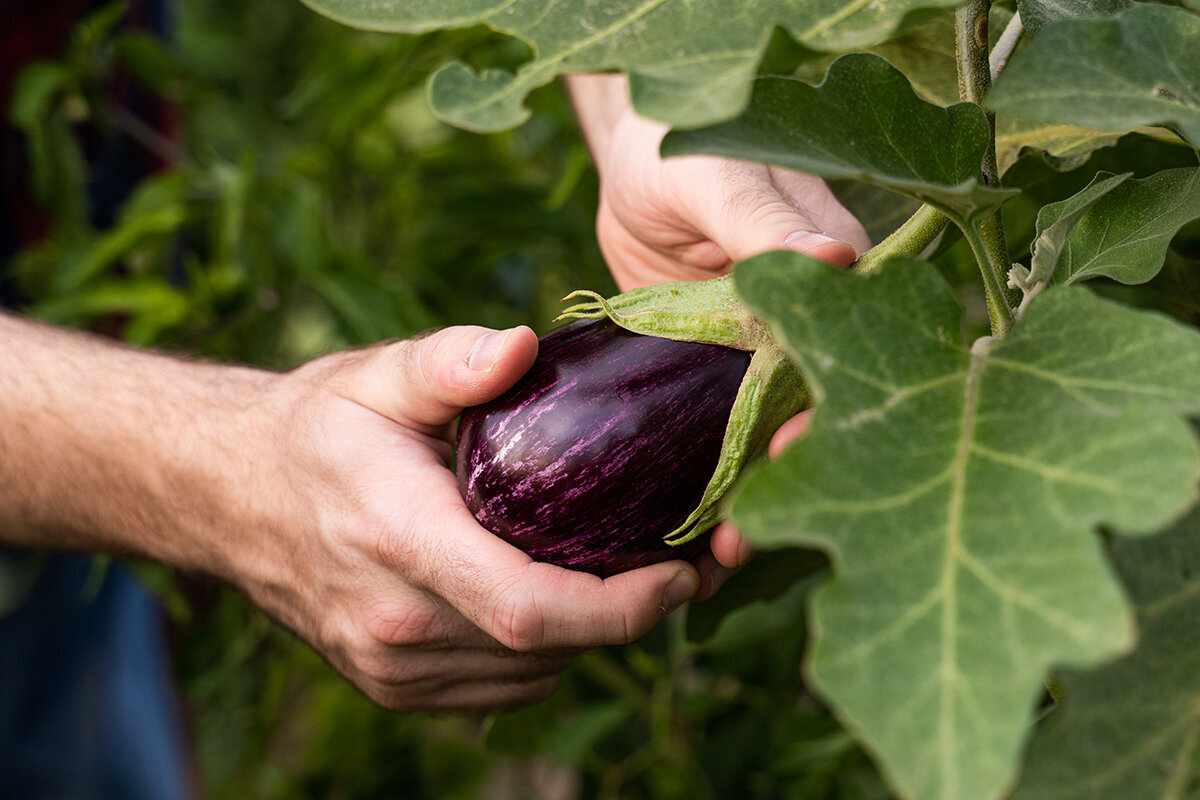
Australian greenhouse crop 02 · Solanum melongena
Raising Eggplants Under Cover
That lustrous summer fruit comes from a demanding plant. Eggplants require dependable warmth, settled roots, sound supports and attentive care during flowering.
A greenhouse makes eggplants a structured, long-season crop. Earlier picking is only one advantage: roots stay more evenly warm, leaves escape harsh weather, ventilation becomes controllable, and developing fruit gains protection when outdoor plants encounter rain or chilly nights.
Principle one · establish climate first
Shelter alone is not enough.
Build warmth into the growing area.For eggplants, steady conditions matter more than brief bursts of heat.
Build warmth into the growing area.For eggplants, steady conditions matter more than brief bursts of heat.
Under glass, warmth becomes a resource the grower can regulate.
As heat-seeking nightshades, eggplants lose momentum after a cold start. Germany’s Bavarian Garden Academy advises protected cultivation outside notably warm wine districts. Chilled nights, saturated roots and sudden fluctuations restrict growth, increase dropped flowers and shorten the productive season. Where summer weather varies, greenhouse management offers a much steadier path to fruit.
There is no need to imitate the tropics. Aim instead for balanced warmth and a thoughtful ventilation pattern. Cold mix, containers left in runoff, lengthy shade and a shut greenhouse during humid weather each create different setbacks. Contented plants show upright foliage, compact extension, persistent flowers and fruit that swells without abrupt moisture changes.
Plan the structure as a place for both plants and daily work, not merely a weatherproof shell. Keep beds and containers close to water, leave every vent accessible, and make the undersides of leaves easy to inspect. The Classic Aluminium Greenhouse range can guide decisions about headroom, benches, paths, ventilation and usable rooting space before any eggplants are brought inside.
Managing the heat cycle
Provide warmth without stagnant air.
Take readings beside the foliage; a thermometer should inform cultivation rather than decorate the wall. Seed mix at roughly 22–25 °C supports germination, while later growth benefits from sustained warmth and strong light. Yet direct Australian sun can raise greenhouse temperatures rapidly. Vent the roof and doorway before heat accumulates, introducing shade where necessary, instead of waiting until late-day wilting needs attention.
22–25 °Cgermination warmth
Steady beginningSound fruit setOpen vents promptlyFilter peak sun
Germination
Use seed-raising mix warmed to about 22–25 °C, encouraging even emergence without waiting through weeks of delay.
Growth
Plenty of light and warm days build firm stems and useful foliage without producing weak shoots that stretch towards brightness.
Fruit set
Keep open flowers away from chilly nights, persistent moisture and prolonged spells of fierce midday heat.
Stress zone
Flowering and fruit growth may stall after cool nights, dry pots or excessive heat trapped inside a closed structure.
Develop a daily sequence: close the greenhouse ahead of a cold evening, release accumulated warmth early next morning, and circulate air through foliage without directing a chilly draught along the plants.
Cultivar selection
Match fruit shape to your space, container and cooking.
There is no universal greenhouse eggplant. Compact plants often work best beside narrow paths, whereas traditional large-fruited cultivars justify extra rooting volume, height and substantial support. Choose for the room available throughout summer rather than the most imposing seedling displayed at the nursery.
Compact
Patio and miniature forms
These fit generous containers and lower greenhouses. Their smaller fruit commonly matures sooner, and restrained growth leaves more breathing room around the foliage.
Slender
Long-fruited Asian forms
Slender fruit can be examined easily and picked often. Arrange the stems so each eggplant hangs clear of leaves and greenhouse panels.
Classic large
Large dark ovals
This familiar sculptural form needs a roomy container, sturdy cane or suspended string, plus space for a controlled crop that can mature well.
Distinctive
Small, striped or white
Useful for broadening a protected collection, these types differ not just in appearance but in harvest timing, dimensions and culinary purpose.
Where the greenhouse doubles as a considered garden retreat, view Bloomcabin aluminium greenhouses while matching shade, clear height, walking room and benches to the cultivars you intend to grow.
Seedling plan
Allow time for a sturdy beginning.
In cooler or unpredictable Australian districts, raising seedlings before an unheated greenhouse reaches planting warmth preserves valuable growing time. Late winter into early spring often suits southern temperate climates. Starting substantially sooner without dependable heat and supplementary lighting usually produces soft, stretched seedlings rather than meaningful progress.
Select seedlings with thick stems, compact leaf spacing and roots that bind the plug lightly without forming a dense mat. Reject spotted foliage, floppy extension or plants languishing in exhausted tiny pots. They should establish quickly, not spend weeks recovering from cold, congestion or injured roots.
- 01
Begin with warmed seed mix
Sow about 0.5–1 cm deep into fresh, fine seed-raising mix. Bottom heat aids emergence, but monitor water closely because a warm tray may dry beneath a surface that still looks moist.
- 02
Light seedlings from overhead
Once shoots appear, supply strong light above them and maintain moderate, even moisture. Separate seedlings early so their stems remain upright rather than leaning for a distant window, and their roots can develop without competition.
- 03
Plant after conditions settle
Move eggplants only after nights inside remain mild and neither the bed nor container mix feels cold. Across many southern Australian districts, suitable conditions arrive in spring. Waiting briefly causes less harm than losing a month to stalled growth.
- 04
Add supports while planting
Position the cane, string or framework immediately. Delayed installation can damage roots and requires awkward handling of stems that may already hold flowers or fruit.
Space for roots
Ample mix provides a more stable reserve.
Containers: use volume for stability.
Eggplants perform well in pots, but limited volume causes moisture, nutrition and root-zone heat to fluctuate sharply. Allow at least 20 litres for a mature specimen; 25–30 litres of structurally stable vegetable or container mix is more forgiving. Provide generous drainage holes and place each pot where runoff clears completely rather than collecting beneath it.
Dark containers gather welcome spring warmth but can become dangerously hot in strong sun. Give pots a bright position, shielding their sides from severe midday and reflected heat where needed. During hot spells, inspect moisture and temperature within the root ball as well as the leaves.
Beds: depth with room to breathe.
Add mature compost to a greenhouse bed only after confirming that drainage works. An excessively rich, sodden pocket may generate spectacular leaves but erratic flowers. Start with approximately 50–60 cm between plants, adjusting for vigour, training method and the width required for access.
Keep the root collar level with its former position in the seedling pot. Water the transplant thoroughly and, if useful, apply a light mulch without trapping dampness beside the stem. Rotate permanent beds because tomatoes, capsicums, potatoes and eggplants share the nightshade family and should not repeatedly occupy unchanged soil.
Training upwards
Shape plants for inspection, ventilation and manageable fruit.
Plant framework · leaders, ties and fruit burden
Put the framework in place before cropping begins.
Eggplant stems look robust until their crop becomes heavy. Home growers can use an upright cane, gentle ties or a system of one to three chosen leaders. Any method is suitable if plants stay open to inspection and fruit can be cut without pushing through tangled branches and leaves.
Retain the leader with several vigorous side shoots spaced around it. Over time, take away frail, inward-facing or soil-level growth, but never denude a healthy specimen in one session. Fasten stems loosely with soft ties, preferably crossed as a figure eight. When fruit begins swelling, assess whether its branch has adequate foliage and structural strength.
Restricting the crop modestly can improve fruit size and ripening while reducing snapped stems. On large-fruited cultivars, five to six well-formed eggplants on each plant is a practical guide. An orderly framework also assists ventilation and early pest detection.
Assistance at flowering
Each flower has male and female parts, although protected plants may still need help.
Both reproductive structures occur within an eggplant flower. Inside a greenhouse, wind movement and insect traffic may be limited. Gentle vibration while blossoms are open can bring pollen into better contact. Use a light touch; forceful shaking every day or repeatedly handling individual blooms is unnecessary.
Air
Routine ventilation creates slight movement through leaves and flowers while clearing humid, motionless pockets from the canopy.
Vibration
Late on a dry morning, tap the supporting cane or give the flower cluster a delicate flick. That brief movement is generally enough when manual pollination assistance is required.
Humidity
Persistent humidity can inhibit pollen release and favour disease. Direct irrigation into the rooting area, keep flowers and foliage dry, and ventilate the structure.
Temperature
When blossoms drop, investigate growing conditions before reaching for fertiliser. One cold evening, a parched container or trapped excessive heat may reveal the cause.
A plant need not retain every blossom. Seek a continuing progression from sound flowers to expanding fruit. If losses become recurrent, review the variables in order: overnight cold, midday overheating, moisture in the mix, ventilation and lush weak foliage driven by surplus nitrogen.
Tracking inputs and plant response
Keep water and nutrition even rather than reactive.
Eggplant quality depends heavily on stable root-zone moisture. Repeated drying followed by saturation can restrict yield and growth, encourage bitterness and contribute to physiological disorders. A greenhouse removes rainfall from the watering decision, which is beneficial only when irrigation follows observed plant and mix conditions instead of a rigid calendar.
Irrigation
Deep but controlled
Irrigate at soil level during the morning until moisture reaches the full root ball. Allow the top few centimetres to dry before repeating. Compare pots rather than checking only one: the sunny doorway may lose moisture far sooner than a sheltered position at the back.
Irrigate at soil level during the morning until moisture reaches the full root ball. Allow the top few centimetres to dry before repeating. Compare pots rather than checking only one: the sunny doorway may lose moisture far sooner than a sheltered position at the back.
Signals from the plant
Trust firm foliage, balanced extension and steadily swelling fruit over a watering routine that never changes with conditions.
Trust firm foliage, balanced extension and steadily swelling fruit over a watering routine that never changes with conditions.
Feeding
Measured nutrition
Match fertiliser to the mix and follow its manufacturer’s label. Once container plants set fruit, modest regular doses of potassium-focused liquid feed are usually preferable to a heavy corrective application made late.
Match fertiliser to the mix and follow its manufacturer’s label. Once container plants set fruit, modest regular doses of potassium-focused liquid feed are usually preferable to a heavy corrective application made late.
Observe the foliage
Excess nitrogen shifts energy into luxuriant leaves instead of flowers. Older foliage that pales may signal spent mix, although chilled or saturated roots should be excluded before adding nutrients.
Excess nitrogen shifts energy into luxuriant leaves instead of flowers. Older foliage that pales may signal spent mix, although chilled or saturated roots should be excluded before adding nutrients.
Free drainage
Let surplus water leave
Keep every pot clear of collected runoff. If a bed drains slowly, diagnose that fault before responding with additional irrigation or feed.
Keep every pot clear of collected runoff. If a bed drains slowly, diagnose that fault before responding with additional irrigation or feed.
Root-zone clues
Wilting despite wet mix, yellow leaves and halted development indicate troubled roots rather than simple dryness. Improve drainage and warmth before looking for renewed growth.
Wilting despite wet mix, yellow leaves and halted development indicate troubled roots rather than simple dryness. Improve drainage and warmth before looking for renewed growth.
A timer-controlled drip system is valuable only after you have watched several complete irrigation cycles. Revise its run time as seasons and crop load change: an overcast spring day, a summer hot spell and a plant laden with fruit create very different demand.
Managing regional conditions
Successful summer care depends on releasing heat before it peaks.
Although eggplants relish warmth, full sun can make a sealed greenhouse hostile before the crop benefits. During humid heat, venting helps leaves dry and shortens stagnant periods. In arid, intensely bright conditions, pair airflow with selective shade and inspect pots more often because their mix may lose water unexpectedly fast.
Follow a repeatable opening order. Lift roof vents first, then open a doorway or lower vent to draw air gently upwards. A compact circulation fan can clear still corners, provided its stream is not fixed on one specimen. During severe heat, blinds or shadecloth temper the brightest hours without reducing light unnecessarily for the entire season.
Inspect developing fruit as carefully as foliage. Exposed eggplants may suffer sunscald during dry, powerful heat. Avoid stripping leaves just before a hot spell because sound foliage forms an important layer of natural shade.
Diagnose methodically
Interpret the plant first, then change its surroundings.
Fine webs with yellow-speckled leaves
Spider mites commonly produce these symptoms and favour dry warmth under cover. Damage may weaken a plant well before it is conspicuous from the path, making close checks beneath leaves essential.
Dusty undersides or bronzed foliage
Hot, arid conditions can accelerate spider-mite populations. Use a hand lens beneath the leaves; the earliest symptom may be no more than a subtle decline in sheen and vitality.
Curling, yellow leaves followed by decline
Do not treat every wilt as drought. Saturated cold mix can stop roots absorbing water. If the root ball is already wet, pause irrigation and assess its moisture, odour and drainage.
Bitter, seedy fruit with little shine
The cause is often delayed picking rather than the cultivar. Eggplants move rapidly beyond prime maturity, so inspect frequently during heavy production and judge them by firmness and lustre.
Corrective routine
Every few days, examine the sheltered sides of leaves, new shoots and crowded branch forks. Separate badly infested containers early. Prune seriously damaged foliage sparingly, retaining enough healthy leaf area to power growth and shade fruit.
Responding to pests
Use yellow sticky cards to detect activity, not as the sole control. Remove badly infested material, relieve crowding and, where appropriate, introduce correctly selected beneficial insects. Before treating plants, confirm current APVMA registration or permit conditions, read the product directions and follow the applicable state or territory use requirements.
Responding to climate stress
Consider the pattern across the past week, not merely conditions at inspection time. Note overnight minima, midday peaks, missed irrigation, poor drainage and altered feeding; their sequence is often more revealing.
Reducing disease risk
Dry foliage promptly, clear fallen leaves and fruit left past maturity, sanitise tools and rotate nightshades away from unchanged greenhouse soil.
Browse the Bloomcabin range of greenhouses and conservatories for ideas about structure sizes, access, ventilation and organising a productive space over time. Climate control should make plant behaviour easier to notice, not encourage neglect behind closed doors.
Testing for lustre
Pick while the skin is bright and glossy.
Do not reserve eggplant picking for one day each week. Cut each fruit once it has reached the expected cultivar size while remaining firm and lustrous. With overripeness, skin loses its sheen, seeds become prominent and flesh may turn spongy or bitter. Use sanitised sharp secateurs, retaining a short stem and calyx rather than twisting the fruit away.
Not fully grownAt its bestPast prime
A young fruit can shine before reaching its expected proportions or complete cultivar shape. Give it time to gain a little more width or length.
Choose fruit that feels solid and has taut, luminous skin, the cultivar’s mature colour and a fresh calyx. A gentle press should leave a surface that rebounds.
Loss of sheen and conspicuous seeds indicate increasingly spongy flesh. Cut the fruit regardless, then inspect the remaining crop sooner next time.
Cook eggplants soon after cutting them. Their sensitivity to chilling makes prolonged storage in the coldest refrigerator zone unsuitable. When brief holding is unavoidable, choose cool conditions rather than icy ones. Ideally they should go directly into dishes that are grilled, roasted, layered or slowly braised.
Common questions beside the greenhouse beds
Eggplant questions
Can an unheated greenhouse support eggplants?
It can in numerous Australian districts, provided the interior and root zone are warm enough at transplanting. Use the structure to lengthen a suitable season, not to overpower winter. If nights remain persistently cold, postpone planting or maintain a sheltered, frost-free stage between propagation and final placement.
What number suits a compact greenhouse?
Allow less crowding than might seem possible. Keep approximately 50–60 cm between plants and leave a usable route for irrigation, flower assistance, tying and underside inspections. Two to four orderly specimens may outproduce an inaccessible row where damp foliage is packed together.
What causes eggplant blossoms to drop?
Begin with environmental records. Chilly nights, severe daytime temperatures, thirsty containers and humid stillness can all prevent a flower from setting. Next assess nutrition, since surplus nitrogen favours leaves. If enclosed flowers receive little wind or insect activity, lightly vibrating their support or cluster may assist pollen transfer.
Do protected eggplants require pruning?
Prune only to solve a defined problem. Take out injured foliage, frail stems and shoots that congest the centre, but retain sound leaves for feeding and shading fruit. Secure leaders while young, and remove some fruit if a branch is visibly overloaded.
When should container eggplants receive water?
Conditions rule out a universal interval. Feel several centimetres into the mix and irrigate thoroughly when moisture in the root zone has declined. Heavily laden plants may warrant daily observation during summer heat, whereas cloudy cool weather sharply reduces use. Avoid repeated shallow splashes and never permit pooled runoff.
How can harvest maturity be recognised?
Cut fruit while it is solid, strongly coloured as expected for its cultivar and bright with lustre. Dulling skin, conspicuous mature seeds and a spongy texture signal delay. Retain a short stalk when using secateurs, and pick repeatedly so later fruit can continue developing.
Garden archive · references for further reading
Horticultural sources supporting this cultivation guide.
- Garden Academy, Bavarian State Institute for Viticulture and Horticulture:Eggplant cultivation guidance for Germany– German information about sowing, warmth, propagation, transplanting, crop care and harvesting Solanum melongena.
- Royal Horticultural Society:Growing aubergines– An overview covering propagation, planting, ongoing care, training, picking and frequently encountered cultivation difficulties.
- University of Minnesota Extension:Growing Eggplant in Home Gardens– Horticultural guidance in English addressing site choice, planting, irrigation, nutrition, harvesting and typical problems.
- University of Minnesota Extension:Harvesting and Storing Home Garden Vegetables– Information about judging maturity, suitable picking methods and short-term storage of vegetables grown at home.
- UC Davis Postharvest Research and Extension Center:Eggplant Produce Facts– Specialist material on fruit quality, maturity, storage environments and eggplant behaviour after picking.
Tailor the guidance to the cultivar, immediate weather, greenhouse design and relevant manufacturer directions. Before applying crop-protection products, beneficial insects or fertiliser, verify current APVMA registration or permit details, label instructions and destination state or territory requirements. Ask a qualified local horticultural adviser to assess uncertain disease symptoms or serious infestations.
Composing a longer productive season
Give long-season plants the warmer setting they need.
A well-designed greenhouse proves its worth as a working climate system. Trained plants need usable height, roof vents must release accumulated heat, seedlings benefit from a dedicated bench, and the grower needs an unobstructed inspection route. With eggplants, such planning separates crops that merely endure summer from those finishing it with lustrous fruit.
Classic Aluminium GreenhouseExplore how the Classic Aluminium Greenhouse could form a refined, flexible base for warmth-loving plants, organised benches and the regular ventilation practices suited to Australian eggplant growing.
