
Growing Kale in a Greenhouse
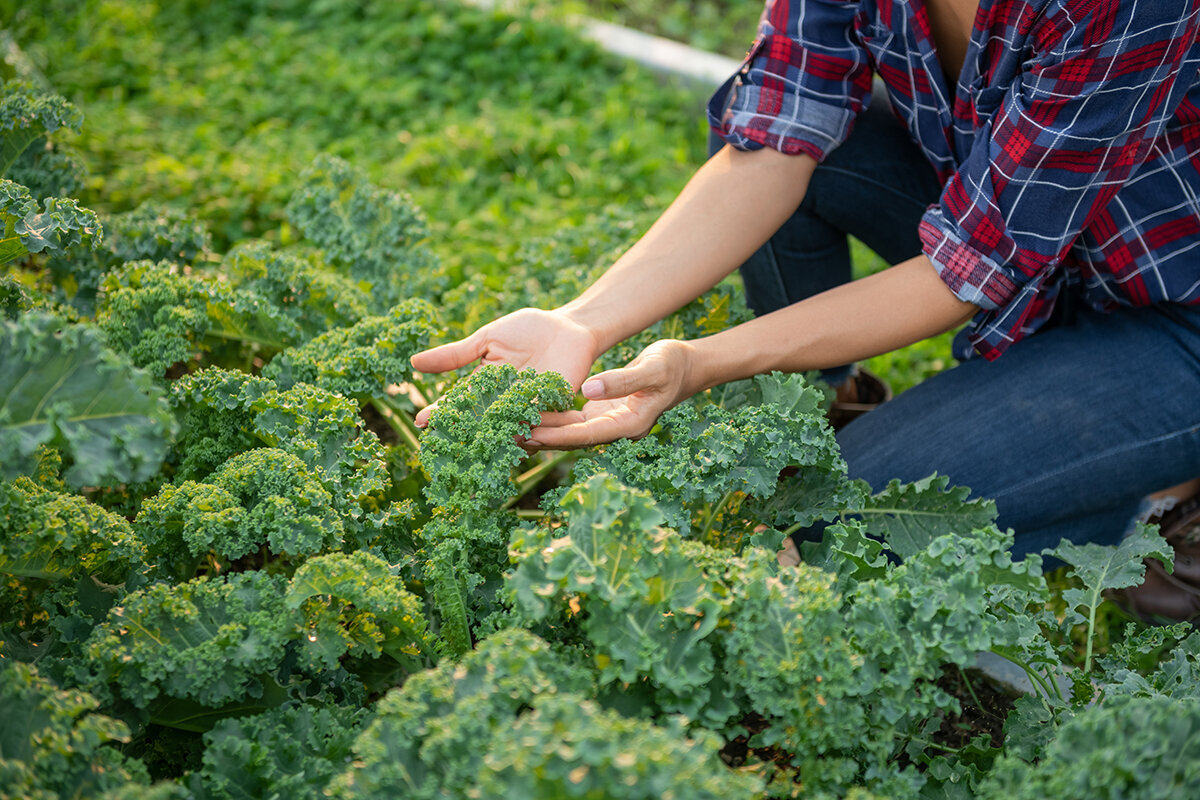
Bloomcabin field notes / cool season
How to Raise Kale Under Glass
A distinctive winter crop with firm, sweet leaves, several pickings, and a productive follow-on after tomatoes, capsicums and cucumbers.
Crop typeCool-weather brassica harvested repeatedly
Where it fitsPicking from autumn into winter and early spring
Ideal conditionsCool air, ample light, even moisture
Key ruleKeep the growing heart intact
Why winter light matters
Kale asks for shelter rather than tropical heat. In a cool covered space, prolonged rain is reduced, roots remain steadier, leaves stay cleaner, and air can dry dense curls.
Read the plant, not only the thermometerSteady development shows in crisp, close-set foliage and a lively centre. Limp stalks, yellow colour or moisture around the heart need prompt attention.
Seasons still shape a greenhouse, but shelter makes their effects easier to manage. Short days continue to slow growth, and an unheated house may still freeze. Its advantage is control over persistent leaf wetness, wind exposure, uneven watering and sudden temperature changes. In a compact house, reserve a bright bed section and keep the walkway open for reaching every crown. A Classic Aluminium Greenhouse then supplies headroom, roof vents and practical access for a tidy, long-running cool-season crop.
Although kale tolerates cold, it still suffers under unstable conditions. Leaf quality is strongest where growth stays measured, rather than lurching from waterlogged, chilled roots to rapid heat behind glass. Forcing growth through midwinter is unnecessary. Aim for an even environment in which emerging leaves become firm, dry promptly after humid nights and remain harvestable for as long as possible.
01 / Choose the growth habit
Choose kale for the space it needs.
Variety choice goes beyond flavour: habit governs height, foliage density, picking method and airflow. Select a plant whose scale fits the walkway, eave height and intended cropping period.
Curly kale
Heavily ruffled foliage gives plenty to pick and suits a traditional winter crop. Because the creases trap dampness, allow extra room and vent promptly.
Suited toOngoing outer-leaf harvests
Glasshouse noteAllow room and keep air moving
Cavolo nero (Tuscan kale)
Its long blue-green leaves rise in an orderly, upright clump. This comparatively slim kale is simple to monitor and easy to pick beside a path.
Suited toNarrow rows and compact beds
Glasshouse noteHarvest young lower foliage often
Red-leaf kale
Purple stems and red-veined leaves bring colour to cool-season mixed plantings. Many varieties suit tender young leaves; inspect soft growth regularly for aphids.
Suited toBaby leaves and staggered sowings
Glasshouse noteInspect new growth for aphids
Shorter varieties
Short varieties fit narrow plots, raised beds and low-eaved houses. Smaller rosettes still crop well, yet leave the walkway open rather than forming a wet foliage barrier.
Suited toContainers, raised beds and confined plans
Glasshouse noteChoose deep containers with drainage holes
For mature large plants, begin with about 45 cm between plants in a row and 50 to 60 cm between rows. Closer spacing is for planned baby-leaf harvests or later thinning. In a compact house, easy access matters more than squeezing in extra plants. Keep stems visible, direct water to each root zone and pick without brushing against wet foliage.
Use friable, humus-rich soil that drains freely, not a compacted bed depleted by previous crops. Mix in mature compost before planting and clear away crop residues. Kale prefers soil near neutral or mildly alkaline, with consistent nutrition. If acidity is severe or clubroot has occurred, arrange a soil test before liming or planting another brassica. Rotation offers a sounder response than a quick fertiliser correction. After several intensive glasshouse seasons, testing also shows which nutrients are actually needed instead of encouraging guesswork.
02 / Start in waves
Stagger sowing instead of doing it all at once.
A single heavy sowing can create a glut, followed by little to pick. Two or three modest batches establish a useful sequence: seedlings, harvest-ready plants and an older group ready for removal.
First wave
Sow direct
Place seed shallowly in a fine seedbed kept uniformly moist. Sowing in position avoids transplant shock and is ideal when the glasshouse bed has already been cleared, cleaned and prepared.
Thin with purpose. Densely grown seedlings can be picked as baby leaves; leave only the strongest plants for large rosettes.
Second wave
Transplant carefully
Raise seedlings in little pots, module trays or a clean propagation tray while summer plants continue cropping. Move robust seedlings after roughly three to four weeks, when they carry several true leaves.
Plant seedlings slightly deeper than they sat in the pot, water them in immediately, and provide brief shade only if a bright late-summer day becomes unexpectedly hot.
Third wave
Repeat after two to three weeks
Add a modest follow-up batch while light and warmth can still support sturdy plants. Through late summer and autumn it extends picking and supplies replacements. Pause in the dimmest winter period rather than producing forced, tender growth.
Record the date, variety and position. Each glasshouse develops its own microclimate, making these notes more useful than a generic calendar.
Across temperate Australia, start autumn and winter crops as summer heat declines; in subtropical and tropical areas, use the locally cooler growing window. Protect summer sowings from hot glass. Later batches can still supply young leaves but may not reach conventional winter-plant size where light wanes or heat persists. For propagation and compact varieties, the Aluminium Mini Lean-to Greenhouse creates a protected changeover area while the main bed remains occupied.
Moisten the medium evenly through germination without saturating it. After emergence, bright light and a gentle current of air help seedlings form short, sturdy stems. For late-summer propagation, check temperature and moisture inside the tray as well as the surrounding air; direct afternoon sun can dry a pot surprisingly fast. If one plant is wanted in each pot, retain the strongest seedling. Weak, elongated plants seldom make up their deficit once autumn brings cooler conditions and less light.
03 / Track the growing conditions
Keep air cool, crowns dry and roots steady.
Kale belongs to the cooler growing period, and consistent surroundings shape its leaf quality. Seek measured, uniform development rather than a soft burst followed by strain.
Seed starts
Available daylight
Heat load
Picking
Seasonal shifts connect sowing, available light, warmth and the picking cycle.
Consider the four tracks as one pattern. As daylight contracts, growth naturally eases; lower your expected pace rather than reducing space or adding impatient doses of fertiliser and water. With brighter conditions from late winter into spring, vent earlier, because enclosed air can warm faster than the season suggests. Staggered small batches spread this change across several crop ages, providing leaves while newer plants build their crowns.
Well-spaced rosettes
Open air routes
Overlapping rosettes
Moisture held inside
Generous spacing lets air pass over the soil and into leaf bases. Base watering is straightforward, ageing foliage is accessible, and crown dryness can be checked after humid nights.
Where plants overlap, foliage retains dampness and hides pests. The extra plant count seldom compensates for poorer access, reduced quality and a canopy that takes longer to dry.
Ventilation remains essential through winter. Within a closed structure, evaporation from plants and soil raises humidity in a small airspace. A brief deliberate flush carries that moisture away, with roof vents working well because warm damp air rises. Still examine the heart of each plant: curled foliage may stay wet even when the panes appear dry. A Classic Aluminium Greenhouse makes that check easy to repeat within a durable, clearly organised growing space.
Use root-zone moisture, rather than a weekly timetable, to decide on watering. In cool conditions, probe about 5 to 8 cm beneath the surface first; dry soil on top can conceal moisture lower down. Pots dry sooner than beds, whereas winter kale under weak light consumes far less than a spring crop in brighter weather. Irrigate early enough for splashes to disappear before nightfall. Empty water from saucers and ensure heavy ground can release any excess.
04 / Protect the crown
Harvest the perimeter; save what comes next.
For long production, use the least disruptive method: take fully grown leaves from the perimeter individually, leaving the tight centre to generate replacements.
Harvestable outside / developing inner foliage / guarded heart
Harvestable outside Begin with the oldest fully developed foliage. Ease each leaf down carefully or make a clean cut through its stalk.
Developing inner foliage Retain these expanding leaves because they supply the following pick.
Guarded heart Keep blades away from the tight growth point. Crown injury may halt growth, cause uneven branching or end further cropping.
Incorrect cut Taking off the whole tip produces one substantial cut, but ends the plant’s value for successive picking.
Let a leaf reach worthwhile size before removing it. Take a small number around each rosette instead of stripping one specimen bare. Work upward from the lower stalk and circle the plant. Strong leaf stalks are best severed with clean snips; softer ones release with a careful downward movement. Leave at least half of the leafy crown after each session, and considerably more while winter growth is slow.
“The centre is not a leaf for today. It already holds the next harvest.”
Baby-leaf stands sown deliberately close may be cut just above soil once or twice for rapid harvests. Full-grown individual plants perform better when leaves are taken around the perimeter. The growing heart stays functional, the stem remains upright and picking continues for weeks. Seedlings removed during thinning can also be eaten as a tender kitchen crop.
Harvest towards late morning, after dew and condensation have dried but before the house heats up. Carry leaves loosely in a basket instead of compressing them in a closed container. Remove thick midribs before cooking if desired. Mature foliage is suited to soup, stew and slow braises; tender leaves from nearer the centre can be eaten raw, briefly steamed or used in a winter salad.
05 / Diagnose signs of stress
Address the cause, not merely the sign.
Several pressures commonly combine to trouble kale. Crowding plus lingering damp and a warm afternoon tells you more than any isolated condition. Examine the lower leaf surfaces, growing heart and root-zone soil before choosing a response.
What you see
Pinholes in tender leaves
Possible reason
Caterpillars and other brassica feeders, often arriving through doors or vents left open longer in late summer.
What to do
Check beneath leaves often, pick off caterpillars, and cover young crops with exclusion mesh when necessary. Remove every old brassica remnant once harvesting ends.
What you see
Sticky, curled centre leaves
Possible reason
Aphids deep in the tender centre, where dense, ruffled leaves readily conceal small colonies.
What to do
Gently open the rosette and inspect new growth. Remove small clusters early in the day with water or by hand, take out heavily affected leaves and improve spacing.
What you see
Yellowed patches or dark spotting
Possible reason
Leaf disease or decay may be involved, favoured by damp foliage, restricted circulation and infected crop debris.
What to do
Discard all affected foliage, sanitise tools, irrigate at ground level, and avoid planting kale immediately after another brassica in that bed.
What you see
Leaves that are tough, bitter or wilted
Possible reason
Possible drivers include heat, dry soil, inconsistent feeding, or the onset of flowering as days lengthen.
What to do
Vent earlier and restore steady moisture. Add modest feed only if mature leaves look pale; when the central shoot stretches strongly, gather sound foliage and resow.
Routine cleanliness prevents trouble without fanfare. Clear yellow outer foliage, remove soil from tools, and never leave picked stalks on beds or benches. After kohlrabi, broccoli, pak choi, rocket, radish, mustard or another brassica, keep that bed out of the family for three to four years, especially where clubroot has occurred. Give the young heart close attention at every inspection. For lasting access and controllable airflow, a Classic Aluminium Greenhouse allows the walkways, crop intervals and ventilation routes to be planned together from the outset.
Before acting directly, identify the problem with confidence. For a home crop, begin with frequent observation, physical removal, clean cultivation, exclusion mesh and freer air circulation. Broad-action treatments are best avoided inside a greenhouse. If badly diseased material has no clear diagnosis, keep it out of compost, then clean the bed thoroughly at the end of the crop. Neither extra irrigation nor fertiliser will eliminate an infestation or mend an injured crown.
06 / Let location lead
Three Australian glasshouse settings.
No single timetable outweighs local weather, glazing, site exposure and the ventilation available in practice. Plan with these patterns, then let a plant-height thermometer, soil-moisture checks and your own notes decide.
Cool southern and coastal districts
Humidity may cause more difficulty here than cold. Build sturdy rosettes ahead of the shortest-day period, keep the bases open and exchange air whenever conditions allow. At midwinter the plants may simply maintain themselves rather than add obvious growth. Harvest lightly, with faster renewal expected as days begin to lengthen.
Elevated and inland frost districts
Management here centres on hard frost and wide differences between day and night. Have fleece ready for severe events and drape it directly across the crop. Once a cold night passes, air the house when daytime weather permits, preventing condensation from lingering beneath the glazing.
Warm and mild-climate districts
Strong cool-season sun or intermittent warmth is often the bigger issue. A cold start can become excessive heat by noon. Vent in good time, add exterior shading when warranted, and remove ageing plants when spring warmth and lengthening days visibly diminish the crop.
Whatever the district, kale needs cover without tropical heat. Marked day-to-night shifts may produce compact plants, but moisture held continuously in the heart invites trouble. Weekly, ask whether the leaf bases are drying, how rapidly the house cools after sunset, and whether picking is followed by new crown growth. Those observations are more useful than rigid watering or feeding intervals.
Small plots can still yield well and look composed: line a path with dark cavolo nero, put short types in raised beds, and tuck quick herbs among young kale. During propagation and seasonal changeover, the Aluminium Mini Lean-to Greenhouse provides cover; schedule the switch to summer vegetables before heat and light rise sharply.
07 / Common practical questions
Kale in a greenhouse: FAQ
Practical answers for turning a brief trial into a reliable crop across the cool part of the year.
Will kale grow in an unheated glasshouse?
Yes. Without heating, the structure still excludes rainfall, lessens wind exposure and softens temperature extremes. Short daylight and sustained hard frost will slow the crop substantially. Use the house as shelter that extends the season, not as assurance of continuous winter growth. Fleece placed over the foliage gives extra protection when frost arrives.
When is it too warm for kale under glass?
A single warm spell matters less than heat that returns repeatedly. Where sunny weather makes the house hot, bring forward the opening of roof vents and doors. Exterior shade assists in late summer but cannot do the job of fresh-air exchange. Prolonged warmth may make foliage tender or leathery and encourage flowering.
How often should kale be watered under glass?
Let conditions around the roots set the interval. In cool weather, test moisture at a depth of 5 to 8 cm; aim for even dampness without saturation. Pots lose water sooner than garden beds, while kale uses much less under weak winter light than during bright spring growth.
Can kale be grown in greenhouse containers?
Yes. Short-growing varieties work particularly well in deep-enough pots that drain dependably. Fill them with good humus-rich mix, maintain steady moisture, and fertilise lightly while growth is active. Arrange containers so foliage does not overlap, and empty any saucer that collects water.
What makes kale run to flower?
Longer days, higher temperatures and previous setbacks can all initiate flowering. When the centre stalk noticeably rises, gather useful foliage without delay. Starting another batch will generally yield more than attempting to turn a plant committed to flowering back into a compact leafy form.
Should yellow lower leaves be removed?
Yes. Promptly take off foliage that is yellow, damaged, diseased or spattered with soil. Doing so opens airflow, improves hygiene, exposes the stalk for inspection and removes damp shelter for pests. One ageing yellow leaf on its own does not necessarily indicate a problem.
Reference material
Sources plus
recommended reading
The German references below expand on garden and commercial kale, soil management and small-glasshouse conditions. Decisions should still reflect the chosen variety, regional weather, soil and ventilation available in your structure.
More from Bloomcabin: Bloomcabin Magazine: Custom Aluminium Greenhouse · Long-range planning · Explore fittings and design
A sheltered place for cool-season crops
Turn limited winter light into a repeat harvest.
Beyond simple cover, a greenhouse becomes a place to read changing weather, regulate humidity and fresh air, and keep fresh kale coming to the kitchen during the garden’s quiet season.
Classic Aluminium Greenhouse