
Growing Parsley in a Greenhouse
The Green Engraving House · Greenhouse Herbs
Parsley under glass
Parsley deserves more than garnish status. With good light, cool conditions and free-moving air, its unhurried beginning can develop into a remarkably useful long-term greenhouse crop.
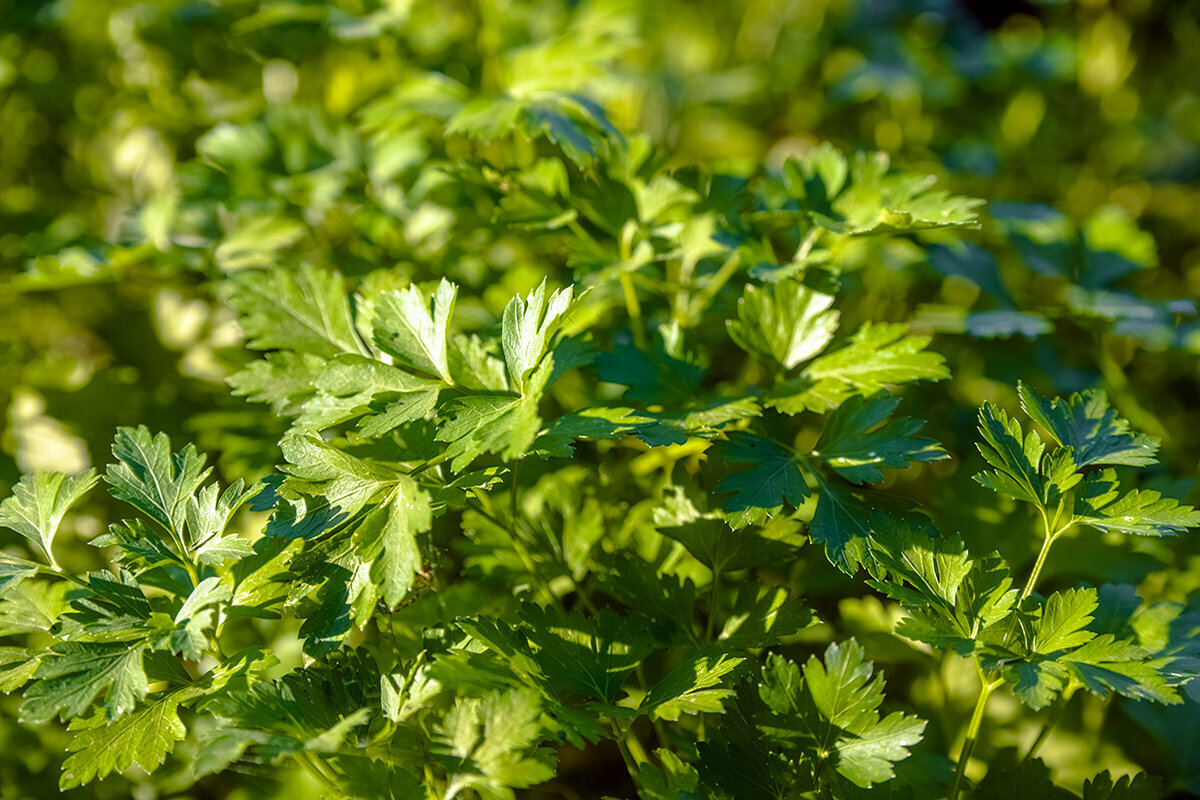
Flat-leaf parsley has wide, open foliage that rinses easily and brings pronounced flavour to salads, sauces and cooked meals.
Curly parsley develops tight mounds of finely curled foliage. An airy, prominent bench edge displays its precise texture while keeping stems accessible for regular picking.
Plate 01 · Establishing a useful herb
More than a garnish
Mature parsley makes a strong visual and practical contribution: divided leaves form a sturdy rosette, the foliage carries a distinctive scent, and stored energy in the roots supports repeated cutting. Under glass, it can remain a compact working crop rather than becoming a single-use bunch of greenery.
That approach shapes every part of its care. Rushing the sowing or trapping plants in overheated, motionless air gives poor results. Start with fresh seed, an open growing medium and steady moisture, then provide ample light and timely ventilation. Once established, each rosette occupies little room yet can supply the kitchen for many months.
In Australian gardens, the greenhouse is most useful for moderating conditions rather than maintaining constant warmth. A sheltered bench assists propagation, shields containers from heavy rain and extends picking through cooler periods. During hot weather, with timing varying by region, the structure must remain bright and freely ventilated. The Classic Aluminium Greenhouse provides an orderly, permanent setting for propagation, a herb bench and changing seasonal zones.
Plate 02 · Foliage structure
Panel A · Open form
Panel B · Close form
Flat, curled and one specialist alternative
Let cooking habits, harvesting style and routine maintenance guide your choice, rather than relying solely on the seed-packet photograph. Either familiar leaf form can thrive under glass. For a steady supply, prioritise recently packed seed, a trustworthy cultivar and several plantings made at different times.
Flat-leaf
Broad, exposed leaf area. Simple to rinse and easy to pick one stalk at a time.
- Loose, spreading growth
- Well suited to salads and sauces
Curly
Tightly curled foliage. Ornamental detail, harvested from chosen outside stalks.
- Close, compact growth
- Effective along a prominent bench front
Flat-leaf parsley is also widely known as Italian parsley. Its generous exposed foliage makes dust, splashed potting mix and isolated aphids readily visible and easier to rinse away. Distinct stalks are simple to trace back towards the rosette before cutting. The assertive flavour works in vinaigrettes, gremolata, soups, infused oils, sauces and salads.
Curly parsley produces a tighter mound of finely curled foliage with an almost decorative finish. Washing requires closer attention, and wet leaves need conditions that let them dry promptly. Place plants towards an open bed or bench front so mature outside stalks remain accessible without disturbing new growth at the centre.
A note about root parsley: Root parsley, also sold as Hamburg parsley, appears in some seed catalogues. Growers raise it principally for the enlarged root, so it requires deep, friable soil without stones. Although worthwhile as a specialised crop, it is less convenient than standard leaf parsley for a small bench intended to provide repeated foliage harvests.
Plate 03 · The slow-germination station
Set aside space for patience
Parsley’s slow emergence is ordinary, not cause for alarm. Seed freshness and growing conditions both influence progress, and individual seedlings often appear at different times. Allow two to five weeks. Rather than repeatedly uncovering the seed, maintain suitable warmth and steady moisture, then clearly mark the cultivar and sowing date.
ISeed quality and mix
Recently packed seed in clean, fine and open seed-raising mix.
IISowing depth and cover
Place seed about 1 cm deep; mark every pot or cell.
IIISteady moisture
Maintain moisture without saturating the mix.
IVWarmth and light
Germinate at 20–25 °C, then provide bright light immediately.
Seed quality and mix. Choose fresh seed and a fine, preferably peat-free seed-raising mix. Loosely fill deep modules or small containers, checking that surplus water can escape. Because germinating seed requires oxygen as well as water, avoid compressing the medium heavily.
Sowing depth and cover. Distribute seed sparingly and add roughly 1 cm of cover. Press only enough to establish contact with the mix, then record the cultivar and date. A transparent lid can conserve moisture at first; air it every day and take it off after emergence.
Steady moisture. Do not let the seed layer dry during parsley’s lengthy wait to emerge. Constant saturation is just as damaging because roots lose access to air. Apply water gently from below or through a fine watering rose, judging the mix itself instead of following a fixed schedule.
Warmth and light. A temperature near 20–25 °C favours emergence. At the first seed leaves, transfer the pots to a much brighter and noticeably cooler spot. Insufficient light combined with warmth creates weak, elongated stalks. During late winter, insulate containers from cold metal or stone benches.
For a measured start, you may soak seed in room-temperature water for twelve to 24 hours before planting. Soaking can assist water absorption, but cannot compensate for old seed or erratic conditions. Inspect moisture each day. When true leaves appear, increase spacing and supply bright light with mild air circulation.
Plate 04 · Establishment and growing atmosphere
Depth below, light above and air throughout
Direct sowing in the permanent bed or container causes the least disruption to parsley’s young taproot. Move propagated seedlings while still small, once their root balls hold together. Support the whole ball, preserve its former planting level and allow about a hand-width between robust rosettes. This space improves access, inspection and airflow. Containers need generous depth, open drainage holes and a structurally stable growing medium.
A long trough can look restrained and refined, but avoid filling it too densely. Open space around each crown speeds foliage drying and leaves room to cut complete stalks without crushing adjacent plants. On a narrow bench, arrange tall crops behind parsley; although tolerant of cooler positions, its low rosette still needs strong light.
Allocate parsley a well-lit part of the herb bench, away from pockets of trapped summer heat. A Classic Aluminium Greenhouse allows heat-loving fruiting crops and delicate herbs to occupy separate areas, reducing unwanted shade. In Australia’s cooler seasons and regions, clean glazing and careful bench placement are especially useful. Temporary screening can soften fierce summer sun, but it cannot replace prompt ventilation or a sensible division between crop zones.
Plate 05 · Moisture, feeding and unsoiled foliage
Build resilience, not excess
- +Soak thoroughly, then reassess. Feel below the surface instead of supplying a token amount every day. Aim for consistent moisture throughout the roots, while ensuring no container remains in a water-filled saucer. Once the top of the medium is slightly dry, irrigate in a controlled, thorough pass. Complete drying weakens the plants.
- +Feed with restraint. A humus-rich bed receiving a moderate amount of finished compost is often sufficient. Container crops in active growth may occasionally need a weak organic liquid feed. Fading older foliage can indicate declining nutrition, but limp yellow plants in wet mix generally need oxygen around their roots rather than more fertiliser.
- +Direct water towards the mix. Keep most foliage dry by using a slim-spouted can or a soft stream close to soil level. If splashes occur, morning irrigation and open vents allow them to evaporate sooner.
- +Keep growing areas distinct. Avoid crowding parsley beside vulnerable seedlings in a perpetually damp corner. Clear access, reachable containers and deliberate spacing avert more trouble than rushed treatment after disease or pests become established.
A practical long-term herb area benefits from a comfortable working height, water-resistant material beneath containers and easy access to the watering point. The Classic Aluminium Greenhouse creates a lasting structure where airflow, paths and distinct crop sections can be incorporated at the planning stage.
Plate 06 · Cutting for regrowth
Pick complete stalks and keep plants productive
The essential technique is straightforward: choose a mature outside stalk and remove it close to its starting point. Avoid shearing only the upper leaves. New growth in the centre must remain intact, while exposed stubs left by shallow trimming detract from hygiene, productivity and the rosette’s neat shape.
- Work from the outside. Select the oldest and strongest stalks around the plant’s perimeter.
- Trace each stalk to its base. Cut low with sanitised, sharp scissors, taking care not to nick young adjacent shoots or the crown.
- Leave the heart untouched. Those tightly grouped upright leaves in the middle are already preparing the following harvest.
- Pick modest amounts often. Light, frequent harvesting serves a small plant better than removing everything at once.
Delay washing until shortly before use where practical, then dry the foliage carefully. For a substantial cut, work on a cool morning after surface moisture has gone and before heat builds under glass. While harvesting, examine the leaf undersides and the middle of each rosette.
Plate 07 · A biennial’s next stage
Know when the plant’s purpose is changing
Home growers usually prize the abundant leaves of the first season. A plant that survives winter may resume growth in its second year, produce a flowering stalk, set seed and complete its natural cycle. Foliage on a flowering plant commonly becomes firmer and harsher. Treat this transition as a management choice, not a growing mistake.
First year · Foliage phase
Establish, then pick
Through winter
Retain, slow down or renew
Second year · Flowering phase
Collect seed or reclaim room
First year: establish, then pick. Make a spring sowing, maintain even care and regularly remove the strongest outer stalks. Another batch in late summer supplies younger plants for autumn and the beginning of cooler weather. Keen parsley users should overlap several batches rather than continually exhausting one rosette.
Through winter: retain, slow down or renew. Sheltered plants may stay green in an unheated greenhouse, although short days reduce growth. Irrigate sparingly, admit fresh air briefly during dry weather and avoid strong feeding. Parsley tolerates light frost, but roots in containers are more exposed. The structure limits wind and excessive winter rain without promising uninterrupted picking.
Second year: collect seed or clear the bench. Longer days prompt overwintered parsley to stretch and form flowering stems. Keep a healthy plant that remains true to type if seed saving is intended. Where tender culinary leaves matter more, replace flowering rosettes with young ones. The soundest sequence combines spring and late-summer sowings, with a small overwintered group where local conditions permit.
Plate 08 · Hygiene and common setbacks
Observe the crop before choosing a response
Begin diagnosis by asking whether the medium is saturated, the leaves stay damp, the rosettes are crowded or insects occupy tender new growth. Remove badly damaged foliage and clean the equipment, then improve placement, airflow and watering practice. Consider another intervention only after correcting those underlying conditions.
Symptom
Check first
Choose a focused response
Priority
Tacky foliage, distorted young leaves or clusters of tiny insects beneath leaves and along stalks.
Check for aphids and discarded skins. Examine soft shoots and neighbouring seedlings as well as the leaf showing the obvious damage.
Move the container away from others where possible. Dislodge a small colony with a controlled jet of water, increase airflow and inspect repeatedly. Do not encourage soft growth with excessive nitrogen.
Respond without delay
Older lower foliage turns yellow while the mix stays sodden and heavy well after irrigation.
Inspect drain openings, filled saucers and compacted mix. Compare how frequently the pot is watered with the amount its plant can actually use.
Stop irrigating temporarily, restore drainage and clear away dead tissue. Extra fertiliser is not the answer because oxygen-deprived, stressed roots cannot use it effectively.
Change the routine
Pale or dark spotting appears, particularly after prolonged wetness on the leaves.
Examine upper and lower surfaces. Investigate crowding, condensation drips, contaminated tools and recently introduced plants that were already showing symptoms.
Remove marked foliage and put it in household waste. Irrigate near soil level early in the day, ventilate promptly, sanitise cutting tools and minimise contact with wet plants. Wider spacing and faster-drying leaves help check further spread.
Keep work hygienic
Plants become pale and stretched, with slender growth and soft stalks.
Review day length and available brightness, including shade cast by taller crops and light lost through dirty glazing. Determine whether the interior is simultaneously too warm and dim.
Increase spacing and relocate plants to stronger light. Clean the glazing safely, but do not attempt to correct weak growth by overfeeding. Without supplementary lighting, reduced winter growth is expected.
Move to a better position
From greenhouse to kitchen
For maximum freshness, maintain living parsley close enough to cut immediately before preparing a meal.
Handle each cut as a fresh ingredient
Parsley is at its best soon after cutting. Take only what the recipe requires, rinse briefly when needed, then spin or pat the foliage completely dry. Loosely wrap dry parsley for a few days in the refrigerator. Do not seal damp leaves airtight, as retained water accelerates deterioration.
Surplus parsley may be finely chopped and frozen in small serves, including in ice-cube trays with a little water. Stir it into cooked food near the end. Drying also works, though much of the fresh aroma and green quality disappears. Tender upper stalk sections can flavour stock, pesto, sauces and herb oils.
For annual crop planning, use the Classic Aluminium Greenhouse as a clearly organised growing area. Parsley earns valuable space in spring and autumn; during high summer, shift it towards a cooler section away from the thickest fruiting plants.
Questions
Parsley-under-glass FAQ
Will parsley grow in an unheated greenhouse?+
Yes, particularly from spring to autumn and through mild spells in winter. It still needs useful light, restrained watering and containers protected from freezing solid. Cold temperatures and short days greatly slow new growth. An unheated structure extends the growing period, but cannot reproduce heated production with supplementary lighting.
When should greenhouse parsley emerge?+
Do not expect emergence on one exact day. Seed age, available warmth and moisture can all alter the result, so allow roughly two to five weeks. Maintain even dampness without saturation. Give apparently empty sowings sufficient time, then resow only the obvious gaps after several weeks.
Is a garden bed or container preferable?+
Both are suitable. A bed buffers changes in moisture and gives roots a stable setting; pots are simpler to relocate during heat or when pests are present. Whichever you choose, provide depth, a friable medium and unobstructed drainage. Leave space between plants and prevent continual wetness around their crowns.
What makes greenhouse parsley flower?+
Parsley naturally completes a two-year cycle. After overwintering, a plant will commonly send up a flowering stalk as warmth and daylight increase during year two; severe heat may speed the transition. Replace flowering plants when tender leaves are wanted. Retain a healthy, true-to-type specimen only if collecting seed.
How frequently may parsley be picked?+
Begin once the plant carries enough mature outer stalks. At each picking, remove only a small number of complete stalks close to their bases, preserving the central growth and ample foliage. Modest, regular harvesting sustains production better than occasional stripping or repeatedly trimming only the leaf tips.
References and additional reading
Horticultural sources
More from Bloomcabin: Custom aluminium greenhouse · aluminium-greenhouse questions and answers · Bloomcabin blog
- Bavarian State Institute for Viticulture and Horticulture. Guidance on planted parsley, including cultivation and cultivar information. LWG leaflet, “Planted parsley”
- Bavarian Garden Academy. Growing, harvesting and using fresh culinary herbs from a home garden. LWG guidance on fresh garden herbs
- Royal Horticultural Society. Advice on cultivating parsley. RHS parsley-growing guide
- University of Minnesota Extension. Home-garden parsley guidance covering sowing, maintenance, picking and storage. Growing parsley in home gardens
- University of Illinois Extension. Information about parsley cultivation, harvesting and kitchen use. Illinois Extension parsley resource
- Iowa State University Extension. Practical germination guidance and temperature requirements for vegetables and annual plants. Seed-germination requirements
