
Growing Rosemary Successfully in Your Greenhouse
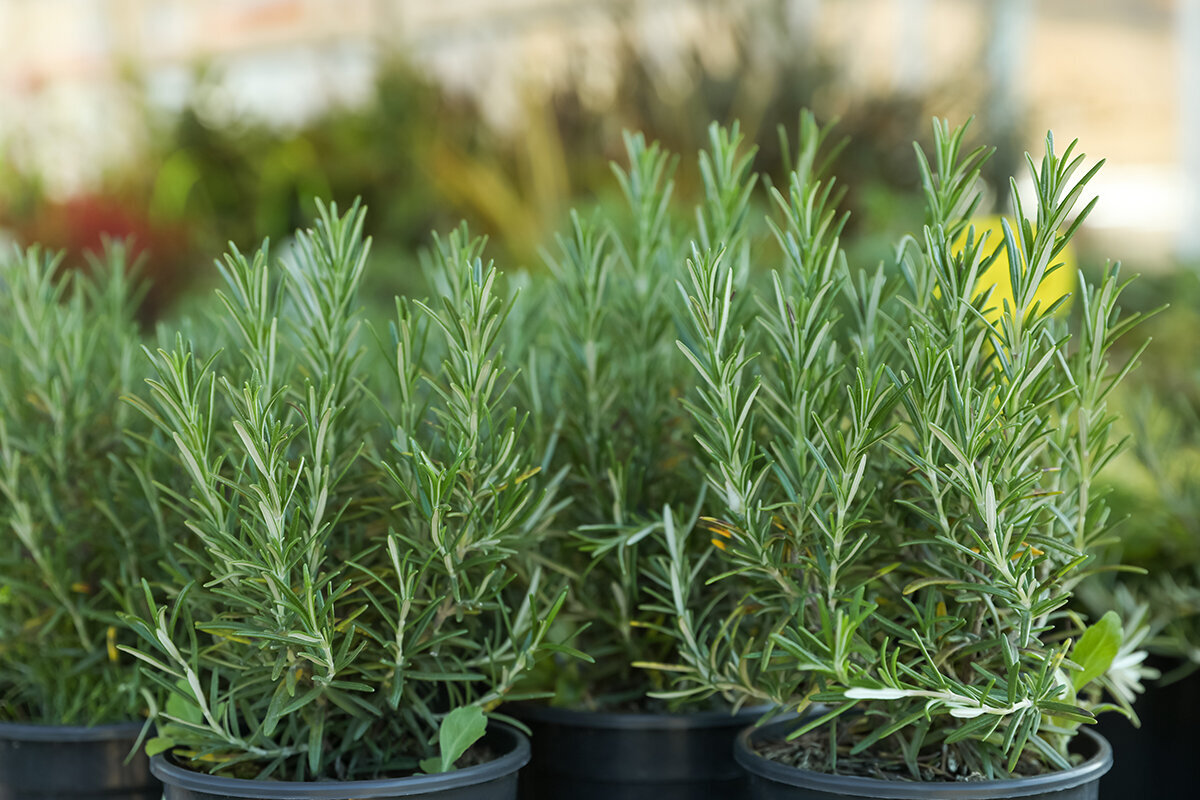
Bloomcabin Garden Journal · Issue 21
Successful rosemary
growing under
glass
Recreate the essentials of a sunny Mediterranean courtyard for this aromatic shrub: generous light, a sound root environment, fresh airflow and pruning that preserves living foliage.
Rosemary should not be managed like a tougher-leaved basil. Its scent, structure and lifespan reflect how sunlight, roots, ventilation and maturing wood function together.
This is why rosemary deserves different handling under glass. Soft annual herbs commonly favour reliable moisture, fast nutrient supply and regular replacement. Rosemary needs strong illumination, a container that does not store cold water, and a discernible cycle of thorough watering followed by drying. Its tough narrow leaves cope with sun and limit moisture loss, while roots react badly when compacted wet medium excludes oxygen.
In Australia, protection is most useful during awkward transitions: cool wet periods, unsettled spring weather, humid spells and the lower-light months of southern districts. Rosemary should not be treated as a tropical crop. The cover blocks persistent rain and wind, while doors and vents restore fresh air. As a useful German comparison, a greenhouse may overheat rapidly in March yet let the same pot dry very slowly in November; locally, judge the equivalent seasonal risk by regional weather and pot moisture.
Choose a healthy young plant or a cutting from a proven variety, then organise its position and care around that specimen. A thoughtfully arranged Classic aluminium greenhouse can give committed home growers a durable, light-filled setting in which airflow, plant placement and seasonal routines are designed in from the outset.
01 / Position under glass
Prioritise light, then make air movement a habit.
Give rosemary the brightest suitable position, usually on the north or north-west side in cooler southern parts of Australia. Sun through glazing may become fierce from late morning, so watch a newly relocated plant closely through its first warm weeks. Pale stretched shoots and wide gaps between needle clusters suggest inadequate light. Conversely, bleached or grey tips appearing after a sudden move may signal insufficient acclimatisation and a temporary need for pale shading.
Select an accessible position with clearance around the canopy. Avoid tucking rosemary behind basil, parsley and vigorous seedlings on a packed herb rack. An uncluttered bench, low stand near an opening, or site reached by cross-flowing air will usually work better. Space pots apart so leaves lose moisture promptly after humid nights. That clearance becomes especially valuable during winter.
Air exchange prevents two contrasting problems from developing together: severe daytime heat beneath the glazing and moisture trapped among the stems. Start opening roof vents early in sunny weather. Pair the doorway with an opening across the structure so stale air is replaced rather than collecting beneath the ridge. A well-designed Classic aluminium greenhouse makes daily responses to fast-rising temperatures and changeable weather much easier.
Practical orientation In many cooler Australian districts, the sunnier aspect is north to north-west. Where heat is intense, or a compact greenhouse warms rapidly, prioritise ample vent area, open the structure early and deploy movable pale shade across the harshest midday period.
Order on the bench Separate rosemary from plants that demand frequent watering. Distinct microclimates can coexist beneath one roof, but a damp propagation area's irrigation routine must not govern every crop.
02 / Plant and container
Select a form that fits the room you have.
Upright rosemary is useful in the kitchen and gives a single container a crisp architectural presence. Because its shoots are longer, you can harvest regularly without quickly spoiling the form. Compact cultivars are simpler to contain on a bench. Trailing plants suit elevated bowls but need just as much light. Keep their descending shoots from restricting air flow beneath shelves or resting against wet surfaces.
Propagate named cultivars by cuttings when you want to preserve their habit and aroma, as seedlings may differ. Choose stock with firm, strongly fragrant needles and a root ball that is neither parched nor immersed. Reject plants with blackened stem bases, grey material inside the canopy, or dense fine peat that remains heavy and wet for days.
03 / Root-zone architecture
Treat drainage as the foundation of planting, not an optional extra.
Use a pot with unobstructed drainage holes and an open, stable growing medium. As a home-mixed guide, the Bavarian Garden Academy suggests roughly 40 percent bark compost, 40 percent garden soil and around 20 percent pumice, lava or expanded clay. The function matters more than an exact recipe: the mix should distribute water, retain nutrients, drain completely and admit air again as it dries. Neither a sterile gravel layer nor a collapsing peat root ball is the aim.
Raise the pot
Free drainage / air beneath
Saucer full
Standing water / avoid
Container oversized
Too much wet medium / risk
Raise the pot: Use pot feet or a free-draining bench to lift the container. Position the plant base at the finished medium level or just above it. Runoff must escape through an unobstructed hole instead of pooling beneath the pot.
Check the saucer: A saucer can catch runoff while you irrigate, but empty it afterwards. Water left there is drawn back into the root ball, keeping the lowest roots damp even when the surface appears dry.
Match container size: Match the pot to the existing root mass. A small plant surrounded by a large volume of cool, unrooted medium can suffer root damage before the tub visibly appears waterlogged.
Do not cover the woody base with the new mix when positioning the root ball. Deep planting keeps the crown needlessly moist, especially through winter. After repotting, soak the mix thoroughly and let every surplus drop drain. Wait until the upper portion is dry and the pot noticeably lighter before watering again.
A decorative layer of gravel beneath the mix cannot correct unsuitable growing medium. It sacrifices root volume without providing either a clear outlet or consistent permeability. Distribute coarse structural components throughout the mix instead, then elevate the whole container.
04 / Moisture rhythm
Water deeply, then let the root zone breathe.
Spring
Lengthening days increase the water used by fresh shoots. Inspect the pot more frequently without adopting automatic daily irrigation. Wait for a dry upper layer and a lighter container, then water and drain the saucer.
Summer
Containers may lose moisture rapidly in bright summer heat. Irrigate the entire root ball in the morning, rather than sprinkling only the surface and needles, and release indoor heat before it accumulates.
The rosemary check
Probe several areas of the mix with a finger and, where practical, gauge the pot by lifting it. A dry top paired with a clearly reduced weight is more informative than fixed dates. If irrigation is due, pour steadily across the mix until a small amount emerges underneath. This moistens the entire ball and demonstrates that its outlet remains clear.
Neverassume greenhouse shelter means rosemary should remain damp. Overcast conditions can extend drying time substantially.
Usuallywait for the upper medium to lose moisture before irrigating again. An established plant handles brief dry intervals, although an actively growing summer pot should not stay completely parched.
Alwaysassess the season alongside container material, specimen size, sunlight and airflow. Terracotta in full sun dries quite differently from glazed ceramic standing on a shaded, cool floor.
Use fertiliser modestly. New potting medium generally contains adequate nutrition initially. If a plant has occupied one container for longer, apply a weak herb feed only during active spring and summer growth. Repeated high-nitrogen applications encourage soft, unstable shoots; luxuriant growth does not prove quality in an aromatic subshrub. Withhold fertiliser in autumn and winter.
Autumn
Shorter days and slower growth reduce water use. Avoid carrying a fully saturated container into several gloomy days or a cold night.
Winter
Wait until drying has begun within the root ball. At 5 to 10 °C, finger checks may indicate that watering only every two or three weeks is sufficient. Small pots can still dry rapidly on a sunny winter day, so let observation override a fixed routine.
Mistake record / 01 Small daily drinks leave the lower ball continuously damp while failing to flush the root zone properly.
Mistake record / 02 A cachepot or saucer used as permanent water storage drives air from root-zone pores.
Mistake record / 03 Fertiliser burdens a waterlogged, stressed plant whose roots already cannot take up water and nutrients properly.
05 / Wood and renewal
Prune for live green growth, not dramatic effect.
Frequent modest harvesting and gentle tip trimming suit rosemary, but completely leafless mature wood cannot be relied upon to reshoot. Maintain younger branches carrying foliage throughout the canopy. Once a large shrub has become bare underneath, one severe corrective cut is unlikely to restore it.
Following flowering or a vigorous growth burst, trim several green tips lightly. Work above a leafy side branch, keeping visible needles below each cut. Begin with dead, injured and crossing stems before refining the outline. If growth leans towards one pane, rotate the container and redirect flexible shoots gradually instead of resorting to major cuts later.
Harvest tender ends. Cut vigorous green shoot tips for cooking. Spread harvesting evenly across the entire plant.
Read the wood. Firm older stems carrying foliage remain productive. Leafless mature wood supports the framework but offers an uncertain base for fresh shoots.
Renew gradually. Across several months, bring selected long stems back to sections that still carry leaves. Do not take away a substantial portion of the green crown in one session.
Fresh green growth — harvest Leafy mature zone — shorten Bare old wood — do not cut Semi-ripe tips — cuttings
06 / Propagation bench
Keep semi-ripe cuttings as a reserve.
Cuttings preserve the flavour and growth habit of a valued rosemary specimen. In frost-prone Australian districts they also provide useful insurance: protecting a small rooted plant is easier than sheltering a spreading container specimen. Take healthy side shoots without flowers, choosing material that has begun to firm near the base while remaining flexible and green at its tip. Summer to early autumn is suitable.
Using clean secateurs, remove 12 to 15 cm tips immediately below a leaf node. Clear the needles from their lower third so buried foliage cannot decay. Fill clean pots with fresh, open propagation medium rather than dense garden earth, then insert each stem about 2 to 3 cm. Cleanliness and gentle, even moisture matter more than elaborate additives or tropical humidity.
01 / SelectHealthy shoot tip
02 / PrepareStrip lower third
03 / Insert2–3 cm deep
04 / RootMoist, never saturated
05 / CheckNew growth
06 / Pot onAcclimatise slowly to sun
Form a pilot hole before inserting each stem so the cut end is not scraped or damaged. Several cuttings may occupy one pot when sufficient spacing is provided. Press the medium lightly into place. A loose cover can limit excessive moisture loss, but it must admit air. Remove dead material and check often for pooled water.
New shoots and mild resistance to a careful tug after several weeks suggest that roots have formed. Only then should each young plant move into its own small pot. Keep early irrigation controlled and introduce direct sunlight in stages before adopting mature-rosemary care.
07 / Flowers and aroma
Take moderate harvests without losing the plant's defined shape.
Flowers may be blue, pale violet, pink or white, adding colour and drawing insects when greenhouse openings are available. Allow several shoots to bloom. The scented needles nevertheless remain the regular culinary crop. Harvest in the morning after the foliage has dried, taking young sprigs from around the canopy rather than denuding one side. Repeated small cuts also help maintain a compact outline.
For drying, gather clean stems into small loose bundles and suspend them somewhere warm, shaded, dry and airy. A greenhouse that overheats in summer is not automatically appropriate because humidity and temperature can swing too widely. Use fresh needles promptly. Whole sprigs or removed needles may also be frozen, retaining their fragrance better than rosemary stored for long periods after grinding.
“Culinary quality in rosemary comes from concentrated growth in strong light, not from mistaking controlled drying for thirst or neglect.”
08 / Seasonal climate management
Cover softens seasonal extremes, but the calendar still matters.
In mild districts, an appropriate rosemary variety may endure outdoors in a sheltered site with rapid drainage, although a container makes added protection easier to manage. An unheated greenhouse blocks wind and prolonged rain but does not ensure safety during hard frost. The Bavarian Garden Academy recommends a bright winter space at roughly 5 to 10 °C for potted plants. During extended severe frost, use added protection or a cool, well-lit indoor position. Whether heated or not, the space should favour light and fresh air over warmth combined with darkness and damp.
WinterVentilate when frost-free. Do not leave pots on wet ground.
SpringIncrease checks; use strong new growth for cuttings.
SummerRelease heat early; maintain cross-ventilation.
AutumnCut watering and prepare early for frost.
Winter trouble usually develops when limited light, chilled medium and retained humidity occur together. Irrigate sparingly without abandoning a small pot until it has been dry for weeks. Increase spring watering only when fresh shoots appear. During summer, start ventilation early and deploy movable pale shade in exceptional midday heat. End feeding in autumn, using the local forecast to decide when a large container needs greater shelter. Brief ventilation on frost-free winter days helps disperse condensation and discourages pests.
For a herb-growing area that remains practical over time, review how a Classic aluminium greenhouse can be arranged, including the functional options of the Classic aluminium greenhouse. Whatever the season, a successful rosemary position keeps access, incoming light and ventilation routes unobstructed.
09 / Interpreting plant symptoms
Review the whole growing setup before focusing on single needles.
Soft base, dull needles, brown tips
Possible cause: Overwatering, restricted drainage or a persistently cold and saturated root ball may have caused root stress or decay.
Response: Inspect the outlet holes and saucer first. Discard pooled water and, where necessary, move the plant into fresh, open medium. Irrigate conservatively while it recovers, and withhold fertiliser from the impaired roots.
White or grey coating in the canopy
Possible cause: Crowding and humid, motionless air may be encouraging powdery mildew or another fungal problem.
Response: Cut away obviously affected material, widen the spacing and improve regular air exchange. Apply water to the medium rather than the foliage, and leave openings available during mild, humid conditions.
Fine spotting, webbing, pale needles
Possible cause: Spider mites, particularly in hot, dry air and on already weakened plants.
Response: Separate the affected pot, then look closely beneath the needles. If appropriate, rinse foliage carefully and inspect it more often afterwards. Although the surrounding air may be dry, roots must still retain enough moisture to remain functional.
Greenhouse rosemary can also attract aphids, scale, whiteflies and mealybugs. Finding these early avoids the harder task of restoring an already damaged, dense crown. While harvesting, lift a sprig, inspect the centre and examine the base; use what you see to decide between watering, more air, a light trim or leaving the plant alone. Diagnose the problem before treating an edible herb. Consult APVMA PubCRIS and permit records for the product and authorised use, and comply with its label and state or territory requirements.
10 / Four calm routines
Rosemary tasks by season
Late winter Wash the glazing, test roof vents, inspect for spider mites and remove dead wood. Irrigate only once drying becomes apparent in the root ball.
Mid-spring If roots are circling densely, repot gradually, renew the medium and begin restrained feeding only with steady new growth.
High summer Ventilate early, water deeply when needed, harvest tips moderately and do not trap humid air overnight after watering.
Early autumn Prepare backup cuttings, finish feeding, monitor forecasts and choose the sheltered winter position for large containers before cold conditions arrive.
When designing a greenhouse primarily for herbs from the outset, a Classic aluminium greenhouse can organise ventilation, movable shade, benches and convenient work paths. Rosemary generally benefits more from open space around one or two substantial pots than from every surface being occupied by thirsty annual herbs.
Greenhouse rosemary: common questions
Answers from the growing bench
Is year-round greenhouse cultivation possible for rosemary?
Yes, when the plant has strong light, circulating air, permeable medium and temperatures appropriate to the season. Reduced winter light slows growth and lowers its demand for water. An unheated structure is suitable only if severe cold is not prolonged or extra frost protection can be provided. A cool, bright indoor location may offer greater safety during hard frost.
How often should rosemary be watered under glass?
Do not rely on a standard interval. Assess the upper medium, container weight, root-ball depth and current weather. When the plant genuinely needs moisture, soak the ball, drain it fully and allow obvious drying before the next application. Sunny summer conditions call for close monitoring, whereas water use may be minimal through dull winter weeks.
Can rosemary stand in a full saucer?
No. The saucer may shield a bench or floor during irrigation, but empty it after runoff has finished. Rosemary roots suffer when the bottom of the ball remains saturated and poorly aerated.
Should very woody rosemary receive a severe cut-back?
Be conservative. New shoots do not emerge dependably from bare mature wood. Reduce stems in stages, retaining leafy green sections below each cut. If the shrub is already extensively bare, first propagate healthy tips as insurance and only then undertake modest reshaping.
What causes brown lower needles when the medium still feels damp?
Root distress is a more likely explanation than insufficient water. Look for an obstructed outlet, water retained in the saucer, excessive pot volume, compressed medium, inadequate light and poor airflow. Resolve those conditions before irrigating again.
Sources and further reading
Supported by horticultural practice
More from Bloomcabin: Essentials of the Classic aluminium greenhouse · Planning door placement and entry · Blinds for greenhouses
- Bavarian Garden Academy — rosemary reference:Rosemary — scent of the south
- Bavarian Garden Academy — fresh culinary herbs:Cultivating herbs to eat fresh
- Royal Horticultural Society — growing rosemary:How to grow rosemary
- UMass Amherst — rosemary root disease:Rosemary – Phytophthora root rot
- University of Connecticut IPM — herbs under cover:Managing pests in protected herbs
- UC Statewide IPM — rosemary health:Rosemary pest and disease identification
Breathing room for greenhouse rosemary
Create a bright, airy setting suited to rosemary.
Healthy rosemary demonstrates the value of thoughtful greenhouse design: dependable light, convenient access, controlled irrigation and steady air exchange. Choose a Bloomcabin greenhouse that supports those everyday tasks. With the right setting, this fragrant evergreen shrub becomes both a productive kitchen plant and an enduring feature in the garden.
Classic aluminium greenhouse