
Growing Zucchini in a Greenhouse
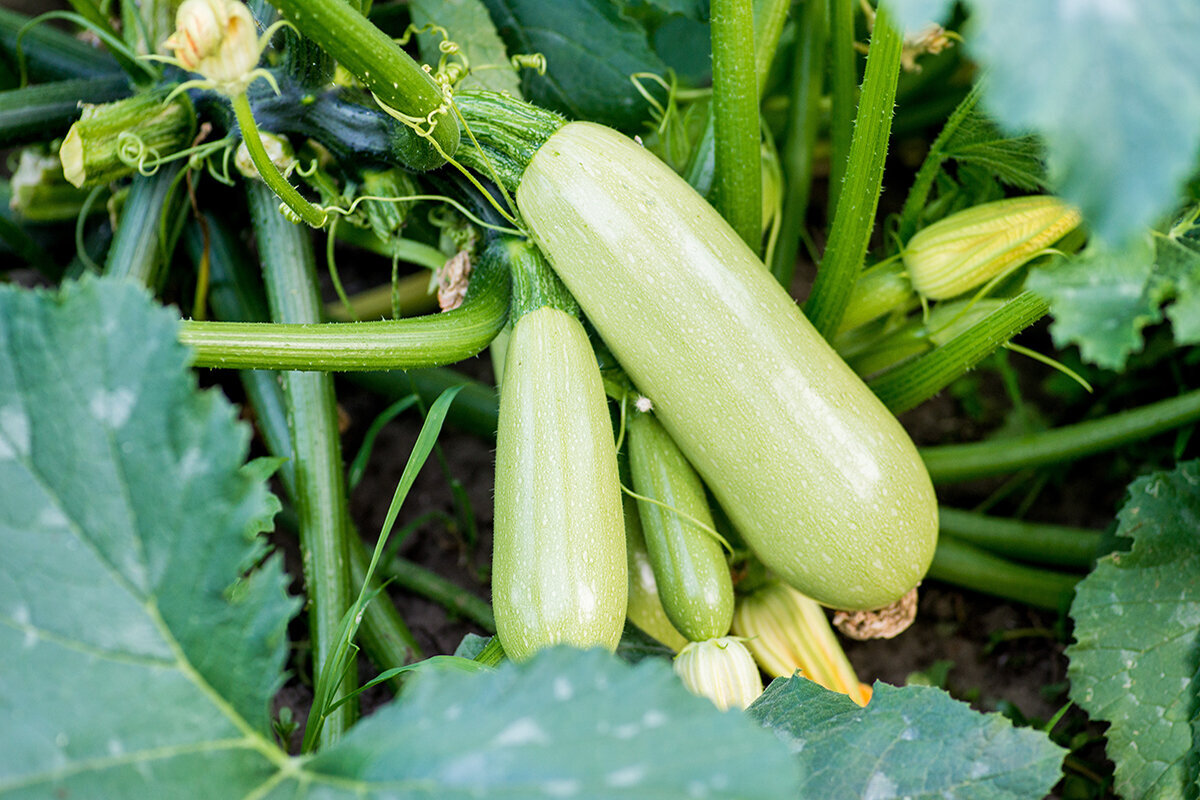
Greenhouse notes · Cucurbita pepo
Greenhouse Zucchini: A Growing Guide
In the early morning, flowers are open and foliage is still cool—one well-planned plant can crop generously all season.
Protected cultivation can give zucchini an early start and abundant crops, but a roof is only the beginning. They also need broad growing space, circulating air, evenly moist roots and dependable pollen transfer during the brief opening of each female flower.
One plant can be enoughOpen vents earlyHarvest young and tender
Why grow under glass?
Zucchini is not a modest greenhouse crop. It quickly forms a broad canopy, with short-lived flowers tucked into its centre.
By moderating the cooler edges of the season, a greenhouse benefits this warmth-loving crop. Large leaves avoid prolonged rain, while irrigation becomes easier to control. Pollinating insects that routinely visit an outdoor vegie patch may be less frequent under cover, however. The answer is not tropical heat but thoughtful access: keep air circulating among the leaves, leave the crown within reach for inspections, and ensure bees or a soft brush can reach each morning flower.
A compact cultivar with bushy growth or an open habit suits most backyard greenhouses. Allocate a dedicated bed or sturdy large container instead of squeezing the plant among tomatoes, cucumbers and shelves. Better spacing helps foliage dry, keeps young fruit visible and leaves the crown within reach. Picking every one or two days is then less likely to damage leaf stalks or require a search through interwoven foliage.
Treat greenhouse zucchini as a brief morning task, rather than a crop that looks after itself. Check flowers, vents, soil moisture and harvestable fruit each day.
Space needs & cultivar choice
Plan for foliage first, then fruit.
A zucchini needs an open growing position, not a forgotten corner.
Choose a zucchini cultivar described as compact, bushy or open in habit for protected growing. Seed suppliers use varying terminology, so look beyond the label “bush zucchini”. Useful traits include short internodes, suitability for containers or tunnels, and sound powdery-mildew tolerance. Select a fruit shape you will enjoy picking and using often. Open growth makes pollination, selective thinning and harvesting easier, but still requires generous spacing and regular ventilation. Always follow the supplier’s cultivar-specific pollination guidance.
For initial planning, reserve roughly 0.9 to 1.2 m of usable width for a compact plant, with extra room for a vigorous cultivar. Treat this as practical working space rather than a rigid planting standard. The layout should let you reach the crown, harvest from different sides, collect fallen foliage, and operate the door and roof vents without repeatedly touching wet leaves. In a narrow house, use an outer bed edge for the plant while protecting the central walkway and airflow corridor. One zucchini may take the space of several smaller crops.
Clearance per plantTop view
Foliage reachCanopyHarvest pathVentilation route
Dashed circle Mature foliage needs clear, moving air on every side.
Visible canopy Leave the plant centre within reach for picking and health inspections.
Clear corridor Leave room for watering, harvesting and pollination.
Door and roof vent Preserve this escape path for rising warm air.
Raising plants calmly
Time sowing so the young plant keeps growing steadily.
Zucchini resent cold soil and becoming root-bound in a small pot. Direct sowing into a prepared greenhouse bed is straightforward once the soil has warmed reliably. For a slight head start, place one seed in each adequately sized pot around three to four weeks before the intended transplanting date. Move the seedling while it remains compact and the root ball holds together. Sowing much earlier commonly produces oversized, stressed plants rather than a larger crop.
01
Sow without rushing
Sow each seed about 1.5 to 2 cm deep in an open, free-draining seed-raising mix. Germination is generally prompt at 18 to 21 °C. Maintain even moisture without leaving the mix saturated. Reliable warmth around the roots matters more than an exceptionally early sowing date, and using one seed per pot means delicate roots need not be separated later.
02
Pot on only if needed
When chilly weather postpones transplanting, move the plant carefully into one larger container so its roots do not circle tightly. Leave the growing point untouched and provide abundant light, mild air movement and suitable spacing. Seedlings can stand in slightly cooler conditions after emergence, provided frost is excluded. Two to three sturdy true leaves are sufficient before preparing to plant out.
03
Plant with the root ball level with the soil
Create a roomy planting position using mature compost and humus-rich soil that retains its structure. Keep the root ball at its previous pot depth, water thoroughly to settle it, and mulch only after the surrounding soil is warm. Do not pack mulch tightly around the stem base. The crown should remain uncovered, and heavy compaction beside the plant should be avoided.
An unheated greenhouse may allow an earlier start, yet it cannot make cool spring conditions behave like summer. Dependable soil warmth, nights without frost and a short adjustment to direct sunlight and airflow are the important signals. Australian planting dates differ greatly between tropical, subtropical, temperate and elevated districts, as well as with greenhouse siting, so use local conditions rather than a fixed national calendar.
Flower biology
Two flowers. One short golden exchange.
Male and female flowers occur separately on the same zucchini plant. It is common for several male blooms to arrive first, and this does not indicate a problem. Identification is straightforward: the female bloom sits above a small zucchini-shaped ovary, whereas the male bloom is carried on a long, narrow stalk with pollen-producing anthers in the middle. Both usually open during the morning and offer only a brief period for pollination.
Male flower
Slender stalk · pollen-bearing anther
Pollen-bearing anther
Female stigma
Female flower
Ovary · receptive stigma
Male flower: slim stalk and central anthers
Pollen comes from the male blooms. Early in flowering they may greatly outnumber female blooms; this means the flowering phase is under way, not that fruit has formed. When harvesting blossoms for food, retain enough newly opened male blooms to supply visiting insects or manual pollination.
Recognise it by: the absence of a tiny zucchini behind the petals and pollen visible in the middle.
Female: swollen ovary, receptive stigma
A tiny zucchini beneath the bloom is only an ovary, not a certain crop. Inadequate pollen on the stigma may cause it to turn yellow, shrivel, develop only near the stalk or grow unevenly, and it can fall within a few days. Thorough pollination favours uniform growth.
Recognise it by: an undeveloped fruit immediately below the petals, with a divided stigma in the flower’s middle.
The morning flower round
Open.
Transfer.
Observe.
Each zucchini bloom provides a narrow opportunity for pollination in the morning. Cucurbit guidance explains that male blooms may arrive before females and that pollen must be deposited on the female stigma. Bees and other insects may complete the task when the greenhouse is ventilated early. During cool, wet weather, or where openings remain closed, pollinate manually until consistent insect activity is apparent.
Use a soft artist’s brush, or select a newly opened male bloom and carefully uncover its pollen-bearing centre. Gently apply the pollen to the stigma of a female bloom that has also just opened. A single male flower may pollinate several females. Complete the task early, while the flowers remain dry and open, and avoid unnecessarily spreading or damaging their delicate petals.
01Open
02Find pollen
03Transfer
04Watch fruit
Open flower Make the greenhouse check early in the day. A newly opened female bloom carries a small developing fruit just below its petals.
Check pollen Choose a completely open male bloom whose central anthers carry clearly visible, dry yellow pollen.
Transfer With either a soft brush or the male bloom, gently deposit pollen across the female stigma in one controlled action.
Read the fruit Watch the developing fruit for several days. Even expansion indicates successful pollination, while yellowing, shedding, narrow growth or pronounced distortion commonly points to an incomplete transfer.
A note on summer heat
Extended hot spells place flowers under stress, may cause buds to drop and can reduce reliable fruit set. Do not wait for midday heat to build beneath the glazing. Ventilate widely from the morning, keep the airflow corridor unobstructed and add moderate temporary shade during intense sun. The aim is a bright growing space with circulating, less overheated air—not a dark interior. Prevent dense foliage from trapping heat around flower level.
Water, nutrients & ventilation
Maintain even root conditions while keeping air in motion.
Fast-growing zucchini have extensive leaves and a substantial demand for water. Soak the soil thoroughly rather than routinely spraying the foliage. Irrigation frequency will vary with weather, soil composition, pot size, mulch depth and the amount of fruit carried. Check below the mulch by hand or with a basic moisture sensor. Before setting an automatic system, observe how quickly that particular bed loses moisture during warm weather.
Mulching warmed soil limits evaporation and reduces fluctuations in moisture. Well-rotted compost and soil rich in humus establish a useful nutrient foundation. Once harvesting is continuous, a moderately applied organic liquid fertiliser may be beneficial. Follow the directions for the fertiliser or growing medium. Heavy nitrogen feeding promotes lush, soft leaves and may reduce the emphasis on flowers and fruit. Containers respond more reliably to frequent light applications than to infrequent concentrated feeds.
Watering and ventilation must work together. Vent the greenhouse before trapped warmth becomes excessive. Using clean equipment, cut away leaves that are old, seriously damaged or resting on wet ground, but retain a healthy working canopy. Keep neighbouring plants outside the zucchini’s airflow and access zone. During periods of fierce summer sun, restrained shading can reduce midday stress; it assists ventilation and never substitutes for fresh-air exchange.
From water to fruit
Moist growing soil
Root system
Leaf canopy
Developing fruit
Calcium movement
Keep moisture even while drainage remains free.
Avoid alternating drought and saturation.
Open foliage helps movement through the plant.
Steady growth favours tender flesh.
Stress can interrupt calcium transport.
When a dark, sunken area appears at the blossom end, begin by examining moisture consistency, drainage and root condition. Blossom-end rot involves disrupted calcium delivery to rapidly expanding fruit tissue, yet irregular water movement is frequently the immediate cause. Applying lime or fertiliser without a diagnosis cannot restore interrupted water uptake and may create further nutrient imbalance.
Diagnosing fruit development
Inspect the fruit before blaming the entire plant.
Zucchini often reveal trouble while it is still easy to see. Use the daily picking round to examine fresh blooms, leaf undersides, the lower stem and young fruit. Look for a recurring pattern over several days instead of reacting strongly to one yellow leaf. Remedies are often simple: create more airflow, make watering steadier, assist pollination early in the day, pick promptly, or use disinfected secateurs to remove severely damaged tissue cleanly.
Setting fruit
Weak fruit set
Fruit condition
Blossom-end issue
Foliage
Powdery mildew
Inspect for pests
Feeding marks
Climate
Heat-related stress
Small fruits yellow and drop
Insufficient pollen on the female stigma is the usual cause. Confirm that male and female blooms are opening together, then assist pollination on subsequent dry mornings. Early ventilation gives insects a route inside. A young plant may also lose some of its first developing fruit without indicating a lasting failure of the crop.
Sunken dark area at the blossom end
Blossom-end rot is a non-infectious disorder linked to interruptions in water movement and calcium delivery. Make soil moisture more consistent while preventing waterlogging, damaged roots and excessive nitrogen feeding. Discard fruit with severe damage. Check irrigation, available root volume and the growing medium before assuming that lime or further nutrients are needed.
Powdery white markings
Cucurbits commonly develop powdery mildew. Cut away older foliage that is heavily coated, increase the room between plants, promote circulation and direct irrigation away from leaves. Remove infected debris rather than leaving it beneath the greenhouse crop. Choosing a cultivar with useful mildew tolerance next time may reduce pressure, although airflow will still be necessary.
Feeding marks or an abrupt wilt
Look closely beneath leaves, along their stalks and around the crown for injury or pests. Irregular holes accompanied by slime trails may point to slugs, while limp leaves can also reflect heat, dry roots or stem damage. Reassess wilted foliage in the evening; recovery often shows that temporary midday heat was responsible. Select a response only when the cause has been identified with reasonable confidence.
- Avoid indiscriminate treatments whenever flowers are open and pollinating insects are visiting.
- Clean tools thoroughly after handling diseased plant tissue.
Flowers shed in very hot weather
Vent through the door and roof opening early, before warmth becomes trapped. Use moderate shade during severe sunshine and avoid swings in soil moisture. Glazing can expose young fruit and foliage to both heat and sun injury. Aim for a cooler space with active airflow rather than a closed, damp shelter. Shading is therefore a partner to ventilation, not a replacement for it.
Harvest rhythm
Regular picking keeps the plant producing.
Harvest while the skin remains shiny and delicate and before the seeds enlarge. For many long cultivars, roughly 15 to 20 cm gives particularly good eating quality, although the cultivar’s natural form matters more than a ruler. Pick round types earlier at their characteristic size. In the height of summer, inspect the plant daily or at least every second day; warmth under glass can make a missed fruit oversized with surprising speed.
Use clean secateurs or a knife and retain a small piece of stalk on the fruit. Pulling or twisting hard can injure its attachment to the plant. Regular removal encourages further flowering and fruiting. Harvest an overlooked zucchini even after it becomes very large. It will generally remain usable, although its skin is tougher and its seeds larger; leaving it in place consumes resources and may delay the next crop.
Store freshly picked zucchini only briefly in a cool place and use them promptly. Quality is finest when fruit is young: skin is delicate, flesh is dense and seeds are barely noticeable. Long refrigeration offers no quality advantage over using it fresh.
Mini5–10 cm
Young10–15 cm
Ideal15–20 cm
Oversizedover 20 cm
Exceptionally tender; well suited to brief cooking or slicing into delicate raw ribbons.
Tender skin and immature seeds make this useful for many dishes.
A strong compromise between eating quality and yield; harvest often now.
Firmer skin and larger seeds; suitable for grating or stuffing, and best removed promptly.
A two-minute picking check
Begin by opening the greenhouse, assessing its temperature and vents, and testing moisture beneath the mulch. Raise foliage gently from the outer edge towards the centre, cut any ready fruit, and examine each female bloom that has just opened. In a few minutes you may find a concealed zucchini, absent pollen, dry soil around the roots, decaying flower material or early mildew. Daily movement along the central path also fulfils the purpose for which that space was reserved.
Finish the season cleanly
End the crop decisively and reset the space.
Once yields fall markedly, disease becomes difficult to manage or cool conditions end growth, clear the entire plant together with all fallen material. Do not leave mildew-coated foliage or soft fruit beneath benches or bed edges. Wash paths, pots, cutting equipment and reachable irrigation parts before another crop is planted. Afterwards, ventilate thoroughly whenever the weather is dry. A decisive clean-up is preferable to forcing a final few flowers in weakening light and increasing humidity.
If zucchini return to the same greenhouse soil each year, alternate botanical families wherever the available ground permits. For container cultivation, replace depleted mix or recondition it appropriately. A protected structure does not remove the need for crop rotation, cleanliness or soil care matched to plant needs; it simply offers greater control over those practices. Record any place where foliage narrowed a walkway or obstructed ventilation. That observation can guide next season more effectively than adding another plant.
Make a deliberate end to the crop
- Promptly clear every fruit, the plant and all leaf litter.✓
- Wash picking tools and inspect irrigation outlets or drip lines.✓
- Wash the glazing to recover limited cool-season light.✓
- Check where foliage restricted the path or ventilation.✓
- Plan the next plant’s space before buying seed.✓
Explore the Classic Aluminium Greenhouse from Bloomcabin.
Questions gardeners often ask
Practical guidance for zucchini grown under cover.
Will zucchini grow in an unheated greenhouse?
Yes, once the soil and air have warmed sufficiently and frost is no longer likely. Because zucchini is a heat-loving summer crop, overhead glazing alone does not justify transplanting into cold ground. An unheated structure is useful for extending the season, limiting exposure to wind and heavy rain, and giving closer control over irrigation. After establishment, excessive warmth in a sealed greenhouse on sunny days is usually a greater danger than any lack of tropical conditions.
How many zucchini should a greenhouse hold?
For many domestic greenhouses, one well-positioned plant gives the most practical result. Depending on the cultivar, budget approximately 0.9 to 1.2 m of workable width and retain clear routes to the crown, entrance and roof vents. Add a second only where separate airflow corridors remain around both canopies and routine movement is still comfortable. Two crowded specimens are generally less useful than one that is accessible from every side required for care and picking.
Is hand pollination necessary for greenhouse zucchini?
It may not be. Early opening of doors and vents can allow bees and other pollinators to visit often enough for fruit to form unaided. Manual transfer is nevertheless an easy, dependable fallback when the structure stays enclosed, mornings are cool and wet, or female fruitlets repeatedly discolour and fall. Check early in the day for male and female blooms open at once, then move pollen using a soft brush or a newly opened male bloom.
Why is my zucchini leafy but short of fruit?
Investigate pollen transfer, excessive warmth and nitrogen first. Heavy nitrogen feeding can favour abundant soft foliage, while trapped heat places blooms and developing fruit under strain. Confirm that both flower sexes are opening together, assist pollen transfer early and increase ventilation. Extra fertiliser should not be the automatic response. Several early male blooms without matching females are normal; often the young plant only requires more time and stable growing conditions.
Should zucchini leaves be pruned in a greenhouse?
Avoid severe defoliation of a healthy zucchini. Take out only old, badly damaged, obviously diseased leaves or leaves that stay on damp soil. You may also remove a leaf that completely prevents access to fruit or the plant centre. Work carefully with sharp, disinfected secateurs. Enough healthy foliage must remain to fuel the crop. It is far better to provide adequate room from the outset than to repeatedly prune an overcrowded plant in an attempt to restrain it.
References and useful reading
Reliable references support better cultivation choices.
These German and international horticultural references support the guidance on sowing, transplant timing, protected climate, flower function, fruit formation and frequent disorders. Australian conditions differ across climatic zones, elevations, seasons and greenhouse designs. Close observation of your own growing bed should therefore be used alongside the general information.
Explore more at Bloomcabin: Classic Aluminium Greenhouse · Aluminium greenhouse sliding-door options · Bloomcabin greenhouse curtains
- Bavarian Garden Academy – Zucchini get movingPractical information on raising, planting, caring for and harvesting zucchini.
- Bavarian Garden Academy – Preparing the vegetable gardenGuidance on sowing, planting dates and reliably mild growing conditions.
- Bavarian State Institute for Viticulture and Horticulture – Greenhouses for home gardensFundamentals of structure, ventilation, use and growing under glass.
- Royal Horticultural Society – Guide to growing courgettesGrowing, watering, pollination and harvesting advice for home-grown zucchini.
- Royal Horticultural Society – Guide to courgette, marrow and squash disordersIdentifying and understanding common zucchini and cucurbit problems.
- University of Minnesota Extension – Cucurbit flowering and fruit setTechnical information about bloom sequence, pollen transfer and the formation of cucurbit fruit.
Design for the morning routine
Make room, airflow and reachability priorities for a productive plant.
The best greenhouse for zucchini is not packed with every possible crop. Its arrangement starts with an unobstructed walkway, vents used early, a crown that remains visible and fruit picked at the right stage. In this way, protected ground becomes a purposeful summer workspace: sufficiently warm for strong growth, accessible to pollinating insects and convenient for a short check each morning.
Classic Aluminium GreenhousePlanning tip: mark out the middle walkway before anything else. Position beds, plants and worktables only afterwards, ensuring that ripe fruit, every flower and all roof vents stay easy to reach. The area that looks unused on a drawing often proves essential to consistent greenhouse care.
Keep refining the proportions, glazing, airflow and entry points with the Classic Aluminium Greenhouse and browse the available Classic Aluminium Greenhouse.
