
Hot Tub Maintenance Costs in Australia: A Realistic Annual Budget
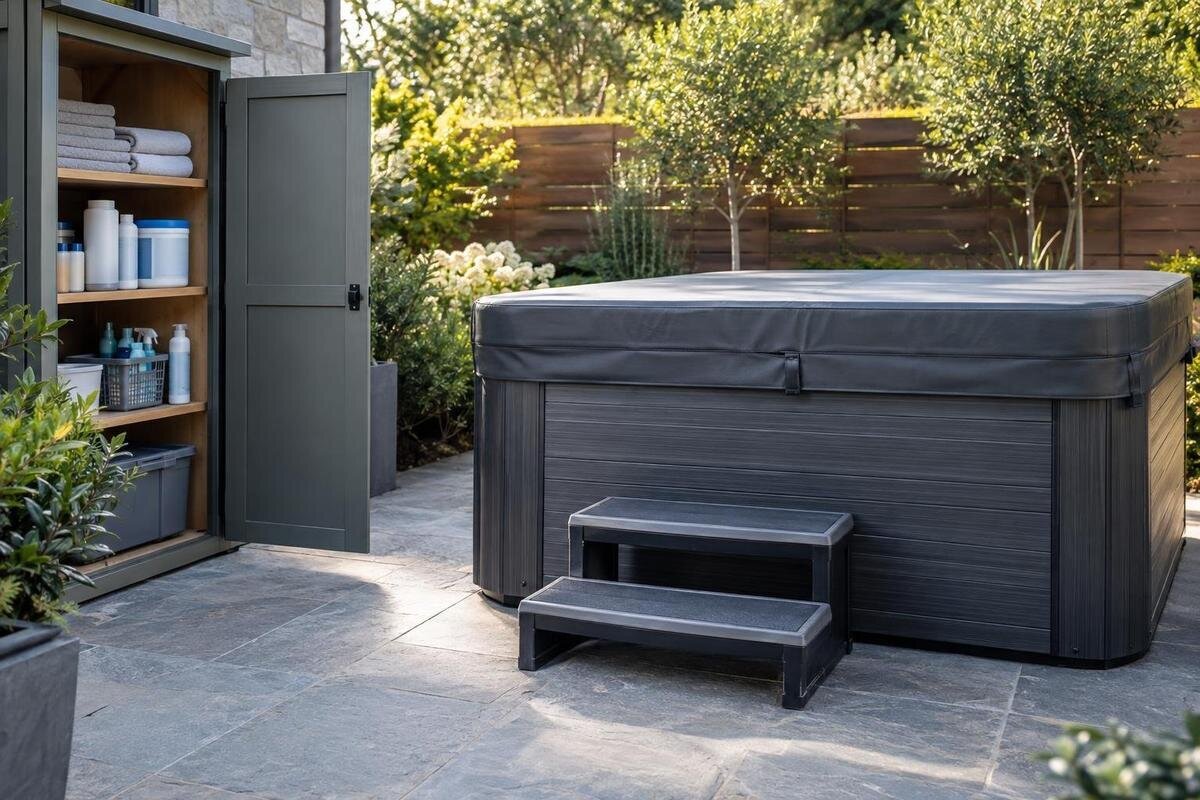
HOT TUB UPKEEP
Hot tub maintenance is only one part of owning a spa. Water-care products, filter care or replacement, paid servicing and occasional parts are upkeep; power, fuel and water charges belong elsewhere. A useful yearly figure depends on the exact tub, care method, use and local supplier and technician prices. This guide explains how to build that figure from current local quotes and your own care routine, rather than offering a national average. It also separates purchases you expect to make this year from money set aside for repairs or later replacements.
What counts as hot tub maintenance?
An annual maintenance budget covers the products and paid work needed to keep a particular tub's water and fitted equipment in line with its care instructions. Depending on the care system and setup, recurring purchases may include water-testing supplies, treatment products, filter-cleaning materials if specified, and a compatible replacement filter when one is due. Add any professional servicing you plan to pay for. Also recognise occasional repair parts, but keep them in a reserve rather than treating them as a bill that arrives every year. Expected annual spend is what you intend to pay in the coming year; a reserve is money held against a possible future repair or longer-term replacement.
Keep the tub's purchase price, delivery, site preparation and installation outside this yearly figure. Energy or fuel for operation, and water charges for the initial fill and later top-ups, belong on a separate running-cost line. If a first-year purchase includes a care pack, record what is actually supplied and budget only for extra products you expect to buy. When considering a model such as the Cove 2 hot tub, ask for the care guide and details of compatible consumables for the exact configuration. The catalogue name alone does not establish its water volume, filter type, service interval or annual upkeep cost.
Keep maintenance separate from running costs
Running costs are the regular charges for operating the tub: electricity or fuel where relevant, along with water used for filling and replenishment. Maintenance is different. A bottle of water-treatment product or a filter-cleaning item is an upkeep purchase, while the water it treats and the utility charge for using it are operating costs. Separating these lines makes it easier to see which expenses change with household use and which relate to care products, servicing or a replacement part.
For a useful comparison, keep three figures: expected maintenance spending, a separate reserve for repairs and longer-term replacements, and an operating-cost estimate. Keep the initial purchase and installation costs separate from all three. Do not derive an energy, fuel or water estimate from maintenance prices. When preparing a budget for the Haven 6 hot tub, give each quoted expense its own category before adding it up. If a supplier bundles care supplies with other items, ask for an itemised breakdown so you can compare the upkeep allowance with another quote without mixing in purchase or operating costs.
Estimate water-care supplies from actual use
Water-care costs depend on the care system, the tub's actual water volume, use and the products chosen. Depending on that system, consumables may include testing supplies, sanitising products and water-balance products. The pack count cannot be reliably worked out from a model name or another owner's routine. Use the instructions for the exact tub and each product to work out quantities, and keep a record of what you buy and use. Do not substitute a generic dose or assume another product is compatible.
For each product, record the pack size, the number of packs you expect to buy in the year, the current price in Australian dollars and the date you checked it. Include delivery in the amount you compare, and note whether GST is included or needs to be confirmed. Compare equivalent quantities rather than pack prices alone. Also distinguish the amount you expect to use from the number of whole packs you will need to purchase: your annual cash budget should reflect the purchases, with any leftover supplies noted for the following year. If you are still planning, use a provisional allowance based on current quotes, then reconcile it against actual purchases and use. For a model such as the Fjord 8 hot tub, confirm its care instructions and water volume before estimating any product quantities.
Filter care and replacement depend on the exact setup
First confirm whether the exact tub configuration uses a replaceable filter and what care the manufacturer specifies. Cleaning and replacement are separate budget lines: cleaning may involve no additional purchase, or may require supplies named in the instructions, while a replacement filter is a part to budget for only when it is due. Do not apply a universal cleaning or replacement interval. Check the manual for the relevant schedule and conditions, and use the specified method rather than assuming that another filter can be treated the same way.
Before pricing a replacement, identify the compatible part number and confirm availability with the seller or a service provider. Compare the delivered price for the correct item, not a filter that merely looks similar. If the manufacturer gives a replacement date or interval, place the expected cost in the year it is due, or keep an appropriately labelled longer-term reserve. A listing such as the Aurora 10 hot tub does not by itself identify a filter or prove that one is included, so verify the parts information for the precise configuration.
DIY care and paid servicing have different costs
Doing routine care yourself can avoid a professional labour charge, but it does not make supplies free. Allow for the products, filter-care items and replacement parts you will actually buy, and only take on tasks described in the tub's care instructions that you are comfortable completing. Keep the time you spend separate from cash spending if you are comparing ownership costs. Do not assume that a paid visit includes every task: service scope varies, so a quote should state what will be inspected or maintained and what is excluded.
Local service availability and charges depend on the provider and postcode. Ask whether a technician supports the exact model and configuration, whether travel or a call-out charge applies, what labour covers, and whether parts and consumables are extra. Confirm the quoted total in Australian dollars and check GST and delivery or travel charges rather than assuming they are included. If you are comparing DIY care with a paid visit for a listing such as the Bloomcabin Cove 2, treat the visit as an optional budget line unless the exact care guidance or your chosen service plan gives you a reason to include it.
Allow for repairs without treating them as a yearly bill
A repair is an occasional, uncertain cost, not a routine annual purchase. Depending on what is fitted, a future job might involve a replaceable part or a technician's diagnostic and labour charges. Do not assume that every tub will need a repair each year, and do not use an unsupported percentage of the purchase price as a maintenance estimate. If you have ownership records, use your actual invoices to inform a reserve. If you are a prospective owner, ask for current prices for relevant parts and local service work before choosing an amount to set aside.
Keep scheduled servicing, a part you know is due and an unplanned repair on separate lines. For a repair, ask for the diagnosis, the part or work proposed, and any additional call-out or return-visit cost before treating the initial quote as the total. When asking about repair support for the Bloomcabin Haven 6, identify the exact configuration so the provider can explain which parts and services the quote covers. Once work is completed, record the final invoice separately from your routine care purchases. This keeps an exceptional repair from looking like a recurring annual expense when you review the budget.
An annual budget with labelled assumptions
Use this planning case to structure a quote-based budget: one tub in regular household use, with two sessions a week for 52 weeks, or 104 sessions in the year. That is an explicit example, not an Australian average or a product recommendation. Assume the owner handles routine care described in the exact instructions and buys supplies by the pack. Set the water-care quantity from the tub's actual volume, product directions and observed use; do not invent a dose per session. Record a separate count for any prescribed filter-care product. Set replacement-filter quantity to zero unless a compatible filter is actually due during this budget year.
Then compare two service approaches. The DIY version sets the number of paid visits to zero. A second, illustrative paid-service version includes one visit solely to show how a local quote changes the total; it is not a recommended service interval. For each water-care or filter-care product, multiply the number of packs you expect to buy by its current delivered price, then add those amounts together. Add the cost of any compatible replacement filter due that year, the quoted total for planned service visits, and known planned parts. Use dated Australian-dollar quotes and record GST status. Keep a separate amount for possible repairs and longer-term replacements. If you are budgeting for the Bloomcabin Fjord 8, use the same categories so you can compare DIY and paid-service totals without changing the underlying product quantities.
Turn Australian quotes into comparable annual figures
A current price needs a supplier, product size or part number, and date to make it useful for comparison. This guide provides a calculation method rather than a priced Australian market average: no dated retail listings or local servicing quotes are supplied here. Fill in the amounts using current quotes for the items and services that apply to your tub. Keep a note of when each amount was obtained, particularly if you gather quotes over several months. An unpriced item should remain clearly marked as an estimate still to obtain, rather than silently contributing zero to the annual total.
For each consumable, record the supplier, product name, pack size, quoted Australian-dollar price and date, then confirm GST and delivery. For a filter or repair part, add the exact compatible part number and the delivered price. For servicing, note the provider and postcode, the quoted work, call-out or travel charges, labour and any exclusions. Compare equivalent items and scopes, not a low headline price against a more complete quote. If a supplier price is displayed without delivery or GST details, ask before using it as the annual budget input.
Check upkeep and service support before buying
Ask for the care instructions for the exact model and configuration before comparing maintenance requirements. Confirm the water volume, the recommended care approach, what filter is fitted if applicable, which replacement part is compatible, and what ongoing consumables the instructions call for. The point is not to assume one model is cheaper because of its name; it is to identify the actual products and tasks you will need, then price them using comparable, current quotes. Also ask which care information applies if the configuration or included equipment changes.
Check whether a local technician can service the exact model in your postcode, what the provider will and will not do, and whether parts can be identified and ordered. Ask how service charges, travel, labour and parts are priced, and whether the estimate covers a specific visit or is only a general guide. When comparing support for the Bloomcabin Aurora 10, keep these answers alongside the product and consumables quotes. Distinguish a supplier's explanation of the care routine from a local provider's offer to carry out that work. Your maintenance budget needs the cost of the service you actually intend to book, not an assumed allowance for unspecified work.
Review the budget after the first year
Keep a simple record of purchases and paid work through the year: product and pack size, quantity, price, supplier and date, plus any delivery charge. Note the care approach and how often the tub was used so you can see whether the original planning case matched your household. Record water-care supplies separately from filter care, paid servicing and repair parts. This turns the next estimate into a budget based on your own receipts rather than a generic routine, while making one-off costs easier to distinguish from purchases you expect to repeat.
At review time, update expected annual spending with current delivered prices and the quantities you actually used. Keep a different reserve for a replacement or repair that is not due yet. If the manufacturer gives a replacement interval, use that guidance to place the cost in the appropriate year; do not invent an interval when none is supplied. A budget that separates recurring care, known future replacements, uncertain repairs and running costs gives a clearer picture of what ownership may require, even when local prices change.
Frequently asked questions
What should an annual hot tub maintenance budget include?
Include the water-care products you expect to use, filter-cleaning supplies and any replacement filter due that year, planned professional servicing, and a separate allowance for possible repairs or parts. Keep energy, fuel, water charges, purchase costs and installation costs outside the maintenance total.
How much does hot tub maintenance cost in Australia each year?
There is no single annual figure used in this guide. Add up the water-care supplies, filter care, replacements due and paid servicing that apply to your tub, using current Australian-dollar prices and local service quotes. Record delivery, GST status and any travel or call-out charges. Keep money set aside for possible repairs separate from expected spending, and exclude energy, fuel and water charges from the maintenance total.
How often should a hot tub filter be replaced?
Use the care instructions for the exact filter and tub. Replacement timing can depend on the equipment and its use, so a generic interval may not suit your setup. Check whether a replacement is actually due in your budget year, and confirm the compatible part number and delivered price.
Should I include a professional service visit every year?
Include a visit when it is recommended for your exact setup or when you choose to pay for one. Ask a local provider what the service covers, whether the provider supports your model, and whether travel, labour, parts and GST are included in the quote.
Are water-care products part of running costs?
Water-care products are maintenance consumables. Water charges for filling and top-ups, and the energy or fuel used to operate the tub, are running costs. Track them separately so the same expense is not counted twice.
A realistic annual budget is built from the products, parts and service work that apply to the exact tub, priced with current local quotes. Keep expected upkeep separate from the reserve for future replacements or repairs, and track energy, fuel and water charges on their own line. After a year of receipts and use records, update the quantities and prices rather than relying on a generic maintenance figure.
