
How Long Does an Aluminium Greenhouse Last? Care and Spare Parts
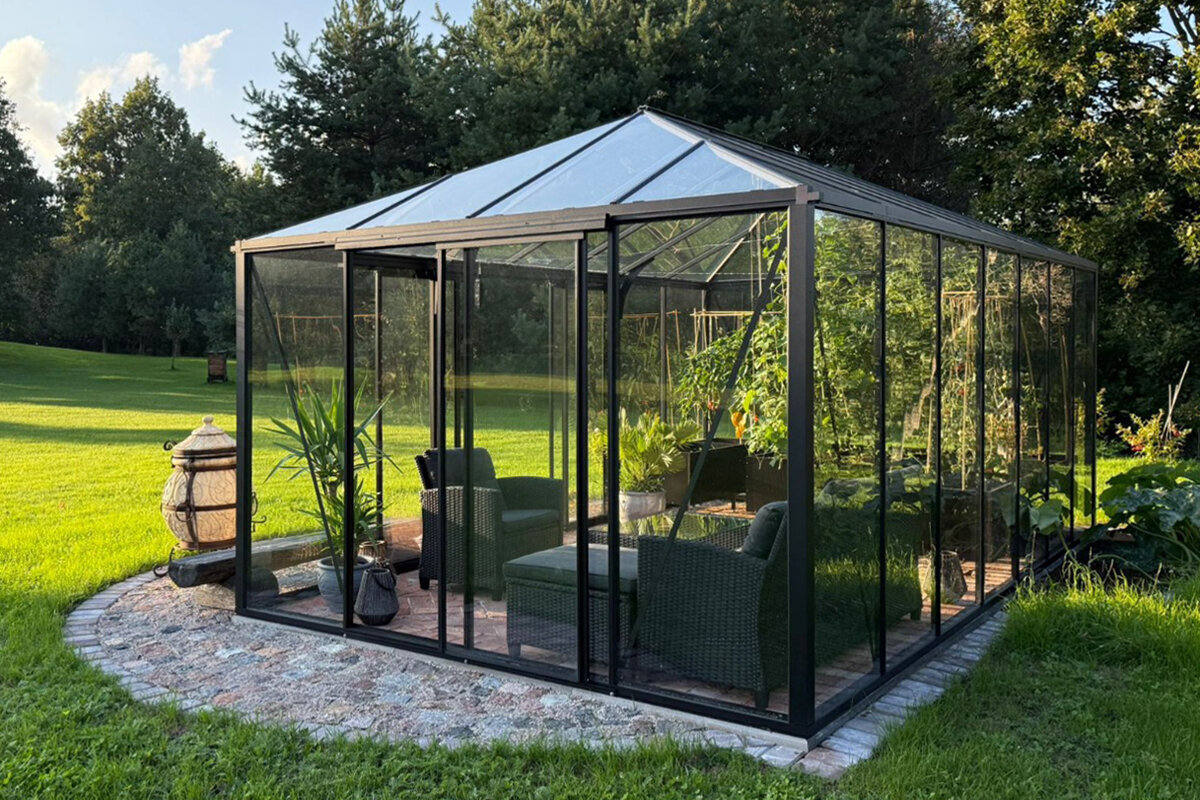
Long-term ownership
An aluminium greenhouse lasts longer when the right choices are made before purchase.
Frame material alone cannot determine how long an aluminium greenhouse will last. Sound installation, a stable site, routine checks and access to correctly matched replacement parts all matter.
The short answer: what really shapes service life
With sound planning and ongoing care, an aluminium greenhouse may serve for many years. Quoting one standard lifespan would still be misleading because every garden differs in site, foundation, assembly, weather conditions and treatment of flexible or moving parts.
Aluminium profiles are only one element of the system. Long-term use depends especially on dry, stress-free connections, sound glazing, effective drainage and a clear route to matching spare parts. Small, regular checks are usually more effective than a major repair after damage.
01
Construction
A carefully levelled foundation and correctly secured profiles prevent stress, distortion and permanently loaded joints.
02
Maintenance
Gentle cleaning, routine observation and prompt attention to adjustable parts can stop a small concern from developing into a larger fault.
03
Spare parts
Keeping the model reference, order documents and clear photographs helps identify compatible seals, rollers, glazing panels and fasteners later.
Construction, location, maintenance and matching spare parts influence use across many growing seasons.
An aluminium greenhouse is an investment many gardeners expect to keep using well into the future. Although aluminium resists corrosion and is straightforward to maintain, longevity depends on the entire assembly. The glazing, seals, openings, hardware and foundation require the same consideration as the frame profiles.
Ease of future repair deserves attention alongside a greenhouse's appearance and current equipment. Before a long-term purchase, find out how its structure fits together, whether parts remain accessible for inspection, and whether replacements are supplied for components subject to routine wear.
This guide explains the main influences and shows how to maintain an existing greenhouse methodically. It does not replace installation instructions or an individual professional assessment, but it can help you identify concerns early and create the conditions for many useful years when buying.
Review 01 · Focus point 01
Why frame material cannot decide longevity
Greenhouse frames benefit from aluminium because everyday garden exposure demands little upkeep from it, and it will not rust in the manner of untreated steel. The profile is nevertheless only part of the durability picture. Pay close attention where materials meet, at bolted joints and wherever moisture may linger. Careful assembly allows drainage and avoids unnecessary tension between components.
How the greenhouse is used also shapes its condition. Regularly opening doors and windows, resting heavy items against it or fitting accessories afterwards can increase demand on local areas. Look beyond the exposed frame surfaces to fittings, screws and glazing alignment. A greenhouse that is looked after still needs maintenance; its details simply remain inspectable.
Give extra attention to corners and areas near the ground. Fine soil and plant matter can gather there, keeping moisture in place longer. Clear these deposits carefully, then check whether screws appear secure and the profiles remain aligned without visible strain. Repeating the same route regularly makes developing changes easier to recognise.
Review any accessories fitted later to ensure they neither obstruct operation nor bear incorrectly on the frame. Use only the designated attachment locations, avoiding added strain and concealed spaces where debris could collect.
- Make sure supporting surfaces remain even, as a frame held under tension can transfer avoidable forces to glazing, windows and doors.
- Remove soil, foliage and retained moisture from contact points instead of allowing this material to sit within the joins.
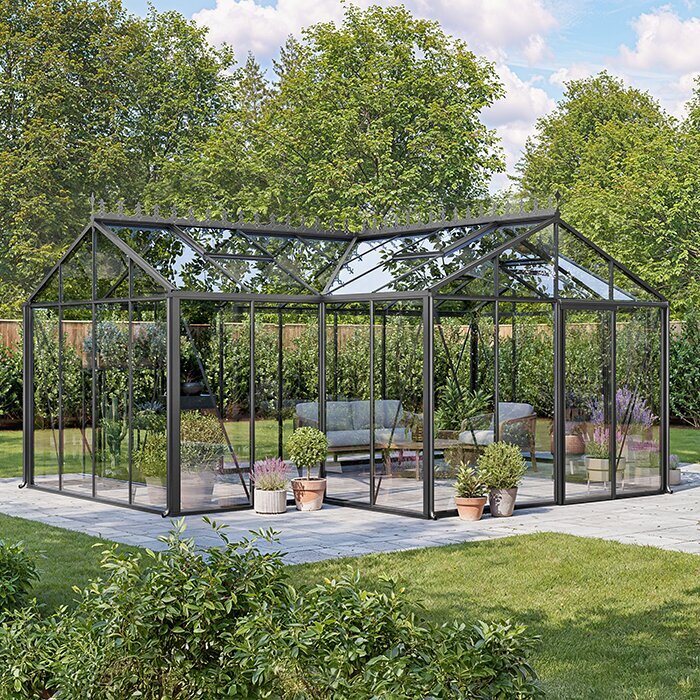
A straightforward place to begin is a standard Classic greenhouse whose frame junctions and connection points remain readily accessible.
Review 02 · Focus point 02
Foundation and site as the supporting base
By distributing loads, a firm foundation preserves the greenhouse's intended shape. Small level differences may make a door catch, put glazing under tension or lead to repeated adjustment of fasteners. Design the base as an integral structural element rather than adding it later. Always follow the installation requirements supplied for the selected model.
Assess the proposed position in practical terms. A windy open site, low branches, splash exposure or regularly saturated ground presents different challenges from a sheltered garden. Watch how sunlight and water move through the area and confirm that maintenance access is workable. For site-specific building or approval questions, seek guidance from the relevant local authority or an appropriately qualified professional. Think ahead to how the surrounding space may change. Garden beds, climbing frames, rainwater tanks and furniture can constrict service paths or block the side walls. A clear perimeter simplifies cleaning and later inspection of the base connections, glazing and drains.
Allow for the garden layout to evolve. Beds, trellises, tanks and furniture added later can narrow service routes and hide parts of the side walls. Maintaining clear access helps with cleaning and with inspecting the base, glazing and drainage. Tools and replacement pieces should also have a safe route to the greenhouse when maintenance is required.
Include the area around the foundation in your checks. Roots, sinking edges or later paving can alter water paths and limit access to lower frame sections.
- Use appropriate measuring equipment to verify the base's diagonals, elevations and attachment positions before assembly.
- Preserve a clear service route around the structure, keeping its glazing, gutters and bottom profiles within reach.
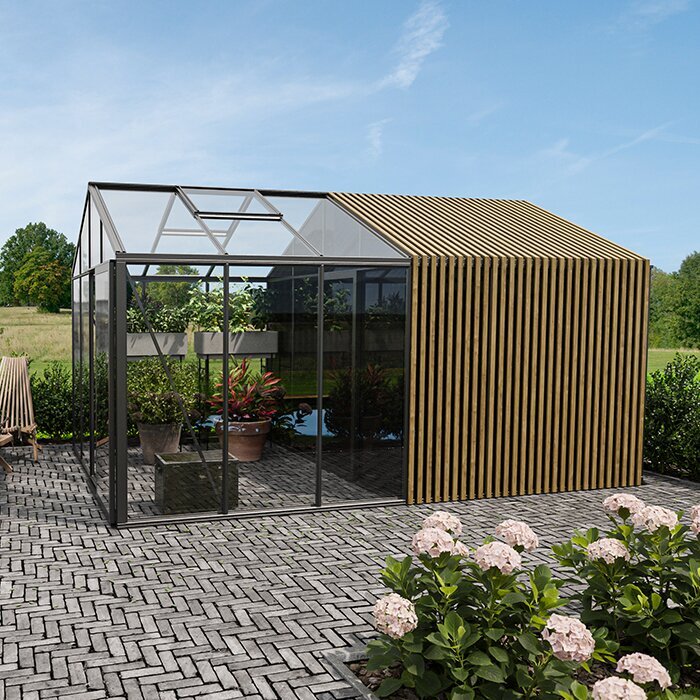
Where the greenhouse meets a house, a regular lean-to greenhouse in a large format requires careful design at both the foundation and the wall junction.
Review 03 · Focus point 03
Inspect glazing, seals and junctions routinely
Glazing and seals form important protective layers. At the end of a season and following unusual weather, confirm that each pane remains properly seated, its edges show no damage and the seals make consistent contact. Movement, rattling, gaps or clips out of position warrant attention because they can point to loose hardware, frame movement or deterioration of flexible components.
Take a gentle approach to cleaning. Use ample water with a mild cleaner suitable for the materials; harsh or abrasive products may affect seals and surfaces. Do not direct concentrated high pressure at edges and joints. This task also provides a useful opportunity to remove light deposits and examine the glazing in clear light.
During an inspection, compare the present condition with earlier observations rather than looking only for major damage. A slightly uneven seal or altered clip position can be an early clue. Record exactly where and when you noticed it. These notes make changes easier to follow and support a specific request for assistance if needed.
Open doors and windows so the surrounding seal surfaces can also be examined. You can then judge more easily whether the panel meets the frame evenly or loads one area unusually.
- Log deterioration in a seal promptly, before moisture or debris finds its way deeper into the adjoining assembly.
- While washing glazing with non-scratching equipment, examine its edges, retaining clips and the channels in each profile.
On a standard-framed Classic greenhouse these repeat observations can become part of ordinary seasonal garden work.
Review 04 · Focus point 04
Monitor wear at doors and windows
Doors, windows and other moving elements can be the first indication that something has changed. Scraping, resistance in an opener or unfamiliar sounds call for inspection. Possible causes include debris in the track, loose fixings, changed alignment or a worn part. Avoid forcing anything, which may increase the load on both fittings and glass.
Follow the manufacturer's directions when clearing tracks and hardware, removing leaves, soil and vegetation. Where adjustment is allowed, note the original position before making gradual changes. If you find a crack, deformation or an unexplained problem, obtain the correct component or suitable advice rather than relying on a makeshift repair.
Do not prop vents with makeshift cords, wedges or permanently trapped objects. These can load joints and running surfaces in the wrong places. Operate the intended stays, controls or catches and verify that they work correctly. When a window or door will not hold its position, investigate promptly before its movement deteriorates further.
Once cleaning is complete, gently operate each moving element. Debris dislodged during the work may have entered a runner, so confirm that travel is still smooth.
- Test doors and windows at regular intervals; smooth movement matters more than temporarily disguised play.
- Prune or move vegetation away from operating clearances so fittings, ventilation parts and seals remain unobstructed.
For a full regular lean-to greenhouse allow access to wall-side moving and cleaning areas from the outset.
Review 05 · Focus point 05
Drainage avoids unnecessary strain
Greenhouse operation naturally involves rain, condensation and irrigation, but none should pool unnoticed within a joint. Clear leaves and debris from gutters, discharge points and the bottom frame, paying particular attention around seasonal leaf drop. Repeated overflow or pooling in one location calls for investigation of both the source and the route taken by the water.
Conditions inside matter too. A well-arranged interior supports ventilation, watering and cleaning, whereas closely packed pots or continually wet growing media can conceal vulnerable areas beside the frame. Leave a usable route along each wall so drips, algae or a displaced seal remain visible without extensive rearrangement. Observe runoff during rain as well as in dry weather. Wet conditions reveal splashing, overflow and pooling more clearly. Confirm that runoff moves away from the foundation and that sediment is not accumulating nearby.
Use rainfall as an opportunity to observe runoff. Overflows, splash patterns and lingering puddles are then much more apparent. Check that the foundation sheds water and that nearby material is not collecting. Changes to plant placement, storage or cleaning frequency may keep these vulnerable areas visible and manageable.
- Give gutters and outlets particular attention around leaf drop and ahead of a forecast run of wet conditions.
- Organise irrigation to avoid repeatedly splashing vulnerable joints, door areas or frame profiles.
Using a standard Classic greenhouse as a reference makes it easier to plan drainage routes and service access from the outset.
Review 06 · Focus point 06
What to do after severe weather and winter
Make an inside-and-out inspection after a storm, substantial snowfall or an impact from a falling branch. Confirm that glazing is seated, profiles look straight, openings work normally and gutters are unobstructed. Take photographs before moving anything unusual; they can help a manufacturer or professional identify the affected component.
Winter action should reflect the location, construction and operating instructions. Remove snow or other deposits only when glazing, roofing and personal safety will not be compromised. Never step on elements not intended to carry a person. If the site experiences high recurring loads, obtain a site-specific assessment instead of relying on a general recommendation.
Inspect promptly rather than waiting for the garden to return to full use. Soon after an event, loose vegetation, displaced clips and blocked drainage are often easier to identify. Work only with good visibility and secure footing. Where the extent of damage is uncertain, avoid placing further load on the structure and seek qualified advice before proceeding.
Look beyond the greenhouse after rough weather. A damaged branch, displaced outdoor setting or wind-carried object might threaten the structure later even when no immediate fault is visible.
- Before going back inside after exceptional conditions, look for fractured glazing, loose components and obstructed drainage.
- Retain written observations and photographs of damage to support a clear, evidence-based request for replacement components.
For a garden arrangement beside a wall, a regular lean-to greenhouse in a full-size format makes a thorough assessment of the location especially valuable.
Review 07 · Focus point 07
Prepare accurate spare-parts requests early
Future access to compatible components is vital when a greenhouse is expected to stay in service. Profiles, seals and hardware that look alike are not necessarily interchangeable. Retain the order confirmation, exact model designation, assembly documents and images of the completed structure. Detailed photographs, dimensions and the component's installed position reduce uncertainty when a replacement is required.
Requests commonly concern seals, pane retainers, screws, rollers, window hardware and individual glazing panels. A visual resemblance is not enough for ordering; verify every item against the model. Repeated loosening or breakage also calls for examination of adjacent areas, otherwise the underlying cause remains while only the symptom is replaced. A brief equipment record can sharpen an enquiry. Store the model reference, approximate purchase date, affected assembly and supporting paperwork together, and include a wider image with every close-up to show orientation.
Keep a compact record specifically for future component enquiries. Group the model designation, purchase period, relevant assembly and supporting documents in one place. Pair close-up images with a photograph that shows the entire installation and its orientation. This helps determine whether one worn item is sufficient or whether neighbouring components and attachments also warrant inspection.
- Archive paperwork and images electronically so the identifying details remain easy to retrieve well after the original purchase.
- An enquiry should identify the installed location and include a photograph, approximate size and any markings visible on the item.
A Classic greenhouse in its standard format remains easier to maintain when its records are kept with the rest of the garden documentation.
Review 08 · Focus point 08
Choose between adjustment, repair and expert advice
Not every irregularity warrants extensive work. You may be able to address surface dirt, an obstructed runner or a single deteriorated seal directly. Fractured glazing, pronounced frame deformation, leaks that return or a door that still fits poorly after approved adjustment require a more cautious approach. Establish the cause methodically without imposing extra loads.
Deal first with immediate safety and the risk of additional damage; operation and appearance follow. Keep people away from broken glazing and use only appropriate protective equipment. For project-specific questions about structural alterations, council requirements or insurance, consult the relevant authority, insurer or a suitably qualified professional.
Use a considered order before undertaking repair: make damage safe, observe the likely cause, consult your documentation and only then select an action. This reduces the risk of stressing a suitable replacement part through incorrect fitting. Retain removed components and clear photographs until identification is complete, as they can show shape, fixing method and installation location.
When investigating causes, distinguish an isolated fault from repeated loading. A replaced fitting or new seal works well long term only when alignment, fixing and surroundings also suit it.
- Use parts specified for the model rather than improvising around a damaged seal or attachment with incompatible temporary materials.
- Obtain appropriate assistance if the concern may involve structural members, glazing or the secure alignment of the greenhouse.
For systematic upkeep of a regular lean-to greenhouse in a large format allow both repair access and reliable identification of individual components.
At-a-glance comparison
Features that favour a longer working life
This overview separates maintenance actions you can influence from matters decided before purchase or during installation. It helps you assess a greenhouse objectively and rank actions by urgency.
| Area | Favourable long term | Warning sign during checks |
|---|---|---|
| Foundation | Even, structurally sound and completed in accordance with the assembly directions. | Scraping door or visibly uneven joints. |
| Frame | Clean profiles and checked connection points. | Distortion, loose screws or persistently wet joints. |
| Glazing | Secure fit, sound edges and seated seals. | Rattling, cracks, gaps or shifted clips. |
| Moving parts | Clear tracks and routinely checked fittings. | Stiff operation, play, scrape marks or blocked tracks. |
| Drainage | Clear gutters and reliable water runoff. | Overflow, deposits or recurring drip marks. |
Make maintenance a yearly routine
A brief circuit repeated through the year reveals changes while they remain manageable. Adapt the timing to your model, local climate and site, and follow the supplied documentation.
01
Spring: thorough wash-down
Wash glazing, profiles, gutters and service routes without harsh treatment. In clear light, follow with a close look at seals, retainers and hardware.
02
Early summer: operate everything
Cycle each door and window more than once. Clear vegetation from the runners and record any stiffness or resistance that was not present before.
03
Late summer: review drainage paths
Inspect outlets before seasonal leaf drop. Position containers and tools so the inner walls and bottom frame remain easy to reach.
04
Autumn: update your records
Take images of anything unusual and note relevant dimensions. These records will support accurate identification if a spare component is needed later.
05
Winter: inspect after unusual conditions
After notable weather, view the frame, glazing and runoff system from secure footing, applying the instructions supplied for the greenhouse.
A checklist for choosing and keeping a greenhouse
Use the following questions during purchase discussions or for a concise review of a greenhouse that is already assembled.
01. Will the prepared base remain flat and structurally sound while meeting the directions for this particular model?
02. Does every side retain sufficient working room for washing, inspection and replacement of a single component?
03. Have the model designation, assembly paperwork and contact information for component enquiries been filed somewhere secure?
04. Are the frame, gutters, windows and doors accessible without furniture or vegetation blocking the approach?
05. Does the chosen position provide suitable runoff and reasonable separation from branches that could fall onto the greenhouse?
06. When viewed closely, do all seals, retainers and fasteners appear present and free from damage?
07. Have you established an uncomplicated schedule for washing, testing operation and recording the effects of unusual weather?
08. Is the area secured before damage is remedied using compatible components or assistance from an appropriate professional?
Common questions about aluminium greenhouse longevity
What service life can an aluminium greenhouse provide?
No single duration can be stated responsibly. The aluminium framework is only one part of the finished structure. Its continued reliable use reflects the foundation, assembly, location and upkeep, together with the condition of seals and glazing and whether correctly matched replacement components remain obtainable.
Is ongoing maintenance necessary for an aluminium greenhouse?
Yes. Although the workload is usually modest, it remains worthwhile. Wash the glazing and profiles, clear the drainage system, examine attachments and seals, and operate every window and door. Frequent observation can reveal a developing change before it demands a larger repair.
Where does wear usually appear first?
Watch seals, pane retainers, operating hardware, runners and bolted junctions especially closely. Moisture, debris, movement and recurring forces act on these items. How quickly their condition changes will depend on the model, quality of assembly, patterns of use and weather at the site.
Is one damaged glazing panel replaceable?
Depending on the design and available compatible components, replacement may be feasible. Secure the immediate area before recording the model, panel position and exact glazing and retainer type. Dimensions and clear images help establish the correct item. Treat any task involving broken glazing as a safety-sensitive job.
How should I respond when a door starts catching?
Begin by clearing vegetation and debris from the runner, then look for attachments that have visibly loosened. If catching continues, assess alignment and use only adjustment procedures permitted for the model. Forcing the door or adding unsuitable shims may increase stress on the frame, hardware and glazing.
How important is access to spare parts before purchase?
It matters because ownership over many years may require targeted attention to one component. Confirm that the model can be identified unambiguously and preserve its documentation. Future requests for seals, retainers or hardware can then be specific, avoiding improvised use of a visually similar but incompatible item.
Choose with future care in mind
Long-term thinking means caring for details
An aluminium greenhouse's lifespan is not a fixed figure on a specification sheet. It is created by an appropriate site, correctly prepared foundation, careful installation and a willingness to notice small changes. Glazing, seals, water routes and moving parts especially deserve regular attention.
Organising model information and maintenance steps creates a sound basis for long-term use. Bloomcabin can help you choose a greenhouse suited to your garden concept. Before deciding, review the available documentation, maintenance access and options for model-specific spare parts.
Explore greenhouse solutions and choose a structure whose care and use fit naturally into everyday garden life.
