
How Many People Do You Need to Assemble a Garden Shed?
Garden shed planning
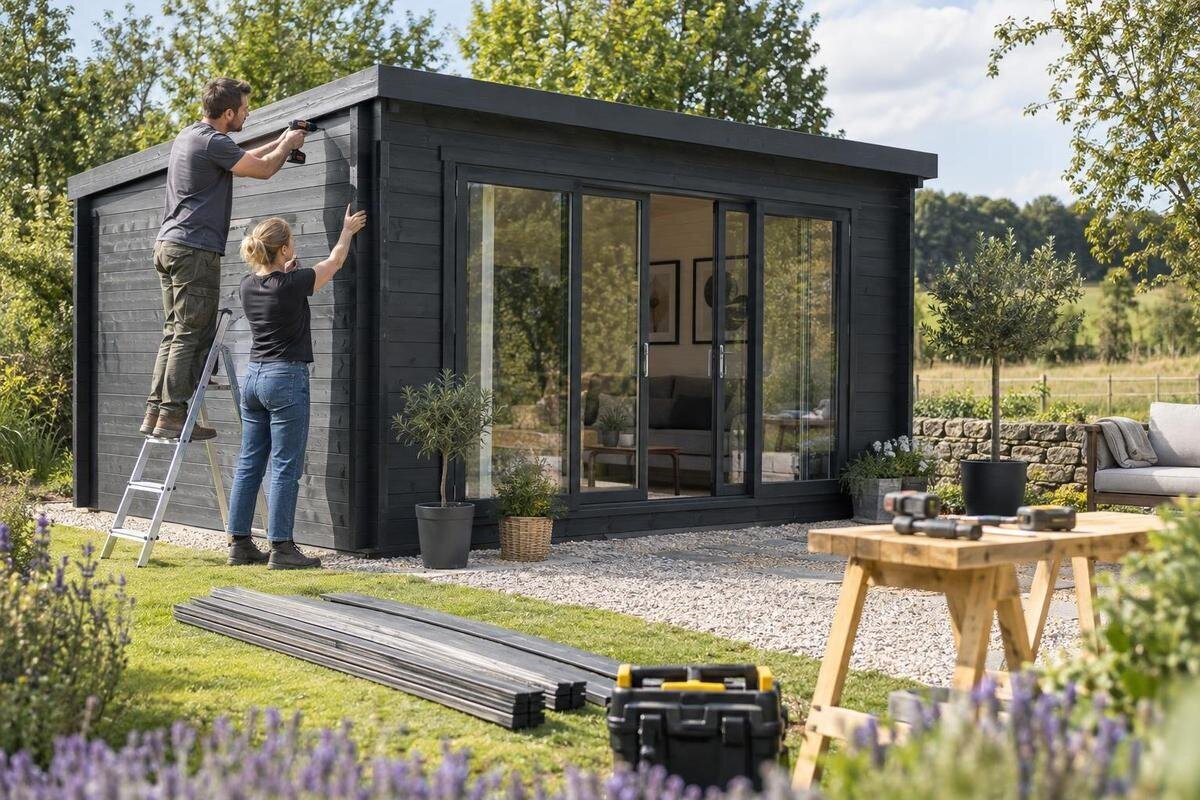
Planning the people needed to assemble a garden shed means looking at the awkward parts of the job, not just counting panels. There is no single headcount for every kit: the manufacturer’s instructions, component size and shape, site access and assembly sequence all matter. As a practical starting point, arrange two capable adults for the main build unless the instructions clearly allow one person to assemble it. Some steps may need more help, while others need only one person. Use this guide to judge the work, confirm requirements before ordering and avoid booking a helper for a stage that does not need them.
01
A sensible starting headcount is two people
Two people are a sensible provisional plan for many garden shed assemblies because one can assist with positioning while the other follows the instructions or fastens components. That does not mean every kit needs two people at every step, or that two will be enough for every lift. A straightforward kit may allow solo work, while awkward parts, an elevated task or a difficult site may call for extra help or a professional installer. The right answer depends on the exact kit and the stage in question. Treat the manufacturer’s stated team size as the reference, not a rule borrowed from another shed. Experience with a different model is not a reliable substitute for checking its own instructions.
Before ordering, find the assembly guide for the exact model and look for a stated team size, lifting notes and stages that call for another person. If the information is not available, ask the retailer or manufacturer rather than relying on product photos or another shed’s review. If the Verdana 1 garden house is on your shortlist, use its matching instructions to confirm the recommended headcount. Clarify whether the answer applies to the whole build, a particular lift or unloading, because those are different tasks. Keep the answer with your order details so the person planning the work uses the same information.
Plan the headcount by assembly stage
Separate the job into the points when people are needed: receiving and moving cartons, checking parts, getting items to the work area, assembly and final checks. These jobs do not necessarily require the same crew. You may arrange a helper to move items as directed, then have two people present for steps where a component has to be positioned while another person follows the instructions. Some inventory and planning can be done alone. Keeping the stages separate prevents treating every hour as a two-person task, while still ensuring help is present when a step actually needs it. Plan delivery handling separately, since the arrangements may not include moving everything to the build area.
Read the full guide before choosing dates. Note each step that explicitly asks for assistance, lifting or holding, and whether that is occasional or repeated throughout the build. A third person can help move components or keep items organised, but may simply crowd a restricted work area if nobody has a defined role. For the Verdana 2 garden house, mark the points in the relevant instructions where help is required. This shows whether a helper needs to be available for a short window or much of the assembly, rather than waiting all day without a clear task.
02
The components matter more than floor area
Physical handling matters more than a simple comparison of floor area. Check dimensions and weights for packages or individual components where the manufacturer provides them, and note whether the kit arrives as separate pieces or larger assembled sections. Long panels can be awkward to turn through a gate or manoeuvre in a narrow work area even if they are not especially heavy; weight alone also does not explain how easy a part is to grip or guide. A compact-looking shed is not automatically a solo build, and a larger footprint by itself does not set the required team size. Compare actual handling details, not a label such as small or spacious.
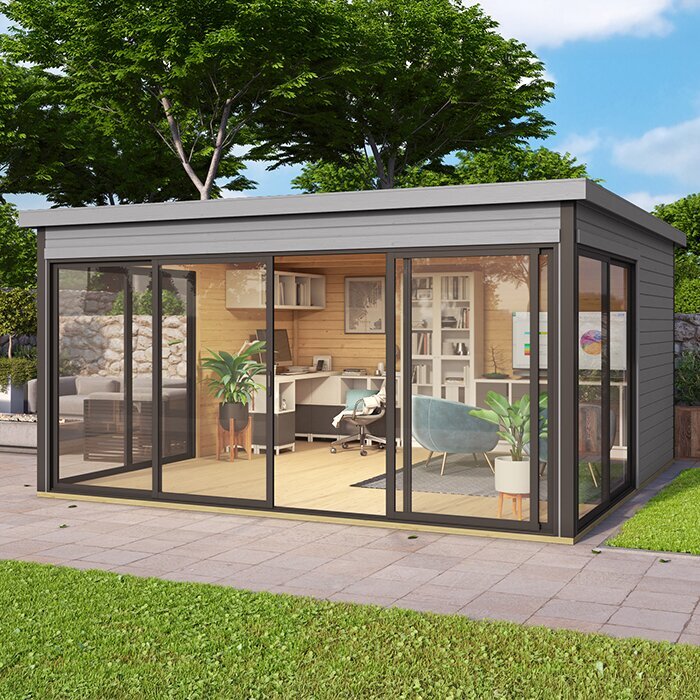
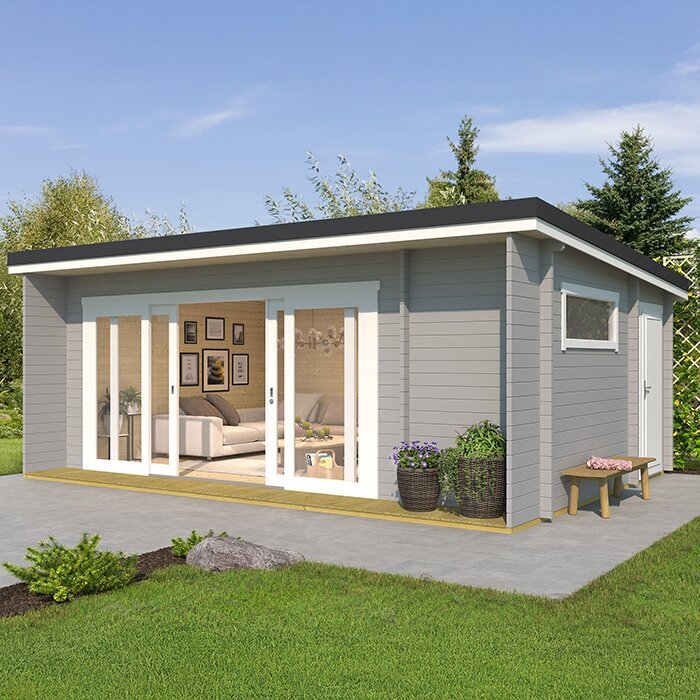
Look at the assembly sequence as well as the parts list. If the design includes doors, windows, roof sections or optional components, check which pieces must be positioned together and whether the guide names a helper. Do not count extras shown in an image unless they are included in the exact configuration you are ordering; accessories can change the work. For the Durano garden house, use the matching documentation to establish the assembly steps, rather than assuming its name or photograph reveals part dimensions, weight or staffing. Ask for missing handling details before deciding what you can manage, particularly if more than one person may need to position a component.
A helper is not a substitute for proper support
Pay particular attention to steps where a wall, panel or other section has to be held while it is aligned or joined. The instructions should show the intended sequence and any support required; a helper is not a replacement for a specified brace or other proper support. Do not ask someone to steady a part that feels unstable, balance it overhead or hold it in a position the instructions do not describe. If the component cannot be controlled using the people and support method specified, stop and get suitable advice instead of improvising. Check the manual before booking helpers, not midway through the build.
Adding a third person does not automatically make a difficult lift safe. Extra help is useful only if the assembly guide or a competent installer identifies a role for that person and there is room to work. Consider professional help if a component is too awkward for your available crew, if work at height is involved and you cannot manage it safely, or if the instructions are unclear. Before ordering the Veltor 1 garden house, verify the stated crew size and support requirements. Do not let a tight schedule push a volunteer into a task they are not comfortable doing.
03
How site access affects the headcount
Walk the route from the delivery point to the proposed build area before deciding who will help. Check gates, corners, steps, changes in level, overhead obstructions and space to set parts down without blocking access. A longer carry or narrow turn can make moving bulky pieces a separate task, while clutter can leave helpers with nowhere useful to stand. Prepare the site and base only as the product instructions specify; if the ground or site requirements are uncertain, ask the supplier or an appropriate professional rather than guessing. Note whether the route makes it difficult to coordinate the movement of large items, and ask about package sizes in advance.
Leave enough room for the chosen crew to move and assemble components without bumping into each other. A cleared area nearby for sorting parts can be more useful than inviting another person into a tight assembly zone. Consider the weather on the planned day: gusts, rain or high temperatures can make handling and concentration harder, so have an alternative date rather than asking helpers to work in unsuitable conditions. For the Orello 1 garden house, compare package dimensions and weights, if provided, with your access route; request missing details before finalising the delivery and assembly plan. Check separately that the area where you will assemble the shed leaves enough space to work.
Give each helper a defined role
Decide who leads the work and who assists at each important stage. One person can keep the instructions open and read each step; another can identify and pass components or help position them when the guide calls for it. If a third helper is there, give them a useful task such as keeping parts sorted or managing the route from the staging area. Avoid having several people interpret different versions of the instructions or make changes at once. A clear lead prevents rushed guesses and makes it easier to stop when a part does not match the stated step. Agree in advance who can call a pause.
Settle simple communication before beginning: who checks the next step, how you will pause and what to do if the parts or sequence do not seem to match. Helpers should know that stopping to check is preferable to forcing a component into place. Keep roles flexible enough for short breaks, but do not assume someone can leave during a step that needs their assistance. When considering the Modano 1 garden house, request the relevant guide and see whether the helpers available can cover the roles described. A quick briefing helps everyone understand when to wait and when to move a part.
04
More people do not automatically mean a faster build
More people do not necessarily make the build proportionally quicker. Many instructions require work in sequence, so extra helpers may wait while one person measures, aligns or fastens parts. Too many people in a confined area can slow hand-offs and make it harder to keep components organised. A second person is valuable when two tasks genuinely happen together; a third helps only if there is a clear job. Plan around the manufacturer’s stated duration, if supplied, and add time for reading, checking, breaks and unexpected pauses. Do not promise helpers a same-day finish based on headcount alone; the guide may not give a complete project duration.
Choose a time when the site is comfortable and the crew has enough daylight to work without rushing. Weather can change how manageable a component is: wind may catch broad panels, while rain or high temperatures can make the work area less suitable. Treat those as reasons to pause or reschedule, not problems a bigger crew will solve. If you are considering the M timber garden shed, use its assembly guidance and your available hours to estimate the commitment. Allow time for breaks and checking; a general online estimate cannot guarantee how long your particular build will take.
When a professional installer makes sense
DIY assembly is not automatically the best option if the required crew or skills are unavailable. An installer may be sensible when the instructions call for more people than you can arrange, components are outside your lifting ability, work at height is involved, or the base and site preparation need advice beyond the assembly guide. It can also be worth comparing a quote if you would otherwise postpone repeatedly or ask helpers to improvise. The decision is not a judgement on your ability: it is a way to match the job with people and equipment suited to it. Use the manufacturer’s directions to explain precisely what support is needed.
Ask what the installer will actually do before comparing quotes: assembly only, moving the kit to the work area, site preparation, base work, waste removal or final checks may be separate tasks. Confirm who provides extra workers and equipment, what information they need from you, and whether the quote assumes a prepared site. Check their experience with the type of kit and relevant credentials or insurance for your location; do not assume these items are included. For the Timber Tool Shed S, request an assessment based on the exact product documents and site. Record any exclusions so you know which tasks or people you still need to arrange.
05
Confirm helpers before booking the work
Once you know the likely crew, ask each helper for a clear commitment rather than a general offer to lend a hand. Share the expected role and explain that some stages may be more physical or require concentration; do not leave a difficult task as a surprise. Check that the agreed people can be present when the instructions call for two sets of hands, not merely at the start of the day. If a critical stage depends on a helper who may need to leave, have a backup or plan to stop and resume later. Build in time to check parts and read instructions before the main assembly, rather than asking everyone to arrive for a rushed start.
Send the relevant pages of the guide in advance and agree on one person to coordinate the instructions. Keep the work group to people with a job; additional onlookers can obstruct the route or distract those handling components. Decide who will be available to move parts, who will read and check steps, and when the crew can take breaks. Make sure everyone knows they can call a pause if they are uncomfortable or something appears unstable. These details make help more useful and reduce pressure to finish a stage simply because people have come over. Let helpers know if they may need to return for another session.
Use assembly requirements to guide your purchase
Use assembly requirements as a filter while comparing garden sheds, rather than choosing first and discovering the labour needs after delivery. Before placing an order, obtain the guide for the exact model or ask for a clear answer about the recommended number of people, stages that need assistance and whether package handling is part of the job. Check package sizes or weights if they affect your access route, and confirm what the delivery arrangement includes, especially unloading and movement beyond the drop-off point. Keep site preparation as a separate question, because delivery, assembly and base work may have different requirements. Note what information is still missing so a general product description is not mistaken for model-specific instructions.
If the instructions are explicit and the people needed are available, DIY may be practical; if the number is unclear, seek product-specific information or an installer before committing. Where you must work alone, choose only a kit whose instructions expressly support one-person assembly and whose components you can handle as directed. Do not equate a smaller-looking shed with a solo-ready project. Compare the time, labour and site demands alongside the shed’s intended use, and order only once you know how the work will be staffed. If two or more people are required, confirm they can attend before finalising your delivery arrangements.
Frequently asked questions
Can I assemble a garden shed by myself?
Only if the instructions for that exact kit allow solo assembly and its parts can be handled as directed by one person. Do not skip a step that calls for a second person or improvise a way to support a component. If the guidance is unclear, arrange help for the critical stages or ask an installer before ordering.
Are two people usually enough?
Two people are a practical starting point for many sheds, but they are not a guarantee for every kit or every task. Parts, the assembly sequence and site access can all affect the crew size. Follow the stated team requirements and ask about any handling step the guide does not explain.
Should I ask a third person to help?
Invite a third person when the instructions or the work give them a clear role. They might assist with moving components or organising the work area, but three people can crowd a confined site or add little during tasks that only one person can do. Check the guide and the available space first.
Do helpers need to be there for the entire assembly?
Not necessarily. Help may be needed for delivery movement or at particular assembly stages, but the instructions determine when. Mark those points before booking anyone, and do not begin a critical step if a required helper has left. Unloading may also need separate planning, depending on the delivery arrangements.
What should I check before ordering if I do not have a helper?
Ask for the exact model’s assembly instructions and confirm whether they allow one-person assembly, which steps need assistance, and what package-handling or delivery arrangements apply. If the guidance is missing, ask the retailer or manufacturer rather than relying on a photo or product title. Consider an installer if the stated crew is unavailable.
Plan for two people as a useful starting estimate, not a guarantee. The exact headcount comes from the manufacturer’s directions, the parts that need to be positioned together, access around the site and whether handling tasks call for a specialist. Check those details for the exact model before ordering, separate delivery help from assembly help, and agree who is available for the critical stages. When instructions are unclear or components exceed what your crew can manage comfortably, get product-specific advice or use a suitable installer. That gives you a realistic plan without relying on a guess from the product name.
