
How often should you repaint a wooden garden shed?
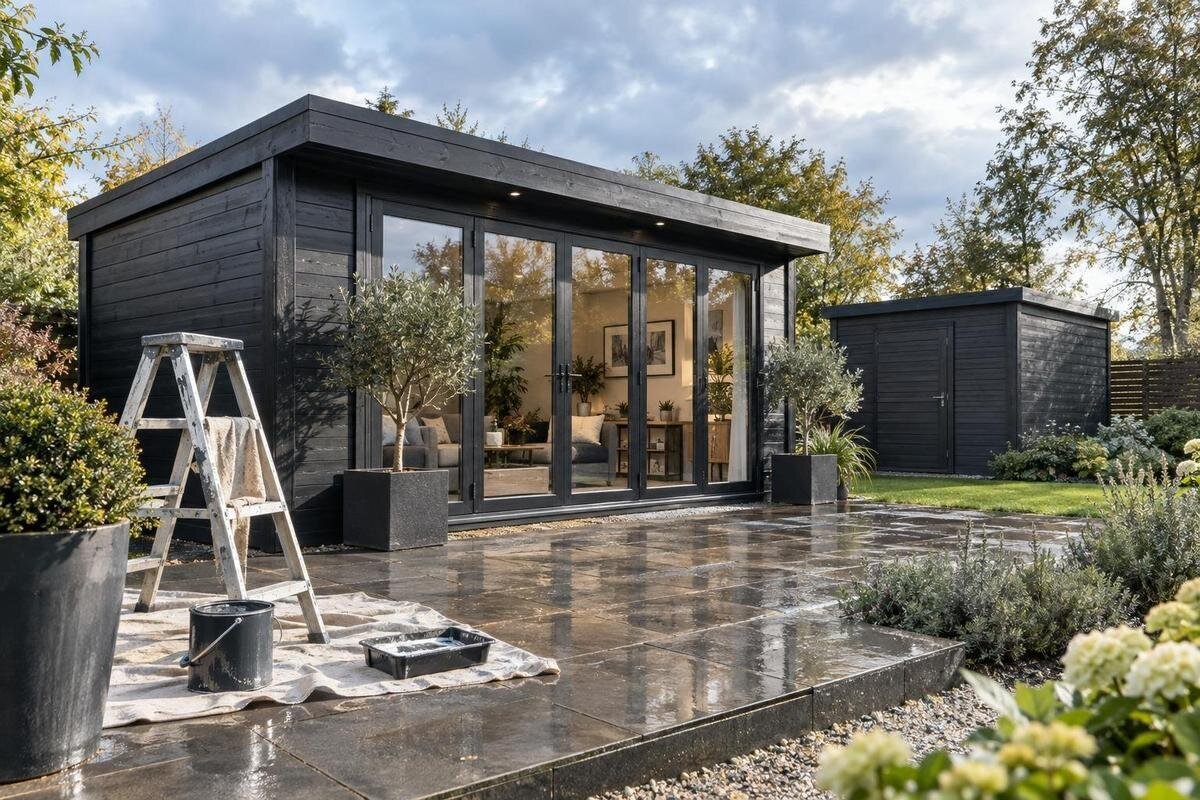
Garden shed care
How often to repaint a wooden garden shed depends more on the condition of its coating and its exposure than on a fixed anniversary. For a rough budget, allow about five to ten years before reassessing an exterior paint job, but treat that as a broad guide, not a promise. Strong sun, wind-driven rain, damp shade, the original coating and the quality of earlier work can bring the date forward or push it back. An annual visual inspection is more useful than repainting automatically: watch for loss of adhesion, cracking, bare timber and changes concentrated on one wall. Act on the finish, not the shed’s age alone.

01
Use the calendar as a guide, not a deadline
Exterior paint on timber has no universal service life. For budgeting, use roughly five to ten years as a broad window in which to reassess a coating, not as a promised repaint date for every shed. A sheltered wall can remain sound beyond it; a face with direct sun and wind-driven rain may need attention sooner. The coating used, the timber’s condition before it was painted, how well the earlier work was done and subsequent wetting all affect the result. If an earlier coat wore quickly at the same site, that history is a better reason to review sooner than a generic national rule. Use the range to reserve a budget, not to repaint by date.
Start with the shed’s finish history, if you know it. Record when it was last painted, which product was used and whether it went onto bare timber or over an earlier finish. Note if only some faces were repainted; they may not share the same starting date. With a new purchase, don’t assume timber arrives painted or that a factory-applied coat is the final exterior finish. Check the product information and request care guidance. The Verdana 1 garden house listing can help identify a model under consideration, but its name or images don’t establish a repainting interval. If records are missing, treat your first inspection as a baseline and watch the finish more closely until its pattern becomes clear.
Inspect the whole shed once a year
Set a reminder for one visual inspection each year, ideally at about the same time so you can compare similar conditions. Walk around the entire shed and inspect every painted wall, including the face least visible from the house. Note whether one side is fading, cracking or losing paint while the rest remains intact. Include accessible corners, lower edges and painted trim as well as broad wall panels; narrow edges can show changes before a large area does. Ground-level inspection is enough for routine checks, so don’t take risks to reach the roof. If a wall looks darker just after rain, compare it again when dry rather than treating that temporary appearance as paint failure.
Take photos from the same positions and write a short note for each face: sound, watch, or needs advice. Add the date and any event that may explain a change, such as a severe storm, prolonged rain or water running onto the wall. Similar lighting helps you distinguish a real colour change from a difference in the photo. Repeating the same simple review makes gradual wear easier to see and helps avoid mistaking a shadow for fresh damage. If you’re comparing a Verdana 2 garden house product page before buying, keep the exact model reference with any supplied care information after ordering; it gives you a clear starting point for your records.
02
Australian weather affects each site differently
Australian weather is not one set of conditions: a shed in a sunny, open garden can face a different load from one under trees or beside a sheltered wall. Strong direct sun and ultraviolet exposure can fade and weather a coating; repeated hot-and-cool cycles can stress it, while wind-driven rain reaches faces an eave may not protect. Near the coast, salt deposits can add another maintenance factor; in humid, shaded places, surfaces may stay damp for longer. These are exposure clues, not a state-by-state timetable. Location alone won’t give you the repaint date, but it helps explain why two sheds of the same age can look different.
Look at the shed’s immediate setting when judging wear: which walls get the longest sun, where rain hits, whether sprinklers reach the timber, and whether plants or stored items hold moisture against it. An open site may call for closer attention to weathering; deep shade isn’t automatically protective if the surface dries slowly. Changes around the shed, such as new planting or altered irrigation, can change its exposure too. Use these observations to decide which faces deserve the closest watch rather than applying a schedule intended for another site. For a new purchase, the Durano spacious garden house listing is a model reference; ask the seller for finish and care information relevant to your site rather than inferring it from the product name.
Check exposed faces, edges and lower sections
Inspect each painted surface separately. Broad wall panels show general fading or chalking, while cut timber ends, corners, joints and painted door or window surrounds may show peeling or bare patches first. Pay attention below roof edges, around openings and near the ground where rain splash or runoff can reach, especially if the same mark reappears. Only judge surfaces that actually have paint: a roof, floor or metal fitting may use another material and coating. A change on one of those parts doesn’t by itself mean the shed’s painted walls need repainting. The aim is to spot early changes without assuming every component has the same finish.
Compare more and less exposed faces before deciding whether the whole exterior is due. If only one area has changed, consider whether it receives much more sun or is repeatedly wetted; local exposure can make a patch fail before the rest. If you need to ask which sections of a particular shed are timber or supplied with a finish, use the Veltor 1 garden house page to identify the model and confirm details with the seller. A product photograph isn’t a reliable inventory of paintable surfaces. Recording which components are painted also makes your next annual comparison more useful.

03
Recognise the signs of failing paint
Peeling, flaking, blistering and cracks that expose timber are clear reasons to investigate repainting rather than waiting for the next yearly check. Widespread loss of adhesion matters more than a small isolated chip, but even one patch deserves attention if it keeps returning. Powdery colour transfer from a gentle touch can indicate weathering; check it against the paint maker’s care guidance and the rest of the surface. Colour fading alone is less decisive: a finish may look older while remaining intact, so assess coverage and adhesion as well as appearance. A change in sheen or colour is a prompt to inspect, not an automatic repaint order.
Look for a pattern, not only a dramatic spot. Repeated blistering, several cracked areas or bare timber on multiple faces suggest broader coating failure; a small mark on an edge may have a different cause and may not mean every wall needs repainting. Consider how quickly the signs have changed since your last record, whether they recur after wet weather, and how much timber is exposed. Don’t cover a warning sign simply to make it disappear: first consider whether the paint is still attached and whether impact or moisture is involved. If the failure is widespread or you can’t judge it, ask a painter to assess the scope before arranging work.
Look for moisture problems before repainting
Not every stain means paint has failed. Dust, soil splash, tree residue or a temporary wet patch can alter a wall’s appearance without proving that the coating needs replacement. More concerning is a mark that returns after rain, stays damp, spreads from a joint or comes with swelling, softness or visible timber breakdown. Compare its position with downpipes, overhanging branches, ground splash and nearby irrigation, and note whether it changes as the surface dries. A recurring moisture source can undermine new paint, so the repaint calendar shouldn’t be the first explanation for every discoloured patch.
If the timber feels soft, looks distorted or appears decayed, don’t treat a fresh coat as a repair. The cause may need attention before you can assess the finish again. A painter experienced with exterior timber can assess the coating; a builder or another qualified professional may be needed if the shed itself seems damaged or water is entering. This is different from ordinary repaint timing: a shorter interval can’t compensate for a leak or persistent wetting. When the cause is uncertain, describing when the mark appears, how long it remains and which face it affects is more useful than simply asking for another coat.
04
The existing finish changes the schedule
The first repaint depends on what was applied and when. Bare timber, a factory-applied coat, a primer and a previous full repaint are different starting points, and the word ‘treated’ doesn’t necessarily mean ‘painted’. If paperwork identifies the coating, follow its inspection and recoating instructions; if records are missing, ask the supplier or a qualified painter to identify what’s there before relying on a general interval. A coat applied before delivery may already have spent time outdoors, so years since purchase aren’t always years since painting. If a previous owner repainted only one wall, its maintenance history may differ from the rest. The shed’s age alone is a poor guide when its finish history is unknown.
Before ordering, establish whether a new shed arrives unfinished, primed or with a complete paint system, and whether another coating or later maintenance is expected. Ask for the product name and care instructions rather than assuming a photograph shows the delivered condition. The Orello 1 garden house listing can identify the model you’re considering, but only its supplied details or the seller can confirm the finish and recommended care. For an older shed with unknown layers, check the most worn areas and get advice on compatibility before scheduling another coat; don’t set a date based on a label that no longer matches the finish.
Choose a repainting window that suits the coating
Once the finish is nearing repainting, timing matters because each coating has its own application and drying conditions. Don’t choose a month on the assumption that all Australian locations share the same dry season. Read the paint maker’s instructions for acceptable temperature, humidity, surface condition and rain-free time, then compare them with the local forecast and the shed’s exposure. Dew, shade and recent rain can leave a surface unsuitable even on a sunny day. If the label doesn’t help you interpret the conditions at your site, ask a painter. A convenient weekend isn’t a useful window if the coating’s instructions can’t be met.
Arrange the work before widespread peeling or bare timber leaves the shed exposed, but don’t repaint a sound finish solely because a calendar reminder has arrived. If you’re comparing the Modano 1 garden house listing, include maintenance information in your purchase questions: ask what finish is supplied and what conditions its maker recommends for future recoating. The product page identifies a model; it can’t set a local schedule. Planning ahead gives you time to check the guidance, arrange an assessment if needed and find a suitable weather window without turning a routine inspection into a rushed repair.

05
Keep records to refine the interval
Keep records that make the next decision easier. Note when the shed was painted, the coating product and colour, whether a professional did the work, and which faces needed attention. Retain the product label, receipt or care sheet so a future owner or contractor can check the manufacturer’s guidance. A few labelled photographs are useful too: they show the condition just after painting and at each annual inspection. Add local repairs separately, since one wall may have a newer coating than the others. Keeping inspection notes distinct from work carried out gives you a clearer timeline when the original finish is several years old.
If you bought the shed recently, save its exact product reference with those notes; the M timber garden shed page can serve as a model identifier if that is the product you selected, but it doesn’t replace instructions for the paint actually applied. Update the log after any repair, then set the next reminder from current condition and coating guidance. If a face remains sound through several checks, there’s no need to repaint it solely to match an arbitrary date. If deterioration speeds up, bring the review forward and reconsider whether exposure or recurring moisture is contributing.
Know when repainting needs a professional assessment
One failing patch doesn’t always call for a complete repaint, and a good-looking wall doesn’t prove every side is sound. The scope depends on how far the paint failure extends, whether the current coating can be identified and what its maker says about repairs and recoating. A painter can advise whether local work is appropriate or whether a more consistent renewal is needed across the exterior. A repaired area may look different from older paint even when local work is suitable, so ask what to expect. Avoid expanding a small repair into a whole-shed job without a reason, but don’t leave broad areas of bare timber until the next annual review.
Get professional input if several walls are peeling, the timber seems soft or decayed, moisture keeps returning, or the existing coating is unknown and a new system may not adhere. A product page can help you identify the shed when asking for care information: the timber tool shed S product page is a listing you can refer to, but the maker or seller must confirm model-specific details. A qualified painter can assess the coating itself; if the shed seems structurally damaged or water is entering, consult an appropriate building professional before repainting. You don’t need to wait for every sign to appear before asking for an assessment.
Frequently asked questions
Can I repaint exactly five years after the last coat?
Not automatically. Treat five to ten years as a broad point to reassess the coating, not a fixed repaint date. Inspect every face and follow the paint maker’s care guidance. An exposed wall may need attention earlier than a sheltered one, while sound paint may not need replacing yet.
Is fading enough to show that a shed needs repainting?
No. Fading is a change in appearance, not proof that paint has stopped adhering or covering the timber. Look for chalking, cracking, blistering, peeling and bare areas as well. If you can’t tell whether the coating is still sound, check its care instructions or ask a painter.
Can I repaint just the weathered side?
Sometimes, but don’t decide from appearance alone. Consider whether failure is confined to one face, whether the existing coating can be matched and whether the paint maker allows local recoating. A painter can advise whether a local repair is appropriate or broader work is needed.
Does a factory-applied finish change the schedule?
It changes the starting point, but doesn’t provide a universal interval. Confirm what was applied, when, whether it is a primer or a completed paint system, and what care instructions apply. Ask the seller if the product documents don’t make this clear.
What if the timber feels soft or stays damp?
Don’t use paint to hide the problem. Repeated dampness, soft timber or signs of decay need attention before a new coat is planned. Ask a painter or relevant building professional to assess the condition; repainting can’t fix a moisture source or timber damage.
Make a yearly visual check part of owning a wooden garden shed, then use changes in the finish and the coating maker’s care guidance to decide when to repaint. Five to ten years is only a budgeting prompt; strong sun, wetting, shade and the starting finish can shift that window. Respond to peeling or bare timber before it spreads, but investigate recurring moisture or damaged timber rather than covering it. A short record of dates, photos and coating details turns the next decision from guesswork into a condition-based maintenance plan.
