
How to Care for a Hot Tub’s Timber Exterior
Hot tub care
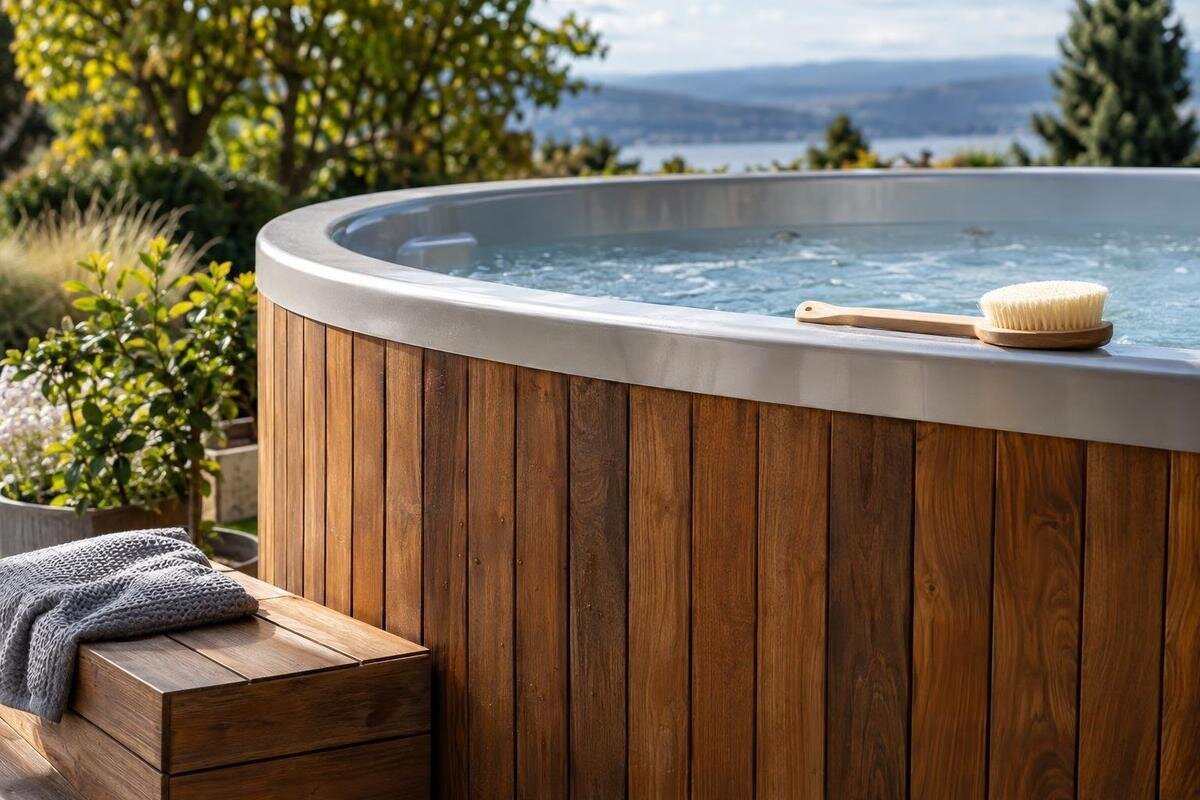
Timber cladding on a hot tub does not automatically need deck oil, a strong cleaner or a fixed annual routine. The right care depends on the actual exterior material, its existing finish and the instructions for that model. Identify those details before cleaning, inspect for changes and use a treatment only when it is confirmed as compatible. A simple record of what was applied and when can prevent guesswork later, especially if the finish or condition becomes difficult to identify.
Identify the timber and its existing finish
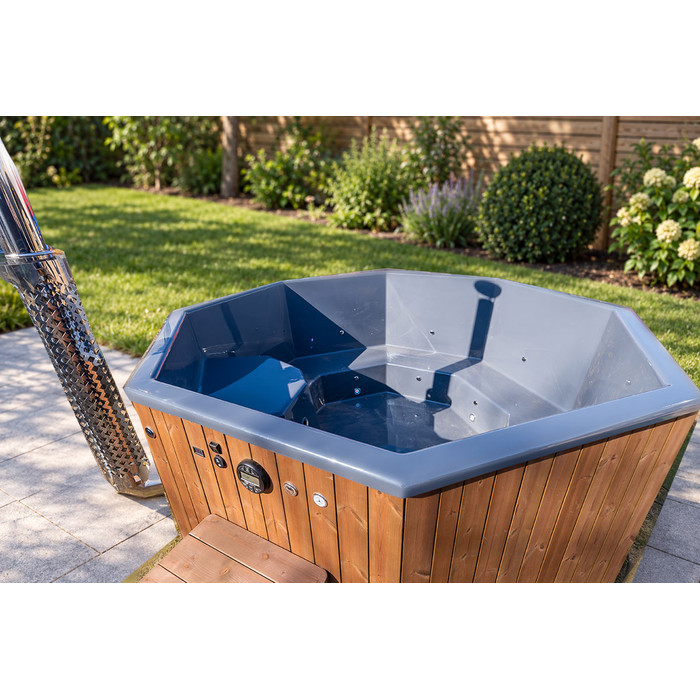
Start by confirming what the visible cladding actually is. A woodgrain appearance does not prove that it is solid timber; it may be another material or a timber-based product, and the distinction affects which cleaners or finishes are suitable. If it is timber, the species and construction may still matter. Establish whether the surface is bare, factory-finished, oiled, stained, painted, sealed or previously recoated. These descriptions are not interchangeable: a product intended to penetrate an exposed surface may not suit an existing coating. Do not identify a finish by colour or sheen alone. Record the material and finish separately, using the wording in the owner documents. This gives you a clear reference when comparing care products instead of relying on a broad description such as “wooden exterior”.
Use the exact model information, owner documents or purchase records to ask the manufacturer or seller for the exterior material and finish, ideally in writing. If the tub has been owned before, find out whether anything has already been applied; an unknown old coating is a reason to check, not to guess. Ask whether replacement panels have a different finish from the original cladding. Until those details are clear, avoid stripping, sanding or adding a coating, as that can make the surface harder to identify and complicate later maintenance.
Inspect the exterior for wear or damage
Inspect each visible face in good light, rather than relying on a quick glance from one angle. If practical, look when the surface is clean and dry so water marks or loose dirt do not obscure it. Scan the boards or panels for changes in colour, lifting or flaking finish, raised edges, splits, worn contact areas, swelling or gaps. Note dark patches, rough spots and exposed fasteners too, but do not diagnose the cause from appearance alone: a surface mark and a change to the timber or coating can look similar. Describe the location precisely, such as the lower edge beside an access panel, rather than recording only “a patch on the side”. Use the same locations in later inspection notes so you can compare changes.
Pay particular attention to lower edges, corners, joints, fixings and any access panels, if present. Check only what you can reach safely without removing parts; do not pry boards off or probe them with a sharp tool. Record any areas you could not inspect rather than assuming they are in the same condition as the visible faces. Note whether a section moves, feels unusually soft or crumbly, or has a split that appears to be growing. These observations belong in a request for assessment, not a diagnosis or an immediate repair plan. A colour change alone does not establish that a repair is needed.
Check the manufacturer’s cleaning instructions
Use cleaning advice written for the exact model and its exterior, not a generic guide for decks or outdoor furniture. Find out which cleaner, if any, is approved; whether a cloth or brush may be used; and what the instructions say about water, rinsing and drying. Ask what to avoid and whether solution or rinse water needs to be kept away from joints, openings or neighbouring components, where present. Instructions for a hot tub’s inner shell or cover do not automatically apply to timber cladding.
Give the seller the exact model name and, if available, other identifying details, then request the current owner instructions and the exterior-care information. If the advice says only “wipe clean” but does not explain which products are suitable, ask before trying household detergent. Clarify whether care differs by finish or local exposure, and whether replacement panels have separate instructions. When asking about Bloomcabin hot tub Cove 2, confirm the exterior material and finish for the configuration you are considering; the catalogue name alone does not establish that it has timber cladding.
Clean the cladding only by an approved method
Once the instructions confirm a cleaning method, follow it rather than improvising. Before starting, read the whole procedure so you know which tools, water supply and drying conditions it calls for. Clear loose debris using an approved tool, apply only the named cleaner as directed and test an inconspicuous area if the manufacturer permits. Work on a manageable section and keep the product away from adjacent surfaces or openings unless the instructions say otherwise. Use the recommended amount of water and the specified rinse method; avoid letting a cleaner dry on the cladding if the directions call for rinsing. Keep the cleaner’s label available while working. If its directions and the tub’s care instructions appear to conflict, resolve that question before applying it rather than combining parts of two different methods.
If a mark does not lift after the approved clean, stop instead of scrubbing harder or switching to a stronger product. Do not assume that a deck cleaner, bleach, solvent, abrasive pad or pressure washer is suitable; use one only if the manufacturer approves it for the actual exterior and finish. If Bloomcabin Hot Tub Haven 6 is on your shortlist, ask for the written cleaning method for its supplied exterior before choosing products. Rinse and allow the surface to dry as instructed, then assess its appearance rather than immediately applying a treatment.
Decide whether the timber needs a treatment
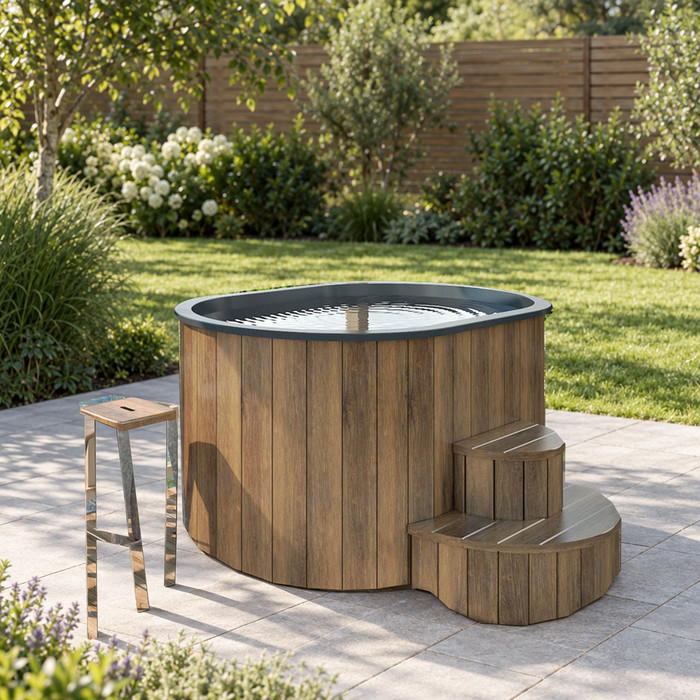
Timber cladding does not automatically need oil or sealer on a fixed calendar. It may have a factory-applied finish, or its care instructions may call for cleaning without an additional treatment. An untreated appearance is not enough to determine what it needs either. First identify the existing finish and ask whether the changes you can see are expected or indicate that the manufacturer’s maintenance guidance applies. A faded or weathered look, by itself, is not proof that recoating is necessary.
Ask whether the recommended care is cleaning alone, a particular treatment or no additional coating, and what condition should prompt action. Find out whether the proposed product can go over the existing finish and what preparation is required. Separate a wish to refresh the colour from a maintenance requirement: explain which result you want and ask whether it is compatible with the supplied finish. Do not use a fresh coat to disguise a split, soft area or peeling surface. Before deciding on treatment for Bloomcabin Hot Tub Fjord 8, request advice covering both the condition that warrants treatment and the preparation needed, rather than just a product name.
Choose a treatment compatible with the finish
Do not choose a product simply because its label says “exterior timber”. Check that the manufacturer approves it for the actual cladding material and its existing finish. A treatment intended for bare timber may not suit a painted or sealed surface, and a product designed for one type of finish may not be suitable over another. Ask for the approved product name, whether a separate cleaner or preparation product is required, and whether the existing coating must be left in place. Keep the full product description with the advice you receive. If you cannot find that exact product, do not treat a similarly named oil, stain or sealer as an equivalent; ask whether the proposed alternative is compatible before buying it.
If a treatment is approved, follow the product label and the tub manufacturer’s instructions for preparation and application. Ask what to do around joints, fittings, access panels and neighbouring surfaces, where present, and whether an applicator with relevant experience is recommended. Do not guess at the number of coats, drying conditions or recoating interval. For Bloomcabin hot tub Aurora 10, request a clear application procedure for any treatment recommended for its confirmed exterior. Keep the product details and application date with the care records, including which areas were treated. This is particularly useful if only one panel or face receives attention rather than the whole exterior.
Plan inspections around the conditions at your property
Exposure can differ from one side of the tub to another. When inspecting, note direct sun, shade, wind-driven rain, nearby irrigation, repeated splashing, leaf debris or salt air if relevant to your location. A sheltered face may stay damp longer, while a more exposed area may show a different pattern of weathering; record what you observe rather than assuming the whole exterior is affected equally. These local details can help the manufacturer give more useful care advice.
Follow the inspection intervals in the model’s instructions. If none are given, ask the manufacturer for a suitable approach rather than importing a fixed schedule from another timber product. Keep a simple record of the date, the areas checked, any cleaning or treatment and any visible change. A brief visual check during normal use, and another after an unusual weather event, can help you notice changes; neither replaces the recommended inspection routine. Record the conditions alongside the observation so the notes remain useful later: for example, whether a mark was visible only while the surface was wet. If you are considering the Cove 2, describe the intended location when asking how its exterior should be inspected and maintained.
Know when to stop cleaning and ask for an assessment
If an approved clean does not remove a mark, do not escalate straight to sanding, bleach, paint, sealant or a commercial stain remover. The appearance of a patch may not reveal whether it is surface dirt, a change to the finish or something else. Photograph it before and after cleaning, note which approved product and method you used, and record whether the mark changed. This gives the manufacturer or service professional useful context and reduces the chance of repeatedly trying incompatible products.
Pause routine cleaning and seek model-specific advice if cladding is loose or moving, a split is deep or growing, an area feels soft or crumbly, or the finish is peeling and exposing what lies beneath. Do not remove panels or fasteners, or cover a suspect area with a new coating while waiting for guidance. Contact the manufacturer or a qualified hot tub service professional; if they recommend a timber specialist, ask what work is appropriate for this particular cladding. When requesting help with a Haven 6, include the model identity, photos, location of the issue and any previous cleaning or treatment. Ask whether to leave the affected area untouched and what assessment is needed before resuming care.
Consider the upkeep before choosing timber cladding
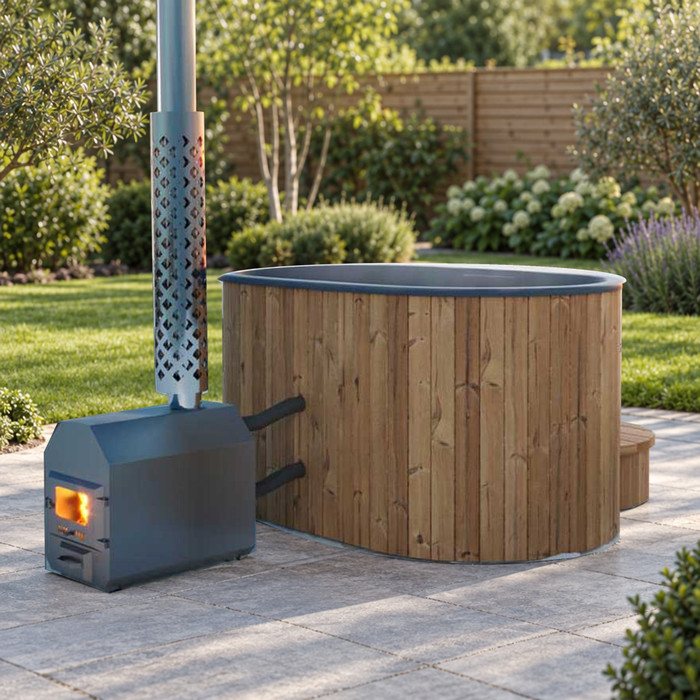
Before buying, consider whether you are comfortable identifying the finish, inspecting visible surfaces and keeping a record of products used. Ask which tasks the owner can do and which signs should prompt professional assessment. Find out whether the intended finish is meant to weather visibly and what maintenance, if any, keeps it in the condition you want. Consider the practical work too: can you comfortably reach the exterior faces for the approved cleaning method, and would you prefer to arrange help for any refinishing? Include these tasks in your assessment rather than judging upkeep solely by how often a coating might be needed. Do not assume timber always needs frequent recoating, or that any exterior can be left without checks; rely on the care information for the actual product.
Compare ongoing requirements, not just the initial appearance. Relevant variables include the cost of approved cleaners or treatments, consumables, the time needed for inspections, access to matching products and whether professional refinishing may be recommended. These vary with the finish, the site and the manufacturer’s instructions, so avoid relying on an estimate for a different tub or timber product. If you are considering the Fjord 8, request its exterior-care information before comparing upkeep with other options. Compare the same tasks for each shortlisted tub: routine cleaning, inspection, any treatment and help with damage. Mark unanswered questions as unknown rather than treating missing information as evidence of low maintenance. This keeps the comparison useful without inventing a yearly cost or workload.
Questions to ask before buying a timber-clad hot tub
Ask what the exterior is made from, whether it is timber, and what finish is applied before delivery. Request written cleaning instructions, the name of any approved cleaner or treatment, the method for using it and the manufacturer’s recommended inspection and maintenance intervals. If no treatment is needed, ask how to tell when that changes. Also ask which visible signs of wear are normal for that finish and which should be assessed before you clean, sand or recoat the surface.
Clarify whether the guidance applies to the exact configuration you plan to buy, and whether replacement panels or touch-ups use the same finish. Ask who can assess damage and where to get current care advice if the owner documents do not cover a particular product. If you are considering the Aurora 10, keep the seller’s replies with that model’s details so they do not become mixed up with advice for another shortlisted tub. Distinguish what is supplied from optional treatments, and ask for clarification where an answer refers only to “standard timber care”. Clear, specific answers make it easier to judge whether the upkeep suits your routine and which questions remain open before purchase.
Frequently asked questions
Can I clean the timber with household detergent?
Only if the manufacturer’s instructions confirm that the detergent and cleaning method are suitable for your tub’s exterior. “Mild” is not a reliable compatibility check: the product, how it is used and whether it needs rinsing all matter. If the instructions name no cleaner, ask before trying one.
Does every timber exterior need oil or sealer?
No. Some cladding has a factory finish or specific care instructions that do not call for an added treatment. Identify the timber and existing finish, then follow the advice for that model. Fading or a weathered look does not, on its own, prove that a new coat is needed.
How often should I inspect or recoat the timber?
Use the manufacturer’s recommended inspection and treatment intervals; they are not necessarily the same. If the instructions do not give an interval, ask rather than applying a general annual schedule. Keep a record of inspections and any products used so you can describe changes accurately.
What do grey or dark patches mean?
Appearance alone may not reveal whether a patch is dirt, a finish change or another issue. Note where it is, photograph it in good light and follow the approved cleaning method. If it persists, spreads or comes with softness, movement or peeling, pause and ask the manufacturer or a qualified professional.
Can I use a pressure washer or sand the cladding?
Do not use either unless the manufacturer specifically approves the method for that exterior and finish. High-pressure water or abrasive preparation may be unsuitable for some cladding and coatings. Ask for an approved cleaning or repair method before escalating from a gentle clean.
Good timber care starts with knowing what is on the tub, not with choosing the strongest cleaner or most familiar oil. Confirm the material and finish, inspect before acting and follow the model-specific instructions. When treatment is not clearly called for, restraint is often the more useful choice; when the cladding shows damage, get it assessed rather than hiding it under a fresh coat.
