
How to Plan Water Supply and Drainage for a Garden Hot Tub
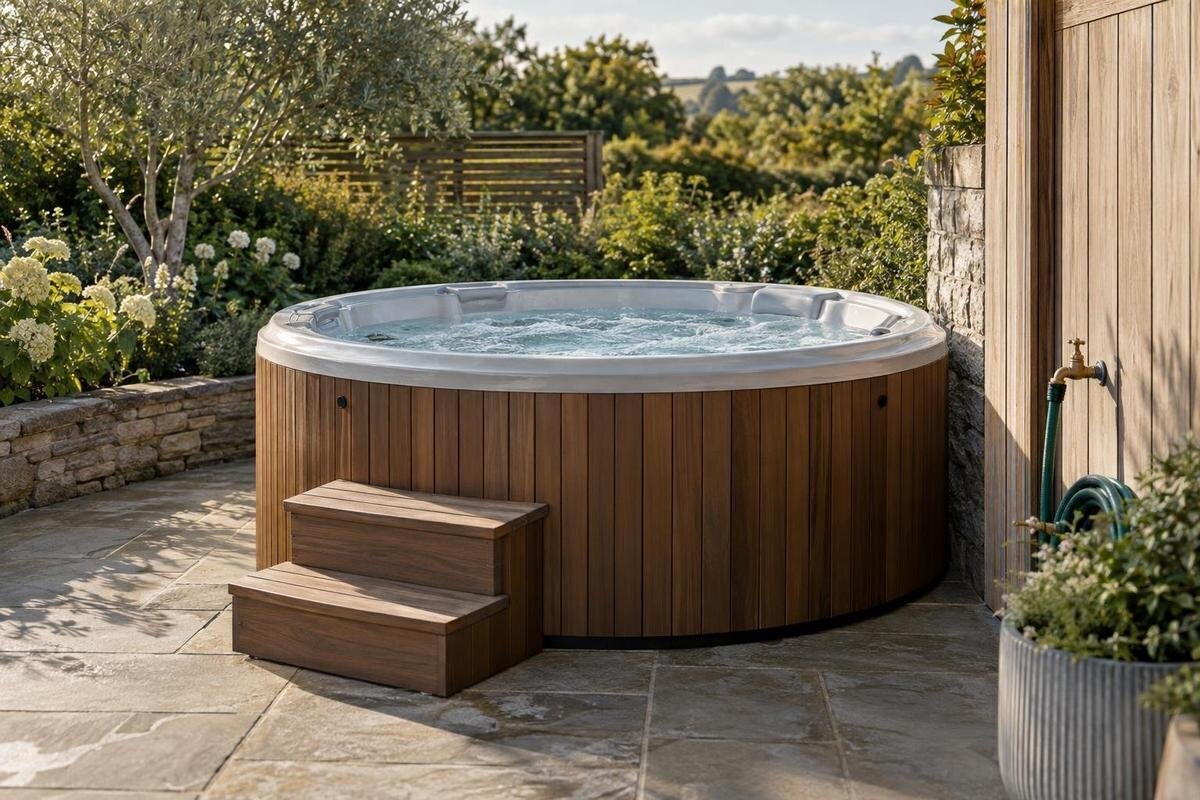
Garden hot tub planning
Water logistics can be missed when a garden hot tub site looks ready. Before choosing a model, map the water source and hose route, check how you can reach the drain outlet, and identify a locally suitable destination for emptied water. Manufacturer instructions and local advice are part of the buying decision, not details to guess from a product name.
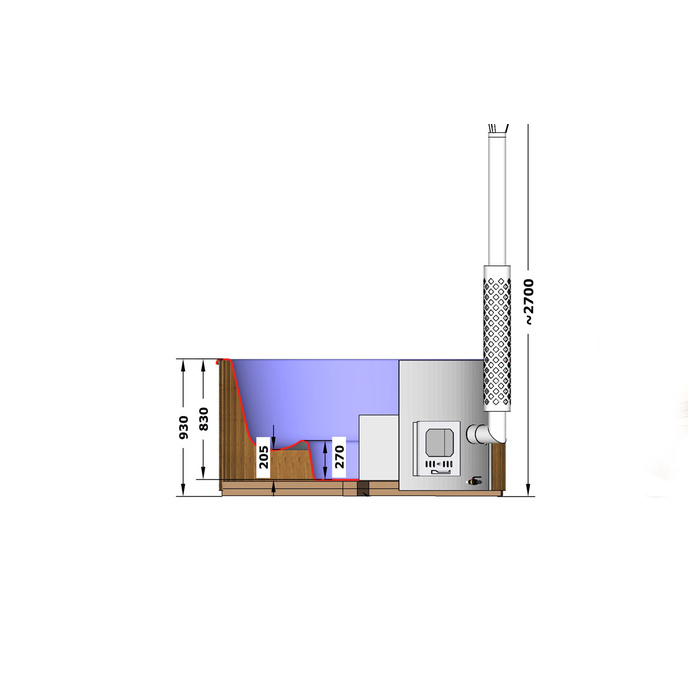
Why plan water supply and drainage before buying?
Filling and emptying are separate jobs, and a convenient-looking position may not make both straightforward. Before ordering, identify the intended water source, the route from it to the tub’s fill point, the position of the drain outlet and the likely destination for discharged water. A nearby tap does not settle the disposal route, and an accessible outlet does not make a receiving point suitable. Sketch both journeys for each possible position, including where someone must reach fittings, handle a hose and stand while working.
Planning both journeys early can reveal a conflict while changing the shortlist is still simple. The tap may be accessible while the outlet faces a wall; a clear hose path may end at a discharge point that needs local confirmation. A proposed arrangement may also rely on a fitting or method that the current model instructions do not support. Treat each as a question to resolve, not a reason to improvise plumbing. A simple sketch helps a supplier or installer comment on your actual arrangement rather than give a general answer about hot tubs.
Water-source suitability and access
Begin with the nearest practical source, but check more than whether a tap is visible. Trace the route from that tap to the fill point and consider access when you expect to fill: a shared tap, locked gate or hose path through the house may be inconvenient even when the straight-line distance is short. Confirm who controls the source and whether it is available for the intended use without disrupting other household or shared needs. Include access to the tap itself: would stored items need moving, or would someone else need to unlock the area? If you are comparing two sources, record these practical differences alongside the route length. Ask the supplier which source types and connection arrangements the current model instructions allow. A garden tap alone does not confirm that the supply is suitable.
If the property uses mains water, rainwater storage, a bore or another source, do not treat them as interchangeable. Their characteristics may differ, and clear-looking water is not proof that a source suits the tub or its care system. Ask the manufacturer or supplier for current guidance on acceptable source water and any treatment considerations; seek specialist advice if the instructions direct you to do so. If the Cove 2 hot tub is on your shortlist, explain which source you intend to use so the supplier can address that proposal. Check whether current local water-use limits affect filling.
Measuring the hose route to the fill point
Measure the route you would actually use from the source to the model’s stated fill point. Note turns, steps, changes in surface, gates and any doorway the hose would pass through. A tape measure or string laid along the intended path can give a more useful estimate than a straight line on a plan; include the bends and the room needed to reach the fittings. Record each awkward point on the sketch rather than keeping only a total distance. Check the route with gates and doors in the positions they would occupy during filling, and distinguish fixed obstacles from items you could readily move. This gives the supplier a clearer picture of how the hose would reach the tub. Ask the supplier to identify the fill point and any required fitting. If the Haven 6 hot tub is being considered, record its confirmed connection details rather than assuming they match another model.
A route that works once may be awkward for regular top-ups or water changes. Check whether the hose would cross a pedestrian path, driveway, sharp edge or doorway, or could be pinched or damaged. Avoid planning a route that creates a trip hazard or depends on a door being left open. Think through where the hose will be stored and how the tap can be reached and shut off. Use only a hose and fittings recommended for the intended use. If you are considering a fixed fill connection, ask the supplier and a qualified local plumber what it involves; do not add one simply because it seems tidier.
Keep the drain outlet accessible
Find out where the drain outlet is before deciding on the final position. Ask what access the manufacturer requires for emptying, whether a panel or surrounding feature must remain clear, and what fitting or equipment the instructions specify. The outlet should be reachable for the intended procedure without needing to move fixed landscaping or dismantle a screen. On your sketch, distinguish space for reaching the outlet from space for attaching and routing the drain hose. Ask the supplier to explain which parts you would need to reach during emptying, then check whether a wall, planter or proposed screen would obstruct them. Include any removable access panel in the drawing so its position is not overlooked when planning the surrounding area. A product photograph is not a reliable guide to outlet placement, so request the details for the exact model and check them against the proposed position.
Ask how emptying is intended to work, including whether the instructions rely on gravity or specify another approved method. Do not assume a nearby drain or length of hose will work, or that a pump is permitted if the route is difficult. The relative levels and distance between the outlet and proposed destination may matter, so ask the supplier or installer to assess the arrangement against the manual. Include the Fjord 8 hot tub in this assessment if it is on your shortlist, and record any unresolved access or equipment questions alongside the proposed route.
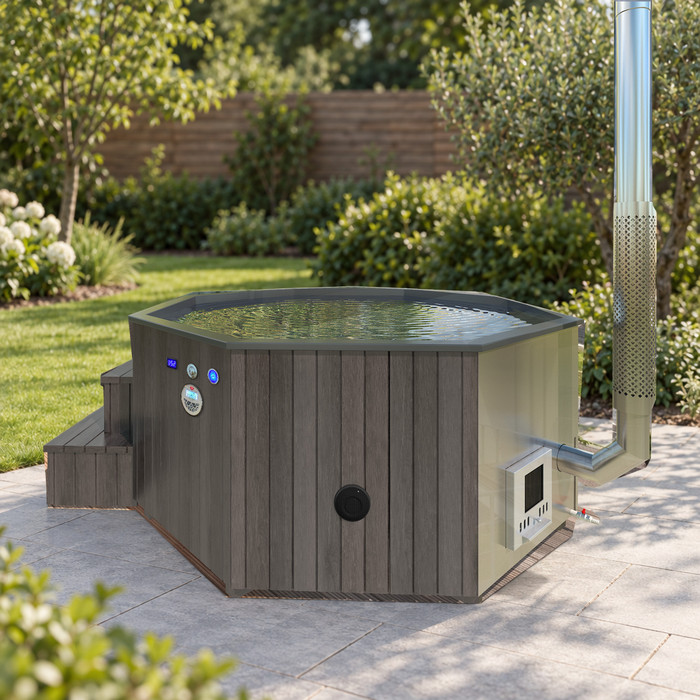
Confirm a suitable destination for drained water
Decide where emptied water could go before filling the tub. If water-treatment products have been used, their directions may affect disposal. Do not assume that a lawn, garden bed, stormwater inlet, street gutter, sewer connection or nearby waterway is suitable. The right route depends on the product instructions, the water being discharged, the property and local requirements. Do not rely on appearance alone or let water run across a boundary, public path or neighbouring land. Ask the relevant council or water provider what destination is acceptable for your address and circumstances.
Mark the intended route on your sketch: follow it from the drain outlet to the receiving point and note places where water could pool or escape. If you plan to use an existing drain, identify whether it is stormwater or sewer rather than guessing from a cover or location; ask a qualified person if you are unsure. Show the actual receiving point rather than labelling a broad area simply as ‘drainage’. Include any gate, path or shared area that the route would cross, and note whether access depends on another person. These details make it easier to ask about the complete proposal instead of receiving an answer about the destination alone. Consider whether the route remains manageable during the conditions in which you expect to empty the tub. If an Aurora 10 hot tub is on your shortlist, check its draining procedure against this route before treating the destination as settled.
Check ground levels and runoff paths
Ground levels matter because water on the way out must reach its intended destination without creating unwanted runoff. Mark high and low points between the tub and receiving area, along with paved surfaces, garden beds, fences, retaining edges, doors and nearby drainage inlets. Where possible, observe how rain or ordinary hose water moves across the area; a dry-day glance can hide pooling or a route towards a building or boundary. Hard surfaces and slopes may carry water farther than expected. This is an observation exercise, not a guide to changing levels or designing a drain.
Consider both deliberate emptying and small spills during filling or hose handling. A surface that appears to drain well may still direct a larger release into a low corner or onto a walkway. If the route depends on gravity, or if grading, trenching or a new connection seems necessary, ask a qualified local drainage professional to assess it against the product’s instructions and site conditions. For a Bloomcabin hot tub Cove 2, mark the confirmed outlet position on the sketch so the professional can consider the full route, not just the receiving area.
Allow for refills, water changes and local restrictions
Water use does not end with the first fill. Ask the supplier for the model’s documented fill quantity and the manufacturer’s current guidance on when a water change may be needed; do not estimate either from the product name or assume every setup follows the same routine. This information helps you understand how much water the source may need to provide over time and whether the disposal route remains practical. Follow the model instructions and directions for any treatment products rather than using a generic water-change schedule.
Check local water-use arrangements before setting a filling date, especially if the source is shared, tank-fed or subject to current restrictions. Ask whether refill and water-change needs should be considered alongside initial filling, and who can confirm any limits at your address. Restrictions can change, so do not rely on old advice. For a Bloomcabin Hot Tub Haven 6, record initial filling and later water changes separately so each question receives a clear answer. If different people manage the water source and disposal point, confirm the arrangement with both before choosing a date.
Get current, model-specific instructions
Get the current owner or installation instructions for every shortlisted model before deciding that the water route is workable. Ask the supplier to identify the filling method, any specified connection or fitting, the drain outlet location, the emptying procedure and the access needed to use it. Request documents for the exact model rather than relying on a product photograph or a general answer about hot tubs. Also ask whether any hose, adapter or drain equipment is supplied or needs to be sourced separately. Keep the supplied items and additional purchases separate in your comparison, and ask the supplier to identify the relevant fitting rather than shopping from a general description. If the quoted setup differs from the arrangement shown in the instructions, ask for clarification so you know which procedure and equipment the supplier intends you to use.
Check where the manual addresses acceptable water sources, water changes and discharge precautions, and whether the water-care approach affects that advice. If guidance is unclear, ask the manufacturer or supplier to clarify it before ordering; do not fill gaps with assumptions from another product. For Bloomcabin Hot Tub Fjord 8, request the same evidence as for any other shortlist option. A model name or number does not establish water capacity, hose compatibility, drain height or emptying method.
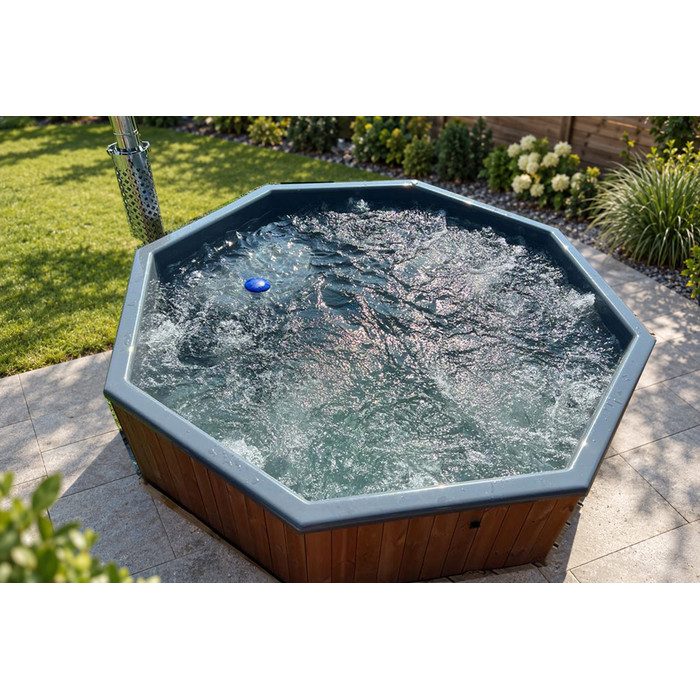
Check local requirements before plumbing or discharge
Treat local confirmation as separate from manufacturer guidance. The manufacturer can explain the model and its instructions; the local council, water provider or a qualified trade can clarify matters within its role at your address. Ask about current water-use restrictions, whether your proposed discharge destination is acceptable, and what to check if you are considering a permanent connection or an alteration to existing drainage. Requirements can differ by state or territory, council area and service provider, so avoid applying advice from another property or a general online post.
Describe the actual proposal when asking for advice: source type, temporary hose or fixed connection, outlet position, discharge point and water-care products. If a plumber or drainage professional needs to inspect it, ask what site details or photos they need and what work, if any, falls within their scope. If you are planning around the Bloomcabin hot tub Aurora 10, include its confirmed filling and drainage details with the site sketch. Keep any answer tied to the exact arrangement you intend to use, and note who provided it.
Compare each model against the same site plan
Use the same questions for each candidate position and shortlisted model: source type and access, measured hose route, confirmed filling method, drain outlet access, intended discharge destination, local confirmation and outstanding details. Mark where each answer came from, such as the current manual or address-specific advice, and leave gaps visible rather than filling them from a similar-looking product. This makes it easier to see whether a concern relates to the position, a missing model detail or an arrangement that needs professional input. Give each unresolved question a named contact, such as the supplier, water provider or plumber, so it is clear who can answer it. If you revise the proposed position or discharge route, update the sketch and identify which earlier answers need revisiting. Keep alternative arrangements separate rather than combining the most convenient parts of each into one unconfirmed plan. This keeps supplier conversations specific and comparable.
If extra work appears necessary, compare quotes for the same confirmed scope. Cost factors could include a longer water route, fittings, a plumbing or drainage assessment, connection work and the water used for the initial fill and later changes; the actual scope and local charges vary. Separate one-off work from ongoing water use, and do not treat a catalogue price or model name as an estimate of those costs. A temporary hose may suit a setup, but only if the instructions, route and local arrangements support it; a permanent connection is not a default requirement.
Frequently asked questions
Do I need a permanent water connection for a garden hot tub?
Not necessarily. Ask the supplier whether a removable hose is suitable for the model and your intended setup. If you are considering fixed plumbing, have a qualified local plumber explain what work and requirements apply at your address before you plan around it.
Can I drain hot tub water onto the lawn?
Do not assume that a lawn or garden bed is suitable. Check the manufacturer’s advice for the water-care products used, then confirm locally whether that discharge route is acceptable. Avoid letting water run onto neighbouring land or public areas.
Can I fill a hot tub with rainwater or bore water?
Ask the manufacturer or supplier about the source water allowed for the exact model and its care system. Rainwater, bore water and mains water are not automatically interchangeable, and appearance alone does not establish whether a source is suitable.
How often should hot tub water be changed?
Use the current model instructions and the directions for any water-treatment products; there is no schedule to infer from a product name. Ask the supplier how water changes are addressed in the manufacturer’s guidance, and plan for the disposal route as well as the refill.
How long will filling or draining take?
There is no reliable time to calculate from a model name. Ask the supplier for the documented fill quantity and filling and draining methods, then consider the actual water source and route. Do not use an assumed flow rate or a figure for another model.
Treat the water supply and drainage as one continuous plan: from the source to the fill point, then from the drain outlet to a confirmed destination. Once both routes are supported by the product instructions and address-specific advice, you can compare shortlisted models and sites with fewer unknowns. If either route remains unclear, resolve that question before ordering rather than after water needs to be moved.
