
Buying a large garden shed on Black Friday: what makes an offer good value?
Black Friday garden shed buying guide
When you’re looking to buy a large garden shed on Black Friday, a price badge is only the starting point. Comparing large garden sheds on Black Friday is more useful when you weigh usable capacity, documented construction, included parts and ordering terms against what you actually need. This guide explains how to judge a possible offer without assuming a seasonal label guarantees a saving. No particular discount or current promotion is confirmed here, so use the retailer’s product information and checkout terms for the offer you are considering.
Before you buy 1
Compare the exact offer before judging the price
A headline price is the first figure to examine, not a conclusion. A discount matters only if it applies to the exact model, size and package you want, against a clearly stated comparison price. No particular offer or discount is confirmed in this guide, so check the retailer’s product information and checkout terms rather than assuming a promotion applies to every option. Record the date, product variant, displayed price and conditions; similar-looking listings may describe different configurations.
If a previous price or percentage saving is shown, identify which amount is the reference and whether it belongs to the same variant. A percentage alone cannot tell you whether the shed suits your needs or compares well with another. Put the model, size, described construction and included package side by side, and note whether the displayed amount changes when options are selected. Compare prices only after matching those details, then assess practical fit separately. Keep a copy of the offer wording and the variant you assessed; it helps you compare them with the final order summary if the page presents several configurations. This stops an event label, attractive photo or prominent saving figure from substituting for the information that determines value.
Size the shed around the items you will store
Define large by the items you intend to store, not by the product title. Make an inventory and measure the bulkiest equipment, boxes and seasonal items at their widest and tallest points, including handles or other projections. Add room to lift or move each item; a plan that fits everything edge to edge can make everyday access frustrating. Decide whether you need one open area or separate zones for equipment and smaller supplies. Sketching the inventory as simple rectangles on paper can reveal awkward gaps before you choose a footprint. If you expect seasonal additions, list them explicitly rather than paying for unspecified future storage. This gives each listing a clear capacity test.
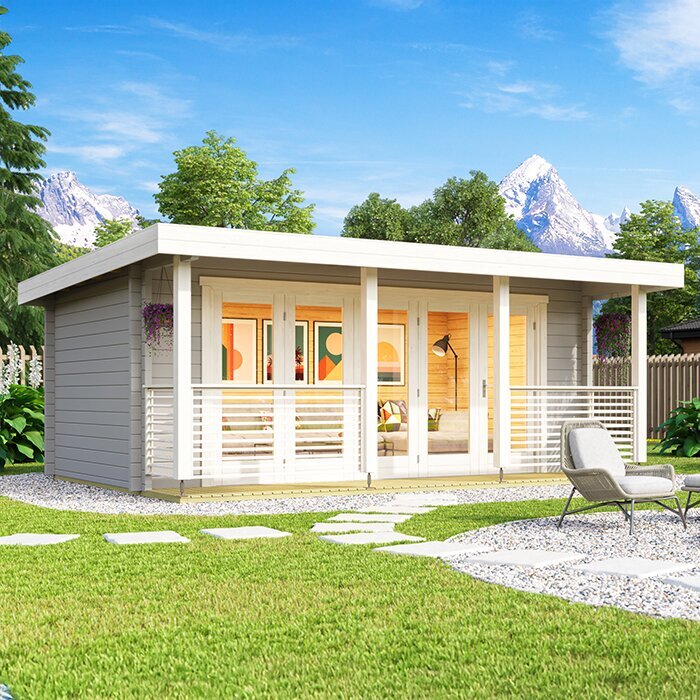
Read external dimensions, internal dimensions and height as separate figures wherever they are supplied. The outside footprint helps you judge how much ground the shed occupies; usable space depends on internal measurements and the shape of the walls and roof. Check what each figure includes and look for a plan or dimensioned drawing rather than estimating from a photo. Shelving, long-handled tools and room to turn a bulky item all reduce clear floor space. If only outside sizes are stated, do not treat them as a promise of internal capacity. On a page such as the Verdana 1 garden house listing, record the stated measurements and ask about any figure you cannot interpret; never infer capacity from a model name.
Before you buy 2
Check access as well as floor area
Floor area is not the whole storage test: an item has to get through the entry and remain usable once it is inside. Check the clear door opening, opening height, door position and any clearance needed to operate it, if the listing provides those details. Compare the figures with the largest item you intend to move in, allowing room to angle or manoeuvre it instead of matching measurements exactly. A broad interior may be hard to use if its access point makes a mower, bike or bulky box awkward to bring through. Put entry measurements beside internal area in your notes so one appealing number does not dominate.
Map the route from the backyard to the proposed position as well as the opening inside. Note gates, steps, narrow paths and turns, then work out where a door can open without blocking a walkway or storage zone. Allow enough room to retrieve items and, where the design requires it, to open the doors fully. If you regularly move wheeled equipment, consider its turning path as well as the straight run. A product photograph does not show the clearances available on your block. Apply this check to candidates such as the Verdana 2 product page without assuming its entry dimensions or arrangement. If the door type or opening direction is unclear, ask for a dimensioned plan.
Compare materials through their specifications
A material label is not a full construction description. Timber, metal and other materials can be supplied in different grades, thicknesses, treatments and finishes; care requirements depend on the actual product details. Check what the walls, roof and floor are made from, and look for stated coating, preservative or finish information where relevant. If a listing describes only the outer appearance, do not fill the gap with an assumption about durability. Ask whether a stated finish is factory-applied and which surfaces it covers. A material you can maintain may suit you better than one whose care requirements do not match your time or setting.
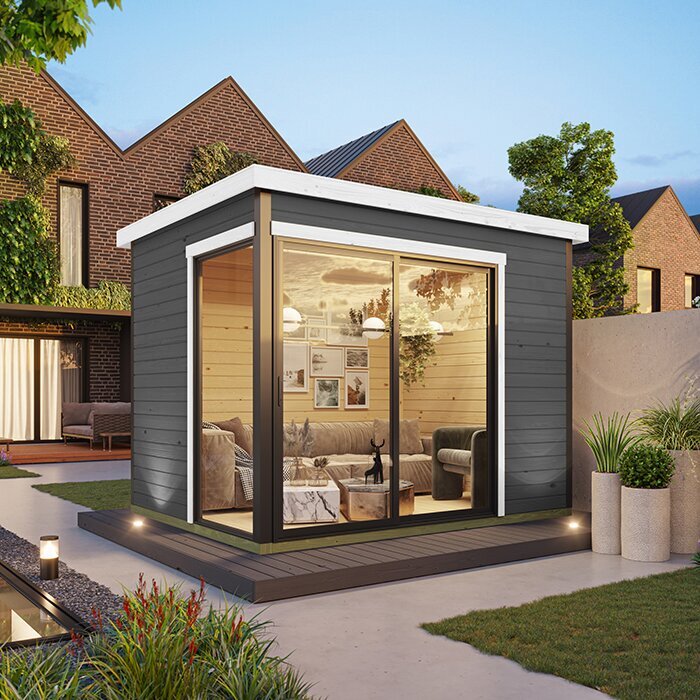
Compare maintenance instructions as carefully as purchase features. Check what upkeep the manufacturer recommends, whether after-assembly treatment is required and which environmental conditions the stated suitability covers. Sun, rain and moisture exposure can matter, but do not turn a material name into a blanket claim such as weatherproof or maintenance-free. Where two sheds share the same broad material, compare their detailed specifications and care instructions rather than the label alone. For a candidate such as the Durano garden house listing, inspect the written details rather than infer material or finish from its name or appearance. If a detail affects your choice and is not stated, ask the seller for a product-specific answer.
Before you buy 3
Assess the whole structure, not one measurement
Look at the structure as a whole rather than using one figure as a shortcut for quality. Where specifications are available, compare wall construction with the roof, floor, frame or supporting members, joins and supplied fixings. A wall-thickness number describes one component; on its own, it does not explain the full build, floor capacity, roof performance or suitability for a particular site. Check whether a floor is part of the package and whether the description covers a complete kit or selected components. A product image can help you recognise a design, but it cannot replace written specifications. Use the same component checks for each candidate.
If the shed needs to handle a particular exposure or intended load, look for manufacturer documentation that addresses that exact use; do not substitute a generic assumption based on price, appearance or material. Ask the supplier for relevant specifications and have a qualified professional assess site-dependent matters such as support requirements where needed. Do not try to derive a safe load or foundation from a photo or a single thickness measurement. With the Veltor 1 listing, as with any candidate, treat stated construction details as evidence and mark anything unstated as unknown.
Confirm what the package includes
Check the package contents line by line. Confirm whether the quoted configuration includes the floor, roof covering, doors, windows or glazing, locks, handles, hinges, fasteners, trim, treatment and assembly instructions where those items matter to the design. This is a verification list, not a claim that any particular shed includes all of them. Product photography may show optional accessories or a completed example, so rely on the written contents for the exact variant. Note anything described as optional, sold separately or required but not supplied. A component that is straightforward to obtain later still changes what the advertised package provides.
Compare the variant selected on the product page with the item in your cart or order summary. A page may present several sizes or configurations, and its headline price may refer to only one. Check that chosen options appear in the description and that the included-items list matches the selection. For a candidate such as the Orello 1 garden house page, use the contents shown for the exact configuration; do not assume a feature is standard because it appears in an image or product name. If the package description is unclear, get the answer in writing before treating the offer as comparable.
Before you buy 4
Choose features for a clear purpose
Features add value only when they solve a real problem for your storage plan. Consider which opening arrangement would make access easier, whether windows or other glazing matter to the space, and whether shelves or internal divisions would help organise the items you own. A feature that looks appealing in a photo may take up wall space, alter the package or add cost without improving storage. If your main purpose is keeping equipment organised, give more weight to usable capacity and access than to extras you are unlikely to use. For a different purpose, check that the product is specified for it rather than relying on the term garden house.
Think through a feature’s effect from inside and outside. A window may affect where a tall shelf can go, while a divider could create separate zones but reduce flexibility. Check which features are included, optional or fixed in the offered configuration, and compare like-for-like versions. On a page such as the Modano 1 listing, look for the seller’s written description of any stated features; do not infer glazing, opening styles or room suitability from a name or image alone. A feature is worth paying for when its documented function matches your intended use, not simply because it appears in a more elaborate package.
Read delivery terms with the offer
An advertised price does not explain how the shed will reach you. Before comparing seasonal offers, check whether delivery is available to your postcode, the stated delivery charge, what the service includes and any limits on vehicle or site access. Confirm the stated drop-off point, whether someone needs to be present, and whether unloading or moving packages further is part of the service; do not assume these details are standard. For a large kit, ask about package or handling information if it affects where you can receive and store it. Delivery arrangements matter when deciding whether an offer works for your property.
Read the timing and order conditions too: how delivery is arranged, what happens if access details are unsuitable, how to report damage or missing parts, and what return, cancellation and warranty terms apply to that purchase. Compare the written conditions for the exact offer rather than relying on a banner. The M Timber Garden Shed page is one product page to inspect for stated ordering information, but do not assume every delivery detail appears there; check the retailer’s terms if it does not. Keep the order confirmation and the information that applied when you purchased.
Before you buy 5
Match the shed to its site and intended use
Check the proposed site before deciding a shed is suitable. Measure the available area, including room to position the structure and operate its doors, and consider access for future maintenance. Look at the ground, drainage and nearby obstacles, then compare those conditions with the manufacturer’s site-preparation instructions. Do not assume an existing hardstand, garden bed or level-looking patch meets the product requirements. If instructions do not explain support needs, or the property has unusual ground or exposure, ask the supplier and a qualified local professional before committing. Local requirements can vary, so seek guidance from the relevant authority where needed.
Match the shed’s stated purpose to the way you will use it. Equipment storage, seasonal items and a frequently used hobby space can create different needs for access, moisture management and comfort; a garden-shed label alone does not make a building suitable for occupation or conversion. Check any stated limits for weather exposure and use, and seek qualified advice before planning a substantial fit-out. For the Timber Tool Shed S listing, as with any product, read the declared purpose and specifications rather than treating a model name as proof of capacity or performance. If a key use is not documented, ask before ordering.
Make a like-for-like comparison before paying
Make a comparison sheet with one row for each exact model and variant. Mark whether it meets your measured capacity and access needs, whether construction and care are adequately described, which components are included, and whether the intended site and use match the documented requirements. Add the displayed price and the applicable delivery and order terms, but keep price separate from the fit checks. Label each point as meets, does not meet or unclear. An unanswered question should stay unclear until confirmed; it should not quietly become a positive assumption.
Use your must-haves as filters, then judge the remaining options by usefulness rather than by the biggest percentage off. A lower-priced shed that fails on door access or misses a component you need is not a comparable bargain; a higher-priced one is not automatically better unless its documented differences matter to you. Before paying, recheck the exact variant, cart amount, delivery conditions and promotion terms. If a key specification is missing or the offer wording is ambiguous, pause and ask for written clarification. The decision should rest on what the shed provides, not on the sale label.
Frequently asked questions
Does a Black Friday label guarantee good value?
No. Compare the exact shed, variant, package and price terms, then check whether its capacity and features suit your needs. A saving on a different configuration is not a like-for-like comparison, and a low price does not make an unsuitable shed a good buy.
How can I tell whether a large shed is big enough?
List and measure the items you plan to store, allowing room to move them in and out. Check the stated internal measurements and door opening as well as the outside footprint; the word large does not establish usable capacity.
Is one shed material always better value?
No single material is automatically the best choice. Compare the product-specific details for the walls, roof and floor, along with the finish, stated suitability and care instructions. Choose a construction you can maintain and that fits the conditions at your property.
What should I check is included in the offer?
Confirm the contents for the exact variant, including any floor, roof covering, hardware, glazing, treatment or accessories relevant to that design. Distinguish included items from optional extras, and do not count something shown in a product photo unless the written package details confirm it.
Can I use a garden shed as a hobby room?
Do not assume that size or a product name makes a shed suitable for that use. Check the manufacturer’s stated purpose and specifications, and get qualified advice about the site or any substantial fit-out you have in mind.
Good value on Black Friday is the shed that fits your needs at a price and with terms you understand—not necessarily the largest structure or the biggest displayed saving. Measure the equipment, check access and site requirements, compare documented construction and package contents, then weigh the delivery and order conditions for the exact variant. If information behind a claim is unclear, leave it uncredited until the seller confirms it. Judge the purchase by how the shed will serve your garden, not by the seasonal headline.
