
Multipoint locks for front doors: what to consider

Planning a front door and its locking system
Visual solidity does not guarantee that a front door will behave as household users expect. Difficulties often appear only in real situations: the door is pulled to rather than locked, a child struggles with the key, or an electronic entry system fails without an obvious response. Choose the multipoint arrangement alongside the door design, swing and sidelights—not afterwards. Its lock case, moving bolts or hooks, frame keeps, euro-profile cylinder, furniture and leaf must function as a coordinated set. Point count is secondary to the operating action, the condition after latching or locking, release from inside and usability for everyone who relies on the entrance. The following checks help define a complete door package, capture replacement measurements and compare quotes on the same basis.
Map how the entrance is used
Multipoint hardware acts at several locations along the lock edge, but that description does not reveal the everyday sequence. The door might merely latch when pulled to, deploy extra elements by itself or require a key turn or handle movement. Build the brief around household routines: who is last out each morning, who approaches with occupied hands, whether children should open the door unaided and how often the entrance is used through the day. Consider holidays and an occasional secondary entrance too. These examples define practical operating needs far better than point count.
Next, describe each required condition of the door in ordinary language. State what occurs when it is pulled to, what changes after locking and how somebody inside releases it. Decide whether the exterior needs a lever, fixed knob or pull handle, and whether a visitor must be admitted without receiving a key. Have regular users imagine performing the whole sequence. An arrangement that seems easy during a sales conversation may frustrate a household whose members follow different routines. Send this usage outline with the quote request so the supplier works from your intended sequence. A compact matrix can uncover competing expectations. For an ordinary weekday, a weekend and a longer absence, record the operator and the condition required after leaving. Add situations involving shopping bags, a pram, care workers or unexpected visitors only when relevant. Highlight every step that demands a key turn, raised handle or ready electronic credential. Although this exercise is not technical advice, it creates a clearer basis for discussion than asking vaguely for a convenient or especially secure lock.
Treat the door, frame and lock as one
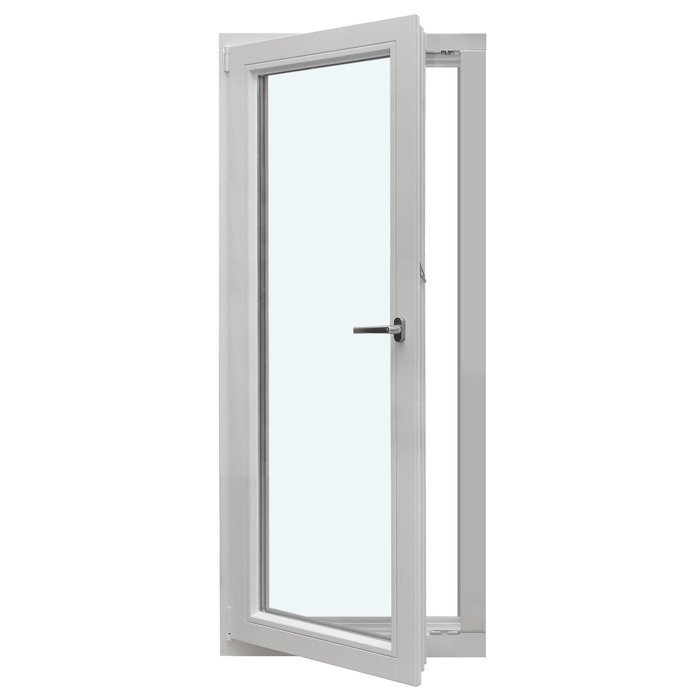
Lock selection depends on the entire door set: its height, width, leaf construction, frame, hinge side, swing, handle position and factory or existing machining. When specifying a new outward-opening front door with panel include the locking system, cylinder and furniture for both faces in the original schedule. The linked name establishes only the door type and outward swing, not the lock supplied. Confirm which locking choices suit that element and whether the quote covers every matching keep and all necessary machining.
Give the frame hardware the same scrutiny as the lock case. Each moving element needs a correctly located keep, so fitting another lock may not cure a door that already binds. Leaf movement, poor adjustment or incompatible frame parts could be responsible instead. For a new set, use the drawing and quote to verify the hinge edge, lock edge and work completed at the factory. For an existing door, ask a competent tradesperson to examine clearances, leaf alignment, faceplate, strike rail and cut-outs. This reduces the risk of buying a replacement that looks right but has geometry the frame cannot accept.
Manual or automatic: compare the full sequence
Manual systems require a deliberate action to engage their extra points, commonly a key turn or specified handle movement. That distinction can suit households wanting to know clearly whether the entrance is merely closed or fully secured. An automatic design may deploy some elements when the leaf meets the frame, avoiding one action but altering the routine. Establish exactly which points operate automatically, whether another key turn remains available or necessary, and how entry and exit then work. A label such as “self-locking” is too vague to answer those questions.
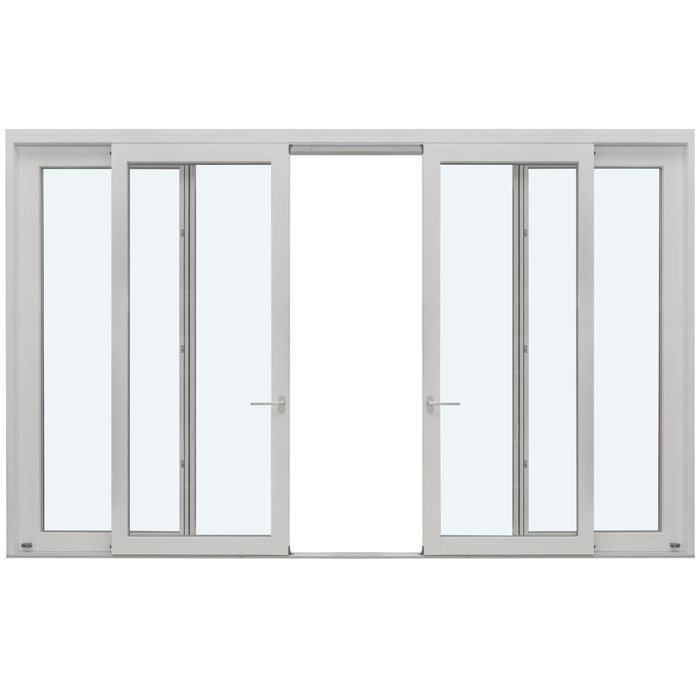
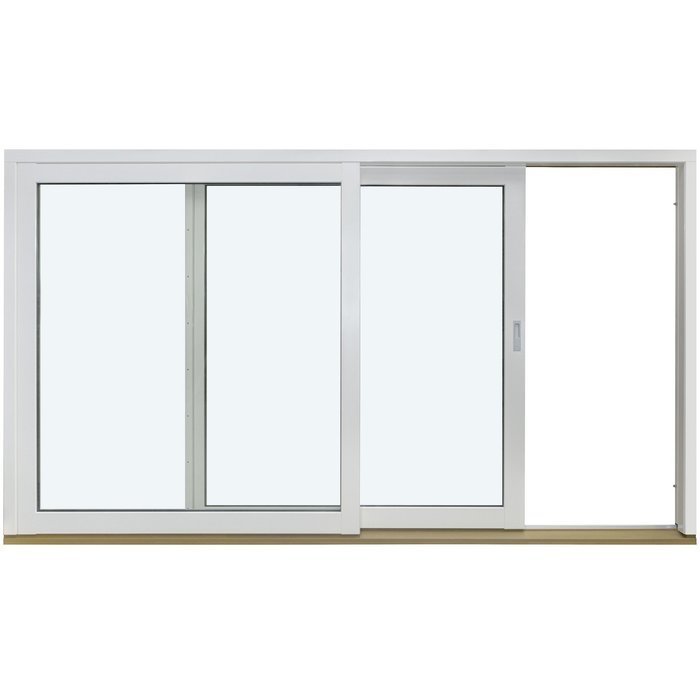
Request a demonstration of each option from beginning to end: leaf open, door pulled to, intended locked state, release from inside and return from outside. Test an incompletely closed door too, and ask how users can identify its condition. A large Patio-Life lift-and-slide door within the same property may follow a completely different closing routine and tells you nothing definite about the front entrance. If the building has several operating methods, provide simple routines and a clear handover. Prefer the solution whose states users can recognise and reproduce reliably, rather than the one with the longest feature list.
Assess hooks, bolts and shootbolts by function
Hooks, bolts, shootbolts and other system-specific elements can all provide multiple locking locations. Their names indicate how parts move and what receives them at the frame; the terminology alone does not rank one system above another. Judge the complete match between the lock, door profile, keeps and installation. Ask for the proposed arrangement to be shown on an open door or a legible technical drawing. Identify every locking location, its movement, the corresponding keep and the action that engages it. You can then compare actual operation instead of relying on persuasive labels.
Point count is meaningful only when considered with the form and placement of those points. Extra hardware cannot compensate for incorrect geometry, weak adjustment or unreliable closure. Set quotes beside one another and check the specified lock, operating action, identified locking elements, strike rail or separate keeps, cylinder and furniture on each face. The words “multipoint lock” alone leave too much undefined. Ask what will be adjusted during installation and which later symptoms should be reported. A detailed scope supports both purchasing and inspection at delivery and handover. Use a comparison table that separates supplied items from decisions still open. Include the lock, frame counterparts, profile cylinder, key quantity, internal and external furniture, any electronics, installation and adjustment. Mark an omitted detail as unresolved rather than assuming it is included. This reveals the reasons for price differences without treating the cheapest or most expensive total as evidence of quality. Record all revisions in one controlled document sothe project folder contains only one current, internally consistent quote.
Choose furniture before sizing the profile cylinder
Key movement reaches the lock through the profile cylinder, which must match the completed thickness of the leaf and the furniture fitted on both faces. On an existing door, an overall measurement is not enough. Measure separately from the cylinder fixing point towards the interior and towards the exterior. Record the current furniture and whether it will stay. A different escutcheon or backplate thickness can invalidate the old cylinder size. For a new door, take both dimensions from the approved full specification rather than assuming the existing cylinder can be reused.
Plan key management at the same time. How many people need a key permanently, who holds a spare, and what should happen after one is lost? Coordinated access management may matter more for rented or work areas than for a single private entrance. A single-panel glazed door sidelight may suit the entrance design, yet it determines neither the cylinder nor the lock type. Mark the movable and fixed fields clearly on the assembly drawing. This identifies the leaf that carries the lock and furniture and provides everyday entry, keeping visual design decisions separate from locking requirements.
Check inside and outside furniture in practice
Furniture affects far more than appearance. Backplates, escutcheons, levers, knobs and pull handles influence fixings, cylinder placement, hand clearance and the movement needed to operate the door. Define the opening action required on each face. Depending on the selected arrangement, the interior may use a key, thumbturn or another control; verify how it interacts with the multipoint mechanism. Account for smaller hands, reduced strength and people unfamiliar with the entrance. Adding technical choices does not make an awkward sequence easier.
Check the physical clearance around every fitting as well. A long pull handle may strike a wall, letterbox, light or the open leaf. With an outward-opening external door the leaf sweeps across the space outside. Plot the landing, steps, awning posts, balustrades and commonly stored objects to scale. Knowing the swing direction alone does not prove the entrance will be comfortable. Ensure somebody can stand securely while unlocking and move the leaf without changing grip. A plan showing the hinge edge, lock edge, swing arc and handle can expose clashes before the order is placed.
Work through electronic access end to end
Keypads, transponders, fingerprint readers, apps and motorised locks may supplement or replace key-only access. Begin with the need, not the device. Decide whether the goal is easier keyless return, changing permissions, temporary entry or managing several users centrally. Then trace the relationship between the credential, controller, lock and door. Confirm what triggers release, how long the release remains active, whether relocking occurs by itself and which functions still work with a mechanical key.
A credible electronic specification also explains failure. Confirm the power feed, batteries where used, low-charge warning, emergency release, permission administration and the person responsible for updates. Establish the response to a missing transponder, replacement phone or departing resident. On a single-leaf outward-opening patio door the external approach, frequency of operation and chosen furniture may differ substantially. Do not assume one electronic arrangement suits every opening. Specify each door separately, while keeping permissions and user instructions coherent across the property.
Account for sidelights and every other entry
An entrance assembly can combine the operating leaf with sidelights, other fixed glazing and a fanlight. Although the multipoint mechanism belongs to the movable leaf, the drawing must define the whole layout. Verify the hinge edge, lock edge, swing, clear movement area and every fixed field. A fixed glazed window may provide glazing beside the entrance, but it is not a door sidelight and contributes nothing to the locking system. Do not use one product description for different kinds of glazed panels in an enquiry or order. An itemised assembly schedule keeps each measurement and fixing detail attached to the correct component.
Regularly used entrances may include a side door, garage or cellar entrance, as well as a glazed sliding door to the outdoor area in the same access plan. They need not share one locking design, but each should support the household routine. Tabulate the entrance, its users, frequency, means of access and required condition when people leave. This can expose a carefully locked front door alongside another opening that is routinely only pulled shut. The purpose is to assign deliberate roles, not standardise every door. The table also indicates where spare keys or electronic permissions are genuinely useful and where uncomplicated operation will suffice.
Record the existing door before choosing a replacement
A replacement enquiry needs a reliable record of the current hardware. Find manufacturer and type markings on the faceplate or lock case. Measure the faceplate width and length, locate the handle follower and cylinder, note their separation, and map the form and position of every additional locking element. Photograph the complete lock edge while the door is open, followed by close views of the case, furniture and frame keeps. Record the hinge side and swing from a named viewing position. Avoid exploratory dismantling when it could disturb adjustments or leave the entrance unsafe to use.
Replace the vague complaint “it closes badly” with observations. Note whether the leaf has dropped, rubs at a particular point, needs pressure against the frame or allows the key to turn only while the door is lifted. Those details help separate a faulty lock from alignment or adjustment problems. A single-leaf inward-opening patio door may use similar-looking furniture, but it is not a specification guide for the front entrance. If a repair would require extensive alteration of cut-outs and keeps, compare it with a coordinated replacement door set. Consider present condition, required work and future use, rather than treating the lock's age as the deciding factor.
Verify the quote, installation and handover
Before authorising the order, consolidate the assembly dimensions, hinge and lock edges, swing, locking method, exact lock, keeps, cylinder, furniture for both faces and any electronic options. Reconcile that schedule with the drawing and household-use notes. Expand vague collective descriptions in writing. Allocate responsibility for site measurement, preparation of the building opening and final adjustment of both door and lock. This prevents a gap in responsibility where the leaf, furniture and locking components arrive separately but no party commissions them as one working entrance.
During handover, cycle the door several times with the leaf both open and closed. Test latching, key travel, operation from inside, each locking condition and every agreed electronic credential. Record the supplied key quantity, final configuration and operating guidance. Bloomcabin provides a five-year guarantee for windows and doors, with delivery four to six weeks after order confirmation. The specific order and confirmation must still be checked. Report stiffness immediately instead of overcoming it with extra force. Handover is not finished until the people who regularly use the entrance can perform the intended routine.
Questions buyers often ask
When does a manual multipoint lock make sense?
It can be entirely suitable when users are comfortable performing a deliberate locking action. Automatic operation is not inherently superior. Examine the condition created by pulling the door to, any further key action, and the release method from each side. Everyone in the household needs to recognise the different states without uncertainty.
Will an upgrade suit any existing front door?
Not without an inspection. Compatibility depends on the lock case, faceplate, handle follower, cylinder location, locking elements, cut-outs and frame keeps as a group. A leaf that already rubs or drops also needs its alignment checked. Visual similarity does not establish that a lock is a suitable replacement.
What measurements establish the cylinder size?
Measure in both directions from the cylinder fixing point: once to the interior face and once to the exterior. Use the finished door thickness with its intended furniture, because one overall dimension cannot establish the correct split. On a new door, the supplier should calculate and label the interior and exterior dimensions from the approved configuration.
Does a multipoint lock automatically include electronic access?
No. Keypads, transponders, fingerprint readers, apps and motorised controls are separately specified choices. Verify compatibility, the power arrangement, the lock-and-release sequence, mechanical emergency entry and administration of permissions. Assign responsibility for settings and document the response to a missing credential or system failure.
Which details make quotes comparable?
Provide the door type and dimensions, hinge and lock edges, swing, normal use, intended locking sequence, furniture and key-management needs. For replacement work, include measured existing details, identifying marks, photographs and a precise account of the fault. Ask for a schedule that lists the lock, keeps, cylinder, furniture and optional electronics separately.
Where to go next
Selecting the most locking points does not by itself produce the right result. Compatibility and usable operation come from the door leaf, frame, lock, keeps, profile cylinder and furniture working together around a clearly defined household routine. A new-door quote should document that complete arrangement; a replacement depends on accurate records of the existing opening. Test manual, automatic and electronic proposals against realistic entry and exit sequences. Do not approve the order until the swing, access method, included parts, installation duties and adjustment responsibilities are unambiguous.
