
New or Used Greenhouse: Which Suits Your Garden?
Garden buying advice
New or used greenhouse: start with an honest assessment of its condition.
Provided its frame, glazing and accessories can be examined properly, a pre-owned greenhouse may be practical. Buying new offers a known package and a more predictable place to begin. Use this guide to compare both routes on their merits for your garden.
An existing structure—sometimes sold with a base or accessories—can make a used listing tempting. Still, neither photographs nor a short advertisement reveal everything. Inspect it in person. With an older greenhouse, reliable joints, profiles that still align, undamaged panes and obtainable spares turn an apparent bargain into a workable growing space.
A new purchase will not suit every situation, but it removes many uncertainties. Its dimensions, parts and assembly process are intended to function as one system. Site preparation becomes easier to organise, while ventilation, watering and planting can be planned on a dependable foundation. That clarity matters in a garden project designed for years of use.
Instead of treating the decision as a simple contest between old and new, assess your practical confidence, time for inspection and collection, and expectations for appearance and use. Combine the purchase, any missing parts, assembly and ongoing care into one assessment. You will then see whether a used greenhouse is genuinely appropriate or whether a new model is the more straightforward option.
01 · Begin with the site
Work out what your garden actually needs
Let the garden brief come before the advertisements. Decide which plants you intend to raise, overwinter or protect, how much room you need to move, and whether the structure should be productive, decorative or both. A pre-owned greenhouse is only persuasive when its footprint and door position fit both the chosen location and your everyday routines.
Starting from new gives you greater choice in proportions, glazing and fittings, although more space is not always better. The result should sit comfortably with the house, beds and outdoor living areas. Mark the footprint on the ground, then study circulation, access and changing sunlight before a low-priced used structure commits you to the wrong position.
Plan for activity around the structure in every season, not merely its footprint. Doors and vents need clearance, and the route should accommodate pots, soil and cleaning equipment. Observe nearby fences, buildings and trees as well, because their shade may shift across the site when useful daylight is most important.
- List plants, working routes and desired bench space before comparing advertised dimensions.
- Review the route through the garden so bulky frame sections and panes can be moved into place without damage.
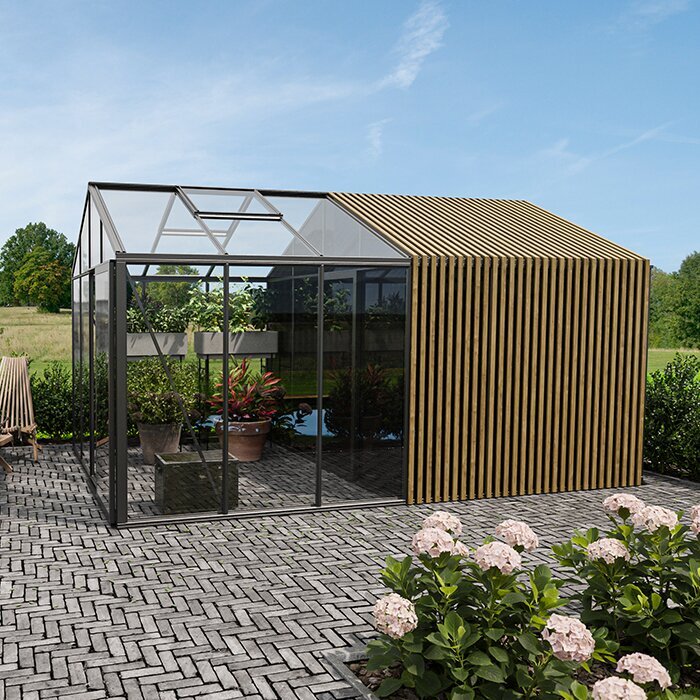
To establish a straightforward planning baseline, use a Classic greenhouse in standard configuration as a reference for its proportions and included features.
02 · Structure
Inspect every used component
Inspect the structure standing and in daylight whenever possible. Look lengthways along each profile for warping, crushed edges, major scratches or irregular joints, which may reflect earlier assembly loads or storm damage. Operate every door and window repeatedly; smooth travel, limited play and a clean closure provide useful evidence about wear in the moving components.
Examine fasteners, seals, junctions and the surfaces supporting the glazing. Dirt is generally manageable, whereas absent retainers or perished seals may mean extra expense and difficult sourcing. Have all detached pieces set out beside any available instructions. Without an assembly guide, taking the greenhouse apart safely becomes needlessly complicated.
Bring gloves, a tape measure and a concise list of checks. Record suspect areas from different angles and ask what repairs have been made. Neat junctions are reassuring; improvised screws, seals or profiles warrant closer attention. The photographs will let you review condition and completeness later, away from pressure at the inspection.
At each junction, see whether the profiles rest together naturally rather than under tension. Irregular gaps or holes that have been widened after manufacture may indicate that a component is no longer correctly matched to the original frame.
- Inspect corners and profile ends for splitting, corrosion, misshaping or makeshift repairs.
- Count the glazing, fasteners, clips and opening units on site instead of accepting the advertisement as the inventory.
If the position is defined by a house wall, use a full-size Lean-To greenhouse as the planning reference for that junction from the beginning.
03 · Glazing
Assess glazing realistically
When purchasing used, glazing affects not only light, appearance and maintenance but also transport risk. Inspect each pane for cracking, chipping and edge damage. Temporary seals or mismatched replacement panels can work, yet may alter the final appearance. Scratches, residue and uneven ageing on clear panels are often much more noticeable in everyday use than during a short inspection.
Confirm both the number of panes and the method for protecting them during removal. Individual glass panels require proper packing, time and suitable transport. New glazing comes without an unknown service history, allowing its appearance to be selected deliberately as part of the broader garden composition.
Review all glazing together rather than pane by pane alone. Variations in tint, surface or material may reveal earlier replacements and can disrupt the overall look. Ensure each panel is properly seated and appears to have every necessary retainer. Question any loose field or unsuitable fixing before either transport or continued use.
- Examine the glazing obliquely in good light, which makes hairline fractures, scuffs and cloudy patches easier to detect.
- Treat protective packaging and appropriate transport as planned used-purchase costs rather than last-minute extras.
A composed, traditional garden scheme can centre on a Classic greenhouse in standard configuration selected deliberately as its focal feature.
04 · Completeness
Small missing parts matter
The frame is only one part of a working greenhouse. Doors, vents, gutters, fittings, covers, fixings and every glazing piece must also be accounted for. Prepare a written handover inventory before committing, separating attached items from those in storage. Specialist screws and small clips often disappear during earlier moves.
Do not assume that an existing base is automatically beneficial. Verify its size, level, condition and suitability for your own property, as it may not be simple to relocate. With a new greenhouse, you can prepare the ground to the model's stated requirements and coordinate that work more easily with other garden tasks.
If the greenhouse has already been taken apart, request an organised display of each component group. Keep doors, vents, gutters and hardware visibly apart from structural profiles. An inventory offers little reassurance when its entries cannot be matched to physical pieces. Good sorting reveals whether reconstruction is likely to involve lengthy searches or further purchases.
- Obtain photographs of every dismantled container, fitting and window component before booking helpers or a vehicle.
- Take your own measurements of any used base, then check them against the greenhouse's true outside dimensions.
When planning beside a wall and wanting a clearly specified package, consider a full-size Lean-To greenhouse as an easy-to-assess alternative.
05 · Spare parts
Origin affects future repairs
For a pre-owned greenhouse, knowing the brand has practical value beyond appearance: it helps connect fittings, profiles and pane sizes to the right system. Request the model designation, original paperwork and manufacturing year where known. Without those details, one absent component may prompt a lengthy search. Generic substitutes can fit poorly and interfere with doors, windows or glazing.
Find out whether earlier modifications are documented. Extra shelving, self-made seals and drilled holes can be useful, but they may make later removal or replacement difficult. A new system has none of those unknown changes, and allows accessories to be selected around your own routines. Keep all documents and a record of fitted components for future reference.
A useful first step is to identify the manufacturer and model range precisely. Compare photos of profile sections, door fittings and window mechanisms with any documentation. Retain that information after purchase, supplemented by your own photos of fitted parts. It makes later queries easier and avoids choosing small additions without a sound basis.
Note any non-standard measurement or unusual fixing during the visit. A precise record makes it easier to decide later whether a proposed addition would integrate properly, both technically and visually.
- Before judging whether spares can be sourced, obtain the model name, documentation and detailed images of its hardware.
- Review owner-made alterations carefully. Although potentially useful, they might hide damage or compensate for original pieces that have disappeared.
For a system with a traceable starting point, consider the Classic greenhouse in standard configuration as a sound foundation for future accessories.
06 · Assembly
Include dismantling and transport
Removal is often where the logistics of a pre-owned greenhouse become clear. Organise sufficient help, safe protection for glazing, marked containers for hardware and dry storage between sites. Record each elevation before undoing anything, and label every profile. Photographs assist reconstruction but do not replace proper instructions; disorder greatly increases the prospect of lost, confused or damaged pieces.
A new kit still requires preparation, although its construction sequence is generally easier to organise. Provide a firm, level base and adequate working room around the footprint. Before either buying route, ask the relevant state or territory authority and local council which planning or building checks apply to the property and proposal.
Do not assume dismantling is simply the build sequence in reverse. Weathered connections may be seized, while panes and profiles need support as each fastening is released. Prepare a sheltered lay-down area and wrap fragile items immediately. An orderly sequence, labelled boxes and connection photographs will preserve the logic of the structure until reassembly.
Walk the full route to the vehicle before starting. Confirm sufficient width and note steps, tight turns or vulnerable surfaces, as each may change the labour required and the safest removal order.
- Assign every profile a label recording its elevation, level and exact position before removal.
- Match the vehicle, load restraints and interim storage to the dismantled structure, giving special care to fragile glazing.
Where outdoor space is tight, a full-size Lean-To greenhouse can concentrate the layout beside an available wall.
07 · Value
Assess value beyond the advertised purchase amount
A low used price represents only the first line of the budget. Add travel, removal, consumables, cleaning, replacement pieces, base modifications and the value of your time. Include paid assistance wherever you cannot complete a task safely yourself. Once those demands are visible, the bargain may remain worthwhile—or buying new may make more sense.
New models provide a clearly specified starting point, although you should still read the quote and included items carefully. Rather than judging new against used in general, assess two actual choices serving the same purpose. A smaller new greenhouse may be the better fit than a larger used one when it needs fewer garden changes. Confirm current terms through the relevant enquiry.
Think about how each route sits alongside the rest of your garden plans. A used greenhouse can add time for inspection, removal and restoration. A new purchase generally shifts effort towards preparing the site carefully. The deciding factor is which jobs you intend to manage and which support you can realistically access.
- Apply identical budget headings to each choice, ensuring personal labour and absent components remain part of the comparison.
- Include time in the assessment, since a prolonged refurbishment may conflict with both your routine and intended planting schedule.
For a garden feature planned to endure, a Classic greenhouse in standard configuration can serve as a practical point of comparison.
08 · Decision
Decide with a clear checklist
A used purchase can be right where you can judge condition personally, the components seem complete and collection is genuinely manageable. If anything remains unclear, make time for a second inspection. Avoid deciding under pressure. Note defects and unresolved questions in writing before agreeing firmly or arranging dismantling.
Choose new when you want coordinated components, place a high priority on appearance or cannot absorb missing items and alterations. Before committing, request the current written conditions and an exact account of what is included. Rank your criteria in advance: one person may prize the established character of a used structure, while another values control over dimensions and finish. Record the compromises you would accept so visual appeal does not override the practical assessment.
Give each important criterion a weight before comparing offers. Existing character may be central to one buyer, whereas another will prefer freedom over size and specification. Record tolerable shortcomings as well. That framework keeps the decision rational when an especially attractive greenhouse first catches your attention.
- Decide only after drawing the location, examining condition and preparing a complete cost picture for each option under consideration.
- For a used handover, document included accessories, visible defects and every agreed component before collection.
For a restrained architectural solution beside a wall, examine a full-size Lean-To greenhouse while working through the proposed site layout.
Side-by-side view
Practical differences between buying new and used
This table is not a substitute for seeing the greenhouse yourself. It does, however, clarify how the two routes differ in practice. Consider every row in relation to the proposed location, the time you have and the particular items being offered.
| Criterion | New greenhouse | Used greenhouse |
|---|---|---|
| Starting condition | Defined components and planned selection. | Condition requires on-site inspection. |
| Included items | Specification can be confirmed beforehand. | Missing or mixed components are possible. |
| Assembly | Preparation follows the intended system. | Dismantling order and completeness affect rebuilding. |
| Appearance | Design starts without signs of use. | Patina may be charming or distracting. |
| Spare parts | Model identity helps later matching. | Manufacturer and model range should be identifiable. |
A method for assessing two actual choices
A written comparison reduces the pull of first impressions. Judge the new and pre-owned choices against identical criteria, recording evidence rather than assumptions.
01
Map the location
Record the footprint, paths and entry points, then allow for sunlight, sightlines, adjacent spaces, construction access and ongoing maintenance.
02
Set the purpose
List the plants, benches and opening functions required. Those needs will guide the appropriate footprint and the arrangement within it.
03
Audit the used greenhouse
Review framing, panes, hardware and separate components. Photograph anything questionable and reconcile what is present with the available paperwork.
04
Capture the full workload
Account for freight, labour, cleaning, base preparation and probable replacement items, then set them beside one identified new model.
05
Confirm your choice
Ask the relevant council or state or territory authority what project-specific checks are needed, and consider insurance separately where relevant. Commit only after unresolved matters have answers.
Inspection checklist for a pre-owned greenhouse
Bring this checklist to the viewing. Evidence that a point has been checked is more valuable than a broad assurance from the seller and creates a fairer basis for assessing a new purchase.
01. The proposed base, site measurements and access route were recorded before the viewing.
02. Profiles, corner assemblies and junctions were inspected for corrosion, distortion and physical damage.
03. Doors and windows were opened and closed repeatedly and checked for play.
04. Each pane was reviewed individually for fractures, edge damage and conspicuous scratching.
05. Hardware, clips, fasteners and seals were either counted or recorded in photographs.
06. The manufacturer, model designation and any available construction instructions were requested.
07. Adequate people and time have been allocated for removal, protective packing, freight and dry interim storage.
08. Before collection, the parties will document visible faults and every item included in the handover.
Questions buyers ask about new and pre-owned greenhouses
What makes a pre-owned greenhouse worth considering?
It may be a good fit when you can view it in person, verify the essential components and arrange removal without undue risk. Its dimensions and present condition must also suit the planned garden. Factor in freight, unavailable pieces and likely adaptations before reaching a decision.
Which faults should concern a used-greenhouse buyer most?
Give greatest attention to split or distorted profiles, compromised corner joints, absent fasteners and glazing with fractures or damaged edges. Doors and vents that bind also require investigation. Grime on the surface generally matters less than a structural fault or an unidentified component.
Is it essential to view a used greenhouse while standing?
An assembled viewing reveals alignment, stability and the operation of doors and windows far more clearly. A greenhouse already in pieces can still be considered, provided you receive detailed images, a complete inventory and credible evidence that the components have been sorted in a way that supports reconstruction.
How much weight should I give spare-part access?
It deserves close attention because correctly sized panes and small pieces of hardware may be hard to identify afterwards. Obtain the maker, model and relevant paperwork. Where provenance remains uncertain, investigate availability before buying and decide whether any sourcing effort would make the project impractical.
Which council or planning checks should I make?
Ask the relevant council and state or territory authority about your particular proposal rather than relying on another property's experience. Provide the site, intended use, dimensions and design when seeking guidance, and make the enquiry before installing a base or committing to construction.
Does buying new always mean a simpler project?
A new system usually makes its condition and included components easier to understand, but the location still needs preparation. Access, base construction, assembly time and continuing care all require planning. The workload is most likely to be lower when a used alternative would demand repairs, dimensional changes or a search for unavailable pieces.
Browse greenhouse designs
Choose the option whose demands you can map out
Character and a useful second service life are strong reasons to consider a used greenhouse. They must be balanced against an unsentimental review of its framing, panes, component inventory and removal logistics. If each issue can be verified, the result may become a garden project with genuine individuality.
By comparison, a new greenhouse begins with known components and a coordinated basis for both function and appearance. No route is universally superior; the better one is the option that will remain suitable for your site. Compare identified choices carefully and proceed only when the work involved is genuinely clear.
Explore greenhouse solutions from Bloomcabin that can be planned to suit your garden project.
