
Replace windows and doors before selling?
Planning your sale decision
An inspection date is nearing. Several window finishes are flaking, the patio door catches, and the entrance looks dated beside the repainted hallway. Renewal may help the campaign, yet it is not automatically money well spent. Ask whether buyers could be unsettled by the condition, whether the proposed extent and styling belong with the house, and whether installers can finish neatly before marketing starts. Ideally, any upgrade should read as part of a coherent home rather than a scattering of obviously new components. If you leave the existing elements in place, explain defects plainly, set a realistic price and avoid presenting an unfinished job. This guide helps you choose among selective renewal, professional repair and selling with the current fittings.
Check before replacement 1
Start with visible condition and everyday operation
Not every older window will deter a buyer. People often distinguish between fittings that are well cared for and evidently maintained, and components whose condition suggests future expense or trouble. Walk around the house inside and out in daylight. Are frames, coatings and sealing areas orderly? Do sashes and doors operate evenly? Are there conspicuous stains, cracks, moisture marks around connections or improvised repairs? Record not only defects, but also areas that stand out on arrival, in living rooms or towards the garden. One stiff basement window usually matters differently in a campaign from an entry door that seems unreliable at first contact.
Sort what you find into three groups. A minor fault with a straightforward remedy will often call for repair rather than renewal. A coordinated replacement may be justified when several defects are alike, conspicuous or disruptive to use. If older elements remain uniform and functional, presenting them honestly in their present state may be preferable. Do not treat novelty as an improvement in itself: components that conflict with the façade, adjacent openings or familiar operating pattern only prompt different concerns. Your goal is a property whose condition is readily understood during an inspection, not the greatest possible degree of modernisation. Photograph your observations and organise them by room to support quotations and discussions with the selling agent.
From one problem to a considered project
Any replacement should feel integrated with the property. Prepare an opening schedule that records the room, existing width and height, direction of opening, panel count, reveal features, current shading and intended use. Identify the elevations likely to feature in listing photographs and note elements sharing a sightline. You can then judge whether installing two windows beside three visibly different older ones creates cohesion or emphasises the disparity. For fixed glazing, decide during planning how ventilation and cleaning will be handled around a fixed-glazed window simply describes fixed glazing, not necessarily the right answer for every opening.
Plan the related trades together instead of treating the window or door order as a stand-alone task. Work may extend to wall and sill junctions, plaster and paint repairs, internal linings, door-floor interfaces, shutters or other shading. Ask an appropriately qualified professional what must be prepared, how finished areas will be safeguarded and what will remain visible afterwards. Allocate responsibility for final measurements, removal, fitting, connection work and outstanding defects. A clearly accountable project is especially valuable before a sale and matters more than an extensive product schedule. With those interfaces settled, you can assess whether everything can be finished before the campaign starts.
Check before replacement 2
Choose the buyers your project should appeal to
The work should support the way you intend to present the home. Someone seeking a ready-to-occupy property is likely to notice first impressions and whether everyday features work smoothly. A renovator may instead regard well-documented older components as material for a later project. An improvised compromise rarely serves either audience. Combining a new entrance with ageing patio doors and one prominent specialty window can look as though only urgent faults were disguised. Prefer a contained scope with an understandable rationale, such as treating the entrance and street-facing elevation together or concentrating on frequently used openings to the garden.
Ask your selling agent which rooms, approaches and lines of sight are likely to influence buyers most. Entrances, living areas and the route to the patio generally attract more scrutiny than utility spaces. Consider an outward-opening panelled front door only when the outward swing, available space, existing junctions and intended visual effect are suitable for that entrance. A catalogue description cannot do the planning for you. What matters to a buyer is whether access, natural light, outlook and movement between spaces feel practical. A well-reasoned choice may strengthen that impression, but only alongside competent installation and candid information about the elements that were retained.
Schedule the work, lead time and campaign launch realistically
Work backwards from the day the property must be camera-ready, not from the order date. Bloomcabin advises 4 to 6 weeks for delivery, subject to order confirmation. Selection, final on-site measurements, installer scheduling and any making-good all need time beyond that period. Build in genuine contingency before listing photography and buyer inspections. A delayed junction, absent cover piece or wall repair can otherwise leave an unfinished detail in the campaign. Choose the intended launch date first, then map every earlier decision and task against it.
Use a staged program: inspect the existing elements; settle scope and configuration; measure and place the order; plan installation; complete and check the work; then arrange professional presentation. A small project need not stop a sale, provided the active works are disclosed clearly and kept orderly. Do not make last-minute hardware adjustments or seal repairs yourself before an inspection. Once installed, test every opening, closure and lock, inspect finishes and junctions, count and locate the keys, and confirm that the paperwork is complete. Bloomcabin provides a 5-year warranty on windows and doors. Keep the order and warranty documents together, and do not infer unspecified features. The commercial warranty does not replace rights available under Australian Consumer Law.
Check before replacement 3
Compare windows by use, not appearance alone
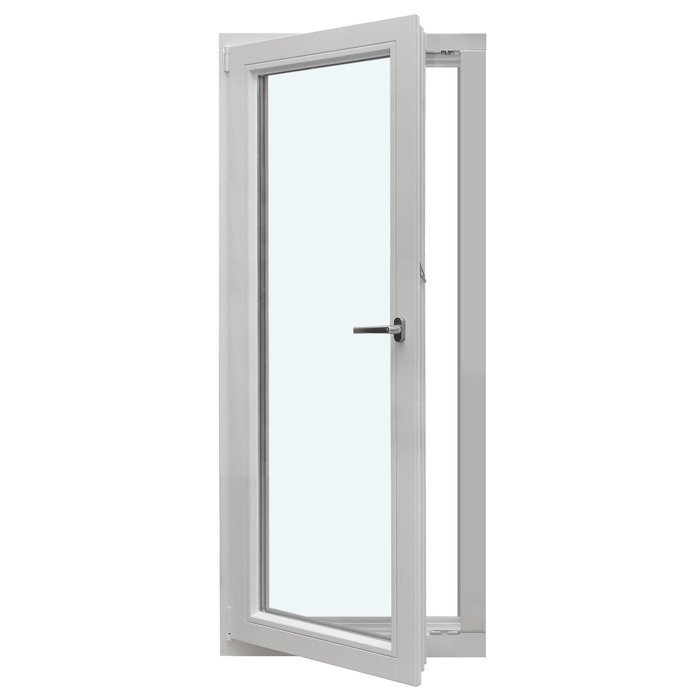
The way a window opens affects daily life. For each room, consider who will operate it, how frequently, nearby furniture and whether it needs to be cleaned from indoors. A single inward-opening window could work where there is unobstructed room for its swing. An outward-opening model creates a different set of constraints along the wall, path or patio. Rather than asking which type is best in general, identify the movement that will remain simple and free of conflict at that opening. Decide as well whether opening is necessary or whether the main purposes are daylight and outlook. If the answer is unclear, sketch the sash arc to scale on a basic floor plan, adding furniture, curtains, heaters and main walking routes. Confirm that intended users can comfortably reach the handle and locking points. This quick test can uncover practical clashes before an attractive specification becomes a daily nuisance.
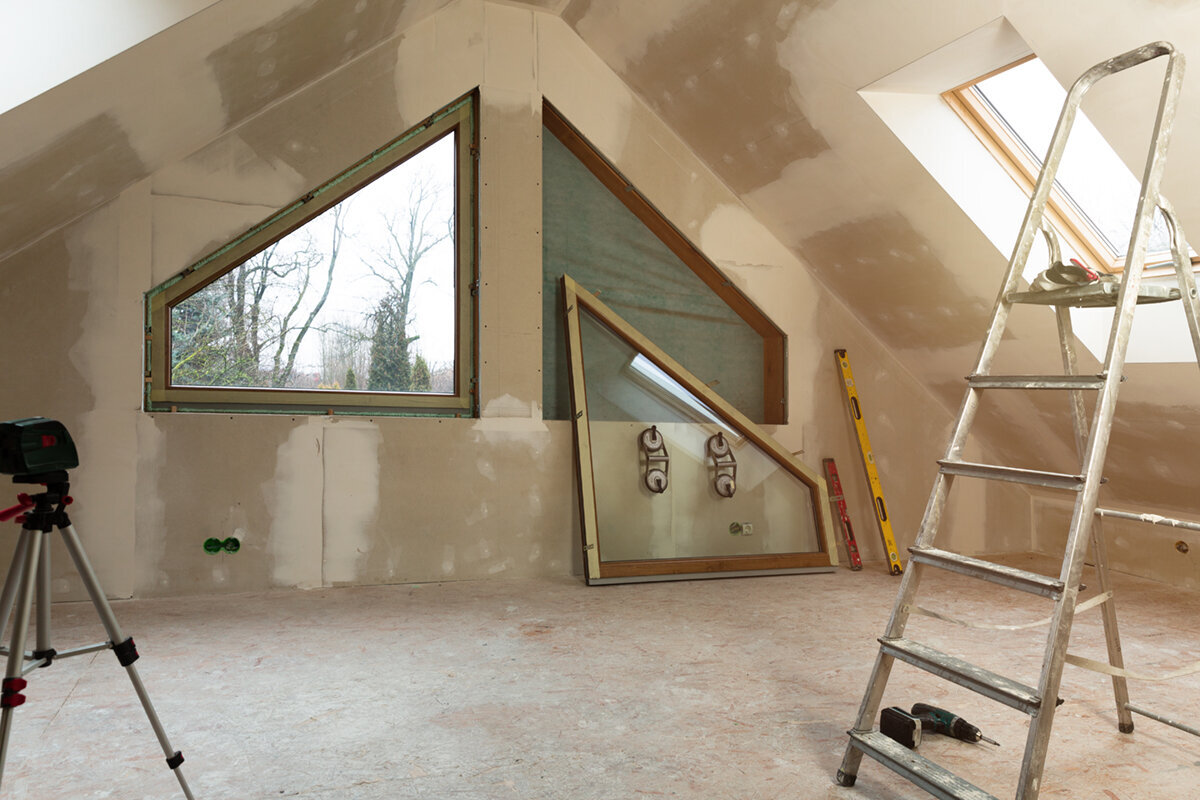
Unusual or expansive openings should not be shaped merely for their appearance in listing photographs. A triangular and sloping fixed-glazed window is fixed glazing formed to an angled or triangular outline. Before choosing one, assess the precise structure, its junctions and the function the window serves inside. Such geometry may echo the architecture of a gable, yet compete with an already complex façade elsewhere. Require the quotation to show each component's dimensions, visible elevations, divisions and opening directions. Clear itemisation prevents a bundled proposal from being interpreted differently later.
Treat doors as connections between spaces, not façade decoration
Patio and balcony doors shape both an inspection and ordinary movement through the home. Review the present route: note the panel swing, furniture positions, access to the outdoor area and the condition of the floor junction. For example, a single inward-opening patio door has one panel that swings into the room. Its suitability will depend on clear floor area and the circulation path you want to preserve. Buyers should be able to see it operate without furniture being shifted; even an inviting garden exit feels awkward when the panel collides with a chair or sofa.
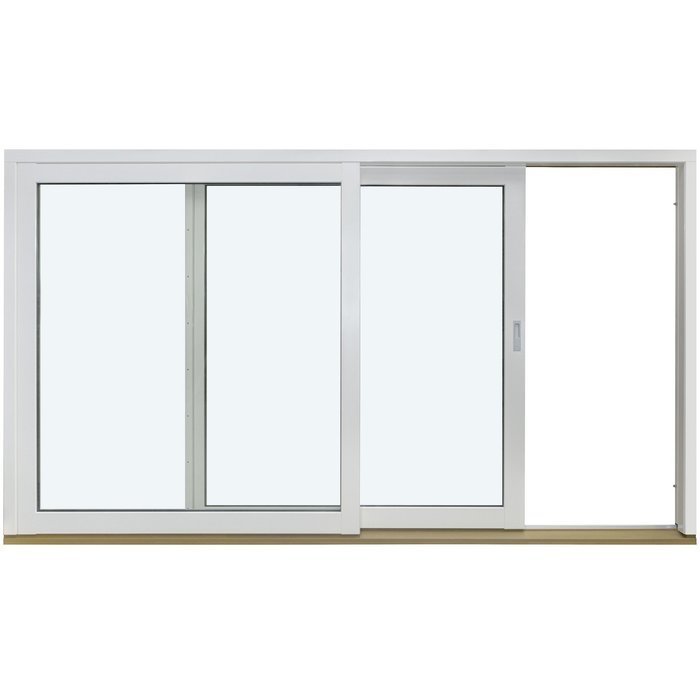
Wider openings need equally careful consideration. Patio Life lift-and-slide doors provide one lift-and-slide configuration, but that does not make them the default answer for every broad opening. Compare the usable passage, method of operation, visible frame widths and spatial demands with double doors and other arrangements. Review the adjoining floor and outdoor finish too, because a new frame can make untidy junctions more conspicuous. Confirm with the qualified professional which site dimensions will become final and how the opening and surrounding finishes will be secured during removal. Reliable preparation contributes more to an orderly project than choosing the most dramatic door.
Check before replacement 4
Keep the character without creating a clash of styles
Replacement deserves extra care in homes with characteristic window formats, divisions or traditional features. Record the visible widths, sash layout, glazing-bar pattern, colour and street-facing effect before making a selection. Glazing bars do not necessarily divide the glass itself, so use accurate language when discussing them and request a clear representation of the finished appearance. An outward-opening historic-style “Kombi” casement window states both a traditional design treatment and an outward opening action, without establishing that it belongs on every older dwelling. Compare proposed and retained windows across the main façade lines instead of judging an isolated feature. Request matched views of the current and intended appearance rather than relying on a small sample alone. Examine them from the distance used for street viewing and campaign photography. Look for balanced sash proportions, a coherent bar layout and repeated alignments. A detail that seems restrained on one sample may dominate when multiplied across the elevation.
Changing a lone element can create a visual break when its proportions contrast strongly with neighbouring windows. Complete replacement is not necessarily the solution. A coordinated group may be renewed while less prominent, serviceable items remain. For a distinctive building or unconventional façade, discuss appearance, junctions and the practicality of the project early with the relevant qualified professionals. Broad assurances in sales literature are not enough. Buyers are more likely to trust an outcome that looks intentional, with related colours and divisions, legible transitions and decorative details that support the architecture rather than drawing attention solely to what was replaced.
Request quotes that can genuinely be compared
Window counts alone are not a sound basis for quotations. Give each supplier the same schedule, including photographs, approximate location, opening direction, required elevations and the work to be priced. Establish whether final measurements will be taken before manufacture, what removal and disposal cover, and where responsibility sits for internal, external and junction work. For an single outward-opening patio door include the threshold, hinge or opening side, adjacent finish and clear area outside, rather than supplying only the product description. Better site information produces more comparable proposals and reduces later variations.
Price is only one comparison point. Make sure the proposal identifies every opening, specifies the correct operating direction and defines all visible design features. Request a list of exclusions. Are junction repairs omitted, who will complete plastering, painting or flooring, and what records are supplied after completion? A low initial amount may leave essential associated tasks unpriced. The property needs a finished result before sale. A properly defined scope also lets you tell buyers exactly what was completed without attributing performance or features that the documentation does not establish.
Check before replacement 5
When repair or an as-is sale may suit better
A professionally managed sale does not always require replacement. Where the component remains sound and the defect is localised, a competent repair may prepare it more effectively. Renewal may also initiate plaster, lining or floor repairs that cannot be coordinated properly before the campaign. Within a uniform group of older windows, replacing only one can look less resolved than maintaining the set and explaining its condition openly. Obtain a qualified assessment before assuming that a stiff handle proves the need to renew every element.
If the existing elements will remain, take a consistent approach to presentation. Secure minor loose items, deal with neglected finishes, and clean both frames and glass without using cosmetic treatments to hide defects. Assemble a factual history showing when repairs occurred, which components operate correctly and what buyers may wish to investigate later. Avoid forecasts about cost, value or technical performance unless dependable records support them. Older building components can be evaluated; vague or contradictory information is harder for buyers to accept. A candid, orderly account is more reassuring than unfinished renewal undertaken shortly before settlement.
Final checks before photography, listing and handover
Finishing installation is not the final presentation task. Agree with the trades when protective film and debris can be removed, test each sash and door, and photograph anything still outstanding. Review the work in daylight from different positions. Have incomplete edges, marks, unsuitable covers and cleaning attended to before the photographer arrives. At inspections, keep routes clear and demonstrate the most relevant functions instead of opening every element simultaneously. Returning the property to a calm, tidy state shows that the project was followed through carefully.
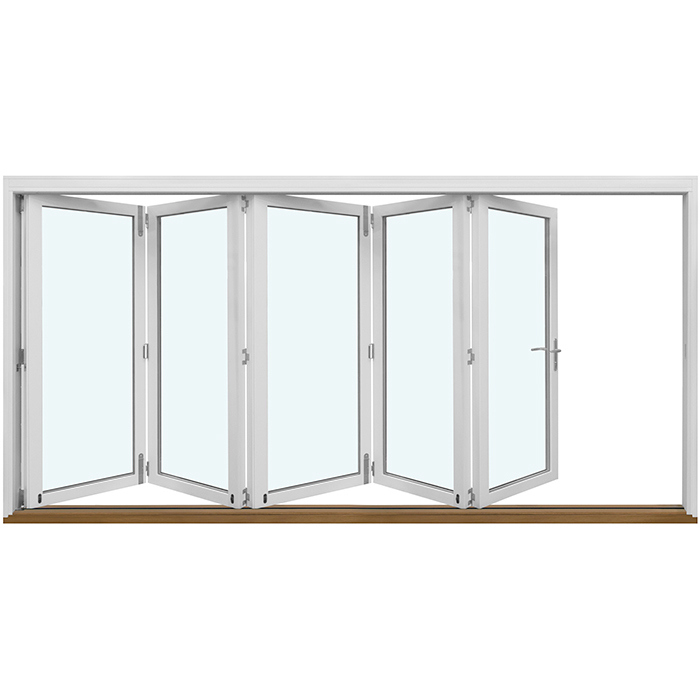
Create a handover pack containing the order confirmation, invoices, warranty records, operating instructions and any available care information. Bloomcabin specifies a 5-year warranty for windows and doors; consult the terms supplied with your order. List keys and accessories separately so their whereabouts are clear at settlement. For outward-opening folding doors, document how the fitted arrangement actually operates instead of relying on the product name shown on an invoice. Match every record to the room or position number in your opening schedule. Note the accessories being transferred and any work finished after the original inspection. This removes the need for a buyer to decipher several invoice lines to identify one component. Demonstrate the operation of important doors during handover as well as providing verbal guidance. Good organisation does not promise performance, but it simplifies questions and presents the renewal as properly concluded.
Frequently asked questions
Will new windows and doors definitely raise the sale price?
No. Better-looking, properly functioning elements may strengthen the property's presentation, but they cannot assure a higher price or shorter campaign. Results also depend on the location, quality of work, extent of renewal, wider property condition and buyer expectations. Consider replacement within the overall sales plan rather than assuming it will repay its cost.
Should I replace only the front door or every window?
Prioritise components with obvious damage, unreliable operation or a major role in the arrival experience. Next, check whether renewing only those items will still look intentional. Replacing the front door may be worthwhile when it improves the entrance, provided its colour, scale and junctions remain compatible with the façade.
What lead time should I set before the sale?
Build one schedule covering selection, measurement, ordering, installation, related repairs and final checks. Allow 4 to 6 weeks for Bloomcabin delivery, subject to order confirmation, and arrange photographs or inspections only after visible work is finished.
What should buyers be told about repaired or older elements?
Compile accurate records of the present condition and any work already carried out. Avoid unsupported claims about performance figures, expected remaining life or later expenses. Seek advice from the appropriate qualified professionals before making specific representations in campaign material or the sale contract.
Which documents should I keep after replacement?
Retain the order confirmation, invoice, warranty records, operating and care guidance, and documentation for fitted accessories. Add an itemised register of components and keys so prospective purchasers and future owners can connect each installed item with the correct order paperwork.
Next steps
Age by itself is not a reason to renew windows and doors before listing a property. Base the choice on a careful condition survey, the buyers you intend to reach and a schedule that includes junction work and final repairs. Give priority to prominent elements whose operation matters, rather than rushing through an uneven upgrade. When replacement is justified, specification, measurement, fitting and records should be managed as one job. When repair or retention is preferable, explain the existing condition clearly and avoid claims you cannot substantiate. This provides an orderly foundation for campaign photography, buyer inspections and the eventual handover.
