
How to Ventilate a Garden Shed While Keeping Insects Out
Garden shed ventilation
Keeping a garden shed ventilated while discouraging insects starts with its openings. Air needs a clear way through, but every vent, door gap and screen edge can become a route for pests if it is not planned. When comparing sheds, check which openings are actually specified, how they can be screened and whether you can maintain them once the shed is in use. The aim is a workable balance, not an airtight enclosure or a permanently open door.

Include ventilation in the shed comparison
Treat ventilation as a buying criterion, not a hole to add after assembly. Think about how the shed will be used, how often the main door will open and whether people will spend longer periods inside. A shed used for quick tool storage has different opening habits from one used for longer tasks. Note what will be stored, whether items may sit close to the walls and which insects are a nuisance at the site. This does not prescribe a vent count; it gives you a basis for comparing layouts and asking the supplier useful questions.
Check what product pages and assembly information actually show: intended vents, opening windows or other ventilation points, where they sit, and whether screens are included or compatible. A photo may show a gap or panel without explaining its purpose. When you review the Verdana 1 garden house, look for written details rather than assuming the name or image confirms a vent. If the opening plan or screening information is missing, ask before ordering. Record the answer beside each candidate so you can compare the air route, screen fit and maintenance access on the same basis.
Plan a clear route for air
Think in terms of an inlet and an outlet. A single opening may allow some air exchange as conditions change, but it does not provide a predictable route through the whole shed. With passive ventilation, wind and temperature can affect direction and strength; screens, partly closed vents and stored gear can change it again. Two openings positioned close together may let air pass between them without reaching the area where you store equipment or work. When comparing designs, ask which openings are meant to work together and whether that route remains clear with the door in its usual position.
Sketch the intended position before ordering. Mark nearby fences, walls, dense planting, roof overhangs, shelving and large stored items that could sit beside an opening. Use the manufacturer’s placement and clearance instructions rather than inventing a required gap. A candidate such as the Verdana 2 garden house should be assessed from its product information or plan, not from assumptions about where its openings sit. Check that you can reach the outside of each vent to inspect and clean its screen. If a sheltered corner or boundary blocks the likely path, ask whether another position is more suitable.
Check how vents work with insect screens
Ask whether a ventilation point is a fixed grille, an adjustable louvre, an opening window or another component; the terms are not interchangeable. A fixed vent may keep an air path available, while an adjustable one can be closed, so its contribution depends on how it is used. Do not infer which kind a shed has from a product photograph or label. Look for a plan that identifies the opening, how it operates and whether it remains accessible after shelving or other fittings are installed. If the shed is usually kept shut, check how its ventilation is intended to work in that position.
Screen fit is another purchase question. Mesh needs to cover the opening and sit securely around its full edge, otherwise insects may pass beside it. Ask whether a screen is supplied, available separately or needs a compatible frame, and whether fitting it affects the way a vent opens. On a listing such as the Durano garden house, use the written description or ask the seller; the model name alone does not establish that it has a particular vent or screen. Check whether airflow information assumes a bare vent or a screen in place, and keep the answer with your order notes.
Account for doors and opening windows
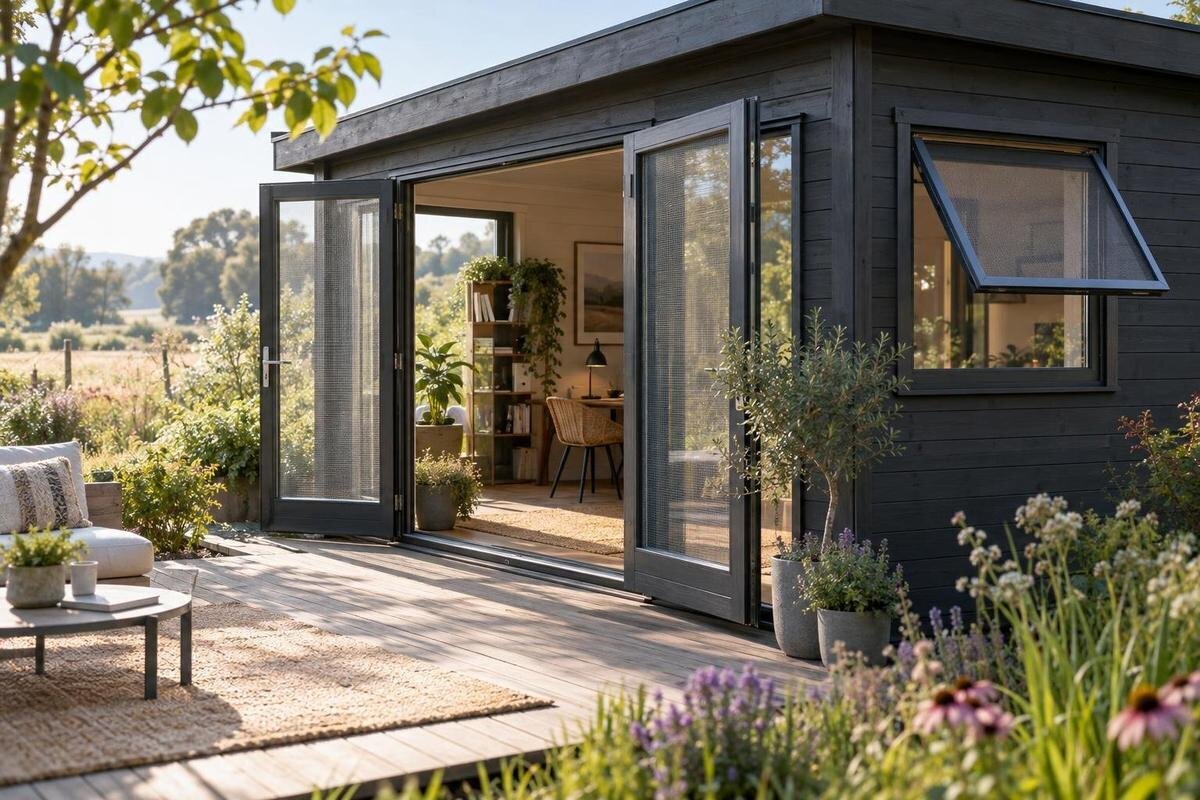
Treat the doorway as both an access point and a possible air route. Whenever it is open, insects have a direct entry path, so relying on the main door for routine ventilation is a compromise. If you plan to ventilate through an open door, consider whether a compatible screen door or removable flyscreen can stay in place without obstructing normal use. Check the way the door moves, the threshold and the space needed to carry tools through; a screen that catches, drags or cannot close properly will soon be left unused. It also needs to be closed after entry to provide a barrier.
Windows and other openable panels deserve the same check: can you open them when needed, close them when appropriate and still keep the mesh intact? Confirm the screen’s attachment and the opening’s operating path before choosing a kit or arranging assembly. For a product page such as the Veltor 1 garden house, ask what openings are specified and whether a screened solution is supported; do not assume every door or window accepts a standard flyscreen. If the door is the only opening, ask how the intended ventilation is meant to work when it is closed.

Match the mesh to the insects and the vent
Choose insect mesh by the pests you want to exclude and the vent it must cover, rather than buying the finest weave available by default. A finer mesh may restrict more airflow, particularly when dusty, while a more open weave may not exclude the small insects that concern you. Ask the mesh supplier which type suits the relevant insects and opening, and check that the ventilation design can work with that screen in place. If your concern is not ordinary flies, a generic flyscreen label may not tell you enough. No screen should be treated as a guarantee against every insect.
Compatibility includes the frame and edges, not just the mesh. Look for a continuous fit with no unprotected corners, joins or loose sections; a well-chosen screen cannot help if insects bypass it around the perimeter. Ask how it attaches, whether it can be removed for cleaning and how damaged mesh can be replaced. When comparing the Orello 1 garden house, verify those details for its specified openings instead of ordering generic mesh on guesswork. If a screen needs a custom frame, confirm who supplies it and what measurements or drawings they require before you commit.
Distinguish vents from unintended gaps
Screening is only one layer of insect control. Look for unintended gaps at panel joins, around the door frame, under the threshold and at corners. A deliberate ventilation opening needs a screen; an accidental gap needs attention so it does not become a route around that screen. Do not seal every opening indiscriminately: a point described in the manual as a vent should remain available for ventilation unless the supplier has approved another arrangement. If you cannot tell whether a gap is designed, check the assembly instructions or ask before covering it.
Use a closure or screening method suited to the location, and make sure it stays in place during ordinary door use and cleaning. Avoid drilling or cutting panels just to make a screen fit; that may alter a component whose function you have not confirmed. If an entry point appears to require a new opening or a structural change, get the manufacturer’s guidance or a qualified installer’s advice rather than improvising. For a candidate such as the Modano 1 garden house, confirm the assembly details and permitted screen attachment before ordering accessories.
Keep ventilation openings accessible
Airflow can be lost after assembly when stored items sit against a vent or a bench blocks a route across the shed. Keep the space around intended openings clear, and organise storage so the air path is not hidden behind stacked boxes, tools or garden equipment. Outside, check that vegetation, stacked materials or a nearby boundary do not cover a vent. Wind exposure and shelter can also affect how air moves, so a sheltered side may behave differently from an exposed one. Follow the product’s placement instructions rather than using an invented clearance figure.
Think about maintenance access as well as airflow when selecting the site. You need to reach each screen to remove debris, check the frame and notice damage without dismantling stored contents or shifting heavy items. The side facing a fence may be difficult to inspect even if it contains an opening. Before placing an option such as the M Timber Garden Shed, compare the proposed position with its published layout and keep the intended vents exposed. Check this before settling on a position, as moving an assembled and stocked shed can be inconvenient.
Maintain the screens and ventilation path
Mesh can restrict airflow when it is clogged, loose or damaged. Give screens a visual check after assembly, after any knock or repair, and whenever insect entry or a change in air movement suggests a problem. Dust, leaves, webs and other debris can build up over time; remove them using the screen maker’s care instructions so you do not stretch or tear the mesh. Do not assume a screen is working merely because it is present: look along its edges, corners and attachment points as well as across the mesh itself.
Check that removable screens are refitted evenly and that an adjustable vent or door still works after cleaning. If insects appear, trace likely routes around the door, screen edges and any unscreened opening before choosing a finer mesh; a bypass gap will not be fixed by changing the weave. If mesh is torn, ask about a compatible repair or replacement rather than leaving the opening exposed. For the Timber Tool Shed S, as for any shed, check what maintenance information is available instead of assuming replacement screens or parts are included.
Confirm the details before ordering
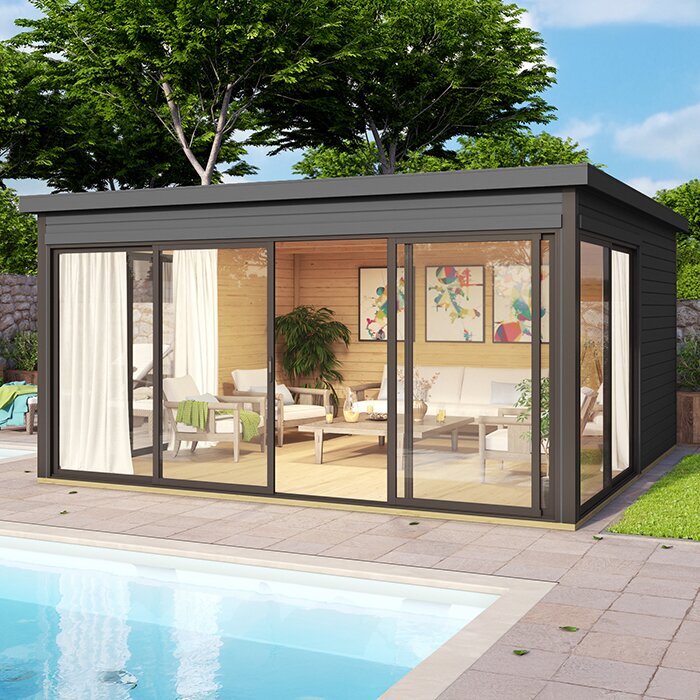
Before placing an order, make a short list of what is confirmed and what is not: where ventilation openings sit, how they open, whether screens are included, and which screening is compatible. Check the written inclusions against accessories you expect to purchase separately, including frames and fixings if relevant. If the product page does not show a vent layout or answer a screen question, ask for the relevant drawing or written clarification. Do not treat a feature in an illustrative image as a promise about the supplied kit, and keep the answer with your order documents.
Assembly order matters too. Read the instructions to see when openings, trims and interior fittings become difficult to reach, and fit only components described as compatible. If a screen requires cutting, drilling or an altered opening, pause and ask the supplier or a qualified installer; do not guess at the role of a panel or make a structural change based on a picture. Consider how the finished shed will sit on the chosen site and how you will keep the vents reachable. Sorting this out before ordering is easier than discovering that a planned insect barrier cannot be mounted as expected.
Check the finished setup in use
After setup, check the arrangement in ordinary use rather than judging it only from a product page. With doors in their usual position, confirm each intended vent is open as planned when you are relying on it for air, its mesh sits firmly at the edges and no shelf, storage box or plant blocks it. Open and close adjustable vents and the door to make sure screens do not snag or shift. Notice whether air reaches the storage or work area, but remember that a brief impression is not a measured ventilation assessment. If movement seems inadequate or the path is unclear, revisit the layout and ask the supplier or a ventilation professional.
Use a simple comparison rule when choosing between garden sheds: favour the option whose ventilation openings are clearly identified, whose screen fit is explained and whose vents can be maintained in the planned position. If these details are unclear, an appealing product image does not resolve the practical question. Ask for answers before purchase; if compatibility cannot be confirmed, keep comparing rather than assume you can modify the structure later. Once installed, preserve the planned air route and inspect the barrier instead of leaving the door open as a permanent substitute.
Frequently asked questions
Should I leave the garden shed door open for ventilation?
Not as your normal ventilation plan if insect control matters. An open door gives insects a direct route inside, even if it lets air move through the shed. Use intended screened openings where possible. If you need to ventilate through the doorway, consider a compatible screen that closes properly and suits the way you use the shed.
Will insect mesh reduce airflow?
It can. A finer weave may restrict more air, particularly when it is clogged with dust or debris. Choose mesh suited to the insects you want to exclude and the vent it must cover, and keep it clean. Check that the ventilation arrangement is intended to work with the mesh in place.
Can I seal every gap to keep insects out?
No. Close unintended gaps, but preserve openings identified as vents so the planned air path remains available. If you cannot tell whether an opening is deliberate, check the assembly instructions or ask the supplier before covering it. Do not cut or alter structural parts just to fit a screen without qualified guidance.
How many vents does a garden shed need?
There is no single vent count that suits every shed. Air movement depends on the position and operation of the openings, the shed layout and what might block the path. Look for a clearly explained route for air and follow the product guidance rather than judging ventilation by the number of grilles alone.
When should I inspect the insect screens?
Check them after assembly, after cleaning or a knock, and whenever insects get inside or airflow seems to change. Look across the mesh and around its edges, corners and attachments. Clean and maintain it according to the screen maker’s instructions, and arrange a compatible repair or replacement if it is damaged.
Garden shed ventilation and insect screening work best as one plan: choose a layout with identified openings, cover intended vents securely, keep the air path clear and maintain the screens. If a product leaves a key detail unresolved, ask before ordering rather than assuming you can alter the structure later. A shed that is easy to ventilate and inspect is easier to keep usable without relying on an open door.
