
What Does It Cost to Heat a Wood-Fired Hot Tub in Australia?
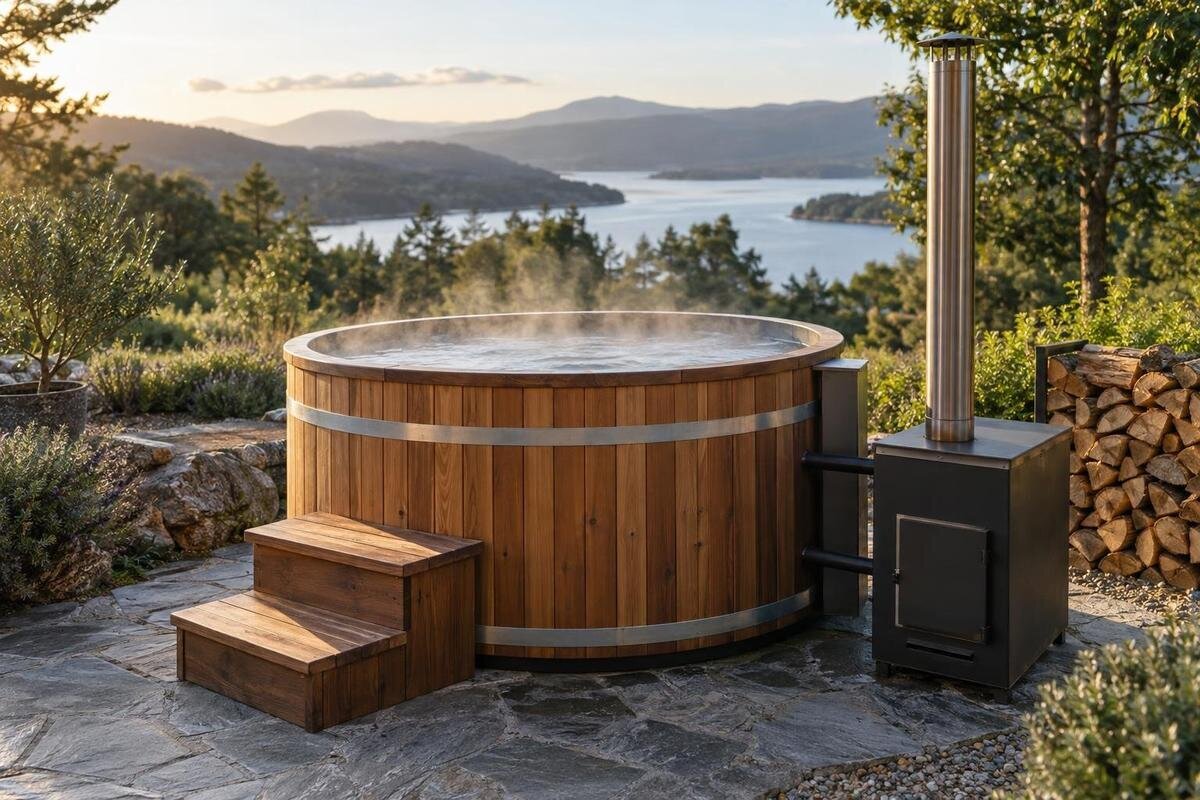
Wood-fired hot tub costs
Firewood spending for a wood-fired hot tub is best estimated per heating event, not treated as a fixed Australian rate. You need the quantity used for a defined event and a dated local supplier price in the same unit, with delivery handled consistently. The hypothetical worked example below shows how to calculate fuel spending before building a budget for cold starts, reheats and regular use.
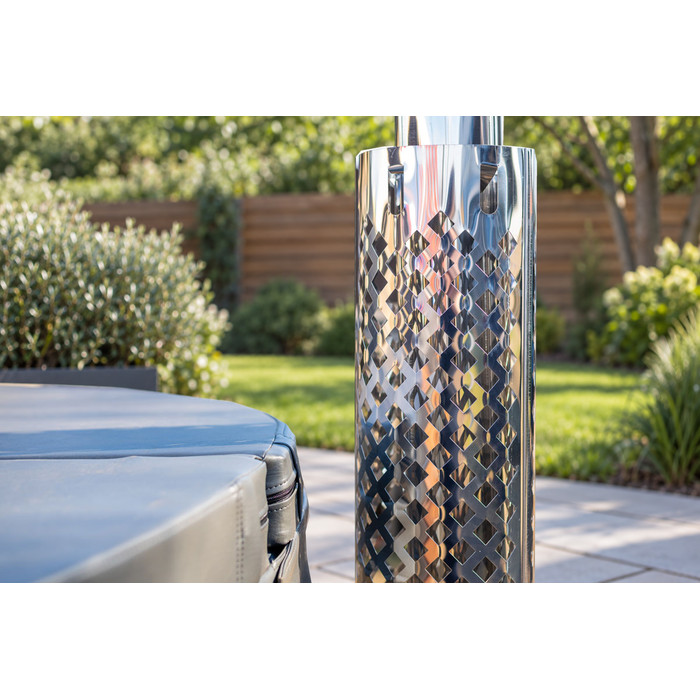
Separate firewood from the rest of the hot tub budget
A useful budget starts by defining what heating cost means. Here, it is the recurring firewood consumed for one heating event: the quantity used multiplied by the price paid for that same quantity. It excludes the tub purchase, delivery and placement, site work, and any heater or accessory purchase. It also does not automatically cover water charges, water-care products, cleaning, servicing or electricity used by equipment if the chosen setup has any. Keep those lines separate so a firewood estimate is not mistaken for the full cost of owning or operating a hot tub. Distinguish wood burned in a period from wood purchased in that period; leftover stock remains to be used later.
Before applying this calculation to a product, confirm its actual heating arrangement and what is included. When considering Bloomcabin hot tub Cove 2, ask whether a wood-fired heater is included, offered separately or applicable to that model. The name alone does not establish this. If the tub uses another heating arrangement, a firewood estimate is not the relevant cost line. In a comparison worksheet, leave an unknown fuel cost marked as unresolved rather than entering zero. That keeps missing information visible and prevents a model with an incomplete estimate from appearing cheaper than one with a fully itemised budget.
Compare firewood quotes on a like-for-like basis
Record the supplier, delivery area, quote date, sale unit and quantity. A suburb or postcode is more useful than simply labelling a price Australian. Note whether delivery is included, whether collection is required, and whether there is a minimum order or compulsory fee. Record the tax treatment if the supplier specifies it. A price for a small bag cannot be compared directly with the total for a bulk delivery just by looking at the headline amounts. Keep the quote or invoice details so you can refresh the estimate later; supplier, location and sale unit matter when checking whether a price still applies.
Convert the quote into the unit used for your fuel estimate, where the supplier provides enough information. For a weight-based estimate, divide the fuel charge plus its allocated delivery cost by the kilograms delivered to find the effective price per kilogram. For bags, use the stated weight rather than assuming every bag contains the same amount. For loose or stacked volume, retain that unit unless the supplier provides a reliable weight conversion. If Bloomcabin Hot Tub Haven 6 is on your shortlist, keep the fuel quote as a separate budget entry beside the purchase price. Record both the total order cost and the calculated unit price: one shows the cash needed to buy the wood, while the other is used to calculate spending per session.
Estimate the firewood used in one heating session
The second input is the quantity of firewood used for one event. There is no universal amount that can be assigned to every hot tub: the estimate depends on the specific heating setup and how the event is defined. If you are considering Bloomcabin Hot Tub Fjord 8, ask the seller about its heating arrangement and whether a relevant fuel-use figure is available for that exact setup. Request a measurable quantity, not just a description such as economical or efficient. Check whether the figure covers heating from cold, reheating or maintaining warmth during use. A quantity without a defined event cannot support a meaningful cost-per-session comparison.
Owners can build a more relevant estimate from their own records. For each event, note the amount of fuel used and the condition of the water at the beginning and end. Record kilograms if the fuel is bought by mass; if it is bought by a defined bag or volume, use that unit consistently and retain the supplier's stated quantity. Include firewood burned to maintain warmth if the budget is meant to cover the whole outing. Several comparable events can help show whether a planning figure is representative. Keep any unmeasured amount clearly labelled as an assumption rather than presenting it as a recorded result.
Worked example: firewood cost per session
Use the supplier's actual quote and the fuel quantity for a defined event. Let F be the firewood charge in Australian dollars, D any delivery fee not already included, M the delivered quantity in kilograms, and U the kilograms used per session. The effective price per kilogram is (F + D) ÷ M, and the session cost is [(F + D) ÷ M] × U. For a purely hypothetical example, assume a 100 kg order costs A$100 plus A$20 delivery. The delivered unit price is then A$120 ÷ 100 kg = A$1.20 per kg. These rounded inputs demonstrate the arithmetic; they are not a supplier quote, a current Australian price or a suggested order size.
Now assume, solely for this example, that one cold-start session consumes 10 kg, including all wood burned during that session. Its fuel cost would be 10 kg × A$1.20 = A$12. Four such sessions would consume 40 kg and represent A$48 of the order's cost. The upfront payment would still be A$120, with the remaining stock available for later sessions. Neither the assumed quantity nor the resulting cost describes Bloomcabin hot tub Aurora 10 or any other model. Replace both inputs with figures relevant to your purchase before relying on the result. For bagged wood, use the stated bag weight to calculate the unit price, or calculate directly in bags if both the purchase quantity and measured consumption use that same unit. Do not mix weight and volume without a supported conversion.
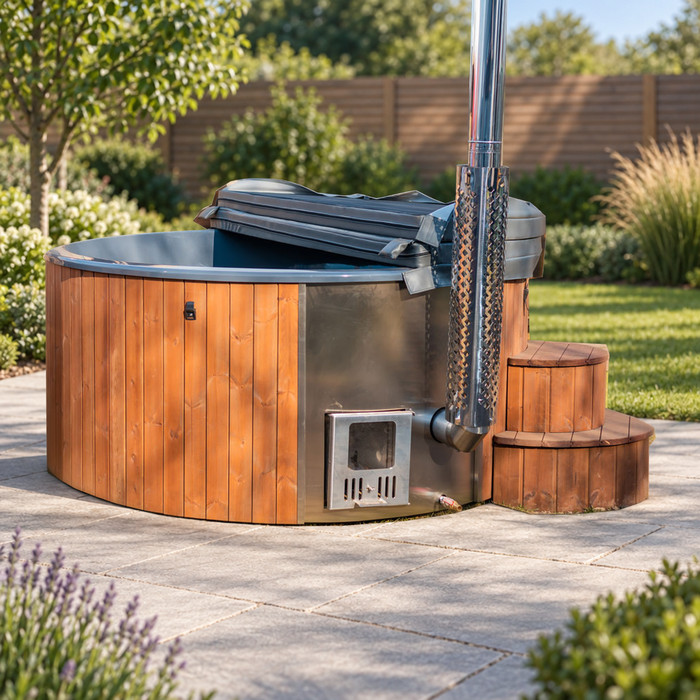
Budget cold starts and reheating as separate events
Keep heating from cold and reheating as distinct budget events. A cold-start estimate needs a stated starting point: water beginning at a low or ambient condition is not the same as water that has retained warmth. A reheat should have its own starting condition and intended endpoint, rather than being treated as a smaller cold start by default. You do not need a technical temperature model to make the distinction; the practical requirement is to avoid mixing unlike events in one average. Write down what each figure includes so that a supplier or manufacturer estimate can be compared on the same basis.
Decide whether the cost ends when the water first reaches your chosen temperature or includes firewood burned to maintain warmth while people use the tub. If you have no record for that additional fuel, do not add an invented amount. Record the full session consistently or keep initial heating and continued use as separate lines. In a budget for a model on your shortlist, such as the Cove 2 product listing, label each fuel estimate with its scope. Count each portion of fuel once: if a whole-session figure already includes maintaining warmth, adding another allowance for the same period would overstate the cost. This definition should stay consistent when you compare quotes or update your records.
Why firewood use can vary between sessions
Several conditions can change the quantity needed between otherwise similar events. Starting water temperature, the amount of water and the desired final condition all affect whether two session estimates are comparable. Weather and exposure can affect heat lost during an event, while the particular heater and its operating condition also matter. These are reasons to specify the conditions attached to a fuel-use figure, not a basis for adding an unsupported percentage to it. A number recorded for one set of conditions should not automatically be treated as a reliable rate for every season, tub or pattern of use.
Record the main conditions beside each quantity rather than trying to calculate corrections from guesswork. Note whether the water had retained warmth, its starting temperature if known, the intended endpoint and whether the estimate includes keeping it warm during use. Keep the record simple enough to repeat. When assessing any fuel-use information available for the Haven 6 product page, look for those same details so you can judge whether it matches your intended use. If two records describe different conditions, retain them separately rather than averaging them immediately. A note explaining why a session used more or less fuel is more useful for budgeting than an unexplained single average.
Turn session costs into a monthly fuel budget
Once you have a cost per event, multiply it by the number of those events planned for the month. Keep cold starts and reheats separate: if P is the price per unit, Uc and Ur are the quantities used for each event type, and Nc and Nr are the planned counts, the monthly fuel estimate is P × Uc × Nc plus P × Ur × Nr. If you use a different unit for a quote, use matching quantities throughout. This calculation lets you change the planned frequency without pretending that every visit consumes the same amount of firewood.
Use your intended schedule rather than a national or household average. Add the months you expect to use the tub for an annual estimate; do not assume every month will have the same number of events if your plans vary. For example, distinguish a month of occasional weekend use from one with more frequent sessions, while keeping the fuel quantity for each event type consistent. If the Fjord 8 listing is part of your purchase comparison, use the schedule you actually expect to follow rather than changing it to make a budget fit. Also distinguish fuel consumed from cash paid for stock: record bulk purchases in the months you expect to pay for them, and fuel consumption in the months you expect to use it.
Include delivery and local supply in the estimate
Delivery needs to be included once, on a consistent basis. If a quote already includes delivery to your address, do not add another delivery allowance when calculating the unit price. If delivery is charged separately, spread that charge across the quantity covered by the order rather than attaching the whole fee to one heating session. Where a delivery contains fuel for several purposes, make the allocation clear so the hot tub budget does not absorb unrelated spending. For collection, include extra transport costs only if your aim is to estimate the full cash cost, and state that choice in your worksheet. Apply the same approach to every quote you compare.
Availability matters as well as the quoted rate. Check whether a supplier serves your area, sells a repeatable quantity and can supply the amount you plan to buy. Ask about minimum orders and delivery charges before relying on a headline price. If the Aurora 10 product page is on your shortlist and wood is confirmed as the relevant fuel, include the practical purchase commitment in your budget: how much you must buy at once, what that order costs and how long your estimated usage would make it last. A low calculated session cost does not remove the need to fund the initial order. Keep that upfront amount visible alongside the monthly consumption estimate rather than treating them as interchangeable.
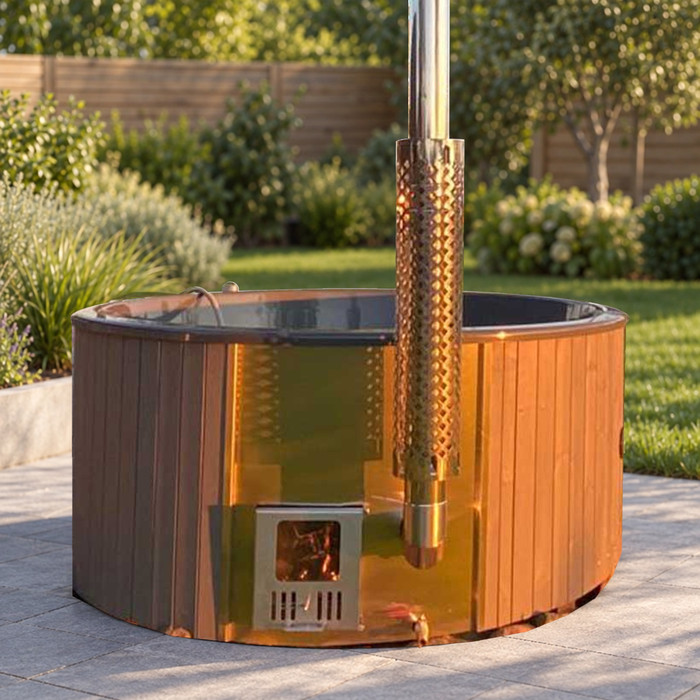
Verify the heating system and fuel information before buying
Ask for the details that make a fuel calculation possible: whether a wood-fired heater is included or separate, what fuel it requires, and whether any stated usage amount applies to that exact setup. Request the quantity in a unit that you can compare with a supplier quote. Check whether it describes a cold start, a reheat or maintaining warmth during use, and record any starting conditions attached to the figure. A broad description such as 'uses a small amount' cannot be multiplied by a local price. If a measurable figure is unavailable, keep your allowance clearly labelled as an assumption.
Do not read a model number as a capacity, seating count or burn-rate specification. Names such as Cove 2, Haven 6, Fjord 8 and Aurora 10 do not by themselves establish heater type, compatibility, dimensions or firewood consumption. Check the current product information and operating guidance for the exact item, and keep separately purchased equipment outside the recurring fuel line. When comparing any supplied consumption figures, place the quantity, unit and event definition together in your worksheet. That makes it easier to spot figures that cannot be compared directly. If a relevant fuel figure is unavailable, retain a clearly labelled planning allowance rather than presenting a model-specific cost as established.
Use a range until you have a reliable fuel figure
When reliable fuel-use information is unavailable, make the uncertainty visible. Set low, central and high quantities per event using relevant manufacturer guidance, comparable owner records or clearly labelled assumptions. Do not imply that an assumed figure has been measured. Pair each quantity with the same dated delivered price per unit so the range shows the effect of fuel use alone. If you also want to test a different supplier price, calculate that separately; changing both inputs at once makes it harder to see what caused the difference. Keep separate ranges for cold starts and reheats, since one combined range can conceal two different kinds of use. Update the assumptions as better information becomes available.
Multiply each case by the number of events you realistically expect in a month and compare the resulting fuel allowance with the rest of your purchase and household budget. If the spread between low and high is wide, avoid relying on the most favourable assumption until better information narrows it. Keep one-off setup costs and other running expenses on their own lines so the firewood estimate does not create a misleading total. Local supply, intended frequency and confidence in the fuel figure all matter when deciding whether the likely spending suits your plans.
Frequently asked questions
Is there a standard firewood cost per heating session in Australia?
No single figure suits every location, supplier or heating setup. Calculate the quantity used for a defined session at a dated local price in the same unit, including delivery where relevant. A price without its unit and location is difficult to compare.
Should I budget a cold start and a reheat at the same rate?
Not automatically. The starting condition of the water is different, so keep separate fuel quantities for each type of event. Define what each figure includes, including any firewood burned to maintain warmth during use.
How can I compare a bag price with a bulk delivery?
Compare them in a unit both suppliers specify, such as kilograms, and include delivery on the same basis. If one quote is by volume and another by weight, ask the supplier for a reliable conversion rather than estimating one from the other.
Can I use the same fuel-use figure for every hot tub?
No. Confirm the heating arrangement and seek a quantity relevant to the exact model and defined heating event. A model name alone does not establish fuel type, heater compatibility or firewood consumption.
Does the calculation provide a current Australian firewood price?
No. The worked example uses hypothetical Australian-dollar amounts to demonstrate the calculation, not a current supplier price or a model's fuel consumption. Replace those inputs with your own figures. Record the supplier, location, date, sale unit and delivery terms so the price can be checked and updated.
A useful firewood budget can be traced to two inputs: a defined quantity for each type of heating event and a local price in the matching unit. Record the quote, delivery terms and planned frequency, then update the estimate when you have better fuel-use information. Until then, treat any allowance as a planning estimate, not a product-specific promise.
