
What Makes a Well-Built Outdoor Hot Tub?
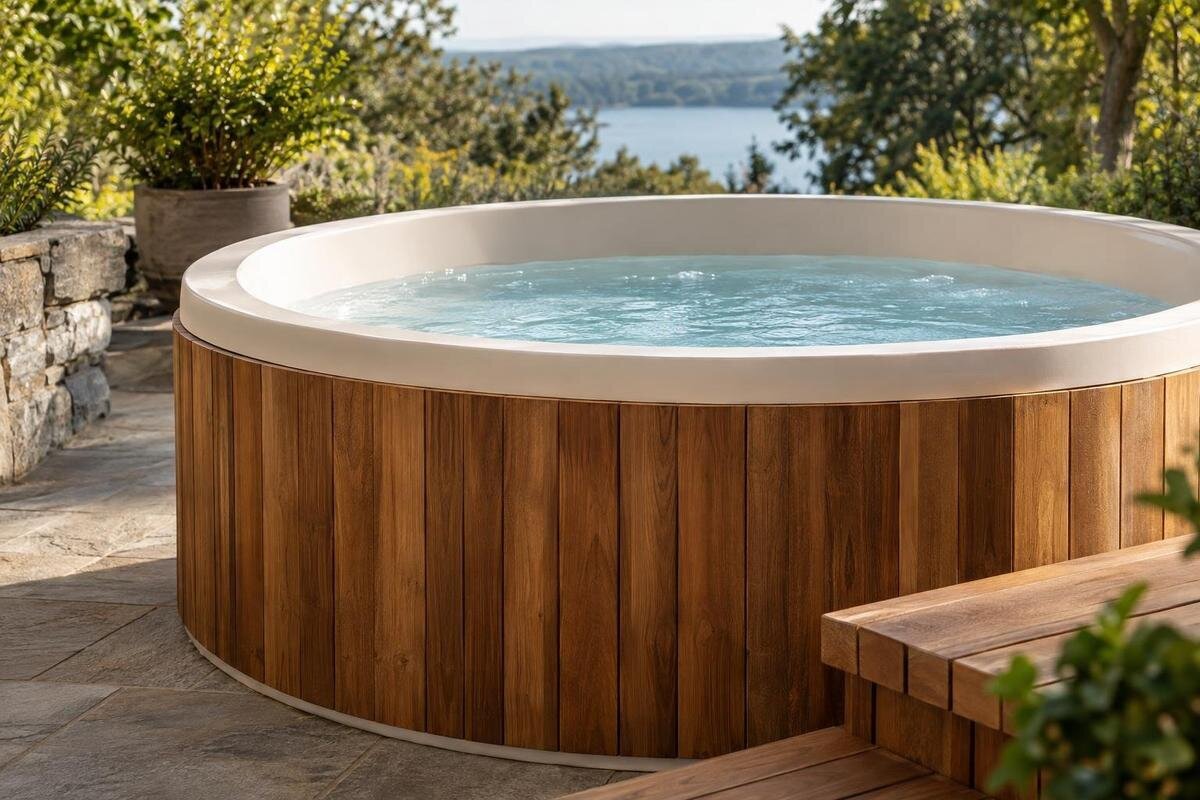
Outdoor hot tub buying guide
A well-built outdoor hot tub is not defined by a glossy shell, neat cladding or a persuasive label. The structure behind those surfaces matters: what the water-holding shell is made from, how it is reinforced and joined, what supports it, how insulation is fitted, and whether concealed parts can be reached later. Those details are not all visible in a product photo. This guide explains what you can inspect, what to request in writing, and how to compare answers without treating an unverified claim—or a model name—as proof.
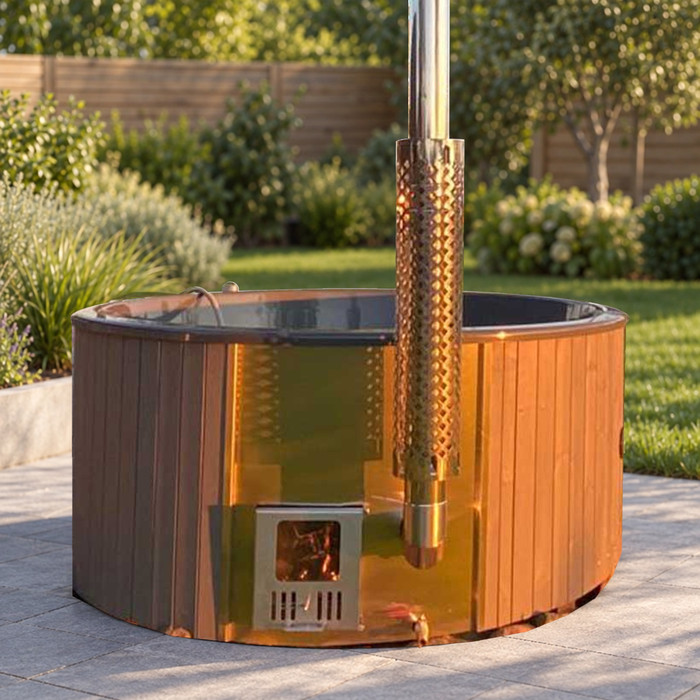
What build quality means across the whole hot tub
Construction quality is not one component but the way the water-holding shell, its reinforcement, support, enclosure and internal connections work as an assembly. The shell holds water; the supporting structure carries its load; an outer cabinet may enclose or protect what sits behind it. Insulation has a different role, while joints connect separate parts. A polished cabinet cannot tell you how the shell is reinforced, and a tidy shell surface does not show how its layers are bonded. Words such as timber, acrylic or composite can refer to different parts of a hot tub, so ask exactly which component each term describes.
Use the same categories for every model: shell material and layers, shell assembly, structural support, finish and joints, insulation, and access to concealed parts. Record each answer and where it came from rather than awarding a general quality score. Use the Cove 2 product listing to identify the model when asking the supplier for construction details; its name or photograph is not a specification. If a detail is not stated, mark it unknown. That is more useful than assuming that a model uses a particular material because of its appearance or a broad marketing description.
Identify the shell material and its layers
The shell material is a useful starting point because it is the water-holding part, but its label does not describe the full build. Ask what the water-contact surface is made from, what substrate or backing sits behind it, whether reinforcement is present, and how the layers are bonded. A term such as acrylic may identify a surface layer rather than explain the complete shell assembly; composite is less precise unless the constituents are named. Ask the supplier to use component-level wording from the manufacturer’s documentation. You need to know which layer a material name describes and how that layer connects with the rest.
Keep the shell separate from the exterior surround. Panels that resemble timber or another material may be cladding rather than the part containing water, so their colour and texture say little about what is underneath. Request a cross-section, component schedule or written description that identifies the layers and structural parts. When comparing Haven 6 with another model, line up equivalent components: shell against shell, reinforcement against reinforcement and cabinet against cabinet. Record the material specified for each component rather than copying a single material label across the whole tub. Otherwise, similar words may describe different things.
Ask how the shell is formed and reinforced
Ask how the shell is formed and reinforced, not merely whether it is described as one-piece or seamless. A moulded shell, bonded layers and added reinforcement refer to different aspects of construction; one term does not show where joins are, what connects the layers or how reinforcement is distributed. Ask whether the shell is formed as a single water-holding piece or assembled from sections, where any joins sit, and what materials or bonding method link its layers. Fewer visible seams may give a simpler appearance, but they do not prove thickness, reinforcement or workmanship. The point is to understand the process used for that model, not to favour a particular method.
A manufacturer’s cross-section or assembly drawing is more useful than an illustration that does not identify the model. Ask whether the document shows the shell, backing, reinforcement and the location of any joins. If it is unavailable, request a written description that answers the same questions. For an enquiry about Fjord 8 construction, specify the product and variant, then ask the supplier to distinguish how the shell is formed from how it is reinforced. Keep the drawing or answer with your notes. If the response says only that the shell is robust, ask which construction detail supports that description.
What the visible finish can tell you
If you can inspect a showroom model or sample, examine more than the most polished area. Look at the rim, corners, accessible edges and joins between visible panels. Note whether surfaces and panel gaps appear consistent, and whether there are obvious chips, cracks, lifted edges, rough exposed material or loose-looking fittings. These observations are prompts for questions, not a complete assessment: a seam may be intentional, and a photograph may omit the reverse side or underside. View surfaces from different angles and check more than one side. A consistent finish is useful evidence of visible workmanship, not proof of hidden construction.
Separate cosmetic joints from joins that affect the shell or its water path. A line between cabinet panels is not automatically a shell seam, and a smooth rim cannot confirm how a fitting is sealed. Ask the seller to identify visible junctions and explain which are decorative, structural or water-sealing interfaces. If a join is hidden, ask for a close-up or section drawing rather than inferring its method from the finished surface. When viewing the Aurora 10 listing, note any junctions you want explained so your enquiry identifies the particular area. If inspection raises a concern, ask for a specific explanation rather than a broad assurance.
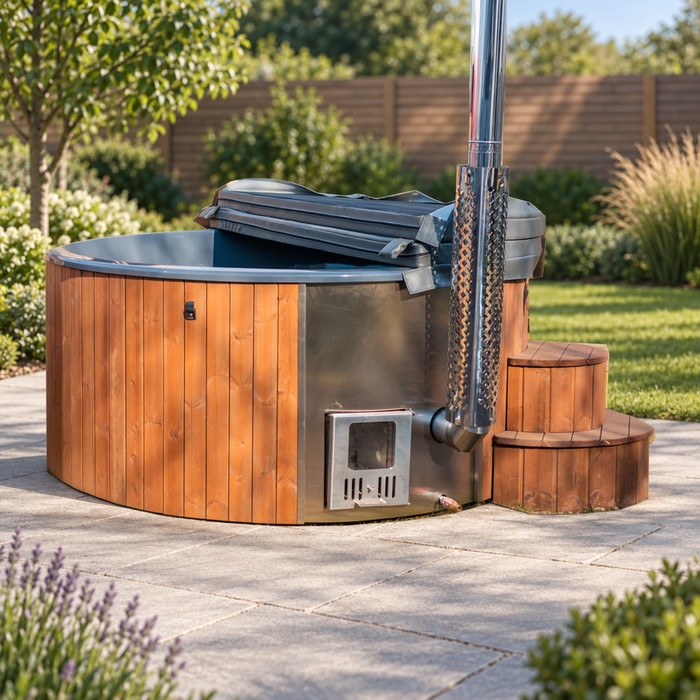
Find out what supports the shell
Support is easy to overlook because it sits beneath the shell or behind the cabinet. Ask what carries the shell, what materials make up the frame or base, and how those members connect to one another. If a design uses an integrated structure or a separate support frame, the supplier should be able to say which applies and describe where the shell bears on it. A cabinet can conceal the structure without forming it, so do not treat the outside panels as evidence of a load-bearing frame. Product photographs rarely reveal contact points or the internal layout. A labelled diagram can show whether the stated support extends beneath the relevant parts of the shell.
Ask which components are part of the tub’s structural assembly and which are separate. This is a construction question, not a reason to estimate strength or calculate a filled load from a picture. Where the support arrangement affects a planned site, have an appropriately qualified professional assess what is needed rather than relying on a general sales phrase. If you are considering Bloomcabin Cove 2, ask the supplier to identify its support components and explain how they connect, with reference to the current specifications. If the answer is only heavy-duty, ask what material, connection or drawing that claim refers to.
Check where insulation sits
Insulation is concealed in a finished tub, so ask how it is arranged rather than judging cabinet thickness or the feel of an exposed panel. A useful description names the material and explains where it is fitted: around the shell, beneath it, within an enclosure or in other specified areas. Ask what is not covered as well, particularly where space is left around pipes or internal components. A phrase such as fully insulated needs a defined boundary; otherwise, two sellers may mean different things. Request a model-specific diagram or written breakdown that locates the insulation, not just a general statement about a product range.
Keep construction details separate from performance promises. The presence of insulation does not by itself establish a measured heat-retention result; a comparative claim needs its own stated method and conditions. For a fair comparison, record the material, coverage, gaps and whether the arrangement is part of the shell assembly or outer enclosure. If Bloomcabin Haven 6 is on your shortlist, ask for those details together so you can distinguish the insulation material from the area it covers. Also ask how the insulation is arranged around service openings. A detailed answer helps you check whether parts that may need inspection remain accessible.
Distinguish structural joins from sealed interfaces
Several kinds of joint may be present, and they should not be conflated. Structural joints connect shell layers or frame members; panel joins close the outside enclosure; fittings and penetrations pass through the shell and need a sealed interface. Ask which joints form part of the water-holding assembly, what materials or components are used at each interface, and whether the manufacturer describes how they are joined. This is more precise than asking whether the tub is sealed. A surface seam may be decorative, while a small connection may be important to the water path. Do not assume every visible line indicates a problem—or that an invisible one is irrelevant.
Request a model-specific close-up, parts diagram or written assembly note for any major interface you cannot inspect. Ask whether a seal or connector can be replaced and how a technician reaches it, without treating that answer as a maintenance routine or a promise about future repairs. For Bloomcabin Fjord 8, organise your questions by connection type: shell-to-frame connections, shell openings and panel joins. Record the response for each separately, rather than accepting one description of sealing as an answer for every joint. Clear component descriptions are more useful than counting the seams visible in a photograph.
Include service access in the construction check
Panels that conceal the structure should be considered alongside how they can be removed and refitted. Ask which sides provide service access, what internal areas can be reached through each opening, and whether access requires disturbing a permanent finish or dismantling unrelated parts. A service diagram should identify the panels and the components behind them; a single access hatch in a picture does not show how much of the interior it reaches. If the seller cannot say what lies behind a panel, ask for the manufacturer’s layout or a written response. These details do not tell you how often a component will need attention, but they show whether the design has planned routes to concealed areas.
Access matters to construction because an enclosure can hide joints, fittings, insulation edges and support connections. Better access does not prove that a tub will be trouble-free, and a tight-looking finish does not prove that repairs will be difficult; the arrangement needs to be described. When assessing Bloomcabin Aurora 10, ask what can be reached without cutting, breaking or permanently altering a panel, and whether panels are intended to be removed and refitted. Record which openings serve which internal areas, rather than noting only that an access panel exists. If the arrangement is unclear, treat repair access as unresolved rather than assuming every side can be opened.
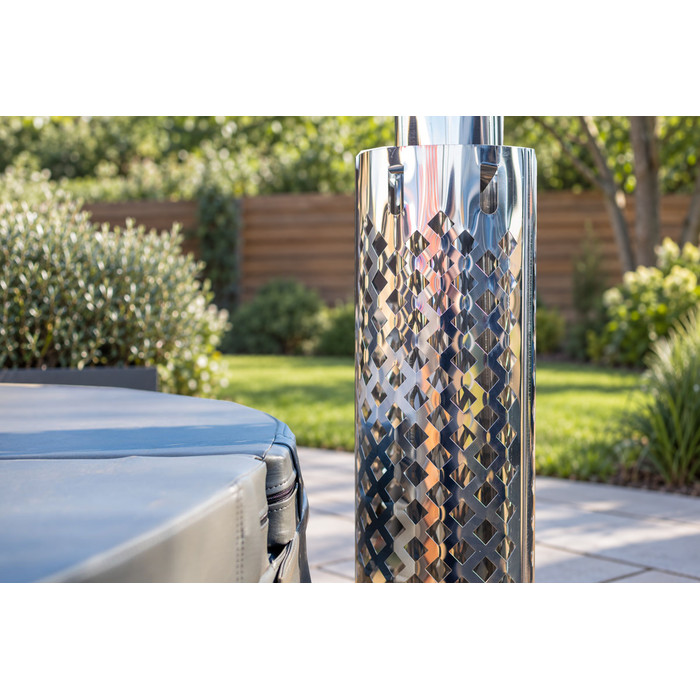
Ask for evidence behind construction claims
Rank evidence by how directly it describes the model’s build. A component schedule names materials; an assembly drawing locates layers, supports and joins; a model-specific written answer can clarify points those documents leave open. A photograph helps you assess visible finish, but usually cannot establish what sits behind an opaque cabinet. General phrases such as premium, robust, reinforced or all-weather need a concrete explanation: which component, what construction and where it is documented. Ask whether a specification applies to the exact variant, not just the product family. If the supplier cannot provide a detail, record that honestly. A missing answer is not proof of poor construction; it simply does not support a positive conclusion.
Keep any warranty or independent-test claim separate from construction evidence. Read the actual warranty terms for what is covered and any exclusions; the wording does not identify the materials or show how a tub is assembled. If a seller cites a test or certification, ask for its exact reference, the component it covers and supporting documentation instead of treating a logo or broad statement as proof. Do not compare phrases from different documents as though they were equivalent. Save the document version or supplier reply with the model and date. This leaves a traceable record and helps prevent an unsupported sales phrase from becoming a fact in your shortlist.
Compare models using the same record
Build a comparison sheet with one row for each exact model and variant. Use separate fields for the water-contact surface, shell layers and reinforcement, forming and joining method, visible finish, frame or other support, insulation material and coverage, and locations of service access. For each field, record whether you have a model-specific document, a written clarification or no answer. Include the source and date, so a general description of a product range does not become attached to the wrong model. Ask the same questions for every hot tub you are considering. A consistent record will show which products are genuinely comparable and which have simply been described with different levels of detail.
Before choosing, check that no blank has been silently treated as evidence. If one product’s shell layers and support are documented while another is described only as premium, you cannot conclude that their construction is equivalent. Ask follow-up questions where an answer could change your view; otherwise, set your own minimum evidence threshold and decide whether the unknowns are acceptable. Do not infer durability, service life or overall quality from a model number, finish or material label alone. A well-founded choice rests on the parts you can verify and a clear view of what remains uncertain, not on the smoothness of a photograph or the confidence of a sales pitch.
Frequently asked questions
Can a polished shell prove that a hot tub is well built?
No. A neat finish shows only visible workmanship. It cannot reveal the shell’s backing, hidden support, insulation coverage or the way concealed joints are assembled. Treat the surface as one part of your assessment and request model-specific information about the construction you cannot see.
What should I ask about the shell material?
Ask what the water-contact surface is made from, what backing or reinforcement sits behind it, and how those layers are joined. If the answer is simply acrylic or composite, ask which part that term describes and request a component-level explanation.
Does a one-piece or seamless shell mean higher quality?
Not by itself. Those terms do not explain the shell’s materials, reinforcement or support. Ask how the specific shell is formed, where any joins are, and what documentation describes its construction. Compare those details rather than favouring a single label.
How can I compare insulation claims?
Record the stated material, where it is fitted and which areas are covered or left open. Treat performance claims separately and ask what evidence and test conditions support them. A general phrase such as fully insulated is difficult to compare without a defined coverage area.
Why ask about service access before buying?
Access panels can affect whether concealed fittings, joints and other internal parts can be reached. Ask what each opening provides access to and whether panels can be removed and refitted. This helps you assess the design without assuming that access guarantees easy or inexpensive repairs.
A credible assessment of a hot tub’s build comes from following the construction part by part. Check what the shell is made from, how it is assembled and supported, where insulation sits, and how concealed components can be reached. Visible finish still matters, but it answers only part of the question. When every model is assessed against the same evidence, it becomes easier to distinguish a well-described construction from a polished presentation—and to see exactly what remains unknown.
