
What Size Hot Tub Do You Need?
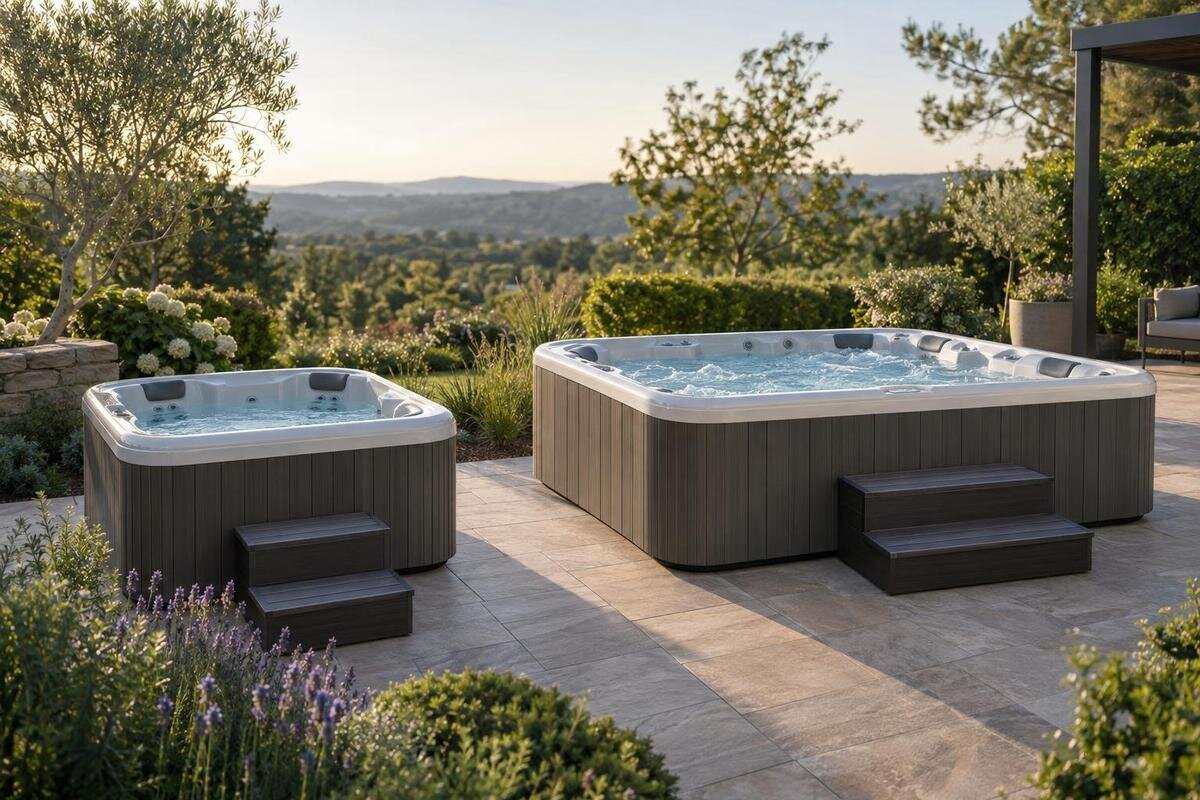
Hot tub sizing
Choose a hot tub size around the people who will use it together most often, not just the largest group you might host once or twice. Start with your regular simultaneous headcount, then consider how often extra users will join and whether the seating layout gives each person comfortable, usable space. Capacity is a useful filter, but it is not a complete measure of comfort. The names Cove 2, Haven 6, Fjord 8 and Aurora 10 do not verify seat counts; check each current Australian product specification before comparing models.
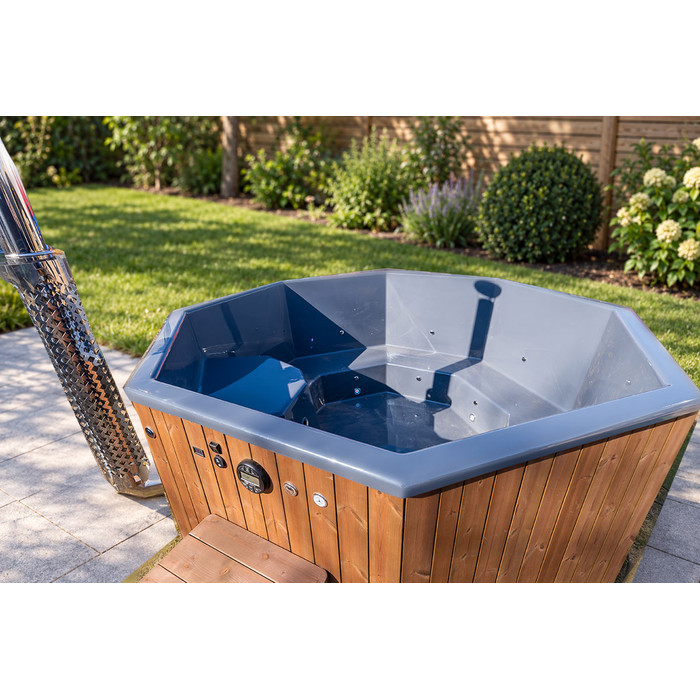
Count the people who will use it at the same time
Size the hot tub around the people who want to use it at the same time on an ordinary occasion. Count regular users who normally share a session, not everyone in the household or every friend who could visit. If people take turns or use the tub at different times, record that pattern too: the household headcount may not match the in-water headcount. The useful baseline is a typical group over a normal week, not the biggest group you can assemble once. If weekday and weekend use differ, keep those patterns separate rather than averaging them into a number that describes no actual session.
Make the count practical by considering when sessions are likely to happen and who usually joins. A pair may regularly use the tub together while another person joins only occasionally; elsewhere, several users may prefer to share most sessions. There is no universal household formula, so use your own pattern instead of assuming one place per resident. When reviewing Bloomcabin hot tub Cove 2, compare its confirmed capacity and seating information with that baseline; the model name is not a substitute for a stated specification. Keep the same headcount when comparing every candidate. This makes it clear whether your decision reflects everyday use or occasional visits.
How often will extra guests join?
Extra users should influence the size decision in proportion to how often they will share the tub. A regular visitor or predictable group that commonly joins is part of the routine, even if they do not live in the household. A one-off celebration is different: sizing around a rare peak may mean the everyday choice is driven by an unusual day. Consider frequency and simultaneous use together, not simply everyone who might accept an invitation. A short calendar of likely sessions can be more realistic than an all-time guest list.
Set an acceptable plan for the occasional busy day before comparing models. If extra people join regularly and everyone expects to use the tub at once, include that group in your target. If a rare visit can be handled by taking turns, keep the ordinary group as the main reference and record the peak separately. On the Bloomcabin Hot Tub Haven 6 page, check the published capacity and how it is described; the “6” in the name does not verify a six-person seating capacity. The useful question is how the listing matches your actual pattern, not what a numeral suggests.
Use stated capacity as a first filter
An advertised capacity answers a narrower question than whether a tub will feel comfortable. Treat a published maximum or seat count as an important screening figure, not a promise that every combination of users will have generous room. It tells you what the supplier says the product can accommodate under the stated description; it does not show whether every position suits your group or how much space is available around each person. A tub can meet a maximum headcount and still feel crowded to some users, so capacity is one part of sizing rather than the whole test.
Check what the figure actually counts. Does it refer to designated seats, a maximum number of occupants, or something else? Do not treat those descriptions as interchangeable if the product information does not define them. Ask for clarification and confirm that the answer applies to the exact model and any selected variant. For Bloomcabin Hot Tub Fjord 8, establish whether the stated capacity describes individual seating positions or an overall occupancy limit. Keep that wording in your comparison notes rather than recording an unexplained number. This matters most when your usual group is close to the advertised total and you need to understand how everyone would be seated.
Seat count alone cannot describe comfort
Even a clear seat count says little about how the individual positions feel. Seats can differ in shape, depth, orientation and the amount of usable room around them; one position may suit a user’s preferred posture better than another. Counting outlines on a diagram is not the same as confirming the space each person can occupy. Look for a seating plan and relevant measurements alongside the headline capacity. This deserves particular attention when the stated total is close to the number of people you expect to use the tub together. If positions differ noticeably, ask whether the published capacity assumes all of them are occupied at once.
Consider the space each person needs while seated, including leg room, shoulder space and room to settle into a preferred posture. A position that looks adequate in isolation may raise different questions when the neighbouring places are occupied. Before judging Bloomcabin hot tub Aurora 10, check its confirmed seating dimensions and ask what those measurements describe. Focus on whether regular users would have suitable room at the same time, rather than whether one person could spread out in an otherwise empty tub. That distinction keeps the comfort comparison relevant to shared use.
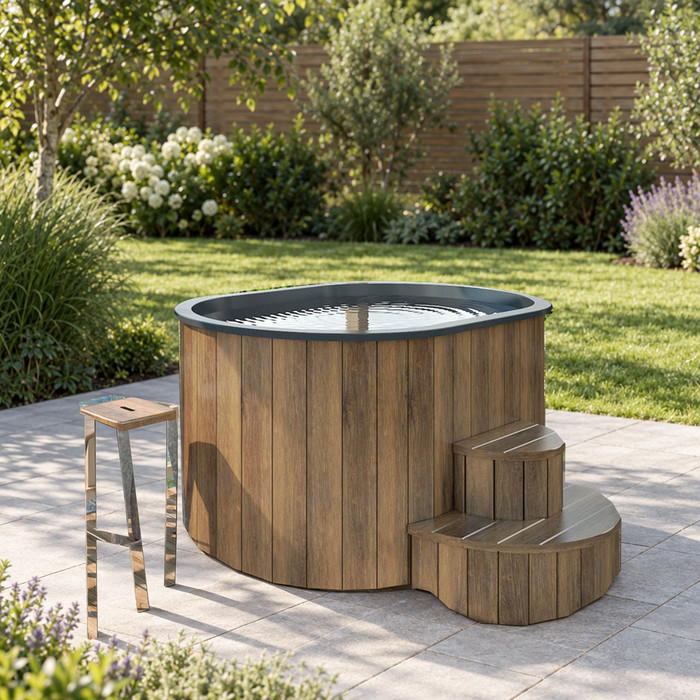
What the seating layout can tell you
A seating plan helps you see how people share the internal space. Notice whether positions are distinct or arranged as a continuous area, which seats sit beside each other, where users would face, and whether several people are expected to share a central foot area. These details affect conversation, personal space and whether the advertised places feel like separate usable spots. None of those qualities follows from a total alone, so compare the arrangement against the way your group prefers to sit together. Ask for a labelled plan if a product image does not make the positions clear.
Use the same layout questions for every candidate rather than comparing a diagram for one model with an angled photograph for another. For the Cove 2 product listing, look for a plan or written description showing the intended positions and which way users face. Consider whether your regular group would prefer to sit beside one another, face one another, or have some separation. Check how the positions relate to any shared central space. The point is not to favour a particular shape; it is to understand whether the arrangement suits the way your group wants to spend time together.
Check whether the seats suit your group
People in the same group may need different amounts of room and may prefer different postures. Height, build and the way someone likes to sit can affect whether a position feels natural, even when the total capacity appears adequate. A count cannot tell you whether everyone can use a suitable place at once. Think about the actual people who will share the tub most often, rather than an abstract average user. If one person needs more room or prefers to sit differently, take that into account while reading the layout; do not guess from a capacity figure alone.
If a display or sample is available, trying the seats can help you understand the arrangement. Consider more than a single favourite position: would each regular user have somewhere suitable to sit when the tub is shared? Otherwise, ask for internal seating measurements or a labelled diagram. When checking the Haven 6 product page, relate those details to the people in your group rather than an average user. If one position seems suitable for several people but the others remain unclear, do not assume everyone has been accommodated. Record whose seating needs are answered and whose still need clarification.
Verify the details for the exact model
Once you have a target group, check current product information for the exact Australian model you are considering. Record the stated capacity, what that capacity counts, the seating layout and any measurements that describe usable seating room. Note whether the information applies to the chosen variant; a model family name or general photograph may not identify all relevant details. Keep a blank in your notes when a figure is missing. An absent measurement is not evidence that a tub is either roomier or tighter than another. Keep the page or written clarification with your notes so you can revisit the same details later.
When reading the Fjord 8 listing, keep information for the chosen model together rather than combining details from several listings. A capacity statement from one description and a seating plan from another are useful only if both apply to the version you are considering. If the headline and detailed information differ, ask which description is current. Request clarification in terms of the exact point at issue: the occupant limit, the number of seating positions or the dimensions of the seating area. A precise question is more useful than simply asking whether the tub is big enough.
Compare each listing on the same basis
Use a simple worksheet to compare candidates. Give each one the same fields: your normal simultaneous group, your frequent busy-day group, the confirmed capacity and its definition, the seating layout, and dimensions relevant to seated space. For the Aurora 10 product page, use the same fields as for the other listings. Keep published details separate from your judgement about comfort: a stated occupant count belongs in one field, while a concern about a particular user's seating position belongs in another. This makes it easier to see whether a difference between candidates concerns capacity, layout or an unanswered question.
Check units and reference points before comparing measurements. An outer-shell measurement is not automatically a measure of the room available to seated users, and a figure for one seat should not be treated as a description of every position. Label each measurement with what it covers so that unlike dimensions do not become an apparent size difference. Where two listings describe different parts of the seating area, leave those figures as separate entries rather than forcing a direct comparison. Use photographs to understand product appearance, not to estimate missing dimensions or rank models by how spacious they look.
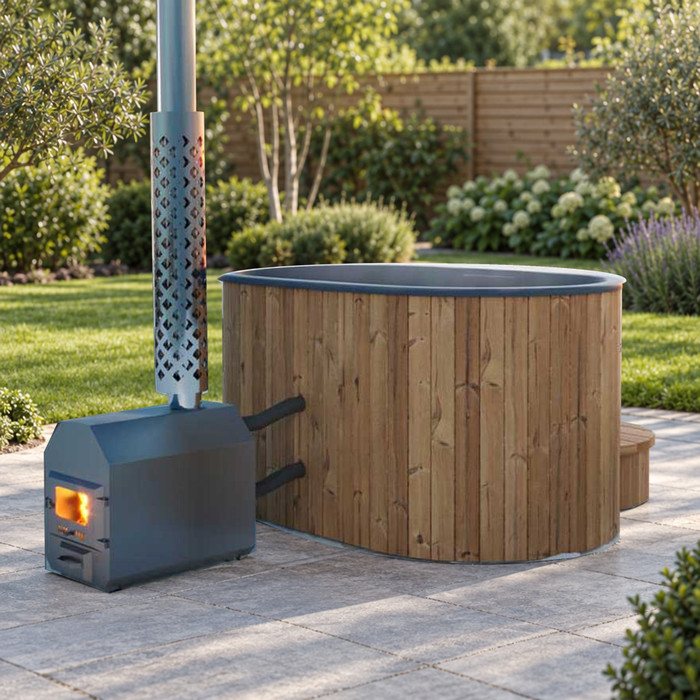
Use two headcounts to build a shortlist
Use two headcounts to make a practical shortlist. The first is the group that usually uses the tub together; the second is a larger group that joins often enough to influence the purchase. For each model, ask whether the confirmed capacity includes the first group and whether the layout provides suitable positions for them. Then decide whether the second group must fit simultaneously or can take turns. Note how often that larger group is likely to use the tub. This keeps a rare maximum from eclipsing everyday needs while still giving regular visitors a proper place in the decision.
Group the candidates by what you can establish: those that meet your everyday requirements, those that may suit but need a specific answer, and those that do not meet an essential requirement. This avoids treating missing information as either a benefit or a fault. Beside each promising option, note why it belongs on the shortlist and what, if anything, remains unresolved. An option with a suitable capacity but an unclear seating arrangement is not at the same stage as one whose layout you understand. Keep the shortlist focused on plausible choices rather than retaining every model simply because it has not been ruled out.
Resolve the trade-offs before choosing
If more than one shortlisted model meets your essential requirements, compare the remaining seating trade-offs rather than repeating the capacity check. One arrangement may better match preferred positions, while another may be worth considering because of a regularly larger group. Neither preference should be assumed from the model name. Decide which requirement matters more in the sessions you actually expect to share. Ask whether anyone would routinely have to accept a position they find unsuitable, or whether the compromise would arise only during an occasional visit. A recurring seating problem deserves more weight than a difference that rarely affects your group.
Make any compromise explicit before settling on a model. Taking turns during rare visits may be acceptable, but it should be a deliberate choice rather than a workaround discovered afterwards. Equally, if accommodating the larger group together is essential, do not quietly drop that requirement because another layout appeals to you. Write a brief reason for the final choice, naming the usual group, the seating arrangement that suits them and how extra users will be accommodated. That explanation should still make sense without the model number or a product photograph: it is a check that the decision reflects your habits rather than an imagined use pattern.
Frequently asked questions
How many people should I count when sizing a hot tub?
Count the people who are likely to use it together on an ordinary occasion, not everyone in your household or the largest group you might ever host. Keep a separate count for frequent visitors, then decide whether occasional guests need to fit at the same time or could take turns.
Do the numbers in Cove 2, Haven 6, Fjord 8 and Aurora 10 show capacity?
No. A model name identifies the product but does not confirm its seating capacity, layout or dimensions. Check the current product information for a stated capacity and what it means; ask the retailer to clarify anything that is not defined.
Should I choose a hot tub for the maximum number of guests?
Only if that group will regularly use the tub together or simultaneous use by everyone is important to you. If the larger group is rare and you are comfortable with taking turns, base the main comparison on your usual group and keep the occasional peak as a separate consideration.
Is the advertised seating capacity enough to compare models?
It is a useful first filter, but it does not show how much room each position offers or whether the layout suits your group. Check how the capacity is defined, review the seating arrangement and look for measurements relevant to the seating area.
What information should I confirm before choosing a size?
Confirm the capacity for the exact model, what that figure counts, how the seats are arranged and any measurements that describe usable seating room. If a page is unclear or details differ between sources, ask which information applies to the current Australian listing.
A sound size choice matches your regular group, the guests who join often, and the seating positions people can actually use. Give rare gatherings only the weight they deserve, and read a confirmed capacity alongside the layout rather than treating either as the whole answer. Where a listing leaves important details unclear, do not guess: keep the choice open until you can compare the models on reliable information.
