
When Does a Greenhouse Pay for Itself?
Greenhouse guide
When can a greenhouse truly recover its cost?
There is no fixed date when a greenhouse recovers its cost. The outcome depends on what you grow, how consistently you use it, the value of food harvested at home and recurring expenses. A transparent calculation helps identify an approach that fits both garden and budget.
Assessing value begins with use, not the price tag. A greenhouse supporting routine propagation and crops such as tomatoes, herbs and sensitive plants produces a different return from one occupied for a short summer spell. Before judging the investment, map it against the way your household already gardens.
Start with every one-off expense: the greenhouse, suitable ground or base, assembly, equipment and any required water or electrical connections. Compare that total with yearly harvest value, purchases avoided, extra growing time and practical usefulness. Personal benefits still matter, as reliable propagation and regular picking may encourage much fuller use.
This guide offers no blanket promise, but a practical method for Australian gardeners. It explains how to value results realistically, account for recurring costs and compare different use patterns. That turns an abstract payback question into a decision suited to your space, available time, tastes and expectations.
01 · Foundation
What garden payback really means
A project reaches payback once the benefits generated by use match both its opening investment and subsequent expenses. For a garden, those benefits may include vegetables, herbs, propagated plants and additional productive weeks. Record financial returns separately from enjoyment, learning and the visual appeal of the garden so each remains clear.
Create a baseline that separates purchases made once from expenses that return each year. Annual entries may cover seed, growing media, fertiliser, water, energy where used and replacement components. A durable structure does not create value by itself; that comes from sustained use suited to the household.
- Separate measurable harvest value from comfort, learning and design benefits to keep the financial assessment clear.
- Allocate initial expenditure across the anticipated years of use for planning purposes, without treating that period as a promised lifespan.
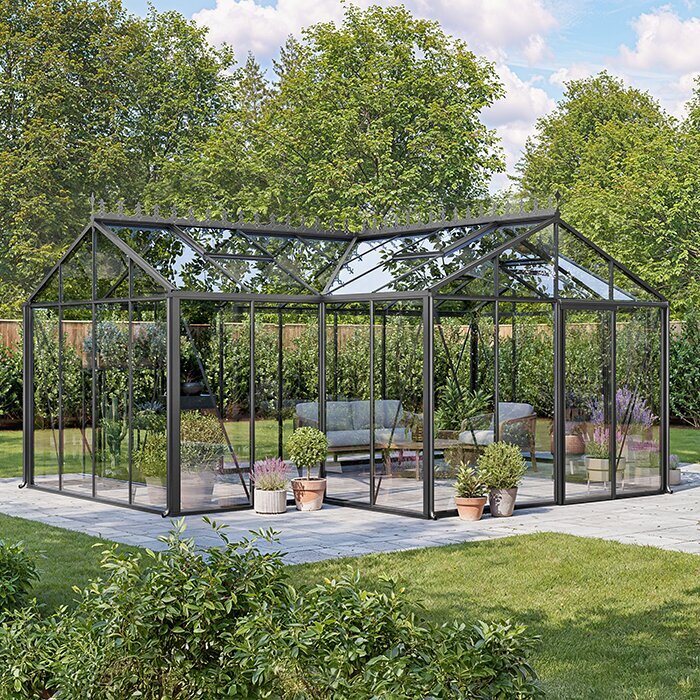
If you want a straightforward basis for costing, a Classic greenhouse in its standard configuration can anchor a fit-out tailored to your requirements.
02 · Investment
Capture all upfront costs
Initial budgets often omit important work. Beyond the greenhouse, assess whether the site is level, stable and suitable for the chosen anchoring system. Earthworks, foundations, access paths or drainage may be needed on some properties. Add benches, shelving, beds, shade, ventilation and watering systems only where they are genuinely part of your plan.
Divide the budget into essential and optional items. Essential components are those required for a safe, functional installation under applicable requirements; optional additions improve convenience or enable a particular crop. Request a current, complete configuration, then compare the product scope alongside the site work needed to make it usable.
- Record resources already available, including tools, water access and usable paths, to avoid budgeting for the same provision twice.
- Allow a modest margin for site-specific work rather than basing your figures on an ideal plot.
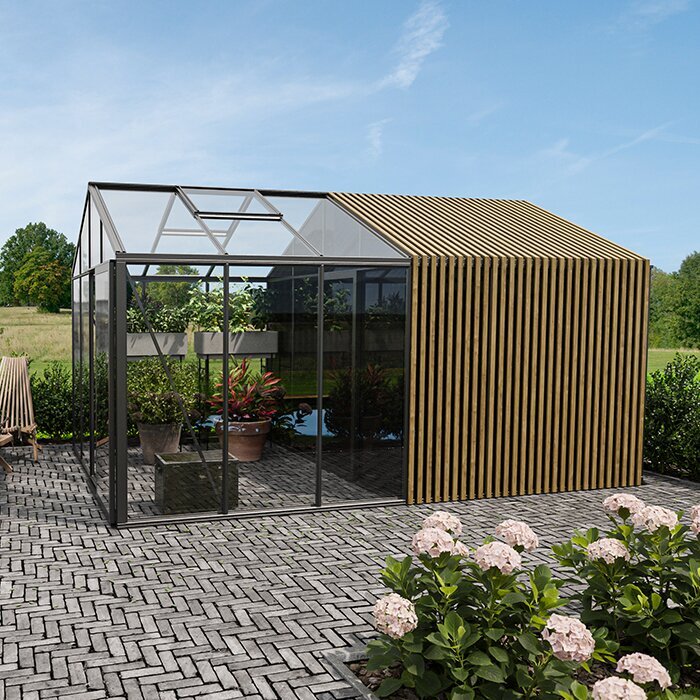
Where space beside a wall is available, a regular full-size lean-to greenhouse can make that area part of the overall investment strategy.
03 · Harvest value
Value your harvest realistically
Calculate produce value from what reaches the kitchen, not from a crop’s theoretical maximum. Begin with foods your household buys and eats often. For tomatoes, leafy greens, herbs, capsicums and cucumbers, multiply the quantity picked by a normal price you select, keeping the comparison quality consistent rather than using unusually expensive produce.
Log each crop and its harvest period. A simple table or garden journal can show quantities picked and used, losses, and produce given away. Home-raised seedlings may represent avoided spending when they are successfully put to use. Surplus that goes unused should not receive full value because it replaces no purchase.
- Value herbs by portion only when they are regularly used at home or preserved effectively.
- Use restrained estimates for unfamiliar crops, then revise them upwards only when your own records support the change.
For varied cropping plans, a a Classic greenhouse with a standard layout can accommodate crops, propagation and trials through the seasons.
04 · Season
Put longer growing periods in perspective
Extending the productive period can add considerable usefulness by bringing propagation and warmth-loving plants into your schedule. It creates a financial return only if the added weeks lead to planting, care and usable harvests. An earlier start or later finish saves nothing unless the resulting produce replaces food you would have purchased.
Think of the growing year as a succession of plantings rather than a single summer crop. Propagation can lead into early leaves, main-season plants and later follow-on crops. This makes better use of space but demands soil care, rotation and ventilation. Gardeners short on time may gain more from several reliable crops than from a continuous, complex schedule.
- Map sowing, transplanting, harvesting and bed changes by month before assigning value to any additional yield.
- Include idle periods honestly; they can be useful for cleaning, soil care or holidays.
For productive use across more of the year beside a building wall, a regular full-size lean-to greenhouse may suit the available position.
05 · Running costs
Plan recurring costs honestly
Individually modest operating expenses can add up. Budget for seed and plants, soil or compost, fertiliser, ties, water, and cleaning and maintenance supplies. If heating or technical systems are proposed, enter their measured consumption as a separate item. Compare the combined expense with produce value every year rather than postponing the review.
Time is valuable too, although you need not convert it into money. One household may regard gardening as restorative leisure while another has little time to spare. State whether the calculation covers cash movements alone or assigns a value to labour, then apply that choice consistently across several seasons with differing weather and crop results.
- Keep seed, water and growing media in the recurring budget even when each purchase appears minor.
- Link costs to individual crops so you can see which choices perform well financially and suit your cooking.
A Classic greenhouse from the standard range can be fitted out to match the level of care you can realistically provide.
06 · Site
Site and use shape the calculation
Location can make regular gardening easier, but a good position cannot compensate for limited use. Review sunlight, convenient entry, water access and clearance for doors, tending and picking. Tasks such as sowing, watering and ventilation are easier to neglect when the structure is remote. Placing it within your normal routine encourages more frequent attention and may improve usable yields.
Positioning the structure by a wall or terrace may improve convenience when the site and drainage work. Before committing, ask the relevant council or authority about boundary distances, local controls and any approval or certification applying to the proposal. The answer may depend on the property, jurisdiction and exact design, so broad assurances are inadequate.
- Watch the proposed site at different times over several days to understand its shade, wind exposure and practical access.
- Resolve planning and building questions with the appropriate local authority before finalising the design or placing an order.
If the strip beside the home has limited depth, a regular lean-to greenhouse in a full-size format may provide more convenient access from the garden.
07 · Scenarios
Use scenarios, not wishful figures
Test the figures through three perspectives. A cautious case assumes modest crops, every recurring expense and periods without production. Build the realistic case from your current gardening ability and buying patterns. The ambitious case can add crops, but only where you have the time to manage them and a practical use for the harvest.
Estimate the period by dividing total outlay by yearly net benefit, calculated from produce value and purchases avoided after recurring expenses. Treat the answer as an indicator rather than a commitment. A poor season delays the result, which is why annual updates are more useful than fixing one forecast before purchase.
- Keep an identical set of expense categories across the scenarios so only cropping and use account for the differences.
- Check yearly whether your realistic scenario still fits, replacing assumptions with your own records.
A standard-size Classic greenhouse offers a defined reference point for comparing each scenario.
08 · Long term
Assess value over several years
Experience often improves how the space is used because suitable varieties, timings and household quantities become clearer. Better decisions can raise produce value without requiring more area. Conversely, travel, new routines or changing food preferences may reduce activity. Keep a multi-year assessment adaptable and continue allowing for upkeep, replacement components and operating expenses.
You may also need to consider liability, building insurance and storm damage. Ask your insurer whether the greenhouse is covered at the particular site and what limits apply under your policy. Read the written product conditions and scope of any commitments as well. These checks place the financial assessment within responsible long-term planning.
- Retain receipts, assembly information and an inventory of equipment so the basis of your expenditure can be checked later.
- Ask the relevant provider to confirm insurance coverage and written conditions instead of relying on broad expectations.
When a wall-side space is intended to remain within your garden layout, a regular full-size lean-to greenhouse should be assessed over the same long horizon for cost and usefulness.
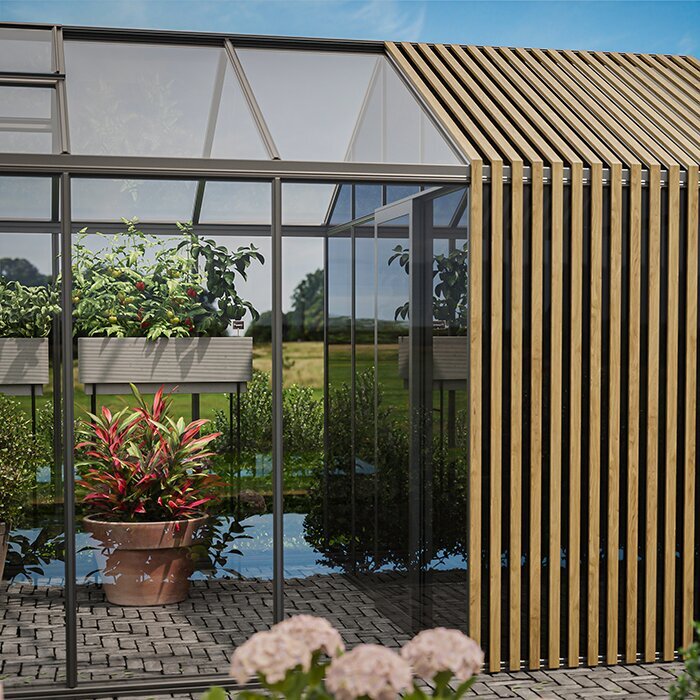
Comparison
Which calculation suits your use?
The way you intend to garden determines which inputs belong in the payback assessment. Use this comparison to organise the assumptions rather than as a substitute for your own itemised budget. It highlights how different patterns of use alter the emphasis placed on produce, labour and equipment.
| Use profile | Typical crops | Value used in the calculation |
|---|---|---|
| Occasional summer growing | Tomatoes, herbs, a few cucumbers | Use a restrained value for the portion of the summer crop that is actually consumed. |
| Regular food-growing garden | Mixed crops, salads, capsicums, herbs | Track produce, later plantings and money saved by raising seedlings. |
| Propagation-focused use | Vegetable and herb seedlings | Assign value only to seedlings that are used or successfully transplanted. |
| Comfort-led garden room | Selected favourite crops | Account for produce independently from the space’s aesthetic and recreational value. |
| Planning across seasons | Early and late crops | Include the additional crop only when it replaces something otherwise purchased. |
Your five-step personal payback calculation
Begin with a method that is easy to understand and update. Once the first growing season is complete, substitute recorded results for estimates. Choose a format simple enough to continue using.
01
Collect initial costs
Itemise the greenhouse, preparation of its position, assembly and essential opening equipment. Keep optional additions in a separate part of the list.
02
Record annual costs
Enter plants, consumable supplies, water and any technology you plan to operate. Exclude expenses that will not arise under your intended use.
03
Keep the planting plan focused
Select several crops that your household will genuinely use. Begin with careful quantity estimates and account for the time needed to tend them, including periods away.
04
Document harvests
Write down how much was picked, how it was used and which purchases it displaced. Separate gifts, waste and crop failures to protect the accuracy of the result.
05
Compare net benefit
Subtract recurring yearly expenses from the produce value, then set that net result against the opening investment. Revisit the figures at the close of every season.
Checklist before deciding
Use these questions to turn a broad intention into figures grounded in your circumstances. Answer them according to the gardening routine you already maintain.
01. My list covers every initial expense, including preparation of the site and the interior fit-out I want.
02. I have identified the crops our household routinely purchases, enjoys and puts to use.
03. I have confirmed practical water access and room to enter, tend plants and gather produce.
04. My annual budget allows for plants, water, growing media and any technology I may operate.
05. I assign value only to produce that is eaten, preserved or shown to displace a purchase.
06. My planting calendar allows sensible gaps for holidays, maintenance and cleaning.
07. Before settling the plan, I asked the appropriate authority about local planning and building matters.
08. I maintain basic records of expenditure and produce so first-season estimates can be refined.
Greenhouse payback questions answered
What determines how soon a greenhouse recovers its cost?
The answer comes from the opening investment, recurring expenditure and net value actually achieved. Frequent crops that displace normal shopping produce a different result from occasional summer planting. Rather than adopting a standard period, compare conservative, expected and ambitious cases.
Should labour be included among the expenses?
Include it if you want a full economic assessment. Choose a clear personal rate for the hours involved and apply it consistently to every scenario. If you regard gardening as recreation, comparing financial expenditure with produce value alone may be more useful. Whichever method you choose, keep the two approaches distinct.
What kinds of crops can strengthen the result?
Prioritise plants that you routinely purchase, can cultivate successfully and will use. A high shop price is not enough on its own. Tomatoes or herbs may contribute well when they are regular kitchen ingredients, while an unusual crop rarely eaten at home offers little comparable value even after a successful harvest. Let your household menu guide the choice.
Can propagated seedlings be included in the return?
Treat them as avoided spending only when the resulting plants are put to use. Include seed, growing media and failures so the estimate remains modest. Early attempts deserve conservative values; records collected over several seasons will reveal which propagation plans are dependable for you.
What changes when heating or other equipment is added?
Technology may broaden the cropping plan, but it brings extra capital cost, energy or other consumption, and attention. Enter the purchase and ongoing expenditure separately, then count only additional produce you are likely to use. Its value therefore rests on your intended crops rather than on a general claim that equipment always improves payback.
Do approvals and insurance belong in the budget?
Investigate both before committing. The site, property and proposed structure can affect what the relevant local authority requires. Insurance depends on the wording of your own policy, so obtain an answer directly from the insurer. Add resulting obligations or expenses only after they have been confirmed for your circumstances.
Choose a greenhouse with purpose
Start the figures with the way you actually garden
A universal figure cannot show when the investment will be recovered. Build your assessment from the full opening expenditure, recurring costs and a cautious value for usable produce. Results become more credible when they reflect your preferred crops, normal shopping and the time you can devote.
Base the plan on gardening you can happily sustain, not an imagined flawless season. Reliable notes, a practical planting schedule and a carefully selected position create a stronger foundation. Bloomcabin can help you explore greenhouse forms while you develop a considered plan for the wider garden.
Assess each shape and equipment choice in relation to the site, intended crops and your own financial calculation.
