
Why timber garden sheds need allowance for natural movement
Garden shed buying guide
Natural movement is worth considering before buying a timber garden shed: timber is not dimensionally static. As its moisture content changes, it swells and shrinks, usually more across the grain than along it. In a garden shed, how that movement is accommodated depends on the actual boards or panels, their joints and the product’s instructions. Planning an installation therefore means more than measuring a flat patch of ground: check how the chosen design is meant to be assembled, what site conditions it requires and which areas must stay accessible. A shed needs its intended movement allowance; an arbitrary gap around the outside is not a substitute for it.
How moisture changes timber dimensions
Timber exchanges moisture with the surrounding air. When its moisture content rises, it generally swells; when it falls, it shrinks. The dimensional change is usually much greater across the grain than along it, so the direction in which a board is cut and used matters. The scale also depends on timber species, board size, construction and the moisture range it experiences. Boards in the same wall can respond differently if one face is sheltered while another is exposed. The product’s construction determines how those individual changes combine across the wall. That is why one fixed allowance cannot sensibly be applied to every timber garden shed, and why outside dimensions alone do not explain how its parts will behave.
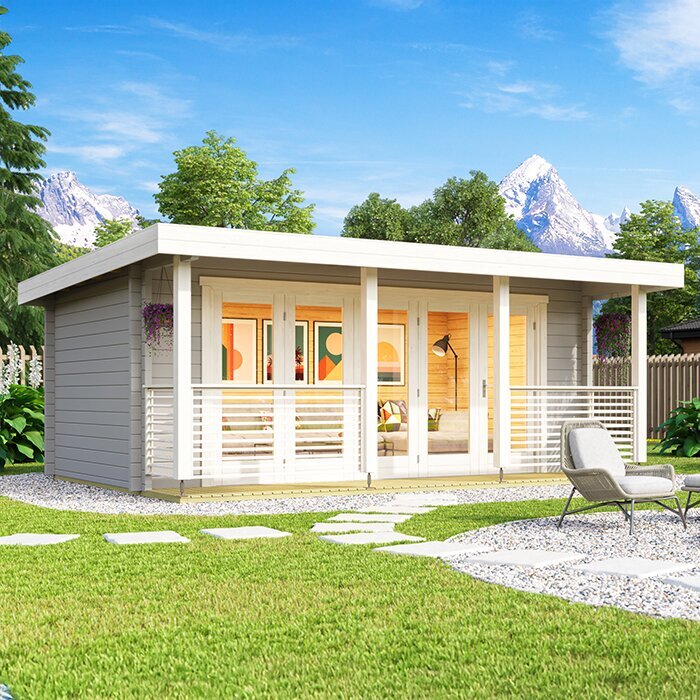
Conditions at the site influence that response. Rain, damp air, strong sun and airflow can change how quickly a component gains or loses moisture; the timber’s condition before assembly matters too. A structure does not follow a reliable calendar schedule for swelling and shrinking, and its faces may not be exposed equally. A dry, windy position and a damp, sheltered one can therefore place similar products under different moisture conditions. While comparing options, open the Verdana 1 garden house listing and look for its construction details and installation guidance. A model name or photograph alone cannot show how movement is managed or what allowance the finished structure needs in your location.
Where timber movement matters in a garden shed
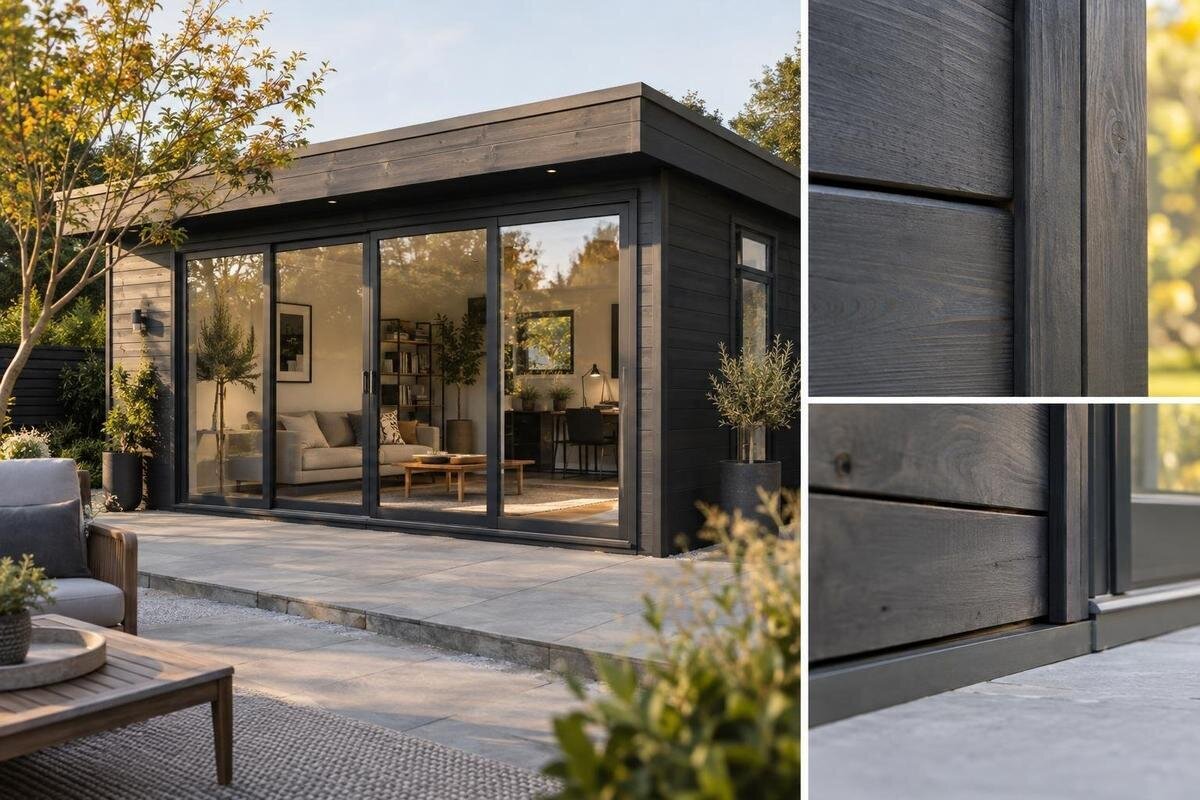
Movement matters most where timber components meet. Wall boards, panels, corners and framed openings can respond in their own ways; their joints have to accommodate the change expected in that design while continuing to do their intended job. A wall made from separate boards does not behave exactly like a single rigid sheet. The joint shape and fixing method can influence whether adjoining parts are able to move as intended. Doors and windows are connected to surrounding parts, so changes in a frame can affect alignment or operating clearance. The details vary between products, and a product photograph rarely shows how those connections work. Pay attention to how the wall is formed and whether the instructions distinguish between the wall and an opening’s frame.
The useful comparison question is not simply whether timber will move, but which components are expected to move and how the design allows for it. Read the assembly notes for board orientation, joint treatment and any stated clearances; do not assume one kit’s method applies to another. For any contender, including the Verdana 2 garden house product page, confirm those points in the actual product documents. Look for the manufacturer’s notes on normal adjustment or when to seek advice, if provided. A small change in fit is not automatically a fault, but persistent binding, opened joints or visible damage deserves a closer look. Gap widths in staged images are not a reliable guide to construction.
How a shed’s design accommodates movement
A movement allowance is usually part of how the components are designed and connected. Depending on construction, boards may overlap or interlock, joints may be shaped to accommodate a change in width, or fixings may be arranged so they do not prevent expected movement. These are possible design approaches, not a checklist of features that every garden shed has. The intended method is specific to the materials and assembly sequence. Movement accommodation must be deliberate: clearance in one location may be inappropriate elsewhere if it compromises the joint’s purpose. It is not safe to infer the method from a generic timber-building tip or invent an extra gap during assembly.
Before you order, see whether the manufacturer provides assembly drawings and explains important fastening, alignment or clearance requirements. Look for instructions on how joints should meet, whether components have a specified orientation, and whether any part needs to be left free to move. Do not cut pieces, enlarge gaps, loosen connections or substitute fixings on a general assumption. For the Durano spacious garden house listing, as for any shortlisted product, use documentation for the exact model to understand its construction. If movement-related guidance is missing, ask the seller where to find it before choosing; do not wait until a joint has been assembled to discover that it matters.
Why perimeter space is not the movement allowance
An empty strip around a shed and a movement allowance within its construction solve different problems. Timber can change dimensions at boards and joints without the whole structure shifting outwards uniformly, so adding an arbitrary perimeter gap does not ensure that each component can move as intended. There is no single clearance that suits every model or site. A manufacturer may specify space for installation, access or maintenance, but those practical clearances should not be confused with the joint and fastening details that let the timber respond. Keep external spacing and movement within the structure as separate items in your plan.
Measure the complete footprint shown in the product information, then separately plan room to open doors, reach surfaces for maintenance and move around the shed. Check whether stated dimensions include projections or other parts before marking out the site; a photograph cannot confirm that. On the Veltor 1 product page, check whatever dimensions and installation guidance are published. If a required clearance is not stated, ask the supplier rather than borrowing a measurement from another shed or guessing at a movement gap. The planned access space should not be confused with clearances between timber components.

Consider moisture exposure when choosing a site
Placement affects how timber is exposed to moisture. A wall repeatedly struck by rain or splashback may wet more often than a sheltered face; direct sun and airflow can also affect how quickly surfaces dry. Persistent dampness, or markedly different exposure from one side to another, can mean uneven moisture changes across the structure. Wind exposure may speed drying on some surfaces without affecting every face equally. This does not make one orientation or shade level right for every shed: nearby buildings, trees, ground and local weather all shape conditions on an individual block. The practical aim is to avoid a position that stays wet or is difficult to inspect.
Before ordering, look at the proposed position after rain and at different times of day. Note where water sits or splashes, which sides dry quickly, and whether shrubs or stored items would block inspection and airflow. A walk-through can reveal drainage or access issues that a product image cannot. Check the supplier’s siting and care advice for the particular construction, and ask if the documents leave important exposure conditions unclear. When reading the Orello 1 garden house listing, treat displayed images as illustrations, not evidence that your own site offers the same shelter or drainage. Compare actual site conditions with written product guidance.
Keep timber movement separate from base movement
Movement within timber is different from movement in the base below it. An uneven, flexible or settling support can twist the structure and put extra strain on joints; doors or windows may then sit poorly for reasons that are not simply a moisture-related change in the boards. Conversely, a stable, level base does not stop timber responding to the air. Treat these as separate checks: one concerns the support specified for the structure, the other concerns how its timber parts are designed to move. A symptom can have more than one cause, so avoid diagnosing it by appearance alone.
Before committing to a site, compare its ground and proposed base with the exact assembly instructions. Confirm the specified support arrangement and the footprint that must be supported; do not assume a generic slab or frame suits every product. Also check how the instructions address water around the base and contact with the ground. If the site is sloped, soft or otherwise difficult, ask a qualified builder or installer to assess it rather than calculating a foundation from a catalogue image. For the Modano 1 garden house product page, use any written base requirements for that exact model. If the method is not specified, ask for clarification before preparation begins.
Check the finish and maintenance requirements
Finishes can influence how quickly timber takes up or releases moisture, but they do not make it dimensionally fixed. A coating may also need maintenance, and the right product or application can vary with the timber and its construction. Do not assume a shed arrives sealed, that every surface is finished, or that your preferred paint or oil is compatible. Check what the manufacturer says about supplied treatment, suitable coatings and preparation before buying materials or scheduling work. A finish is a care decision, not a way to compensate for a poorly designed or fitted joint.
Ask when the finish should be applied, which surfaces require attention and how often inspection or renewal is recommended; follow the product’s own advice rather than using a blanket schedule. Plan access for future care, including wall faces that might be close to a fence or dense planting. If the instructions specify preparation before assembly, include it in the project timing rather than leaving it to guesswork. A listing such as the M timber garden shed listing can help identify a model, but its name does not establish treatment or maintenance needs. Confirm those details in current documentation before placing an order.
Plan for openings and later modifications
Doors and windows make alignment especially noticeable because they need working clearance. If surrounding timber changes dimension, the opening may respond too; if a door begins to rub, that alone does not identify the cause. Moisture exposure, assembly, base movement and hardware can all affect fit. The correct response depends on the product instructions, so avoid forcing a panel or trimming a part simply because one period’s clearance looks different. Check whether the change is persistent and whether the structure itself remains aligned; a small initial difference and a worsening obstruction are not the same observation.
Think about fit-outs before ordering as well. Shelves, hooks, a bench or other additions may be fixed to different parts of a structure; some arrangements can bridge joints or restrain components that are meant to move. Check the manual before drilling, fastening through wall boards or adding a partition, and make sure stored items will not obstruct doors or routine inspection. If a fixed bench or shelf is essential, confirm its mounting points before choosing. For the Timber Tool Shed S product page, and any other candidate, verify the construction and modification guidance rather than assuming a chosen fit-out can be attached wherever convenient.

Questions to settle before ordering
Ask for product-specific answers before committing: what form does the timber construction take; where is natural movement accommodated; what assembly details must be followed; and what clearances, base and siting conditions are specified? Also establish whether finish or treatment is supplied and what ongoing care is required. If the product page does not include these details, request the current manual or written guidance for the exact model and version. Make sure the documentation covers the configuration you are ordering. General advice for another shed may not apply to its joints or fixings.
Compare candidates on evidence, not just names or attractive images. Check overall assembled dimensions and the space needed for access, then compare construction and care information on the same basis. Confirm which parts, finishes or accessories the listing says are included before ordering; do not infer them from a staged photo. Keep the instructions with the order details so the installer can refer to the same product version. Where one candidate has a detail that another omits, ask for the missing information rather than assuming it does not matter. That can prevent a clearance or preparation requirement being discovered after the site is set up.
When to investigate a change in fit
Some change in fit or joint appearance can follow moisture change, but no single sign proves natural movement is the cause. Persistent gaps, split timber, a door that continues to bind, loose connections or repeated wetting call for a closer look. Compare what you see with product instructions and note whether it followed rain, a dry spell or another change in conditions. Changes concentrated at one joint may have a local cause, so note exactly where they occur. Do not treat expected movement as a reason to accept structural damage, and do not decide that every gap means the product has failed. The pattern and the manufacturer’s criteria matter.
Check the surrounding context: whether the support remains as specified, water is reaching a wall, a component was assembled differently from the manual, or a later modification crosses a joint. Avoid forcing doors or making cuts, and ask the seller, manufacturer or installer to review the issue with the model details and clear photos. A brief record of when symptoms appear can help relate them to wetting or drying conditions. If the structure appears unstable or has significant damage, seek assessment from a suitably qualified building professional. This is a way to distinguish expected movement from a separate problem, not a diagnosis from appearance alone.
Frequently asked questions
Does a timber garden shed change size with the weather?
It can, because timber exchanges moisture with its surroundings. As its moisture content changes, timber generally swells or shrinks, most noticeably across the grain. The amount and timing depend on the construction and site exposure, so there is no fixed seasonal movement pattern for every shed.
How much space should I leave around the shed?
There is no universal perimeter gap for timber movement. Follow the exact product instructions for installation clearances, access and maintenance, and treat those separately from the movement allowed at joints and connections. If a requirement is not published, ask the supplier rather than borrowing a measurement from another model.
Does a sticking door mean the timber has moved?
Not necessarily. Moisture-related change is one possibility, but an uneven or shifting base, assembly, hardware or local wetting can also affect alignment. Compare the symptom with the manual and note whether it is persistent; do not force or trim the door based on that sign alone.
Can paint or sealer stop natural timber movement?
No finish makes timber dimensionally fixed. A suitable coating may affect how quickly timber takes up or releases moisture, but compatibility, preparation and maintenance depend on the product. Follow the manufacturer’s finishing advice and do not treat a coating as a substitute for the design’s movement allowance.
What should I check before ordering a timber garden shed?
Confirm the construction and how movement is accommodated, then check the exact assembly manual, base and siting requirements, clearances, finish and ongoing care. Compare overall dimensions and included components using written product information, and request any missing guidance for the model and version you plan to buy.
Natural movement is a normal property of timber, but its effects are not identical in every shed. Choose using the exact construction and assembly documents, plan the base and site conditions around those instructions, and make room for ongoing inspection and care. A well-understood allowance is more useful than a guessed gap: it helps distinguish expected change in the timber from a problem with support, exposure or assembly.
