
Can You Put a Hot Tub on a Deck? What to Check First
Deck suitability
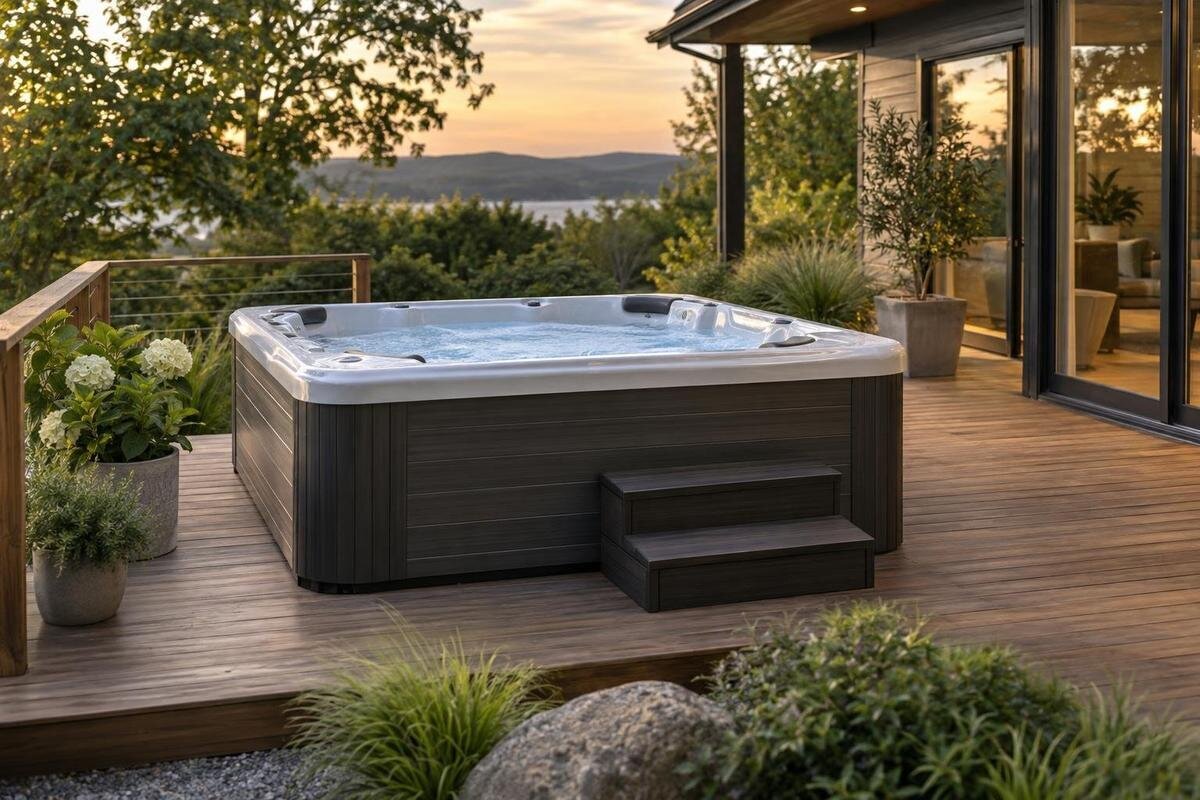
An existing deck can look solid and still be unsuitable for a filled hot tub. Its appearance, age or history of ordinary patio use cannot establish structural capacity for a different, sustained load at one chosen location. Before buying, gather the deck’s construction records, document its condition and mark the proposed tub position. A qualified structural engineer can then assess that deck against verified information for the exact model and its required support. If suitability remains uncertain or depends on changes, pause the purchase decision until the design is clear or another assessed location is chosen.
Before you buy 1
A deck’s appearance cannot confirm its capacity
A deck’s appearance cannot settle whether it can carry a hot tub. Decks are built for particular spans, support arrangements, materials and uses; supporting people, patio furniture or a barbecue does not demonstrate that a deck can support a filled tub. A sturdy feel, recent construction date or lack of visible damage cannot confirm suitability either. The answer depends on this deck’s framing, connections, supports and current condition, together with the exact tub and its proposed position. The load has to travel through the deck structure, not just rest on the visible walking surface. A qualified structural engineer must assess that combination rather than apply a broad rule about decks.
Make the assessment before ordering or finalizing a planned deck. For an existing structure, identify the precise location and gather whatever records still exist; for a new deck, provide the intended hot tub and its manufacturer’s support information while the design can still be coordinated. An opinion based on an assumed model, location or condition may not apply once those details change. If drawings are missing, ask the engineer what information will be needed rather than filling gaps with typical dimensions. There is no universal load limit or visual test that can establish suitability for your deck. Until the specific arrangement is assessed, treat it as unconfirmed rather than safe by default.
Assess the complete hot-tub load
The engineer needs information about the proposed hot tub in use, not just a figure for the empty shell. Ask the manufacturer or supplier for current details for the exact model and configuration: empty weight, water capacity or a stated filled weight, outside dimensions and footprint, support requirements, and the weight or placement of associated equipment. Check what is included in any filled-weight figure rather than assuming. If you are considering Bloomcabin Hot Tub Cove 2, use that exact model name when requesting the information so the engineer receives details for the product you intend to buy, rather than a general description of a similar tub.
People using the tub and other loads on the relevant part of the deck also belong in the proposed setup. Tell the engineer how the tub is intended to be used and identify equipment that will be installed with it; don’t select a convenient occupant count or omit a component because it may not always be present. The engineer should decide which assumptions and combinations apply. Don’t add the figures yourself or divide a total by the footprint to create a DIY capacity check. If information is missing, flag the gap and ask for it rather than substituting an estimate.
Before you buy 2
Gather the deck’s plans and construction details
Look for original deck plans, structural drawings, contractor specifications, renovation records, inspection documents and photographs from construction. Keep any record that identifies framing or the support layout, even if it is not a complete engineered drawing. Note when each document was made and whether later work may have altered the deck. For a planned deck, share the current design drawings before construction details are finalized. If Bloomcabin Hot Tub Haven 6 is on your shortlist, keep its manufacturer information with the deck records as a clearly labelled set. This lets the engineer distinguish the proposed tub’s requirements from the details of the structure being assessed.
Prepare an information package rather than trying to certify the structure yourself. Include overall deck dimensions and any recorded joist or beam sizes and spacing, spans, post locations, connections to the house or a freestanding arrangement, and footing details if known. Note the materials and any additions, removals or repairs. Mark each fact as documented, observed or uncertain; don’t fill gaps with typical dimensions or assumptions. The engineer can tell you which records are sufficient and which details need to be confirmed on site.
Record the deck’s condition and proposed tub location
On a deck plan, mark the exact proposed tub position, not just a general corner or side. If you are considering Bloomcabin Hot Tub Fjord 8, label the plan with that model name and add its dimensions and required support arrangement only after obtaining them from current manufacturer documents. Otherwise, mark those details as unconfirmed. Show the proposed position in relation to the deck edges, house connection, beams, posts and other supports identified in the drawings. This gives the engineer useful context for assessing the structure and keeps the location tied to the intended model. Being close to a beam or post does not by itself prove a spot is suitable.
Record visible conditions across the deck and, if safely accessible, underneath it. Note observations such as sagging, movement, loose connections, soft or deteriorated material, corrosion, cracking or past repairs. These are details to share, not a home inspection or diagnosis. Photos can help the engineer decide whether closer examination is needed, but they cannot establish capacity on their own. Include where each image was taken and disclose known damage or repairs, even if the surface has since been finished over. The deck’s present condition is part of the assessment.
Before you buy 3
Define the question for the structural engineer
Give the engineer one clear question: can this identified deck, in its present or proposed condition, support this exact hot tub at this marked location under the intended operating setup? Supply the deck records, condition notes and current manufacturer information together. Ask whether the review can be completed from documents or needs an on-site inspection, and whether missing measurements, concealed connections or support details must be established first. If your shortlist includes Bloomcabin Hot Tub Aurora 10 alongside another model, identify both clearly and ask whether each model and proposed position needs a separate assessment. This defines the options you want reviewed without assuming that one answer covers them all.
Ask for the scope and conclusion in writing, with the model, configuration, proposed position and documents considered clearly identified. If the answer depends on assumptions, ask what they are and what would make them no longer apply. If changes are needed, request the required design or written criteria before asking a contractor to alter the deck. Clarify whether the opinion covers the complete setup or only specified parts, and whether further inspection is needed after work. This gives you a defined answer for the proposed arrangement rather than general reassurance that a deck seems sturdy.
Obtain current support information for the exact model
Use current manufacturer documentation for the exact model and configuration, not a guessed value from the model name, a retailer comparison or a photograph. When requesting information for the Bloomcabin Cove 2 model, identify the product clearly and ask which documents apply to the configuration you are considering. Request the empty weight and water capacity or a manufacturer-stated filled weight, outer dimensions and footprint, and any requirements for how the tub must be supported. Check what the documentation says about included equipment and what a listed filled-weight figure includes. Keep the definitions alongside the figures so the engineer does not have to infer what each value represents.
Also ask for current installation instructions or drawings that explain the manufacturer’s support requirements. The engineer needs to see whether the deck proposal can meet those requirements, not simply whether the tub fits on a plan. A volume figure is not itself an assessment of the complete load, and dimensions do not establish how the tub is to be supported. Where a detail is absent, request written clarification rather than estimating it. Keep the document date or version with your records, and check again if you change the model or configuration.
Before you buy 4
Keep the model and location fixed during review
Keep the model and proposed position stable while the engineer reviews them. An assessment based on one footprint, support arrangement and set of operating information cannot automatically be carried over to another product or a newly selected location. If you are comparing alternatives, provide documentation for each candidate and ask how the engineer wants them reviewed. For example, keep the information requested for the Haven 6 model from Bloomcabin separate from another candidate’s specifications, even while both remain on your shortlist. The comparison needs to identify which model belongs to each proposed arrangement, rather than combine details from several tubs into a single assumed setup.
Treat revisions to the configuration, associated equipment, tub position or deck structure as reasons to check the assessment’s assumptions. Don’t move the tub to a spot that appears stronger or use one candidate’s documentation for another. Keep a dated set of drawings and specifications, and give any revised documents to the engineer before purchase or construction. Ask directly whether the proposed change is covered or needs a revised review. This helps prevent an assessment based on an earlier setup from being applied to a different one.
Check local requirements and insurance conditions
Structural advice and local requirements answer different questions. Before ordering or arranging deck work, contact your municipality’s building department and ask what current requirements apply to the project you have described. Explain whether the deck is existing or planned, whether structural changes are proposed, and what engineering documents are available. If the Bloomcabin Fjord 8 model is your intended purchase, identify it in the project description alongside the proposed deck location. Ask whether a permit, plans, inspection or other review applies, and what documents or professional qualifications the local office accepts. If it directs you to another authority, follow up there too. Don’t assume that a permit is required, or that none is needed, based on a neighbour’s installation.
Contact your home insurer or broker separately. Ask whether installing a hot tub, altering a deck or completing structural work needs to be disclosed, and whether your policy has conditions relevant to the project. Request the response in writing and keep it with the engineering and municipal records. An engineer’s assessment does not answer an insurer’s policy question, and an insurer’s response does not establish the deck’s capacity. Check these matters before committing to the location so you know which project-specific documents or notifications still need attention.
Before you buy 5
Consider a designed upgrade or another site
If the deck is not suitable as it stands, ask the engineer whether a professionally designed upgrade could make the exact setup viable. If you are considering the Aurora 10 model from Bloomcabin, confirm its technical requirements before asking for an upgrade designed around that tub. The design should identify the work required and the parts of the structure it addresses; don’t assume that adding a post, doubling a joist or placing support under the chosen spot is enough. Existing connections and supports may also need to be considered. Ask the engineer to state any conditions, sequence or follow-up review so the contractor understands both the required work and the limits of the design.
Use the written design to discuss the work with a contractor and compare an upgrade with another assessed location. Ask that any proposal refer to the same drawings and identify exclusions, assumptions and conditions that must be confirmed before the work is settled. If a contractor finds a difference between the design and the actual deck, have the engineer resolve it rather than authorizing an improvised change. The work depends on the specific deck and tub. If the required changes are not practical for the property, a different location may be the clearer option.
Decide whether to proceed with the deck location
Proceed with the deck location only when the engineer’s written assessment identifies the same model, configuration and position you intend to buy and install, and any specified design work has been addressed. Confirm separately with the relevant local office whether approvals or inspections apply, and with your insurer whether notice or a policy condition needs attention. Keep the manufacturer instructions, deck records, assessment and any applicable drawings together so you can check that the planned arrangement still matches what was reviewed.
If the engineer cannot reach a conclusion from the available information, obtain the missing documentation or inspection rather than treating an unanswered question as approval. If the deck is unsuitable or the proposed upgrade is not workable, consider another site—but check that location against the exact hot tub’s manufacturer support requirements and relevant local conditions too. A ground-level location is not automatically suitable simply because it is not a deck. The decision remains specific to the structure, model, position and installation information.
Frequently asked questions
Is a newer deck or one that feels sturdy suitable for a hot tub?
No. A deck can appear sound while important framing or connections are hidden, and ordinary use does not establish whether it can support a hot tub at a particular location. Appearance and age are observations to share with a structural engineer, not substitutes for reviewing the deck’s construction, condition and the exact model.
Can I estimate the load from the hot tub’s water capacity?
Don’t use water capacity to make your own load calculation. Provide the engineer with current manufacturer information for the exact model, including any stated filled weight and what that figure includes. The engineer can determine which values and assumptions apply, along with the occupants and associated equipment in the proposed setup.
Is a location over a beam automatically safer?
No. A beam’s location alone does not show whether the complete deck and its supports can carry the proposed setup. Mark the tub’s position on the deck plan and provide the relevant construction details. Ask the engineer to assess that exact location rather than choosing a spot based on appearance.
How do I find out whether a permit is needed?
Ask your municipality’s building department about current requirements for the project you are planning, including whether you intend to alter an existing deck. Describe the structure and the proposed work, and ask whether plans, a permit or an inspection apply. Don’t assume the answer based on a neighbour’s installation.
What should I do if an upgrade is recommended?
Ask the engineer for a written design or clear requirements before arranging the work. Have a contractor refer to the same documents, and return any differences between the design and the actual deck to the engineer. If the work is not practical, consider another location and have that setup assessed too.
A deck’s suitability for a hot tub depends on the specific structure, model and position—not simply on having enough surface space. Matching current model information to documented deck details and a marked location gives the engineer a clear proposal to assess. That assessment gives you a sound basis for deciding whether to proceed, commission a designed upgrade or choose another site.
