
Choosing a Family Hot Tub: Seating and Everyday Use
Family hot tub buying guide
Choosing a family hot tub is less about the biggest advertised seat count than about how people in your household will actually share the space. You might soak together, take turns after dinner or use the tub at different times; each pattern puts different demands on the seating and the route in and out. Compare the number of people who regularly use it at once, the positions available to them, and who will handle recurring preparation and care. A product name or photograph cannot establish capacity, seat layout or suitability. Use those materials to identify a model, then verify current manufacturer details against your household’s routine. Two households with the same number of people may have very different patterns.
Start with your household’s usual routine
Write down a typical week before comparing models. Who is likely to use the tub on an ordinary evening, and who would join only occasionally? Is use usually a shared break, a staggered routine, or something reserved for weekends? This is not a forecast of every possible gathering; it identifies the seating pattern you will live with most often. Record the busiest normal session separately from the most common one, and note whether anybody expects to use the tub alone. You can record weekday and weekend use separately if they genuinely differ. That distinction keeps an unusual full-house occasion from becoming the only measure of suitability, while showing whether the seats need to work for a regular group.
Put the routine into a simple comparison note: usual users, most people likely to soak at once, likely solo use, and the household member who will manage preparation. Note any preference that would make a shared session awkward if it cannot be accommodated. Keep the same questions for every product, so a polished photo or prominent number does not shift your criteria halfway through. A listing such as Bloomcabin Hot Tub Cove 2 product listing is an identity to research, not proof of a particular seating plan. Confirm its current stated capacity and layout in manufacturer information before deciding whether it matches the pattern you recorded. If schedules differ, note whether everyone expects to soak at once or take turns.
Decide who will use the hot tub together
Count the people who genuinely expect to soak at the same time; do not use the number of people in the home as a substitute. One household may have several potential users but rarely all available together, while another may make shared sessions a regular part of the evening. Identify the normal group and the busiest group you expect to accommodate routinely. Occasional guests can be a separate consideration, but they should not obscure the family pattern this purchase is meant to serve. If the household’s routine may change, record that as a possibility rather than letting a speculative maximum set the standard. A stated capacity matters only when you understand how the seats are arranged for those actual users.
Ask regular users what they need from a shared session: room to turn or shift, a position that suits their preferred posture, or space to sit without crowding someone beside them. These are individual preferences, not features you can assume from a catalogue photo. When considering the Bloomcabin Hot Tub Haven 6 product listing, compare its documented seating arrangement with your usual group. Have each regular user review the layout and identify the positions they would prefer. If several people choose the same position, find out whether the alternatives would also suit them. This gives you a more useful comfort question than simply asking whether the whole group fits within the stated capacity.
Compare seating layouts, not just seat counts
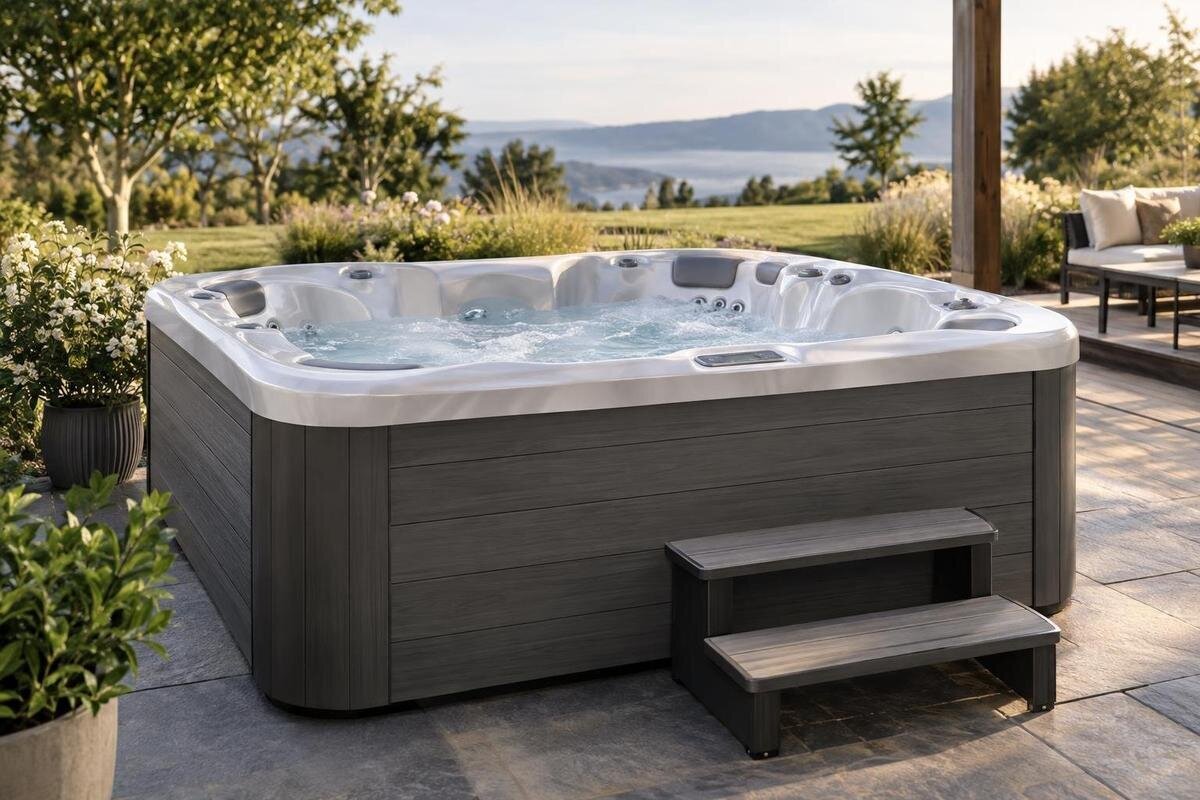
A seat count and a seating plan answer different questions. Capacity is the manufacturer’s stated maximum; a layout shows how the positions are placed and oriented. Products with a similar published count could still arrange seats differently, so the count alone cannot tell you whether people face one another, sit in distinct positions or have room to change posture. Look for a current manufacturer diagram or a clear explanation of the seats, and keep the stated maximum separate from your own judgment about comfort. Terms used for particular seat types may also need explanation. If no layout is shown, mark it as unknown rather than reconstructing one from a photograph.
When reviewing the Bloomcabin Hot Tub Fjord 8 product listing, look for a seating plan, descriptions that identify each position, and any relevant seat measurements the manufacturer publishes. A photograph can show a product’s appearance, but perspective may hide the space between positions; it is not a substitute for a specification. Ask whether the image and written layout refer to the same configuration if anything seems unclear. Where a seat description uses an unfamiliar term, ask what it means for posture and available room. If the listing gives only a headline count, you still need to establish how the individual positions are arranged.
Account for different comfort preferences
Comfort depends on the person, not just the label attached to a seat. Height, leg length, preferred posture and how much someone likes to shift all affect whether a position feels natural. A contoured seat may guide someone into a particular posture, while a more open position may feel easier to adjust; neither is automatically better for everyone. Where a design includes different seat shapes, check what the manufacturer says about each position rather than assuming they are interchangeable. Ask whether people prefer more support or more room to move. The key question is whether the household’s regular users can find positions they would willingly choose again.
If an in-person demonstration is available, have more than one household member try the positions rather than letting one person judge for everyone. Notice whether people can settle in comfortably, adjust their legs and maintain their preferred posture without needing to swap places. Ask each person to name a first and second choice; different answers can reveal whether the available positions suit the group. If a visit is not possible, request a clear seating diagram and any seat dimensions the manufacturer provides. Do not invent a fit from a wide-angle image. The Bloomcabin Hot Tub Aurora 10 product listing is a place to check for model-specific information, not a guarantee of comfort for any particular user.
Consider ease of getting in and out
Entry and exit deserve a separate check from comfort once seated. Walk through the approach users will take and consider where they can pause, turn and step over the tub edge. Think about the whole movement, from approaching the tub to sitting down and getting out again. Someone who can sit comfortably may still find that transition difficult, so ask regular users about balance, flexibility or strength needs without making assumptions on their behalf. Check manufacturer instructions for designated access points or accessories, and do not assume ordinary furniture is a safe support. If a household member needs a specific transfer arrangement, discuss the intended setup with the manufacturer and an appropriately qualified professional before choosing.
Ask a seller to show how a specific model is entered and exited, and to identify which access equipment is included, required or optional. Also consider who will open and close the cover, since that person may not always be the one using the tub. When reviewing the Bloomcabin Hot Tub Cove 2 model page, check for access and cover-handling information relevant to that person's routine. Does opening the cover change the approach to the tub? Can the intended user follow the entry route without someone else having to rearrange the space? Try the route in person where possible, and keep any unanswered access question separate from your assessment of seated comfort.
Seating for solo and staggered use
Shared use is only one part of a household routine. Think about evenings when one person uses the tub, when two people arrive at different times, or when the usual group cannot get together. Identify which positions the most frequent users would choose alone and whether those choices change when someone joins them. A favourite position for a solo session may not be the preferred one for conversation. Also consider whether a person arriving later would need someone else to move before they could settle into a suitable seat. The aim is not to maximize capacity, but to find an arrangement that works without repeated compromises during ordinary use.
Use the seating information on the Bloomcabin Hot Tub Haven 6 model page to assess these smaller sessions as well as your usual shared session. Where a diagram is available, mark the positions each person would choose and consider how the arrangement changes as people join or leave. Note whether users would be happy to swap seats or would strongly prefer to stay in one position. Put these preferences beside your shared-session requirements rather than treating solo use as an afterthought. If the published layout does not show enough detail to assess movement between positions, ask a specific question about that gap rather than assuming the arrangement will be convenient.
Agree on everyday preparation and care
Everyday use includes the work around a session, not only time in the water. Before buying, decide which adult will take responsibility for the preparation and recurring care described in the manufacturer’s instructions, and name a backup for busy weeks or absences. That may include following the stated water-care process, keeping track of routine checks and making sure the cover is closed after use; this guide does not prescribe a schedule or treatment method. Clarify who will notice when supplies or attention are needed. If adults divide the duties, agree who steps in during holidays or other interruptions. A vague plan that everyone will help can leave an essential task unowned.
Ask for the current model-specific care instructions before deciding whether the routine is manageable. Look at what the manufacturer expects users to do before and after a session, how often ongoing checks are required, and what supplies or services the instructions call for; do not assume the same schedule applies to every tub. Think about the household calendar too: travel, shift work and school activities can make regular tasks less convenient. If several adults will share responsibility, make sure each knows where the instructions are and who handles a missed task. The aim is to assess the real workload, not to add an elaborate care plan to a seating decision.
Check the controls and preparation steps
Controls and preparation instructions influence how smoothly a tub fits into ordinary evenings. Find out what users need to do to prepare for a session, which settings or checks are part of the stated procedure, and where the relevant instructions are provided. Ask the manufacturer or seller to explain the steps for the exact model rather than relying on a generic description. If several adults will use the tub, consider whether each can reach and understand the controls and whether the person responsible for care can show a backup how to follow the instructions. Confirm which household members are expected to operate it. These details affect day-to-day ease without telling you anything about the comfort of the seats.
Preparation time is another practical question, but it should come from current model-specific operating information, not an estimate based on a name, an image or an assumed heating rate. If a household expects to use the tub spontaneously, ask what advance preparation the manufacturer recommends and what conditions affect the timing. Record the answer with its source and date, especially if it will shape a weekday routine. If no dependable figure is available, do not build a schedule around a guess; compare what is known and leave the timing unresolved. That keeps convenience claims from turning into an expectation the product details do not support.
Shortlist models using verified seating details
Use a simple comparison table to keep model names, confirmed details and unanswered questions separate. Record the current manufacturer-stated capacity; the seating plan or description that supports it; any published seat measurements you need; and model-specific information about entry, controls and routine care. Note the source and date, since listings can change, and label missing details as unconfirmed instead of filling gaps from a photo or model number. A separate column for questions and answers can make a comparison easier to revisit with other household members. This approach helps you compare the same criteria across the shortlist and see when two products cannot yet be evaluated on equal terms. A ranking built on guesses is less useful than a clear record of what remains unknown.
For example, assess the Bloomcabin Hot Tub Fjord 8 page against the same household requirements as every other candidate. Separate essential needs from preferences: a workable entry arrangement may be essential, while a second preferred seating position may be negotiable. If a missing detail affects an essential need, keep the model on hold rather than letting an appealing feature outweigh the uncertainty. Ask for clarification tied to the specific model and configuration. Once the details are clear, compare the compromises each option would require. A useful shortlist shows why each model remains under consideration, not just how many specifications you have collected.
Check age-related and safety guidance before buying
If children may use the tub, resolve questions about age-related guidance and supervision before purchase. A family household or a high advertised capacity does not establish that a particular model is suitable for a child. Consult current, authoritative Canadian water-safety guidance and the manufacturer’s instructions for the exact model; do not substitute a general online claim or another product’s guidance. Consider who will supervise, how adults will manage access between sessions, and whether every regular caregiver understands the instructions. If adults expect to take turns supervising, discuss that responsibility explicitly rather than assuming someone else will take over. Seek an authoritative answer to any unresolved safety question before planning use.
Include the Bloomcabin Hot Tub Aurora 10 page in this review only on the basis of its model-specific information, not an assumption that the name or image establishes child suitability. If manufacturer information and current Canadian guidance appear to conflict, ask for clarification before treating the model as an option for that use. Keep this decision separate from seating comfort: positions that appear to fit the household do not resolve supervision or access questions. Where technical setup affects the planned arrangement, consult the product instructions and an appropriately qualified professional. Everyone expected to supervise should understand the same plan before the household commits to a routine.
Frequently asked questions
How many seats does a family hot tub need?
Start with the people who regularly expect to soak at the same time, not everyone who lives in the home. Compare that usual group and a realistic busy session with the manufacturer’s stated capacity and seating plan. Then consider whether the positions suit the people who will use them; a maximum count alone cannot answer the comfort question.
Can I use the number in a model name as its capacity?
No. Treat a model number as part of the product name, not as a seat count or a promise about capacity. Check the current manufacturer specifications for the stated capacity and seating layout. If either is unclear, ask for clarification before comparing the model with your household’s usual shared use.
How can I tell whether the seats will be comfortable?
There is no one layout that suits every family. Compare the seating plan and any published seat measurements with users’ heights, preferred postures and legroom needs. If possible, have more than one household member try the positions. Otherwise, request model-specific details and leave personal comfort unconfirmed if the available information cannot establish it.
Is a hot tub with more seats automatically better for a family?
Not necessarily. More advertised places do not guarantee positions that suit each user, and seats that are rarely used may not help with everyday family sessions. Decide how often people will soak together, then check whether the arrangement also works for the smaller groups likely to use it on ordinary days.
What should I check if children may use the hot tub?
Consult current, authoritative Canadian water-safety guidance and the manufacturer’s instructions for the exact model. Do not infer suitability from a family setting, seat count or product name. Resolve who will supervise and manage access between sessions, and avoid planning use while an important question about age-related guidance remains unanswered.
Build your shortlist around the sessions your household is most likely to have: who uses the tub together, who may use it alone, and which positions each person can sit in comfortably. Then verify the current capacity, seating arrangement, access details and care instructions against model-specific information. Do not give a product an advantage because its name contains a number or its photo looks spacious. If seating, access or age-related guidance remains unclear, keep that model unconfirmed and seek an answer before treating it as a fit. A grounded comparison is one that matches verified details to the people and routines that will actually share the tub.
