
Choosing a Hot Tub for Two: Comfort, Space and Practicality
Buying guide
Choosing a hot tub mainly for two people is not just a matter of finding a model with two advertised seats or the smallest capacity. A comfortable shared session depends on whether both of you can sit in positions that suit your height and posture, have enough room for your legs, and move without constantly negotiating space. Conversation, quiet, solo sessions and the occasional guest can all affect what “right-sized” means. Compare documented seating and dimensions against the way you expect to use a tub; do not let a model name or a single number stand in for that assessment.
Agree on what comfort means for both of you
Before browsing, each person should describe a comfortable session in their own words. One may want an upright position and room to extend their legs, while the other may prefer a more reclined posture or enough closeness to talk easily. Ask what makes a position work: back angle, knee bend, where the feet rest and how much personal space feels relaxing. These are preferences to check against a layout, not features you can assume every model offers. Write down two or three must-haves apiece. If your lists match, note that; if they differ, you have a clear set of comfort questions to resolve.
Discuss the compromises you would accept before a product name or seat count anchors the conversation. If closeness matters to one person but room to stretch matters to the other, decide which part is essential and what compromise still feels comfortable. Clarify whether you expect to stay in one position, change places or shift during a session. Then use the same test for every candidate: can both of you settle in without one routinely giving up a preferred position? Agreeing on that standard makes it easier to compare models fairly, instead of letting a striking photo or a single number make the decision.
Plan around the sessions you will actually share
Picture an ordinary shared session rather than an ideal evening. Will you usually use the tub together from start to finish, or might one person join later? Do you expect to chat throughout, spend time quietly, or alternate between the two? Consider how you would choose your places when you get in. If one person settles in first, would the other still have access to a position they like? Think about the end of the session, too: would one person leaving require the other to interrupt their relaxation? These questions help you assess the arrangement as a shared space rather than two isolated seats.
Use that picture to make a short comparison sheet covering preferred postures, legroom, seating distance and how you expect to change places. When reviewing the Cove 2 product listing, note which details help answer those questions and which you still need to clarify. Keep each person’s preferences visible rather than combining them into a single rating for comfort. A model might meet one person’s priorities well while leaving the other with an awkward compromise. Apply the same questions to every candidate, so the comparison reflects your shared routine rather than whichever listing has the most appealing presentation.
Advertised seat count is only one part of the fit
A seat count is useful only when you know what it describes. A stated capacity and a seating layout answer different questions: capacity gives a claimed number of occupants, while a layout shows the positions people are expected to use. Neither tells you whether two preferred seats leave enough space between them or whether both people can stretch their legs comfortably. Look for the documented capacity and a layout for the exact model and configuration. Treat those as starting information, not a verdict on comfort; two people can fit within a stated capacity and still prefer a different arrangement.
Numbers in catalogue names should not be used to work out capacity. For example, the Haven 6 catalogue listing identifies a particular model; the numeral in its name does not establish how many people it accommodates or how its seats are arranged. Confirm the capacity in product documentation and look at the layout as well. If a listing is unclear, ask which model and configuration its specifications describe. This avoids comparing a product title or image with details that may belong to a different version.
Compare height, posture and seat depth
A seat that suits one person’s proportions may not feel as comfortable to someone with a different height or posture. A deeper position may feel supportive to one person but less comfortable to another; a shorter person may want to check where their feet rest, while a taller person may need room to extend their legs. Notice whether either of you has to brace, fold forward or hold an awkward position to settle in. Height alone does not determine comfort, but differences between you make it especially important to assess the positions against both people’s preferences.
If you can inspect a showroom model, try your intended positions at the same time rather than evaluating each seat alone. A position that feels spacious on its own may feel different when another person’s knees and feet are in the adjacent area. Sit as you would during an ordinary session, then make small adjustments and see whether both people can remain comfortable. When reviewing the Fjord 8 model page, identify the positions each of you would want to assess. If a trial is not available, ask for a current seating diagram and the internal measurements relevant to those positions, rather than relying on exterior dimensions to judge seat depth.
Check legroom and room to shift
Legroom is not just a matter of whether your feet fit somewhere in the tub. Check where your knees point, whether your feet have a comfortable resting place and whether one person’s legs occupy the space the other needs. This matters most when you prefer separate positions but share an interior area. If either person has to keep their legs tightly tucked or avoid moving them to prevent contact, the layout may feel restrictive during a longer session. Compare the spaces each position actually offers rather than assuming that a higher seat count means there will be room to stretch.
Also consider ordinary movements: bending a knee, extending a leg, turning slightly or changing posture. Ask whether one person can make those adjustments without the other having to move each time. When assessing the Bloomcabin Hot Tub Cove 2, compare its seating plan with the space each of you needs for those movements. Distinguish contact you both enjoy from contact that forces someone to stay still. If you prefer to stretch out only occasionally, check that position as well as your usual posture. A product photograph may not make shared foot space easy to judge, so clarify how the intended positions relate to one another.
Choose a layout that supports conversation
Think about how you want to interact during a shared session. Some couples prefer to sit side by side; others find it easier to talk when they can see one another without twisting around. The orientation of the positions, the distance between them and the space each person needs to sit naturally can all affect that experience. If one person likes a little more personal space, very close positions may not feel relaxing even when the tub holds two people. Treat conversation and quiet as separate preferences to discuss, rather than assuming that both people want the same kind of shared time.
Look for a seating diagram that makes the positions clear, then consider whether both people could use their preferred spots without leaning or turning uncomfortably. For the Bloomcabin Hot Tub Haven 6, use that diagram to identify the pair of positions you would choose for conversation. Then consider whether you would want different places for quiet relaxation. You need not face each other throughout a session, but neither person should have to hold an awkward posture simply to talk. If the diagram leaves the seat orientation unclear, ask about the exact configuration rather than guessing from an image taken at an angle.
Weigh interior comfort against footprint and upkeep
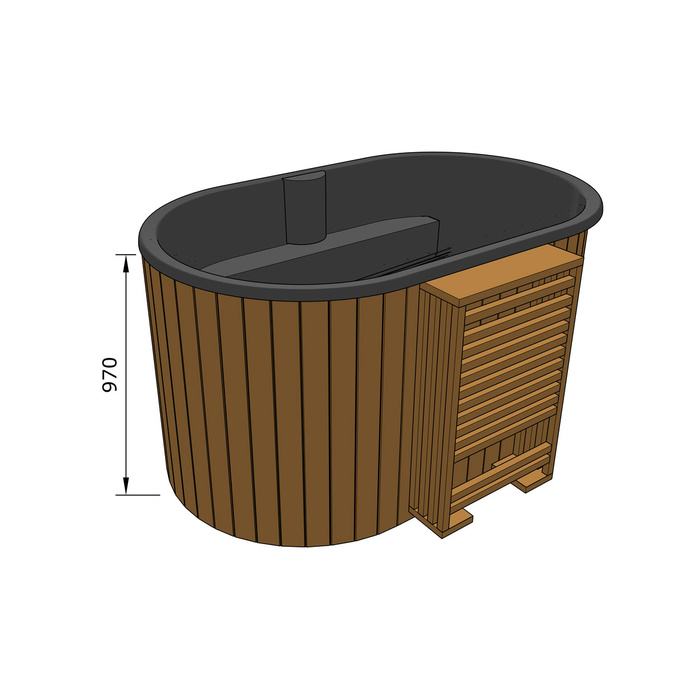
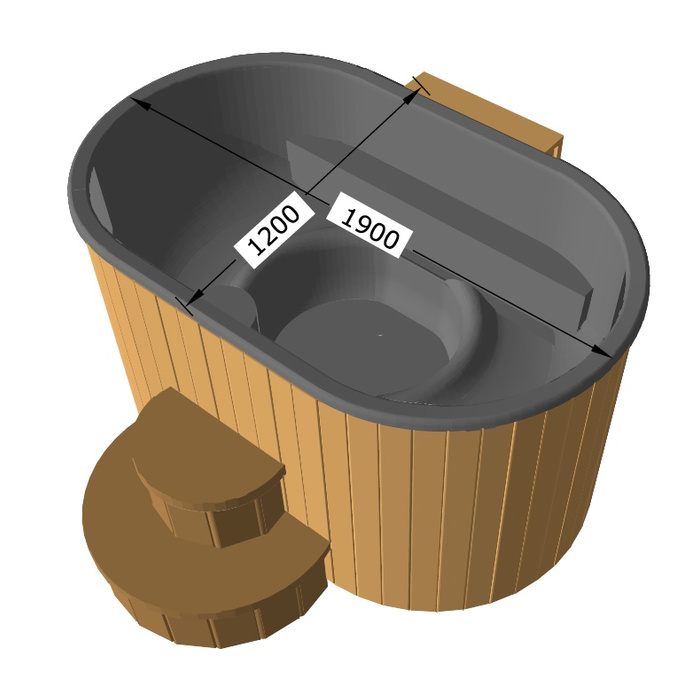
A layout that gives two people more room may also take up more of the outdoor area you want to keep for other uses. Compare the product’s documented exterior dimensions with the space you are willing to dedicate, and do not assume that a spacious-looking interior reveals how large the outside will be. The aim is not to choose the smallest tub at any cost; it is to decide whether the extra room you value is worth the space it may require. Keep the comparison focused on how the tub will fit into your everyday outdoor routine, not on a theoretical maximum capacity.
Upkeep is another part of practicality. Compare water capacity and documented care requirements alongside the interior space you would actually use. If the Aurora 10 listing is on your shortlist, consider whether its dimensions and care information fit the space and routine you have in mind. Identify what any additional room would give you: a more comfortable pair of positions, space to shift, or seats you would rarely occupy. This makes the trade-off concrete. Extra space may be worthwhile when it solves a daily comfort problem, but unused seating alone is not a reason to accept a footprint or care routine you would rather avoid.
Decide how much occasional guests matter
For a tub intended mainly for two people, occasional guests should influence the choice in proportion to how often they will actually join you. Think about the gatherings you expect in a typical year, not only the largest group you could imagine inviting. Would everyone need to use the tub at once, or would taking turns be fine? If guests are rare and you are comfortable rotating, there may be little reason to let a one-off occasion outweigh the comfort and everyday practicality you want as a pair. If shared use with guests is frequent, make that a real part of your requirements.
For regular guest use, confirm both the stated capacity and the seating arrangement for the exact model; a capacity figure does not say whether the positions will suit your group. When considering the Bloomcabin Hot Tub Fjord 8, look at where you and your partner would sit with guests present. Would you keep your usual positions, swap seats or accept less room for those occasions? Decide which compromises are acceptable for a visit but would become frustrating every day. That distinction gives hosting the right weight without making an occasional gathering the main reason for choosing a tub intended primarily for two.
Account for solo use and different routines
A hot tub bought for two may still be used by one person regularly. If that is likely, consider whether each of you has a preferred position that remains comfortable when the other is not there. The best position for solo use may not be the one either person would choose when sharing, so compare both patterns rather than assuming they are identical. At the same time, do not let solo sessions displace your main purpose: if most use will be together, both people still need positions that work at once. A simple estimate of shared and individual sessions can help you give each use the right importance.
Solo use also raises a practical question: can either person manage the routine that comes with using the tub? Review the documented preparation and care tasks together, and decide who would normally handle them. If one person expects spontaneous solo sessions but relies on the other to do all the preparation, discuss whether that arrangement is realistic. Keep this comparison focused on the tasks relevant to your chosen model rather than assuming every tub involves the same work. A tub that suits both people’s seating preferences should also fit the time and effort each is willing to contribute to everyday use.
Confirm the details for the exact model
Before you make a shortlist, gather the details that answer your comfort questions: the exact model and configuration, stated capacity, seating layout, exterior dimensions and water capacity. Check that the information applies to the product you are considering, rather than relying on a general image or a similar model name. If seat shape, spacing or internal measurements are not shown, ask whether that information is available. You can also ask whether it is possible to assess the seating in person. Make a note of any unanswered questions; an unknown detail should remain a question, not an assumption in favour of a model.
For the Bloomcabin Hot Tub Aurora 10, as for any product on your shortlist, compare the confirmed specifications with the preferences you and your partner wrote down. Ask which seats two people can use together, how the stated capacity is defined and which dimensions are exterior measurements. If you cannot try the seating, use the clearest available layout and ask about any measurements you need to judge posture or legroom. A consistent comparison across models makes it easier to see whether a proposed trade-off is acceptable. The right choice is the one that answers your shared comfort needs while remaining practical for your space and routine.
Frequently asked questions
Is a hot tub with two seats automatically the best choice for a couple?
No. A seat count does not show whether the positions suit both people’s heights, preferred postures or need for legroom. Compare the actual seating layout with how you expect to use the tub, and check that the stated capacity refers to the exact model you are considering.
Do the numbers in a hot tub’s name tell me how many people it fits?
Not necessarily. Treat numbers in catalogue names as part of the product identity, not as verified capacity. Look for the stated capacity and seating layout in the product documentation, and ask which model or configuration those details describe.
What should we check when trying a seating layout together?
Sit in your preferred positions at the same time, if a showroom trial is available. Notice whether both of you can rest your feet comfortably, bend or extend your legs, shift position and talk without repeatedly moving to make room for one another.
Should occasional guests determine which hot tub we choose?
Give guest use weight in proportion to how often it will happen. If it is rare, decide whether taking turns is acceptable before choosing a model that uses more of your outdoor space. If you expect guests regularly, verify the actual capacity and layout rather than relying on a model name.
Which details are most useful for comparing hot tubs for two?
Check the exact model’s stated capacity, seating layout, exterior dimensions and water capacity, along with any documented care requirements that affect your routine. If you cannot try the seats, ask for a clear layout and the measurements relevant to the positions you and your partner prefer.
The best hot tub for two is the one that lets both people sit naturally, keep comfortable space for their legs and enjoy the kind of session they actually want to share. Use your own preferences to judge each layout, then balance that comfort against the space and routine care the model requires. A verified seating plan and, where possible, a joint trial will tell you more than a seat count or product name.
