
Cloudy Hot Tub Water: Common Causes and What to Check
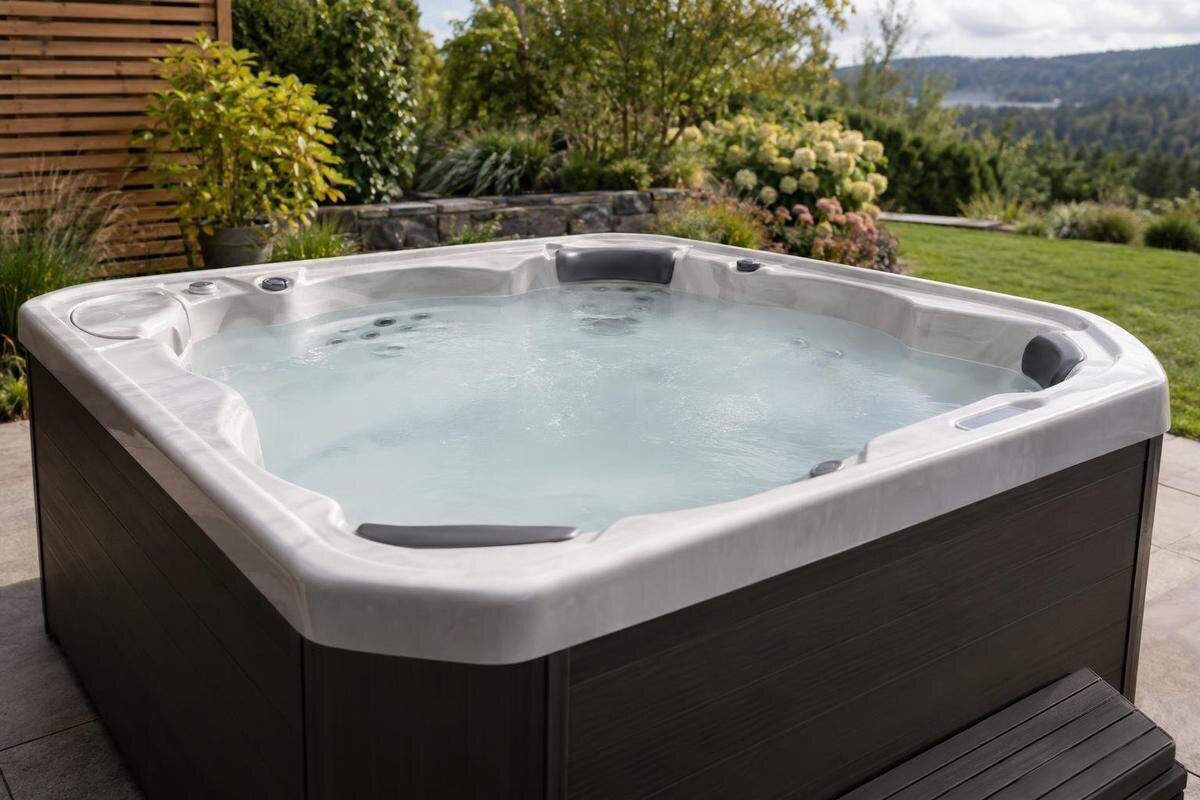
Hot tub troubleshooting
Cloudy water has several possible causes, from a water-test result outside the manufacturer’s range to circulation problems or residue. A careful check helps narrow the issue before you add a product, buy a part or consider replacing the tub.
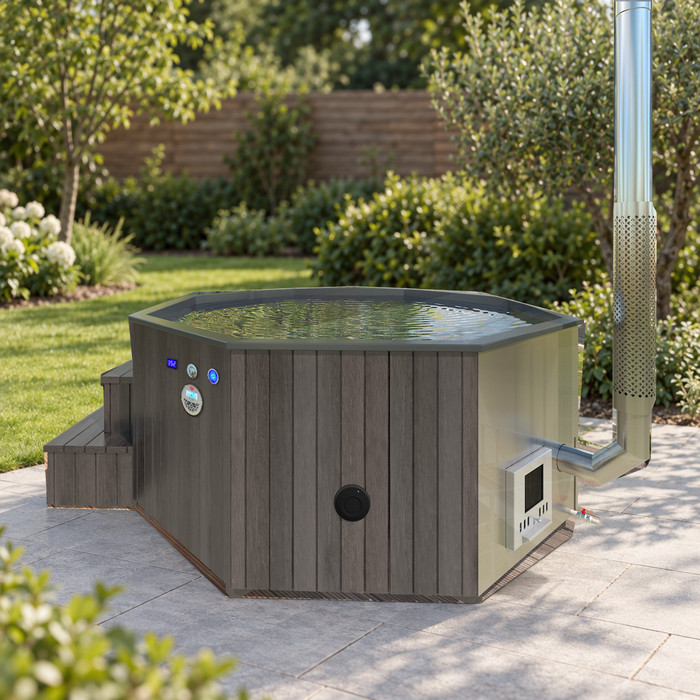
Why hot tub water can look cloudy
Cloudy water is a symptom, not a diagnosis. Fine particles, water-care results outside the range set for the system, limited circulation or filtration, and residue introduced during use are all possible contributors. More than one may be involved. The appearance does not reveal which explanation fits or whether equipment has failed. A photograph or a single look through the water cannot distinguish a water-care issue from a filter problem. Cloudiness alone also does not show that the hot tub is damaged or needs replacing. Treat the change as a reason to gather evidence in order, not as an instruction to buy a treatment, component or new tub. Keep what you observe separate from what a test or service check confirms.
Begin with observation, not disassembly. Note whether the haze is uniform or includes visible specks, a surface sheen, foam or deposits, and whether you notice an unusual odour. Record any display warning or change in circulation that is apparent during normal operation, plus when the cloudiness first appeared. Lighting and background affect how haze looks, so compare from roughly the same viewpoint if you take a photo. A photo can document appearance but cannot establish water quality. Do not judge water suitability by sight or smell; follow the current owner’s instructions if they restrict use while the water is unclear. Do not force controls or open equipment.
What to record in a water test
Use a test rather than guessing from colour or appearance. Find the current owner’s and water-care instructions for the exact model and system, then choose a test kit that covers the measures those instructions require. Follow the kit’s directions for collecting a sample, applying or mixing the test, waiting and reading it; the method matters as much as the chart. Check that strips or reagents are within their stated date and have been stored as directed. If the kit is intended for a different water-care system, or its instructions conflict with the tub manual, pause and ask the manufacturer or kit supplier which method applies. Ask for clarification rather than improvising if the sampling or reading directions are unclear.
Write down every required reading, not just the one that looks unusual, along with its unit, date and test-kit name. Compare it with the range in the current manual for that particular system; do not borrow limits from a different hot tub, a generic chart or an online discussion. Keep the result as reported rather than estimating a colour between categories or rounding unless the test instructions explain how. The Bloomcabin Hot Tub Cove 2 product page can help confirm a catalogue name, but it does not establish test limits or care procedures. If the manual is missing, ask the manufacturer for the current water-care instructions before treating the water.
How to read the results
Read all required results together. Depending on the water-care system, the manual may ask you to check measures such as sanitizer and pH; it defines the relevant list, units and acceptable ranges. One reading outside its stated range may call for a specific manufacturer-directed response, but the cloudy appearance does not tell you what dose to use. A reading within range does not rule out residue, circulation limits or another cause. Do not treat one number as a complete diagnosis, and do not adjust several results at once because the water looks hazy. Follow any timing instructions for testing after a product has been added; do not invent an interval.
If a result conflicts with another test, seems hard to read or sits near a boundary on the kit’s scale, check the kit directions and repeat only as they specify. Record both attempts instead of choosing the more reassuring one. Avoid repeated product additions while trying to make the numbers agree; this can make the cause harder to identify. For Bloomcabin Hot Tub Haven 6, request the current care documentation for the exact model and system before relying on a range or treatment recommendation. A product name alone does not identify the correct test method. If the readings remain unclear, send the complete results and kit details to manufacturer support or a qualified water-care professional.
Check circulation and filtration safely
Circulation and filtration are possible parts of the investigation, but cloudiness does not prove that a filter or pump has failed. Check only what is visible in normal operation: note any warning or error message, an interruption, or a change in water movement that the manual describes. Write down the message exactly, including any code, and compare it with the current guide rather than guessing at an icon. If the manual does not explain an indicator, ask for clarification. A visual observation can reveal a warning, not confirm the condition of an internal component. Do not force controls, run an unfamiliar test cycle, remove a guard or open an access panel just to look for a cause.
An obstructed, damaged or incorrectly fitted filter may affect water movement, but it is only one possibility. Check the manual to see whether owner inspection is permitted and follow its exact preparation, handling and refitting directions; do not transfer a cleaning or removal method from another model. If the part is inaccessible, visibly damaged or difficult to identify, stop rather than improvising. The Fjord 8 product listing is useful for confirming a catalogue model name, not for inferring its filter code, access method or circulation behaviour. Ask the manufacturer or a qualified technician for the model-specific procedure if those details are not in your instructions.
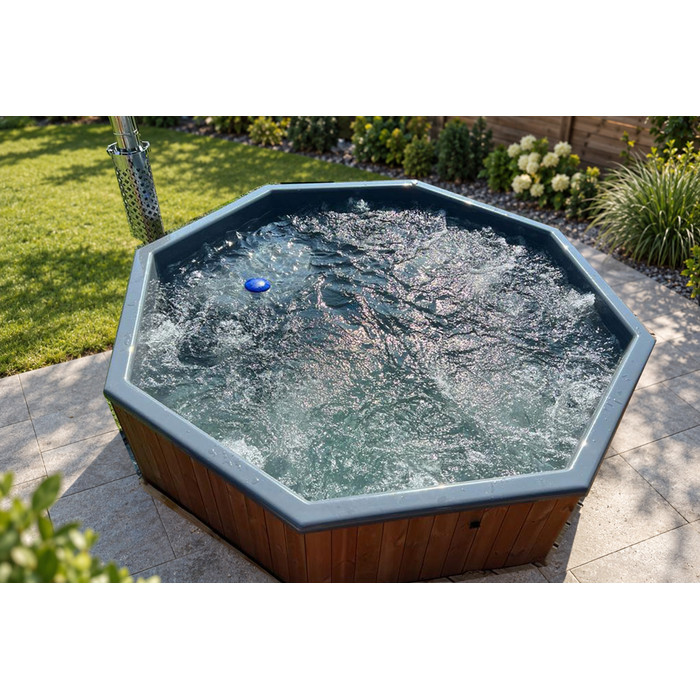
Look for residue and possible contamination
Visible clues can help describe the problem without identifying it. A surface sheen, persistent foam, flecks, deposits or an unusual odour may justify checking whether residue or debris entered the water, but none proves a particular contaminant. Think back to recent use of lotions or hair products, residue on clothing, a cleaning or water-care product, or wind-blown material. Note only events that actually occurred; do not assume that foam or a ring means the water needs a particular chemical. These observations add context to a test result and a service conversation, but they are not a substitute for either.
Record exact product names from their labels, when they were used or added, and whether the water was recently topped up or changed. If you suspect an unknown substance entered the tub, do not try to mask it or neutralize it with another product. Use the label and manufacturer instructions for what to do next, and do not mix products or exceed directions to speed up clearing. The Aurora 10 catalogue page can identify the listed model, but its current owner’s manual is what to consult about compatible water-care products. If the manual does not answer the question, ask the manufacturer before adding anything.
Build a timeline of recent changes
Build a short timeline from the last time the water looked normal to the first time it appeared cloudy. Include a refill or top-up, a change in source water or care product, recent additions, unusually heavy use, and any debris or runoff that may have reached the tub. Note whether the haze appeared suddenly or developed gradually. A close timing link can help narrow questions, but it does not prove that the most recent event caused the haze or that a product is faulty. Record dates and exact package names; these details are more useful than a general memory that the water was treated recently.
Keep the model identifier with that timeline so your notes can be matched to the right tub when you request help. For example, the Cove 2 catalogue entry can help you cross-check the catalogue name against your paperwork; record the unit identifier separately from the model name. Add each test result, including units and when it was taken, and note any manufacturer-directed action between tests. Make only the correction the instructions specify, then retest at the time they state. Changing settings, adding several products or replacing parts together makes it difficult to tell which change affected the water, so avoid experimenting just to see what happens.
Check compatibility before buying water-care supplies
Choose a test kit that can provide the results your manual requires; choose a treatment only when those results and the instructions identify a specific need. For a test kit, confirm it covers the water-care system and the measures named in the model’s instructions, and that its scale can be compared with the stated limits. For a treatment, confirm that both the package directions and the tub’s current instructions permit its use with that system. A spa label, similar packaging or a claim about clearing cloudy water does not establish compatibility. If you cannot identify the water-care system, confirm it with the manufacturer before selecting either type of product.
Before ordering, check the product’s intended use, directions, safety information, units and any stated expiry or storage requirements. Do not calculate a dose from the model name or a guessed water volume; use only the capacity and directions documented for the exact unit and product. If you are buying supplies for Bloomcabin’s Haven 6 hot tub, ask for its current manual or approved-products guidance and compare the proposed product with those requirements. Give the supplier the exact product name rather than asking only for something to clear cloudy water. If compatibility remains uncertain, ask the manufacturer before buying another additive that may not address the problem.
Match any replacement part to the exact tub
Cloudy water alone is not evidence that a filter, pump or other component needs replacing. Consider a part only if an owner-approved check identifies damage or a mismatch, the system reports a fault, or a qualified professional diagnoses one. Record the exact error code and any visible condition before changing anything. A filter may be one area to investigate, but the water’s appearance cannot identify it as the source. Do not remove or alter a component unless the exact manual permits the task and gives the procedure. If you are unsure what the indicator or visible condition means, ask before ordering.
Before ordering, match the part reference to the exact model and, where the manufacturer requires it, the unit identifier. Confirm compatibility in current documentation or with manufacturer support; do not rely on similar appearance, a model number embedded in a product name, or a generic fits-most claim. When discussing a replacement for the Bloomcabin Hot Tub Fjord 8, distinguish the tub’s catalogue name from the component’s own part reference. Include both in your enquiry so the supplier knows which item you need checked. If the reference is missing, ask the manufacturer to identify the correct part. If it affects circulation or the manual does not assign the work to the owner, have a qualified technician assess it rather than trying a substitute.
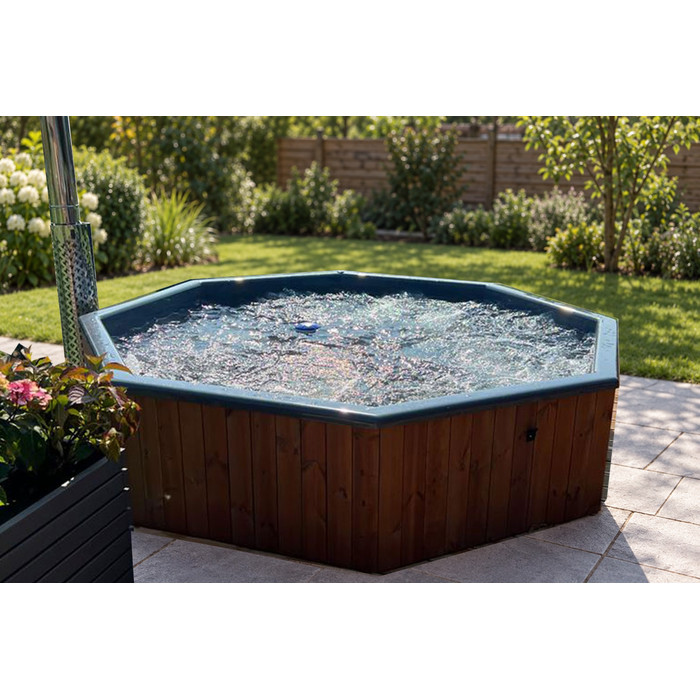
When to call the manufacturer or a technician
Contact the manufacturer when the current manual is missing, an acceptable range is unclear, or you need to confirm test-method, product or part compatibility for the exact system. Also ask for guidance if a control message is unexplained, readings remain inconsistent after you follow the test-kit directions, or the haze persists after a manufacturer-directed correction. Have the model and unit identifiers, readings with units, kit name, product labels, timeline and any error message ready. Sharing what you have already checked helps avoid repeating steps or changing several things at once.
Use a qualified hot tub service professional for a suspected circulation fault, persistent warning, visible damage, unusual operating noise, or any inspection or repair the manual does not permit owners to perform. Do not remove electrical covers, bypass a control or continue a step the manual says to stop. When requesting service for Bloomcabin Hot Tub Aurora 10, explain whether you need help interpreting test results, investigating a warning or assessing a visible condition. This gives the service provider a clearer description than cloudiness alone, without assuming a diagnosis. Follow any manufacturer direction about keeping the tub out of use while the issue is unresolved.
How to confirm the issue is resolved
After a manufacturer-directed correction, repeat the test at the time and by the method in its instructions. Record the new values and compare them with the same model-specific limits; then note whether the haze has changed. Use the same approved method for a meaningful comparison unless the manufacturer says otherwise. Keep these as two separate checks: whether the required readings are acceptable and whether the water looks clear. A clearer appearance does not establish that the test results are within range, and acceptable readings do not explain cloudiness that remains.
If the cloudiness remains, returns or comes with a warning or change in circulation, give your notes to manufacturer support or a qualified technician rather than repeating treatment or ordering parts on speculation. If both the appearance and required readings return to the condition described in the manual, keep the record in case the issue recurs. A confirmed cause can point to a compatible supply, a specific replacement part or professional help. The cloudiness itself cannot choose among those options and is not a reason by itself to replace the hot tub.
Frequently asked questions
What should I check first when my hot tub water turns cloudy?
Note when it began and any visible residue or display warning, then test the water using the method specified for your exact system. Compare all required results with the current manual before changing anything. Appearance alone cannot identify the cause.
Can the filter cause cloudy hot tub water?
A filter or circulation issue is one possibility, but cloudiness does not establish that the filter is at fault. Check indicators and inspect the filter only as the manual permits. Ask the manufacturer or a qualified technician if you find damage or are unsure.
Should I add a clarifier to clear cloudy water?
Not without checking the test results and confirming that the product is compatible with your water-care system. Cloudiness can have several causes. Follow the product label and the exact hot tub’s current instructions; do not choose a treatment by appearance alone.
Does clear water mean the hot tub is ready to use?
No. Appearance does not replace water testing or model-specific use guidance. Check the readings required by the manufacturer and follow any instructions about use while a water-care result or equipment issue remains unresolved.
Does cloudy water mean I need a new hot tub?
No. Cloudiness alone does not show that a part or the tub has failed. Test the water, follow the manual’s permitted checks and seek a diagnosis if the problem persists before deciding whether a part or tub needs replacing.
The useful distinction is between a symptom and a confirmed cause. Test the water with the approved method, compare every required result with the exact model’s instructions, and inspect only the circulation and filter indicators the manual allows. If that evidence does not explain the haze, keep your notes and seek model-specific help; neither an extra additive nor a replacement hot tub is a sound first guess.
