
Greenhouse Powdery Mildew: Diagnose It, Then Contain It
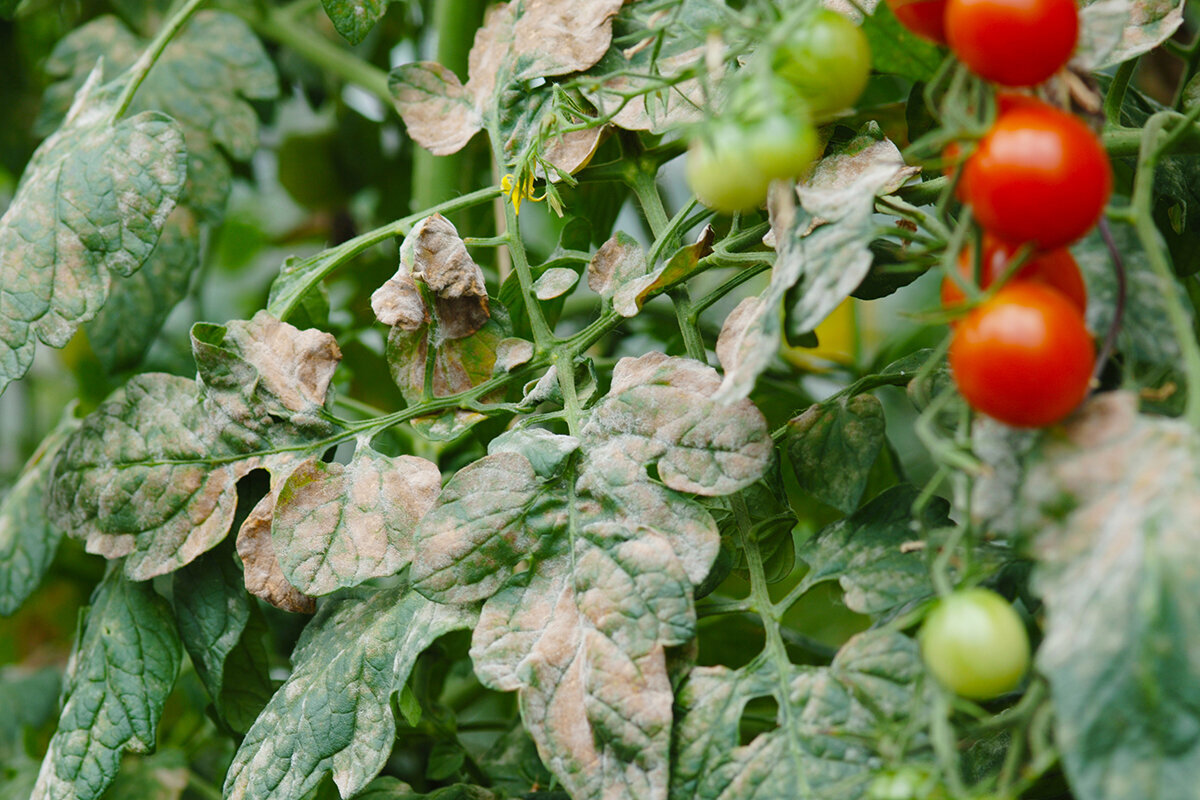
Plant health · practical greenhouse guide
Greenhouse Powdery Mildew: Diagnose It, Then Contain It
A dusting of white on a leaf may look minor, yet guessing can make the problem harder to manage. Identify what is on the surface, limit contact and adjust the sheltered conditions around healthy new foliage.
+
Start with identification A white mark is not automatically mildew, and removing visible powder does not restore infected tissue. Sound control begins with diagnosis, isolation where practical, a more open canopy and only those measures permitted for the particular crop.
What to do first
Preserve the clues while limiting contact
Seeing white on a crop often creates an urge to spray immediately. Take time to inspect it instead. Keep a suspected colony from being carried through the growing area, but retain enough undisturbed material to identify the problem. These fungi grow in association with living hosts and produce spores that may travel in moving air or during handling. Host relationships matter: a colony on zucchini does not, by itself, identify a mark on cucumber, mint, rose or zinnia.
Mixed plantings make that distinction essential. Food crops, ornamentals, seedlings and mature container plants can differ greatly in susceptibility and in which pest-control products may legally be used on them. Base the response on the named crop, where symptoms occur and the immediate growing conditions. Do not begin with an all-purpose homemade mixture.
01
Reduce contact Move a suspect pot or tray only when it can be separated without sweeping it through healthy leaves. Prevent foliage from touching adjacent plants and place the plant where repeated inspection will be straightforward.
02
Capture the full symptom pattern Take detailed photographs of the mark as well as a wider view showing the plant’s location. Record whether it occurs on fresh or old foliage, in shaded growth, or on stems, buds and flowers.
03
Scout beyond the first plant Continue the inspection through at least the adjoining row. Pay special attention to congested centres, glazing edges, walls, shelving and any object that interrupts moving air.
04
Review the lead-up Recent warm afternoons, cold nights, shut vents, crowded growth, evening irrigation and condensation tell you more than a single humidity reading taken in the middle of the structure.
White marks that can mislead
Study texture, pattern and location together
Powdery mildew commonly forms pale white or grey-white growth with a floury or fine felt-like texture. Small colonies may enlarge until they meet. Spray deposits, hard-water minerals, natural plant wax and unrelated diseases can produce similar colours. Treat a visual check as preliminary evidence rather than confirmation, and avoid rubbing multiple leaves because handling may dislodge spores or injure soft tissue.
Loose fungal growth Dried-drop outline Built-in plant bloom Damaged leaf tissue
| Possible cause | What it may look like | Where the pattern leads | Low-disturbance check | What the check cannot prove |
|---|---|---|---|---|
| Powdery mildew | White, cream or grey growth with a soft appearance; initially separate round colonies may eventually form a broad dusty layer. | Leaves and tender shoots are frequent sites. The precise host and fungus determine whether the upper face, underside, stems, flower buds or blooms are involved. | Part of a small colony may lift onto a dry dark cloth. Affected foliage can lose its sheen, yellow, twist or later show brown and cork-like damage. | The surface can look cleaner after powder is lifted even though fungal structures remain associated with the living leaf. |
| Dried spray | Look for a consistent film, fine dots, rings or streaking. Unlike a fluffy colony, the finish may reflect light. | Deposits often repeat along the direction of application and may occur on exposed foliage, labels, containers, glass and surrounding surfaces. | Relate the marks to the most recent application, the source water and the direction of the nozzle. Then inspect sheltered undersides that received little spray. | A treated plant may carry both residue and an active infection, so finding one does not exclude the other. |
| Hard-water mineral mark | These appear as chalk-like spots or firm-edged circles after droplets evaporate. | They often occur on upper foliage, greenhouse glazing and dark container rims following overhead watering or misting with mineral-rich water. | Check nearby glass, labels or pots for a matching mark. Mineral traces commonly define the former outside edge of a droplet. | Do not let a water mark hide a developing disease. Revisit the tissue and inspect subsequent leaves. |
| Natural bloom or plant hairs | This tends to be a consistent blue-white or silver feature of the surface, not an uneven collection of expanding islands. | Comparable leaves, stems or fruit from the same species or cultivar will usually carry a similar finish. | It looks integrated with the plant rather than newly deposited in scattered cloudy patches. | Avoid forceful rubbing. Wax can serve a protective role, and its appearance differs with plant type, cultivar and cultivation conditions. |
| Unrelated foliar disease | Some diseases begin with pale areas but progress to sharply angled patches, grey fungal growth, soaked-looking lesions or dead tissue. | Their distribution may correspond with persistent wetness, splashed water, wounds or the susceptibility of a particular crop family. | Investigate dead centres, yellow margins, spores of another colour, damage on stems, angular borders and sudden tissue collapse. | When the signs remain ambiguous—especially on an important edible crop—qualified plant-health guidance is safer than relying on appearance alone. |
Use the comparison to organize an initial inspection, not to declare a diagnosis. Wiping behaviour is inconclusive, and the disease varies in appearance among host plants.
The microclimate the room sensor misses
Acceptable readings can coexist with stagnant foliage
Conditions beside a leaf may differ markedly from conditions in the centre aisle. Closely packed foliage, containers, shelving and the shaded centres of tall plants alter moisture, temperature and air movement. Those small protected spaces can favour disease even when the greenhouse as a whole appears well managed.
Crowding closes the pathways between plants
Leaves that overlap create shade, obstruct circulation, remain damp longer after irrigation or condensation and conceal early symptoms. Allocate room for a plant’s mature spread rather than using the container footprint as the spacing guide.
Falling temperatures concentrate moisture near foliage
Plants and growing media release moisture during a warm day, and some of it remains inside. Relative humidity increases as the air cools, while colder surfaces may collect condensation. If the crop and outdoor weather permit, earlier ventilation and modest late-day heat can reduce the moisture carried into night. Plant requirements, local weather and energy use should determine the approach.
Persistent shade also changes temperature and airflow
Interior growth, shaded shelf ends and leaves pressed against a wall can be cooler and more stagnant than the open aisle. Moderate temperatures, humid air and shade favour many powdery mildews, but species respond differently to liquid water. One blanket humidity rule is therefore inadequate.
Still pockets and drying blasts need different fixes
A strong fan directed at a single bench may stress nearby foliage yet fail to move air elsewhere. Seek mild movement throughout the planting, together with an open exit for used air and an inlet for outside air.
Identify the host before choosing a response
The name covers many host–fungus relationships
Many powdery mildew fungi favour a particular plant or related group. Consequently, symptom location, seasonal pressure and effective management are not identical for every crop. Use the plant groups below to focus scouting rather than to make a diagnosis. When selecting seed or young plants, evaluate any documented tolerance for that exact species and cultivar.
I
Cucurbit crops
Cucumber, melon, zucchini and pumpkin may develop conspicuous pale growth over their foliage. Fast vine development can soon produce a shaded, difficult-to-inspect mass when plants are trained too close together.
- Begin scouting with mature leaves and foliage inside the canopy.
- Train vines so growth stays separated, visible and reachable.
- Confirm resistance information for the named crop and cultivar.
II
Culinary herbs and leafy food crops
Mint, sage and rosemary host different disease relationships, yet crowded containers and repeated picking can create equally hidden foliage. Before treating an edible crop, verify the Canadian registration, named use, label directions and required interval before harvest.
- Keep products restricted to ornamentals away from food crops.
- Use clean cutting tools whenever harvesting.
- Maintain a visible gap between neighbouring containers.
III
Ornamental and flowering crops
Roses, zinnias, petunias and verbenas can be susceptible without showing an identical pattern. Look beyond obvious powder for distorted shoots and dry, corked or scab-like damage with little visible white growth.
- Include buds, tender shoots and lower leaves in each inspection.
- Observe incoming plants separately before placing them with the established collection.
- Keep cultivar notes from one growing season to the next.
IV
Carryover plants and year-round collections
Living hosts retained through winter or maintained all year may allow certain host–pathogen combinations to persist between growing seasons. A tidy-looking house after summer can still contain plants that need regular scouting.
- Examine carryover plants before new spring growth fills the space.
- Dispose of remaining diseased plant material.
- Where practical, place propagation away from established stock.
The working rule is simple: investigate and manage the plant actually showing symptoms. Registration, professional advice and cultivation changes must relate to that crop rather than to the general disease name alone.
Plan how air travels
An open route matters as much as the fan
Ventilation replaces warm, moisture-laden greenhouse air with outside air. Circulation redistributes air already inside. Neither process performs well when shelves are solidly packed or mature foliage forms a barrier. Reassess the layout after plants have filled out rather than relying on the arrangement used for small transplants.
The design options for the Classic Aluminium Greenhouse include glazing, roof vents and equipment alongside usable cultivation space. Sizes, opening choices and other configurable details are set out on the Classic Aluminium Greenhouse product page.
High-level exit
Warm air rises ↑
Open roof vent
Gentle circulation
Spaced foliage
Still pocket
Low-level entry
Open passage →
Clear the blockage
Early in the day: Inspect before daytime warmth erases evidence from overnight. This is the best opportunity to notice misted glazing, chilled inner foliage, recurring drips and corners where leaves remain still.
During peak warmth: Coordinate vents, shade and mild circulation so excess heat can leave without trapping air among the leaves. Direct fans along the planting rather than continuously blasting one crop.
Before evening cooling: Avoid adding avoidable moisture just as temperatures begin to drop. Adjust openings and any modest heating to the crop and current weather, then confirm that expanding plants have not blocked equipment or air passages.
Use a sequence, not a single remedy
Reduce the disease source while correcting its setting
A treatment cannot compensate indefinitely for crowded, humid foliage with poor air exchange. On the other hand, spacing and ventilation alone may not halt established colonies on a susceptible crop. Work in order: reduce infected material where sensible, improve the local environment, select only permitted crop-specific products and assess progress on newly formed leaves rather than the appearance of old damage.
Folio 01 / reduce the source
Remove only when removal has a clear purpose
With a small localized outbreak, taking out heavily affected leaves, shoots or an entire plant may substantially lower the spore source. Use clean shears, preferably reserved for this work, and transfer the material directly into a bag or lidded container. Do not carry it uncovered through unaffected plants. Complete removal may be the better choice when a badly weakened, replaceable plant sits among valuable susceptible neighbours.
Retain enough foliage to avoid abrupt stress and sun exposure. The objective is to lower active disease pressure and create space for air—not to make every old leaf look perfect.
Folio 02 / improve cultivation
Remove avoidable plant stress
Create openings with wider spacing, selective pruning and a clearer arrangement of shelves and pots. Apply water to the root area early enough in the day that crops do not enter a cool night unnecessarily wet. Limit avoidable leaf wetness when other foliar diseases are a concern, and avoid excess fertilizer that produces soft, congested growth.
Clean hands and tools between plants, collect fallen foliage, and remove dead debris, pooled water and other material that remains damp within the cultivation area.
Folio 03 / verify before applying
Match every product to its registered crop use
If colonies continue to advance, a registered pest-control product—including a biological option where registered—may be appropriate for the particular plant and setting. Registration, availability, plant tolerance and effectiveness differ. Sulphur, oils, biological controls and other fungicides can carry limits involving temperature, timing, mixtures or phytotoxicity. A familiar home recipe is not a substitute for checking the approved use.
Read the current Canadian label from beginning to end. Confirm the crop, target pest, location of use, application rate, interval, maximum applications, protective precautions and pre-harvest interval. If cultivar tolerance is uncertain, use a small unobtrusive test group only when the label permits that approach.
Folio 04 / manage resistance and reassess
Avoid relying repeatedly on the same fungicide group
When repeat fungicide treatment is permitted, follow label directions and qualified resistance-management guidance when selecting rotations. More frequent treatment or a rate above the label does not solve resistance. Keep a record of the product, active ingredient or group, crop, date, conditions and observed outcome so inadvertent repetition is easier to spot.
Return to the crop when new leaves emerge. Previously infected tissue may remain discoloured or distorted; progress is shown when fresh foliage remains clear and no additional colonies appear nearby.
Check Canadian registration before use
Use Health Canada’s product and label searches to confirm that the pest-control product and its stated directions cover the crop, pest, setting and user involved. Follow the current label, including rates, treatment intervals, maximum applications, precautions, temperature limitations, compatibility instructions and pre-harvest intervals. A use listed for ornamental plants does not establish permission for cucumbers, tomatoes or herbs. Also check whether the destination province or municipality imposes additional use restrictions.
Monitor whether containment is holding
Let fresh foliage provide the evidence
Existing scars, yellow areas, distorted growth and dull tissue record earlier damage and may persist after the colony stops advancing. Instead of waiting for old foliage to recover cosmetically, look across the planting for a trend: new leaves remain unaffected, adjacent plants acquire no colonies, and sheltered areas do not become crowded and stagnant again.
Choose a consistent review period and inspect plants in the same order each time. This helps distinguish a stable old mark from renewed disease and prevents one clear leaf from being mistaken for proof that every nearby plant is unaffected.
After 48 hours
Return to the isolated plants and closest neighbours. Record any colony enlargement, treatment injury and places where foliage still receives uneven or insufficient movement.
After 7 days
Compare current symptoms with the earlier notes, and reassess sanitation, irrigation timing and ventilation. Respect every label interval; never add an unscheduled application because old marks remain.
As leaves emerge
Mark the date when unaffected foliage first appears. If those leaves later develop colonies, revisit identification, host susceptibility, the application record and the environmental changes.
Earlier damage
Expanding colony
Recently treated leaf
Unaffected new leaf
- Earlier damage It can remain after active spread is controlled; restoring its appearance is not the objective.
- Expanding colony New powder increases in area, crosses onto young tissue or develops on adjacent hosts.
- Recently treated leaf Observe plant tolerance and possible phytotoxicity, allowing enough time before drawing a conclusion.
- Unaffected new leaf Continued clear growth provides the strongest practical evidence that the combined response is succeeding.
FAQ
Questions to resolve before treating again
Does powdery mildew require wet foliage?
Not necessarily. Unlike many foliar pathogens, powdery mildew can infect without a continuous film of liquid water on the leaf. Shaded growth, humid nights, moderate temperatures and poor air movement may encourage it. Irrigation practices still matter because condensation and extended wetness can support other damaging diseases.
Will rinsing or spraying the leaves remove the problem?
Do not treat washing as a universal cure. Some visible material may disappear while the infected tissue remains affected, and handling or splashing can redistribute spores and other pathogens. In a mixed home greenhouse, begin with diagnosis, more space, careful removal of heavily colonized material and mild air movement rather than indiscriminate washing.
Is circulation from a fan enough by itself?
No. Moving air can improve a stagnant pocket, but it neither removes established infection nor replaces sanitation, spacing and outdoor-air exchange. Find sheltered areas behind containers, shelving and tall crops, then combine gentle circulation with ventilation and suitable morning irrigation.
May one product be applied to food crops and ornamentals?
Only when the current Canadian registration and label cover each intended crop and use. Rates, pre-harvest intervals, plant tolerance and permitted settings can differ. Do not apply an ornamental-only product to an edible crop, and check any additional provincial or local restrictions that apply at the destination.
Does the same powdery mildew fungus affect every crop?
No. The term describes numerous fungi, many associated with particular hosts or related plant groups. Their symptoms and appropriate management can vary. Diagnose the affected crop itself rather than using a cucumber infection to explain every pale mark elsewhere in the greenhouse.
References and next steps
Use Canadian registration information alongside diagnostic resources
The German horticultural references below are retained as clearly attributed background for symptom comparison, and Cornell provides additional university guidance. For any pest-control decision in Canada, verify the current product and label through Health Canada’s public registry. Registrations and labels can change, so consult qualified local plant-health or horticultural expertise when identification remains uncertain.
Continue exploring Bloomcabin: Made-to-measure aluminium greenhouses · Classic aluminium greenhouse designs · Premium aluminium greenhouses for Canadian gardens
- LWG Bavaria, Germany — greenhouse vegetable disease symptoms
- North Rhine-Westphalia Chamber of Agriculture, Germany — downy mildew on cucumber
- Hortipendium, Germany — greenhouse cucumber plant protection
- Health Canada — public pesticide registry
- Health Canada — pest-control product and label searches
- Cornell University Greenhouse Horticulture — powdery mildew
Protect the leaves that come next
Consistent observation and timely adjustments shape a healthier growing space
Create space between leaves.
Confirm what caused the mark.
Watch each new leaf.
Suitable equipment can make these habits easier to maintain. For an example of ventilation, glazing, access and configurable features organized around a practical cultivation area, visit the Classic Aluminium Greenhouse and compare it with the broader product information for the Classic Aluminium Greenhouse.
