
Garden Trends 2027: 12 Ideas for Canadian Gardens
Colours and plant fashions are only the surface of a garden trend. The more useful question is how an outdoor space can look inviting while providing habitat, keeping rainfall on site, softening hot areas, yielding something edible and remaining realistic to care for.
There are useful signals from abroad. A representative 2026 KfW Research survey in Germany reported that 47 percent of households with gardens followed all 4 nature-friendly practices examined. In that German study, 89 percent avoided pesticides or synthetic fertilizers, 66 percent deliberately selected food plants for animals and 74 percent consciously avoided invasive species.
Those results describe Germany rather than Canada, but they illustrate a broader shift toward ecologically useful gardens. Across Canada’s varied growing conditions, heat, dry spells and intense rain can call for very different responses. The strongest ideas for 2027 begin with the actual site and bring appearance, habitat and day-to-day use into the same plan.
Ecology shapes the design
01
A nature-led garden with a clear hand
Leaving everything untouched is not the goal. A successful nature-led garden combines ecological value with an evident structure: native or site-appropriate perennials in generous layers, seedheads held through winter and deadwood placed with purpose, balanced by legible paths, edges, seating and built features.
The KfW survey shows how firmly biodiversity has entered everyday garden decisions in Germany. The practical design lesson travels well: plants can be chosen not only for colour and form, but also for the food, cover and nesting opportunities they provide. Ecological value can add visual depth rather than diminish it.
Good intentions still need a plan. Arrange flowering periods from spring through fall, build several plant heights, include shrubs or other woody structure and leave both sheltered pockets and suitable bare ground for wild bees that need it. The garden can read as intentional while changing from season to season.
Nature-led does not mean abandoned; it means deciding carefully where living processes can take the lead.
Gardening in a changing climate02
Start with the conditions, not a fragile planting formula
Recent garden-trend analysis in German-speaking markets offers useful ideas about retaining water, choosing climate-adapted plants and working with naturalistic layouts. For a Canadian project, treat that analysis as a prompt rather than a template: assess the local soil, exposure, moisture and available water before settling on the plant list.
A sun-baked front garden may need durable perennials, deeper-rooted shrubs and planting layers that cast shade. A low area that receives sudden heavy rain may instead benefit from infiltration, organic-rich soil and plants able to tolerate temporary moisture. Several microclimates can occur within the same property.
The most useful plants often solve several problems at once. A selection might combine drought tolerance with pollinator value, food with shade, or strong structure with modest care needs. That kind of layered performance connects many of the trends that follow.
Water as a design material · 03
Let rainfall work within the garden
Water management is moving into view as part of the design itself. Rain barrels are only part of the toolkit: grading, planted swales, permeable surfaces, shallow planted basins, organic-rich beds and storage can work together to slow water and keep more of it on the property.
The result can also look better. Instead of relying on broad sealed surfaces or a fully paved front yard, a plan can use gravel paths over permeable bases, vegetation between joints and planted areas that briefly receive water after a storm.
Targeted watering matters in vegetable plots and greenhouses. Drip lines place water at the root zone, mulch helps limit evaporation and sound ventilation reduces avoidable stress. If you are planning protected growing, {link("https://www.bloomcabin.com/de/gewaechshaeuser-und-wintergaerten","explore Bloomcabin greenhouses and conservatories")} for options suited to gardens of different sizes.
Everyday biodiversity
04
Think beyond an insect hotel
A nesting feature can help, but it cannot replace habitat. Pollinators also need a succession of food, water, shelter and areas managed with minimal pesticide use. Seedheads, berries and dense shrubs can support birds, while organic material and less disturbance help the life in the soil.
Look for gaps in the calendar as well as gaps in the beds. A spectacular May display has limited ecological reach if little is available in March or September. Early flowers, summer perennials, late bloomers and useful winter structure should form a connected sequence.
That sequence changes maintenance priorities. Faded stems do not all require an immediate cut, and fallen leaves do not need to disappear from every corner. Keep paths, entrances and important views orderly while allowing less formal areas to retain biological value.
Beautiful and productive
05
Put productive plants into the composition
Edible growing is becoming part of the visible garden rather than a utility zone hidden away. Swiss chard, herbs, berries, fruit trees and edible flowers can contribute shape, texture and colour while also providing a harvest.
This approach is particularly useful where space is tight. Raised beds can form boundaries, espalier fruit can occupy a wall and herbs beside a patio can connect the kitchen with the garden. Mixed planting adds further variety through contrasting foliage, colour and bloom times.
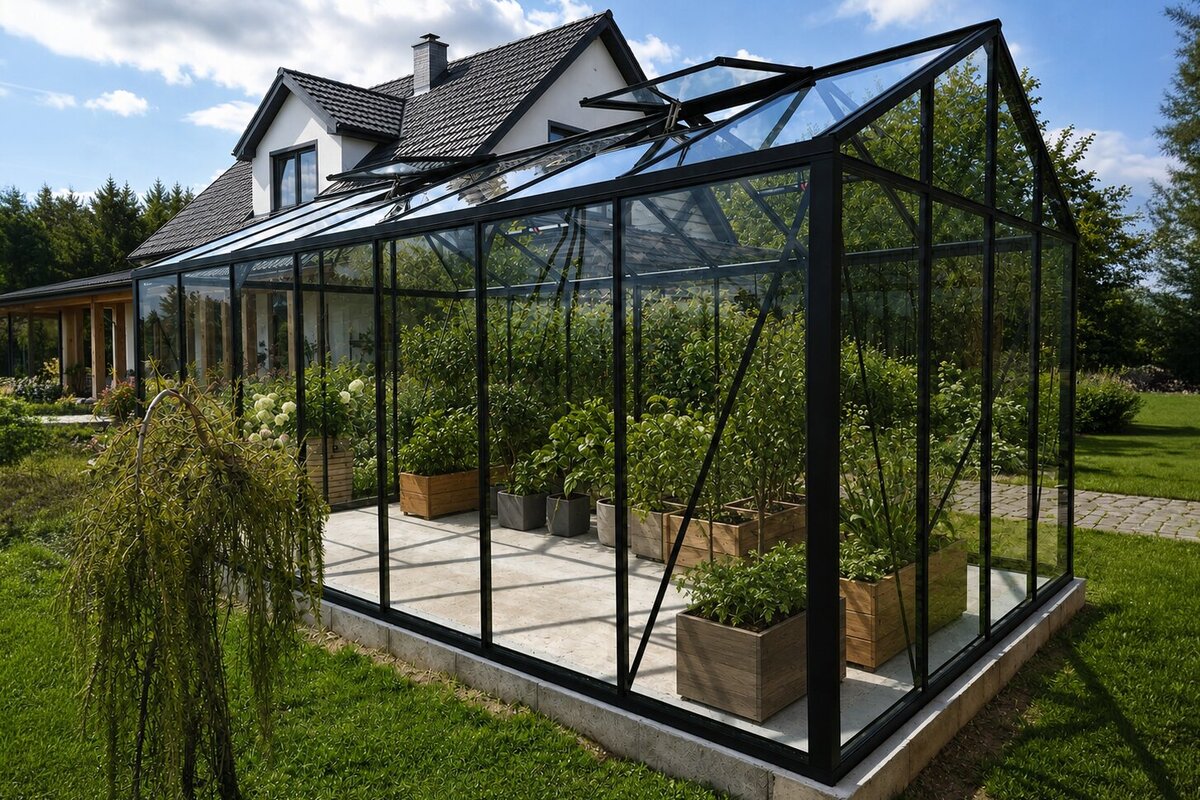
For more ambitious food growing, a greenhouse adds useful planning flexibility. It can help extend the growing season and give tender crops more protection. A classic model such as the {link("https://www.bloomcabin.com/de/gewaechshaeuser-und-wintergaerten/gewaechshaeuser-aus-aluminium/aluminium-klassisches-gewaechshaus.html","Aluminium Classic greenhouse")} can also become the architectural centrepiece of a productive garden.
Redistributing space06
Keep the lawn that earns its place
The lawn is not vanishing, but its job is becoming clearer. Grass still makes sense for play, lounging and visual breathing room. Slopes, edges and seldom-used front-yard sections can instead become perennial planting, meadow-like areas or shrub beds.
That change does not make maintenance disappear. It trades one routine for another: a planted area may need several concentrated visits through the year rather than weekly mowing, while adding flowers, structure and covered soil.
A useful 2027 balance is a smaller, well-defined lawn framed by deeper and more varied planting.
The garden as living space · 07
Connect patios, pergolas and garden rooms
Approach the garden as a sequence of places rather than a patio surrounded by leftover space. Areas for meals, quiet time, plants, cooking or work can each have a role, with views, surfaces, planting, shade and light making the movement between them feel natural.
Pergolas play a larger role because they can define a place without closing off the garden. A {link("https://www.bloomcabin.com/de/gewaechshaeuser-und-wintergaerten/bloomcabin-bioklimatische-pergola/bloomcabin-pergola.html","Bloomcabin bioclimatic pergola")} can frame a dining or lounge area, while a {link("https://www.bloomcabin.com/de/gewaechshaeuser-und-wintergaerten/bloomcabin-wandpergola/bloomcabin-pergola.html","wall-mounted pergola")} can create a clear transition from the home to the outdoors.
The overall effect is calm rather than crowded. A few well-related materials and colours can connect the outdoor layout with the façade, window lines and larger garden structure more successfully than a collection of unrelated furnishings.
Less work, more impact
08
Make maintenance a design decision
A manageable garden is not created by spreading gravel around 3 clipped evergreens. It starts with plants suited to the site, enough ground cover to occupy the soil, durable materials and a realistic understanding of the work each area will need.
Larger groups of sturdy perennials can help suppress weeds, while shrubs with a naturally suitable habit avoid constant shaping. Put irrigation only where it provides real value, and use clear paths and edges to simplify care without making the space feel sterile.
For households that want an inviting outdoor space without surrendering every weekend to it, this shifts spending away from temporary decoration and toward a structure that continues to work.
Technology in the background
09
Use technology where it earns its place
More sensors do not automatically make a better garden. Useful technology stays in the background and addresses a specific problem. Soil-moisture readings, weather-responsive irrigation, automatic greenhouse ventilation or plant-identification tools can help avoid wasted water and poorly timed decisions.
Local information matters most. A city-wide weather reading cannot reveal the moisture level in a raised bed exposed to full sun. Direct soil checks—manual or sensor-based—provide a better basis for watering that particular spot.
A greenhouse makes this especially clear because temperature, moisture and ventilation can be watched together. The equipment should support the growing, not become the purpose of it.
Make limited space work harder10
Small gardens reward precise planning
On a compact urban or suburban lot, every fixed element affects circulation and planting space. Vertical layers, espalier fruit, narrow containers, seating edges with more than one function and carefully scaled shrubs can produce a generous garden without requiring a large footprint.
Protected growing can fit into that approach. A narrow or lean-to greenhouse may use an otherwise awkward strip, provided door swings, paths and working clearance are resolved before installation.
Restraint in the hard materials can make the planting feel richer. Repeating a small palette, preserving useful sightlines and limiting the colours of permanent elements gives abundant growth a coherent frame.
Emotion over perfection · 11
Bring back cottage character without copying the past
The renewed interest in cottage-style gardens is less about historical accuracy than atmosphere: fragrance, abundant flowers, useful herbs, fruit and a sense of personal history. In 2027, those qualities can be assembled in a looser, contemporary composition.
Plant selection keeps the romance practical. Rather than struggling to preserve delicate classics in an unsuitable site, combine sturdy, locally appropriate varieties with traditional favourites. Drought tolerance and habitat value can belong within the same lush visual language.
This creates a warmer alternative to strict minimalism while responding more honestly to current climate and maintenance demands.
Protected growing and architecture
12
Let the greenhouse contribute to the whole garden
Few structures connect as many 2027 themes as a greenhouse. It can support food growing, protect plants, stretch the useful season and create a distinctive destination in the yard, so it need not be treated as equipment to hide at the far boundary.
Its role depends on its size: raising young plants, growing tomatoes and cucumbers, sheltering tender containers for part of the year or accommodating a seat. Whatever the use, include ventilation, circulation, beds, water and shading in the first plan rather than adding them later.
The {link("https://www.bloomcabin.com/de/gewaechshaeuser-und-wintergaerten","Bloomcabin greenhouse collection")} shows how varied this role can be, from a traditional productive greenhouse to a more architectural garden room.
A closer look
How the forecast translates across Canada
There is no single Canadian garden brief. A coastal property, a prairie lot, a colder northern location and a dense urban backyard can present entirely different constraints. A trend becomes useful only after it has been adjusted to the site, the intended activities and the amount of care available.
Begin with the region and the property
A windy coastal site may have salt exposure and persistent moisture, while an inland garden may encounter summer heat, dry periods or abrupt temperature changes. Colder locations can bring deep frost, snow and a compressed growing season. Instead of asking which plant is fashionable, ask which one can perform reliably in that specific place.
That question leads toward regionally suitable planting, resilient perennials, native shrubs and close observation of small climatic differences. Note south-facing walls, shade pockets, wind channels and heat-retaining hard surfaces before designing. Fewer corrective measures should be needed when those conditions shape the plan from the start.
Give living planting a disciplined frame
Habitat-rich planting does not require a chaotic appearance. Clear circulation, quiet hard surfaces, deliberate edges and well-placed greenhouse or pergola architecture can provide a strong framework for native perennials, grasses and shrubs with freer habits.
The useful contrast for 2027 is between restrained organizing elements and generous living ones. Denser, more varied planting covers soil and creates habitat, while calm architecture keeps the whole composition legible.
Choose edible crops for value, not volume
Home food growing does not have to imitate a full-scale farm. A selective crop list—flavourful tomatoes, herbs, berries, salad greens or unusual varieties—can deliver freshness and interest without taking over the entire property.
A greenhouse can make sowing, young-plant care and warmth-loving crops easier to coordinate. Linking it with outdoor beds and perennial planting allows food production to read as part of the garden rather than a separate service area.
Budget time as carefully as space
Wanting more greenery without more weekly work is not a contradiction, but it does require planning. Dense, site-appropriate perennials and ground covers may demand less attention over time than open gravel or bark areas where unwanted growth is continually removed.
For each zone, identify what must happen weekly, seasonally and only every few years. Keep grass where it serves a purpose, use resilient planting at the margins and reserve automated watering or ventilation for places where it provides a genuine time or resource benefit.
From forecast to your own garden
Build a realistic plan from the trends
Treat the list as a menu, not a checklist. Understand the property and decide how the garden should function before selecting a visual style.
- Map the site. Observe sun, shade, wind, soil moisture and troublesome hot spots over several days.
- Understand water routes. Before planning new surfaces or beds, see where rain infiltrates, runs off or collects.
- Assess lawn by function. Keep grass where it is genuinely used; edge zones may offer more ecological value as planting.
- Create a flowering calendar. Combine early, summer and late flowering plants so pollinators find food for a longer period.
- Bring in edibles. Place herbs, berries or espalier fruit where they contribute to the composition as well as the harvest.
- Define outdoor rooms. Use plants, paths or a pergola to distinguish sitting, dining and garden areas without making the divisions harsh.
- Plan the greenhouse early. Consider the foundation, paths, water access, sun and ventilation before the rest of the garden is complete.
- Use technology selectively. Choose sensors and automation where they can genuinely reduce water use, time or plant losses.
FAQ
Garden trends 2027: common questions
What is the leading garden trend for 2027?
The strongest theme is the meeting of nature-led design and climate resilience. Gardens are expected to support biodiversity while coping better with heat, dry periods and heavy rainfall.
Is a nature-led garden automatically low maintenance?
No. It still needs planning and care. Site-suitable plants, dense planting and less formal clipping can make ongoing work different and often lighter, but not absent.
Is the traditional lawn disappearing?
Not entirely. Lawn remains useful where it is used. Less-used areas are more often being converted to perennial beds, meadow-style planting or shrubs.
Will food growing still matter in 2027?
Yes. The appealing approach is to combine ornamental and productive planting, integrating vegetables, herbs, berries and fruit into the overall design.
Does a greenhouse suit a modern nature-led garden?
Yes. Well positioned, it can provide a clear architectural counterpoint to looser planting while extending the growing season.
What garden technology is useful in 2027?
Choose technology with a clear purpose, such as precise watering control, soil-moisture measurement, local weather information or automatic greenhouse ventilation.
The 2027 garden is designed around performance, not decoration
The most useful trends do more than refresh a colour palette. They ask the garden to manage water, support life, produce food, provide rest and relate to the architecture as one connected place.
That leaves plenty of room for individuality. A compact city garden might pair vertical crops with a small greenhouse. A family yard might retain purposeful lawn while adding habitat planting and a covered gathering space. Loose, ecologically useful planting can soften even a highly contemporary home.
Success will not come from collecting all 12 ideas. It will come from choosing the ones that suit the property so precisely that the garden becomes livelier, easier to use and more rewarding to look after.
Ready to shape your 2027 garden?
If your plan includes a greenhouse, pergola or permanent outdoor room, use the Bloomcabin collection to compare forms, sizes and architectural approaches before deciding what fits the site.
Sources and further reading
- KfW Research – Biodiversity in German gardens, 2026
- Maschinenring – Garden trends 2026: climate-resilient, nature-led gardens
- Bloomcabin – Greenhouses and conservatories
This 2027 forecast draws on data, specialist sources and developments available in 2026. Treat it as planning inspiration: suitable plants and measures still depend on the property’s region, soil, microclimate and intended use.
