
Greenhouse Aphids: Identify Colonies, Prevent Spread and Take Control
Greenhouse field notes / T39
Finding aphids under cover Recognize a colony early, block its next move and regain control.
Start with what the plant is showing. A glossy patch, a misshapen shoot tip or a pale shell caught near a leaf vein may appear before the insects stand out. Put those observations together and the problem can be addressed before it shapes the rest of the growing season.
Make inspection possible before trouble starts: leave fresh shoots within reach, keep the backs of leaves visible and provide a separate place for incoming plants. A Classic Aluminium Greenhouse can give home growers the ventilation and workable access needed for this routine.
Chapter 01 / Building the diagnosis
Let the plant evidence guide the response.
A curled leaf by itself is not a diagnosis. Temperature extremes, dry roots, root injury and poor nutrient balance can all alter new tissue. Confirm aphids by combining observations: examine the plant, locate live insects or recently discarded skins, and check whether the surrounding damage fits sap feeding.
Live colony
Shed skins
Honeydew
Sooty mould
Distortion
Live colony
Examine soft shoots, stems, buds and the backs of leaves for delicate insects gathered in groups. Mature aphids, younger stages and a few winged individuals may occupy the same plant.
Shed skins
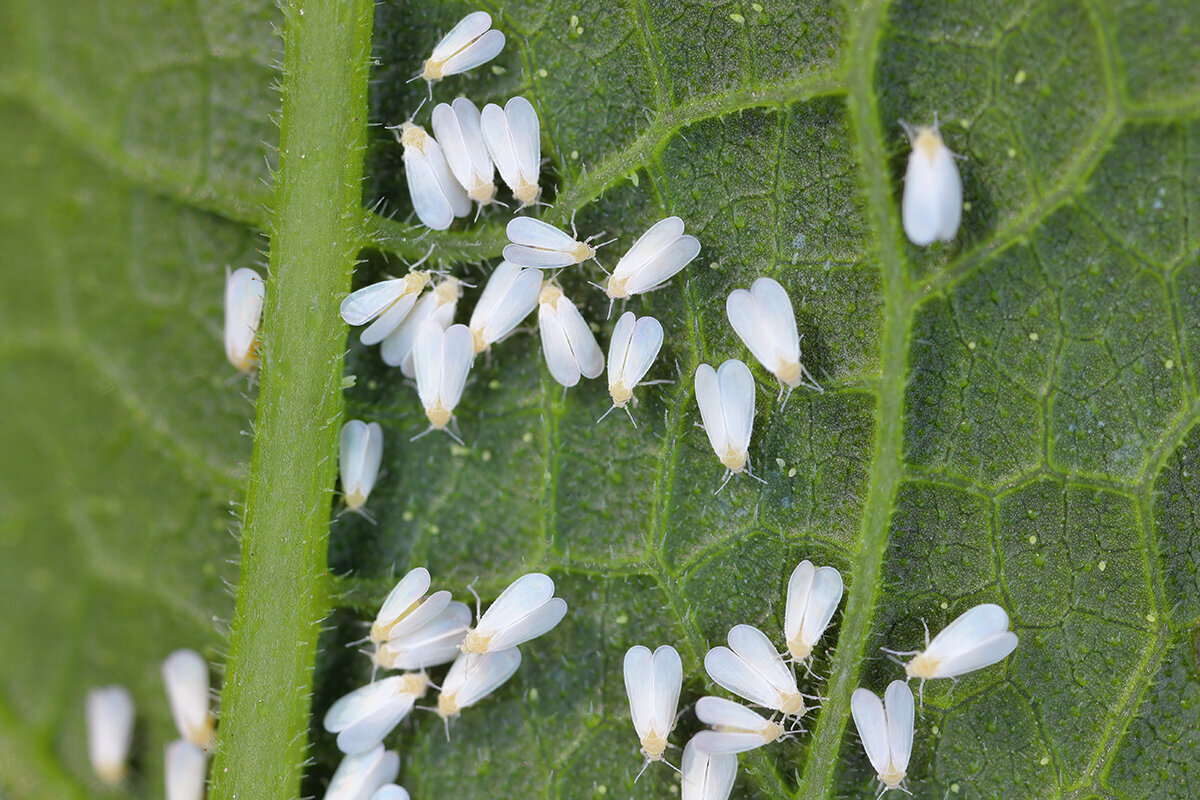
Papery white or silver shells are empty skins left during growth. Do not mistake them for living whiteflies or patches of powdery mildew.
Honeydew
The sugary liquid released by aphids is called honeydew. Look for its sticky sheen on leaves, fruit, containers, benches and surfaces below the colony.
Sooty mould
Sooty mould may develop wherever honeydew collects. Treat it as evidence of the underlying insect activity rather than the original cause.
Distortion
Damage to developing tissue can appear as puckering, twisting, rolling or stalled growth. Seedlings, herbs, peppers, cucumbers and flowering ornamentals deserve especially close attention when these changes appear.
An ant trail adds information but does not confirm the pest. Ants visit honeydew and may interfere with aphid predators, so follow their route and examine nearby and overhead plants.
Chapter 02 / A closer look
Use several physical features to recognize an aphid.
What a hand lens reveals
- Pear-shaped body
- Long legs and antennae
- Cornicles
- Winged or wingless
Pear-shaped body. Most aphids are fragile, soft insects measuring only a few millimetres. Magnification makes their tapered, pear-like outline clearer when they are packed around a vein or growing point.
Long antennae, legs and cornicles. Look for prominent antennae and legs. Many species also carry 2 small tubular structures, known as cornicles, toward the back of the abdomen. Together, these traits separate aphids from the flatter scale insects that remain attached to stems or branches.
Winged and wingless forms. Wings do not make the insect a different pest. Winged aphids are the travelling form, so finding one is a signal to broaden the search to adjacent plants, entrances, vents and recent arrivals.
Use its position on the plant as evidence. Tender leaves, flower stalks, buds and pliable shoots provide accessible sap and often attract colonies. Shape plus feeding position is more informative than colour viewed on its own.
Comparison / Look-alikes worth checking
Whiteflies
Thrips
Scale insects
Helpful larvae
Whiteflies
Disturb the foliage and adult whiteflies may lift off in a small flutter. Their young remain as flattened stages beneath leaves rather than gathering as mobile aphids.
Thrips
A thrips has a narrow body and moves briskly. Silvery feeding marks with dark waste spots are more typical than the sticky deposits associated with aphids.
Scale insects
Some scale insects also release honeydew, but mature scales resemble stationary raised discs or bumps. They do not form moving pear-shaped clusters on tender shoots.
Helpful larvae
Larvae of lady beetles and lacewings consume aphids. Identify an unfamiliar visitor before removing it from a colony; it could be a useful predator.
Chapter 03 / How pressure builds
Today’s small patch can become tomorrow’s greenhouse-wide problem.
Protected warmth and a continuing supply of tender tissue can favour rapid colony growth. Through much of the growing season, many familiar aphid species give birth to live young without first mating. Temperature, light, species, host and plant condition all affect the pace, so no single timetable fits every greenhouse. Early observation is more dependable than waiting for a predicted date.
01Arrival
02Feeding colony
03Honeydew
04Spread
The process often begins on 1 reachable host. Wingless aphids feed and reproduce inside sheltered buds or leaves; increasing numbers make honeydew and old skins more obvious. Crowding, deteriorating host quality and other changes may then produce winged aphids that seek another plant. Since that transition has no fixed schedule, use a repeatable weekly circuit and inspect more frequently after any discovery.
Open vents, doors and newly acquired plant material offer additional routes into the greenhouse. Aphids on a basil plant, young pepper or flowering ornamental should prompt a check of the whole growing space. Keep badly distorted or otherwise questionable plants separate while they are assessed instead of moving, sharing or propagating them.
Chapter 04 / Your scouting route
Make the easy-to-miss areas part of every round.
A consistent route makes changes easier to recognize. Begin near the entrance, work through established crops and finish at the newest arrivals, rather than waiting for conspicuous damage to direct your attention.
- 1
Newest growth
Open folded leaves and inspect growing tips and pliable stems. Rapidly developing tissue is a common feeding location. - 2
Leaf undersides and midribs
Lift and turn foliage, paying particular attention to low or crowded leaves that a quick glance or surface treatment may overlook. - 3
New plants
Recently purchased herbs, seedlings, cuttings and plants brought out of indoor winter storage can all introduce a colony. - 4
Weeds, hanging baskets and edges
Colonies may remain unnoticed on weeds below a bench or on suspended plants beyond the usual line of sight. - 5
Doors and vents
Include entrances and ventilation openings because travelling aphids may pass through these parts of the structure.
A yellow sticky card near a vent or door can reveal flying aphids, but it only provides an alert. It neither removes an established group nor replaces examining the plants themselves. For a layout with reachable beds and clear working routes, consider the Classic Aluminium Greenhouse.
Chapter 05 / Keeping colonies out
Combine sensible screening, plant separation and balanced growth.
Screening Reduce entry while preserving ventilation.
Quarantine Observe incoming plants away from the collection.
Cleanliness Clear volunteer growth and discarded material.
Vigour Do not encourage excessively tender growth.
Records Write down the crop, place and date.
A quarantine area can be simple: use a spare bench, a bright sheltered corner or another clearly separated position where the plant can be examined for several days. Look under leaves, around stems and pot edges, and inside tight new growth. Finding nothing for 1 week is encouraging, although sensitive crops or suspicious symptoms justify a longer watch. Visible fresh activity means the plant should remain apart.
Screen openings without sacrificing the movement of air or allowing heat to accumulate. A fine mesh may reduce incoming winged insects, but ventilation and temperature management still have to work for the crop. Roof vents, shade and deliberate spacing contribute to that balance. Our guide to aluminium greenhouses can help you consider glazing, airflow and accessories as parts of the same growing environment.
Remove weeds below benches, beside the base and along the path to the entrance because they can shelter aphids unnoticed. Inspect decorative and overwintered containers as well. Geraniums, citrus and other frost-sensitive plants moved from indoor shelter in spring may carry aphids into vegetable starts.
Heavy fertilizer applications are not a substitute for good crop care. Aphids are attracted to very lush, nitrogen-rich shoots. Match feeding to the plant, container and development stage; provide even moisture; and keep enough room between plants to examine shoots without snapping them or transferring insects by contact.
Chapter 06 / Choosing the next action
Use the mildest effective step that can physically reach the insects.
Success depends less on product strength than on access, plant tolerance and another inspection afterward. Move to a stronger intervention only when the current approach cannot address the number of aphids, the crop involved or the places where they are feeding.
01
Separate the source and add a dated label.
If it can be moved without knocking aphids onto other plants, place the affected pot away from the collection. Mark the crop and date. Pause propagation, pot sharing and movement through the greenhouse until repeated examinations no longer reveal an active colony.
02
Prune the most concentrated pockets.
Use clean tools to remove tightly curled tips, crowded buds and foliage that cannot be inspected or reached, then contain the cuttings in a bag. Do not place visibly affected material on an uncovered compost heap beside the structure. A gentle, accurately directed stream of water may knock aphids from sturdy plants; support the foliage and provide airflow while it dries.
03
Match beneficial organisms to the job.
For several affected plants, living controls may be preferable to repeated whole-area spraying. Selection must account for the aphid and crop as well as temperature, day length, colony size and residues from earlier treatments.
04
Reserve registered contact treatments for exposed insects.
A soap or oil works by contacting the aphid, so insects hidden in rolled leaves or narrow bud folds may remain untouched. Choose only a product whose Canadian registration and label cover the crop, protected growing site and user category involved. Read every direction, and avoid applying it to plants already stressed by heat or lack of water.
Grower’s note / Biological control
Beneficial organisms succeed when their requirements are met.
Possible aphid enemies include lady beetles, lacewings, aphid midges and parasitoid wasps. A suitable choice depends on which aphid and crop are present, how established the outbreak is, and the temperature, light and environment the greenhouse can provide.
Predatory species consume aphids directly. Parasitoids develop on or within them and may leave rounded, discoloured mummies. Check unusual insects and papery remains carefully, since they may indicate that a released wasp is active.
Chapter 07 / Applying a treatment
The Canadian label defines where and how a product may be used.
Contact soaps and oils
In a home greenhouse, a contact product may be appropriate only when its Canadian registration covers the plant, site and user. It works where the spray actually reaches the pest. Follow the directions when turning leaves or opening foliage. Aphids seen afterward may have survived in sheltered folds rather than arrived since the application.
Crop tolerance must be checked
A product labelled for aphids can still injure a sensitive variety or a plant under stress. Tender seedlings, high heat, bright sun and dry conditions may change tolerance. Observe all label limits, test instructions, waiting periods and mixture restrictions; familiarity with separate ingredients is not permission to combine them.
Products with systemic or extended activity
Some active ingredients enter plant tissue or remain effective for longer. Professional situations may sometimes call for them, but edible crops, open flowers, pollinators, beneficial organisms, harvest timing and re-entry all require consideration. Permission for outdoor ornamentals does not authorize use on greenhouse peppers, tomatoes, herbs or leafy vegetables.
Canadian registration and the complete label govern use
Search Health Canada’s current pesticide registry and open the full label instead of relying on store descriptions. Verify the named crop or crop group, greenhouse site, target aphid, application method, harvest interval where applicable, precautions, maximum quantity and user class. An omitted crop or use must not be treated as though it were approved.
Avoid automatic spraying on fixed dates. No single concentration, pesticide or repeat interval suits every aphid and greenhouse crop. Apply the selected registered product exactly as directed, including limits on repeat use, harvest, resistance management and protection of beneficial organisms. Before treating a biological-control system, ask its supplier or a qualified plant-health adviser about compatibility.
Chapter 08 / Confirming recovery
Treatment is incomplete until the plants have been checked again.
Pruning, water and contact products remove only aphids reached during that session. Insects may remain inside folds or on nearby hosts. Schedule another examination as part of the original response. The timetable below supports, but never overrides, the product label or advice specific to the crop.
| Timing | Check | Note | Next move |
|---|---|---|---|
| Day 0 | Origin plant and nearby plants | Live aphids | Isolate |
| Day 2–3 | Fresh growth | New activity | Address missed areas |
| Day 7 | Adjacent growing area | Direction of change | Reassess |
| Weekly | Hotspots | Likely repeat source | Record |
Day 0 review
Examine the affected plant, its immediate neighbours, entrances, benches and the spaces below them. Log moving aphids, empty skins, honeydew, winged forms, removed tissue and the response used. Wash or otherwise clean tools after handling the plant.
Day 2–3 review
Revisit developing shoots and concealed leaf surfaces. Separate moving insects from old shells, then identify any folded tissue that the water, pruning or applied product did not reach.
Day 7 review
Inspect the original host together with the neighbouring row or bench. Watch for renewed stickiness, altered growth, winged aphids caught by monitoring cards and aphid mummies when beneficial organisms are being used.
In later weeks
Maintain a weekly circuit through previous trouble spots and incoming plants. An upward trend may reveal a hidden weed, an inaccessible planting area or another host recently brought inside.
Clean sticky deposits only after dealing with the insects.
Use a mild method suited to the surface when cleaning containers, benches, nearby glazing and other firm materials; rinse with clean water when appropriate. Sturdy foliage may be washed gently to remove residue and admit more light, but tender leaves should not be abraded. Sooty mould can recede after the supply of fresh honeydew ends. Restoring function and making new evidence visible matter more than an instantly spotless appearance.
Help the plant recover through consistent care, not a compensating dose of fertilizer. Cut away only tissue that is dead, severely misshapen or impossible to inspect. Appropriate moisture, air movement and spacing will allow later growth to demonstrate whether recovery is underway.
Aphid questions for Canadian greenhouse growers
Practical answers for the first confirmed colony.
May a soap-based product be applied to greenhouse vegetables?
Yes, but only when that specific product is currently registered and labelled in Canada for the edible crop, greenhouse site and user concerned. Review the crop listing, application directions, harvest interval and precautions. An ornamental-only label does not cover food plants.
Will plain water remove the infestation?
A carefully aimed, low-force stream can knock many exposed aphids off a robust plant and may reduce a localized colony. It cannot consistently penetrate rolled foliage, tight buds or a crowded canopy, so a prompt follow-up inspection is essential.
Did ants create the colony?
No. They visit the sugary honeydew and may defend the insects producing it, which can hinder natural control. Deal with the aphids and limit practical ant routes rather than assigning the entire infestation to the ants.
What explains aphids appearing after treatment?
Possible sources include survivors inside protected growth, an untreated host nearby, weeds, an incoming plant or a winged aphid entering through an opening. Trace the surrounding route and inspect connected plants before moving automatically to a more aggressive product.
Can lady beetles manage a severe outbreak without other action?
They may contribute, but 1 release can be overwhelmed by a large colony. Results also depend on correct pest identification, removal of concentrated pockets, supplier guidance, suitable environmental conditions and the effects of products used earlier.
Is disposal always necessary?
No. Isolation and careful management may be enough for a limited colony on an accessible, valued plant. Removal becomes more reasonable when infestation or distortion is severe, or when handling the plant would spread aphids. Symptoms suggesting a plant virus require their own assessment.
Canadian sources and additional reading
Use current Canadian pesticide information when choosing any product.
More from Bloomcabin: Setting up a greenhouse · Greenhouse protection from weather and pests · Greenhouses and conservatories
- Health Canada,Public registry for pesticides and pest management.
- Government of British Columbia,How to understand Canadian pesticide labels.
- Health Canada,Search registered pest-control products and labels.
- Government of British Columbia,Registration and label rules for pesticides.
- Health Canada,Current pesticide product and label databases.
- Health Canada,Pesticide public registry.
- Government of British Columbia,Pesticide labels and federal registration.
Closing the file
Finish the response before aphids gain another foothold.
A measured response works better than immediate maximum force. Confirm living aphids, separate or remove the most accessible source, preserve lower-impact choices and treat the next inspection as part of the job.
3 actions to remember
- Examine developing shoots first.
- Keep the source apart.
- Put the follow-up date on the growing schedule.
Support that habit with a greenhouse layout that keeps plants reachable, ventilation effective and ongoing crop care practical.
Classic Aluminium Greenhouse